
Finding the right vet for your exotic pet can be challenging, but it’s crucial for their health. Exotic animals like reptiles, birds, and small mammals require specialized care that many general vets aren’t equipped to provide. Here’s how you can locate an experienced exotic pet veterinarian:
- Understand your pet’s needs: Birds may need annual exams for feather health, while reptiles require checks for temperature-related issues like metabolic bone disease.
- Use professional directories: Websites like ARAV (Association of Reptile and Amphibian Veterinarians) and AEMV (Association of Exotic Mammal Veterinarians) help you find specialists by location.
- Verify credentials: Look for vets with certifications from organizations like ABVP or ACZM, and confirm they treat your pet’s species.
- Ask for local recommendations: Rescue groups, pet stores, and breeders can provide trusted referrals.
- Prepare for the visit: Bring diet logs, photos of enclosures, and transport your pet safely in species-appropriate carriers.
With the growing number of exotic pet specialists, finding qualified care is more accessible than ever. Regular checkups and a tailored care plan can ensure your pet stays healthy and happy.
Know Your Exotic Pet’s Veterinary Needs
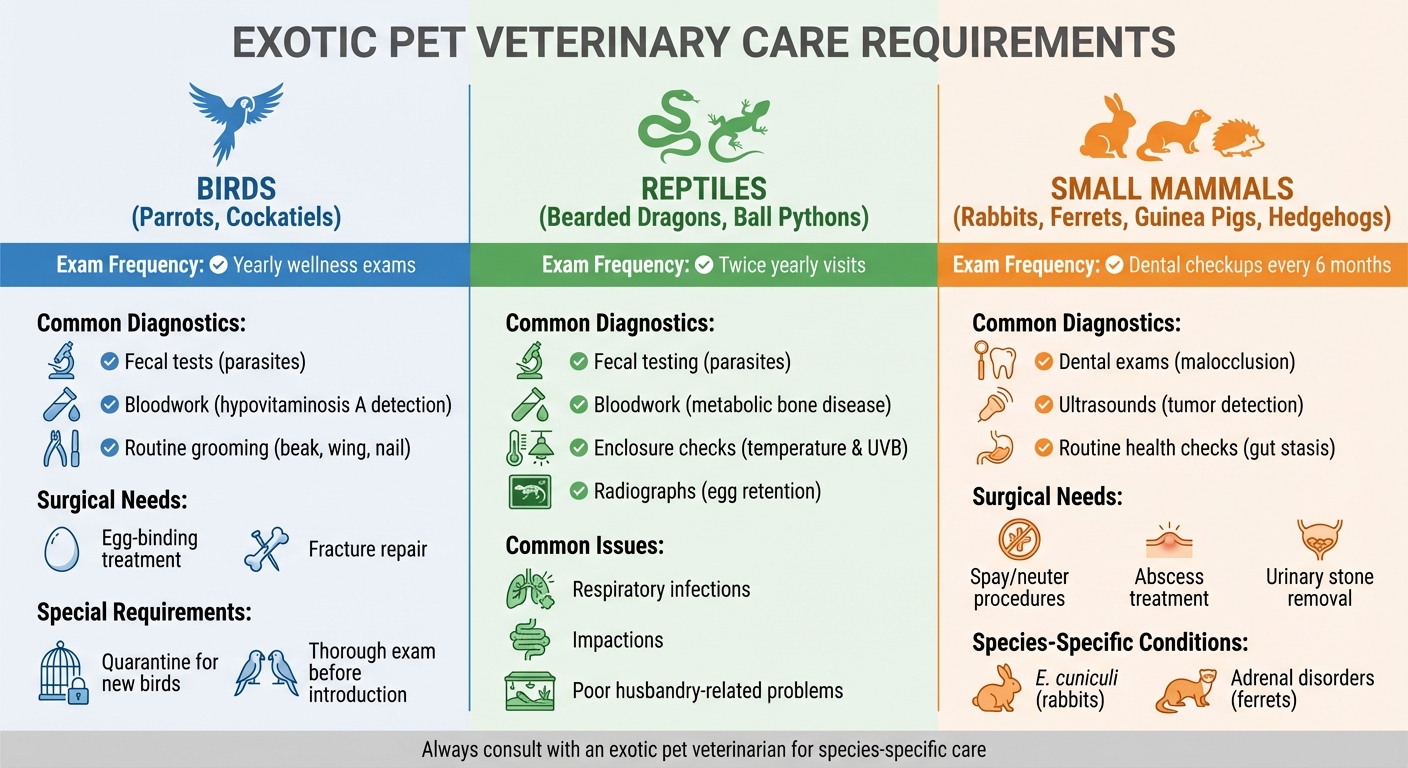
Exotic Pet Veterinary Care Requirements by Species
Before choosing a veterinarian, it’s important to understand the specific care your exotic pet requires. Every species has distinct medical needs, and being aware of these differences will help you make informed decisions about their care.
Veterinary Needs by Species
Birds, such as parrots and cockatiels, benefit from yearly wellness exams. These typically include fecal tests to check for parasites, bloodwork to identify issues like hypovitaminosis A (a common vitamin deficiency), and routine grooming for beak, wing, and nail maintenance. Surgical needs might include treating egg-binding problems or fixing fractures. If you’re introducing a new bird into your home, quarantine and a thorough veterinary exam are essential to prevent the spread of disease.
Reptiles, including bearded dragons and ball pythons, should visit the vet twice a year. These visits often involve fecal testing for parasites, bloodwork to detect conditions like metabolic bone disease, and checks to ensure their enclosures meet proper temperature and UVB lighting requirements. Radiographs may be used to monitor issues like egg retention. Reptiles often face health problems stemming from poor husbandry, such as respiratory infections or impactions caused by incorrect temperatures or inadequate lighting.
Small mammals – like rabbits, ferrets, guinea pigs, and hedgehogs – require dental checkups every six months to catch problems like misaligned teeth (malocclusion). Routine exams help detect issues like gut stasis, and common surgical needs include spay/neuter procedures or treatment for abscesses and urinary stones. Diagnostics such as ultrasounds are often used to identify tumors. Keep an eye out for species-specific conditions, such as E. cuniculi in rabbits or adrenal gland disorders in ferrets.
Not all veterinarians are equipped to handle exotic pets. Many general small-animal vets lack the tools and expertise needed for these species, such as incubators for reptiles or specialized equipment for cloacal exams. Exotic-friendly veterinarians, however, have experience with birds, reptiles, and small mammals, offering services like endoscopy and tailored diagnostics. For the most advanced care, board-certified specialists – such as those certified by the American College of Zoological Medicine (ACZM) or the American Board of Veterinary Practitioners (ABVP) – provide treatments like laparoscopy, chemotherapy for avian cancers, and collaboration with university hospital experts in oncology or neurology.
When to Seek a Specialist
While exotic-friendly vets are great for routine care, more complex conditions often require the expertise of a board-certified specialist. For illnesses such as PBFD (Psittacine Beak and Feather Disease), reptile tumors, or ferret insulinomas, specialists can perform advanced diagnostics and surgeries. Procedures like endoscopy, laparoscopy, or emergency interventions for conditions like egg yolk peritonitis also fall within their domain.
If your exotic-friendly vet suggests a referral to a teaching hospital, such as Cornell University‘s veterinary program, it’s worth taking their advice. These facilities have specialists and advanced diagnostic tools that standard clinics may not offer. Organizations like the Association of Reptile and Amphibian Veterinarians (ARAV), Association of Exotic Mammal Veterinarians (AEMV), and Association of Avian Veterinarians (AAV) provide directories to help you find certified specialists who can address your pet’s specific needs, whether it’s treating metabolic bone disease in reptiles or performing dental work on rabbits.
Search Online Directories and Professional Organizations
Once you’ve assessed your pet’s specific needs, the next step is finding the right veterinary expert using trusted online directories.
Professional Veterinary Directories
Species-specific directories are a great starting point for locating exotic pet veterinarians. For reptiles and amphibians, the Association of Reptile and Amphibian Veterinarians (ARAV) provides a "Find a Vet" tool at members.arav.org. Simply enter your location to find experts in reptile and amphibian care. Likewise, the Association of Exotic Mammal Veterinarians (AEMV) offers a similar tool to help you locate specialists for exotic mammals.
If you’re seeking board-certified professionals, directories from ABVP and ACZM are excellent resources. Additionally, platforms like ReptiFiles‘ Reptile Vet Directory or ZuPreem‘s state-by-state exotic veterinarian lists can help. These often include clinics and teaching hospitals, such as the CSU Veterinary Teaching Hospital in Fort Collins, Colorado, or Pender Exotics Veterinary Centre in Fairfax, Virginia.
Refining Your Search
Once you’ve identified potential veterinarians, narrow your search by entering your ZIP code into tools like those from ARAV or AEMV. Start with a search radius of 10–25 miles. If no suitable options appear, expand the radius to 50, 75, or even 100 miles. Since exotic animal specialists are less common, many pet owners are willing to travel 60–120 minutes for specialized or ongoing care. If necessary, consider searching near major cities or neighboring states, as exotic animal clinics often cluster around metropolitan areas or veterinary teaching hospitals.
When reviewing results, confirm that the clinic treats your pet’s species. Look for terms like "reptiles", "herpetology", "avian and exotic", or "exotic companion mammals." If the directory doesn’t offer species filters, reach out to the clinic directly to verify they can provide care for your pet.
Use Little Pet Corner for Research

After compiling a shortlist of clinics, visit Little Pet Corner to deepen your understanding of your pet’s care needs. This resource offers species-specific information on topics like diet, housing, enrichment, and early signs of illness. These insights can help you identify essential services, such as nutritional counseling for small mammals or UVB lighting guidance for reptiles. Armed with this knowledge, you’ll be better prepared to ask focused questions about preventive care, diagnostic options, and emergency services when evaluating a clinic’s credentials. This preparation ensures you make informed decisions about your pet’s health and well-being.
Check Exotic Pet Vets Before Booking
Before making an appointment, ensure the clinic can meet your exotic pet’s specific needs.
Check Credentials and Experience
Start by confirming that the veterinarian holds either a Doctor of Veterinary Medicine (DVM) or Veterinary Medical Doctor (VMD) degree, along with a valid state license. Look for additional qualifications like board certifications, such as being a Diplomate of the American Board of Veterinary Practitioners (ABVP) in Avian Practice or holding an Exotic Companion Mammal (ECM) certification from the Association of Exotic Mammal Veterinarians (AEMV). Memberships in organizations like the Association of Reptile and Amphibian Veterinarians (ARAV), AEMV, or the American Association of Zoo Veterinarians often indicate the vet stays updated on the latest practices in exotic animal care [5–8].
You should also check how many exotic cases the clinic handles annually. Experts suggest that veterinarians treating 50 or more exotic cases per year are more likely to have the necessary expertise [3, 14]. For instance, the Arizona Exotic Animal Hospital in Phoenix specializes in reptiles and birds, boasting extensive experience. Similarly, Dr. Beth Rodney at Pearland Pet Health Center in Texas is recognized for her broad knowledge of exotic species. To verify credentials, use tools like ARAV’s "Find a Vet" or contact your state’s veterinary board.
Once you’ve confirmed the vet’s qualifications, take a closer look at the services, facilities, and communication practices to ensure they provide well-rounded care.
Review Services and Facilities
After confirming the vet’s credentials, assess the clinic’s diagnostic tools and treatment options. Make sure they offer species-specific diagnostics, such as digital radiography, ultrasound, and endoscopy, as well as in-house lab capabilities. Surgical services should include species-appropriate anesthesia protocols and proper monitoring equipment. The facility should also have specialized housing, like incubators for reptiles, oxygen cages, and secure enclosures, to reduce stress during visits [2, 3, 8].
Ask if the clinic provides 24/7 emergency care or has referral arrangements with an emergency facility. For example, teaching hospitals like CSU Veterinary Teaching Hospital in Fort Collins, Colorado, offer advanced services, including imaging tools like CT scanners [2, 3]. Be cautious of clinics lacking certifications for exotic animals, emergency care protocols, or modern facilities, as these can signal inadequate care [2, 7].
Review Communication and Support
Good communication is key to ensuring your pet receives the best care. Look for clinics that offer clear explanations of diagnoses, customized nutritional plans, and detailed discharge instructions. Veterinarians should also educate you on at-home care, such as maintaining proper humidity for amphibians or using UVB lighting for reptiles [8, 14, 16].
Inquire about follow-up care options, such as post-visit summaries, emergency contact lines, and reminders for recheck appointments. For example, Drs. Rodney and Brennan at Pearland Pet Health Center provide tailored nutritional advice and thorough follow-up care. If you call a clinic with questions and the staff seem unsure or give vague answers about your pet’s species, take it as a potential red flag [8, 16].
sbb-itb-e212914
Use Local and Community Resources
Tapping into local networks can lead you to trusted exotic vets. These community recommendations are a great starting point for building a shortlist of options worth researching further.
Get Local Recommendations
Local humane societies, rescue groups, and wildlife centers often work closely with exotic vets and can share reliable referrals. Rescue organizations, for instance, usually have lists of vets they’ve worked with on complex cases. Pet stores that specialize in reptiles, birds, or small mammals may also point you toward clinics with proven expertise. Additionally, breeders – whether you meet them at reptile expos or through online classifieds – can often provide recent, firsthand references.
Species-specific clubs, such as local chapters of the Association of Avian Veterinarians (ARAV) or bird enthusiast groups, frequently share member-vetted vet lists on platforms like Facebook or Meetup. Even zoos can be helpful. While zoo vets typically don’t treat private pets, their education departments might offer informal advice on clinics known for handling exotic animals. Universities with veterinary programs, like Auburn University in Alabama, are another resource; they often provide referrals to vets experienced with specific species.
Review Clinic Websites
Once you’ve gathered recommendations, take the time to vet each clinic’s expertise by exploring their online presence. Look for dedicated sections on their websites – titles like "Exotic Pet Care" or "Birds and Exotics" are good indicators. These sections often list the species they treat, such as rabbits, ferrets, reptiles, hedgehogs, or sugar gliders. For example, Oak Hill Animal Hospital clearly outlines their care for small mammals, birds, reptiles, and other exotic pets on their website.
Check the staff bios for details about specialized training, like internships or residencies in zoological medicine, board certifications from the American Board of Veterinary Practitioners (ABVP) in avian or exotic companion mammal practice, or memberships in professional organizations such as AEMV or ARAV. Look for case studies, blog posts, or photos of exotic patients – whether it’s a bearded dragon surgery, a rabbit dental procedure, or a parrot wellness exam – as these can confirm the clinic’s hands-on experience with exotic animals.
Consider Practical Factors
In addition to qualifications, think about practical considerations that could impact your visits. For instance, distance and transportation logistics matter, especially for animals like rabbits and guinea pigs that are prone to stress, or reptiles and small birds that are sensitive to temperature changes. If you live in a rural area, like parts of Wyoming or North Dakota, the nearest specialist might be 50–100 miles away. In such cases, plan ahead with secure carriers and climate control measures.
Check the clinic’s hours, emergency care availability (either on-site or through partnerships with facilities like Blue Pearl Emergency Hospital in Lakewood, Washington), and overall appointment process to ensure a smooth experience for you and your pet. It’s also wise to ask about payment options upfront. Most exotic vets in the U.S. accept major credit cards, CareCredit financing, and some pet insurance plans like Trupanion. Typical consultation fees range from $100 to $300.
Lastly, see if the clinic offers quieter appointment times for exotic animals to reduce stress, particularly from barking dogs. Separate waiting areas for small or sensitive pets can also make a big difference. If you notice the same vet being recommended by multiple sources – whether it’s a rescue group, a manufacturer’s directory, or an ARAV member list – that’s usually a strong sign of trust and credibility within the community.
Prepare for Your First Visit
Taking the right steps before your first vet visit can set the stage for a productive appointment and consistent care for your pet.
Schedule the Appointment
Start by calling the clinic to confirm the vet has experience with your pet’s species. Ask what you’ll need to bring. Typically, this includes:
- A diet log covering 3–7 days (include brand names and serving sizes)
- Any prior medical records
- Clear photos or short videos of the enclosure (showing heating, UVB fixtures, food, and water placement)
- Food packaging for ingredient review
- A fresh, labeled fecal sample
It’s also a good idea to ask about exam costs and fees for common tests. Keep in mind that new-patient appointments in metro areas often book out one to four weeks in advance. Don’t wait until there’s an emergency to establish care.
Once your appointment is confirmed, focus on preparing a safe and comfortable way to transport your pet.
Transport Your Pet Safely
A sturdy, escape-proof carrier is essential for safe transport, and it should allow limited movement to prevent injury. The type of carrier and setup will depend on your pet:
- Small mammals: Use a hard-sided carrier (18–24 inches for rabbits, 14–18 inches for smaller animals) lined with a nonslip towel and minimal bedding.
- Birds: Opt for a well-ventilated carrier with stable perches or a padded towel base. Cover part of the carrier to reduce stress.
- Reptiles and amphibians: Place them in a secure plastic container with a tight lid, using paper towels or damp substrate for comfort.
Keep your pet within the recommended temperature range: 70–75°F for most small mammals and birds, and higher for reptiles as needed. In colder weather, preheat your car, partially cover the carrier with a blanket (leaving vents open), and use external air-activated heat packs. During summer, pre-cool your car and never leave your pet unattended. Secure the carrier with a seat belt and minimize noise during the ride. Once at the clinic, you can ask to wait in your car until the exam room is ready. Keep the carrier closed and covered until it’s time to go in.
After the visit, work with your vet to build a care routine tailored to your pet’s needs.
Create a Long-Term Care Plan
Collaborate with your vet to establish a regular care schedule. Healthy adult pets usually need annual exams, while seniors or higher-risk species may require semiannual or more frequent visits. Your vet might recommend periodic fecal exams, bloodwork to monitor organ function, and tracking your pet’s weight at home using a kitchen or postal scale (recorded in grams or ounces).
Ask for a written care plan that includes key details like:
- Target weight and diet recommendations
- Enclosure specifications (minimum size, temperature gradients in °F, humidity levels, UVB schedule)
- Parasite prevention or vaccination needs
- Typical costs for ongoing care
Between visits, rely on trusted resources like Little Pet Corner for species-specific care tips, enrichment ideas, and product reviews. Always check with your vet before making changes to your pet’s routine. Keep a notebook or digital file with your vet’s recommendations, lab results, and weight trends to review during rechecks. If you have follow-up questions, many clinics offer email or patient portals for easy communication and ongoing support.
Conclusion
Finding the right exotic pet veterinarian is a key step in keeping your pet healthy and thriving. Start by learning about your pet’s specific needs. Use resources like ARAV and AEMV directories to locate specialists, and take the time to verify their credentials, evaluate their services, and read reviews. Local recommendations and community groups can also point you toward reliable clinics nearby. This thoughtful approach ensures you’re setting up a solid foundation for your pet’s care.
Specialized veterinary care is becoming easier to access, with directories listing hundreds of clinics across the U.S. – including more than 20 in Florida alone. Regular checkups remain vital for addressing potential health issues early. Healthy adult pets typically need annual exams, while senior animals or those at higher risk may require more frequent visits. These routine appointments go a long way in supporting a long and healthy life for your pet.
When you make your final choice, focus on building a strong relationship with your vet. Clear communication and a customized care plan can help reduce stress for both you and your pet. For more species-specific advice, check out Little Pet Corner, but always consult your veterinarian before making any changes. By establishing this partnership early, you’ll have the expert guidance you need, exactly when it matters most.
FAQs
How can I make sure a vet is qualified to treat exotic pets?
To determine if a veterinarian is equipped to care for exotic pets, begin by checking their license through your state’s veterinary board. Additionally, ask whether they have received specialized training or hold certifications in exotic animal care. Membership in respected organizations like the Association of Exotic Mammal Veterinarians (AEMV) or similar groups is another strong indicator of their knowledge and commitment to treating exotic animals effectively. These steps can give you confidence in their qualifications.
What should I bring to my exotic pet’s first veterinary appointment?
When you take your exotic pet to the vet for the first time, being well-prepared can make a big difference. Start by bringing a detailed list that includes your pet’s symptoms, medical history, and any medications they’re currently taking. If you can, try to collect a stool or urine sample beforehand – this can be incredibly helpful for any diagnostic tests the vet may need to run.
It’s also a good idea to jot down any questions or concerns you want to address during the visit. If your pet requires specific care, such as a particular diet or a unique habitat setup, be sure to mention these details to the vet. Sharing this kind of information ensures they have a complete picture of your pet’s needs.
What’s the best way to safely transport my exotic pet to the vet?
To ensure your exotic pet travels safely, choose a secure, well-ventilated carrier with soft padding to keep them comfortable throughout the trip. The carrier should be escape-proof and appropriately sized for your pet to prevent unnecessary stress. During the journey, aim for a calm and quiet environment, steering clear of sudden movements that could agitate your pet.
Keep the vehicle’s temperature stable, especially if your pet is sensitive to changes in heat or cold. Handle the carrier with care, and avoid opening it until you’ve arrived safely at the vet’s office. A smooth, peaceful trip will go a long way in keeping your pet safe and relaxed.