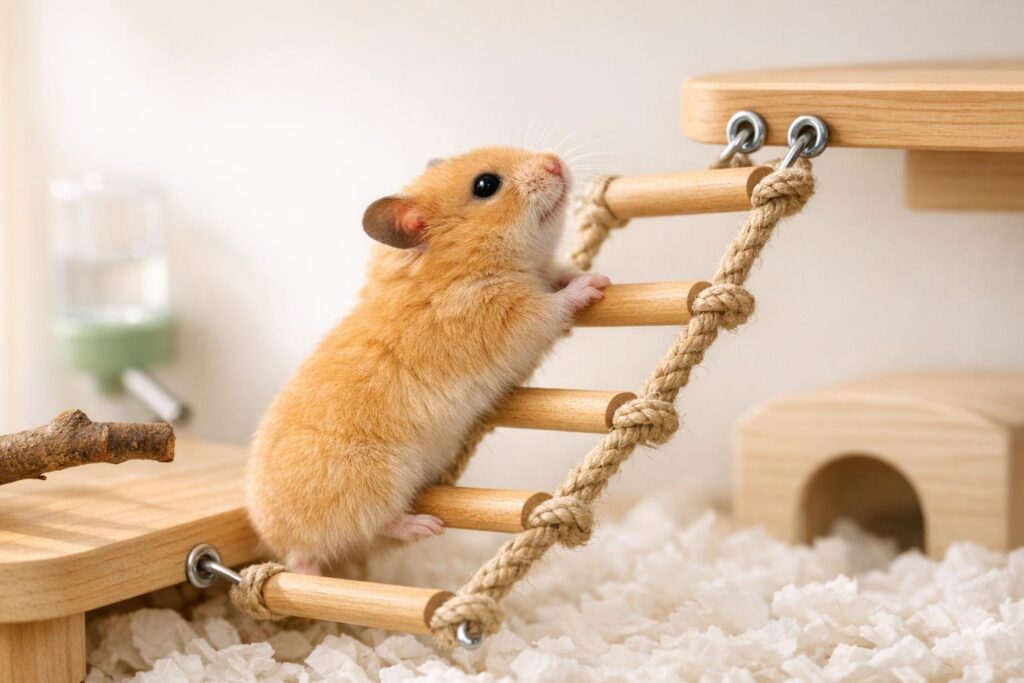
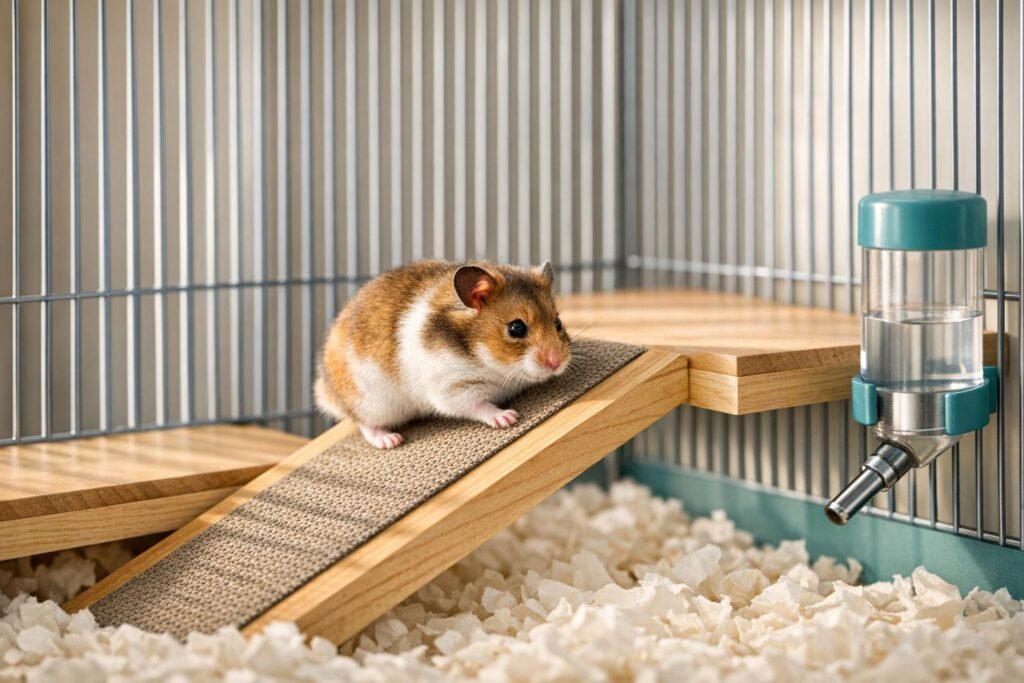
Small exotic pets like rats, mice, and chinchillas love to climb, but their natural instincts can lead to injuries in poorly designed cages. Research highlights how limited climbing space can harm their physical and mental health. For example:
- Mice in small cages show slower sensory-motor responses and higher stress levels.
- Hamsters often display stress behaviors, like repetitive bar climbing, in barren cages.
- Chinchillas need tall enclosures with proper spacing to prevent falls.
Key takeaways for safer cages:
- Cage height and size matter: Rats need at least 10–12 inches to stand upright, while hamsters thrive with 600–800 sq. inches of floor space.
- Safer materials: Replace wire floors and metal ladders with solid surfaces to avoid injuries.
- Species-specific needs: Hamsters prefer deep bedding for burrowing, while chinchillas require staggered shelves for safe climbing.
Well-designed cages improve pets’ health, reduce stress, and support their natural behaviors. Regular checks and thoughtful setups can make a big difference.
7 Hamster Cage Mistakes 🐹
sbb-itb-e212914
Research Findings on Climbing Risks and Behaviors
A recent study has shed light on how climbing restrictions can affect different species in various ways. In February 2024, researchers from Karadeniz Technical University observed 30 male C57BL/6J mice over six months, housed in three different types of cages. The results revealed that mice in smaller, traditional cages took significantly longer – around 14.91 seconds – to respond to an adhesive stimulus during sensory-motor tests, compared to just 6.42 seconds for those in larger cages. This suggests that limited climbing opportunities can negatively impact sensory-motor coordination. These findings also point to broader physiological effects, which are explored in more detail below.
How Climbing Restrictions Affect Mice
For mice, restricted climbing opportunities lead to notable physical and neurological changes. Mice in smaller cages were heavier, weighing 27.01 ± 0.49 grams compared to 24.93 ± 0.29 grams for those in larger cages. However, this weight gain didn’t translate to better health – these mice showed reduced muscle stamina and higher oxidative stress levels in the frontal cortex. Specifically, oxidative stress levels reached 11.35 nmol/mg in smaller cages, compared to 9.11 nmol/mg in larger environments. These findings highlight how restricted environments can harm both physical and neurological health.
Bar Climbing as a Stress Indicator in Hamsters
Hamsters, particularly Syrian hamsters, respond to restricted environments differently. Instead of purely physical changes, they exhibit behavioral signs of stress. These hamsters display two distinct climbing behaviors: natural exploration and repetitive bar climbing. The latter, often triggered by barren or less enriched environments, is a clear indicator of stress and confinement rather than normal activity. Studies show that such conditions increase stereotypical behaviors and anxiety while curbing exploratory tendencies. On the other hand, enriched environments with climbing structures can reduce anxiety and support healthier behavior.
Considerations for Chinchillas
Applying these findings to chinchillas highlights the importance of thoughtful cage design for small pets. While specific data on climbing-related injuries in chinchillas isn’t available, providing cages with enough height and properly spaced bars can help meet their natural climbing needs. These adjustments not only support their physical activity but also contribute to their overall well-being. The research underscores how cage dimensions and design can play a crucial role in reducing health risks tied to climbing and confinement for small pets.
Comparison: Effects of Climbing Restrictions
Research makes it clear: giving small pets access to climbing structures offers substantial benefits compared to keeping them in restrictive environments. Studies show that animals with climbing opportunities enjoy better physical health and exhibit fewer stress-related behaviors caused by confinement.
Take young rats as an example. At three months old, rats with climbing access engage in climbing activities about 76 times a day. They climb to explore, reach resources, and interact with others socially. However, standard 7–8-inch cages, which lack vertical space, severely limit these natural behaviors. In these restrictive setups, rats perform around 53 lateral stretches daily, compared to just 6 stretches in environments with climbing options. This lack of vertical movement doesn’t just change their behavior – it directly impacts their physical development.
Climbing plays a crucial role in maintaining bone strength and muscle health. Early exposure to climbing helps build muscle memory, keeping animals lean and agile as they grow.
"Ladder-climbing training prevents bone loss and microarchitecture deterioration." – Tang et al., Researchers
But the benefits go beyond physical fitness. Climbing-friendly environments also improve mental well-being. For instance, cages with bars that allow climbing often provide a view of the surroundings, which has been shown to lower stress levels and boost cognitive function in rats. On the other hand, solid-walled cages that restrict climbing tend to trap ammonia and encourage mold growth. This poor ventilation significantly raises the risk of respiratory illnesses, a leading cause of death in pet rats.
These findings highlight why climbing-friendly cage designs are essential – not just for physical health but for overall well-being.
Safety Tips for Cage Design
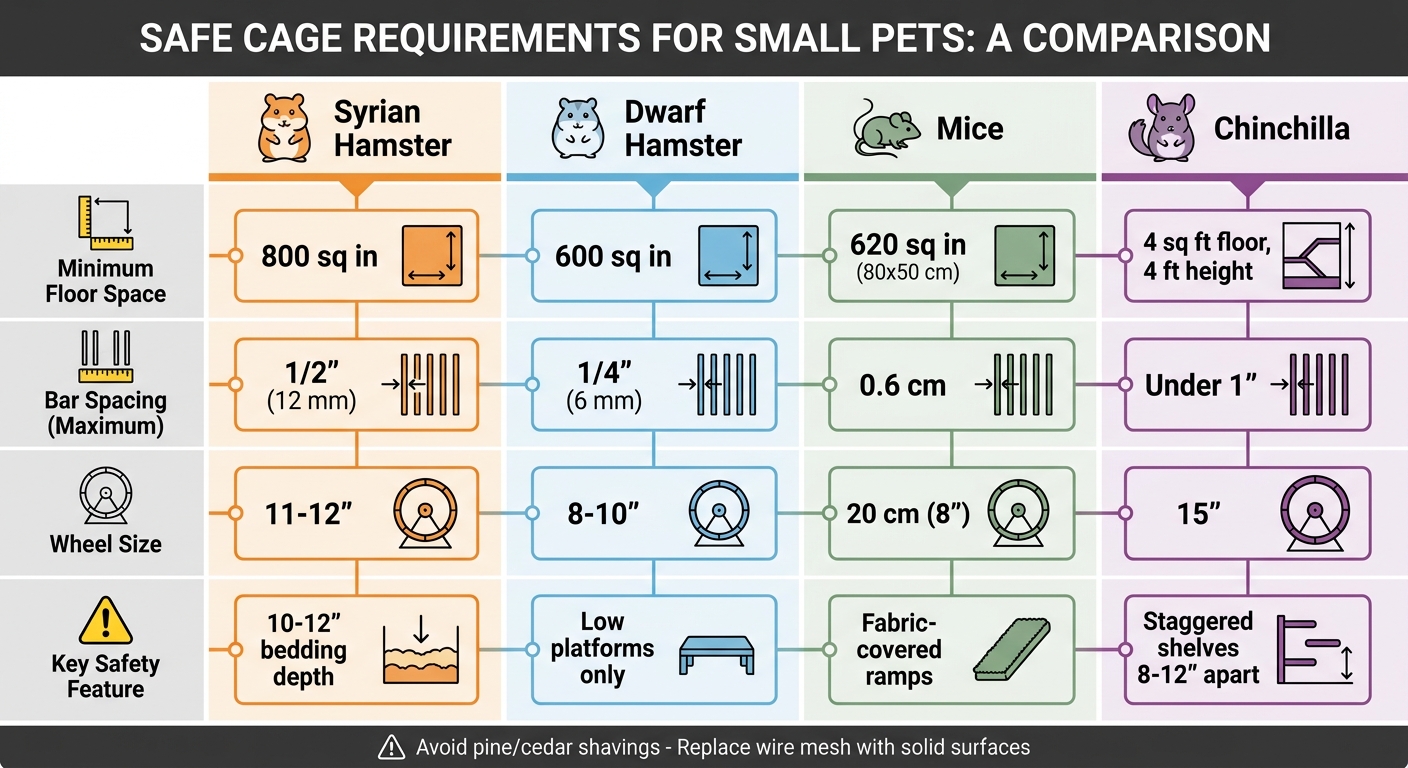
Safe Cage Requirements for Small Pets: Species-Specific Guidelines
Selecting Proper Cage Dimensions
Choosing the right cage size can help reduce stress-related climbing behaviors in small pets. Here’s a quick guide to minimum floor space requirements:
- Syrian hamsters: At least 800 square inches of floor space.
- Dwarf hamsters: Between 600–800 square inches.
- Mice: A minimum of 80 x 50 cm (approximately 620 square inches).
- Chinchillas: Enclosures should measure at least 2′ x 2′ x 4′.
When calculating floor area, focus only on the internal space, excluding areas taken up by ramps or built-in furniture. For hamsters, it’s important to remember they are natural ground-dwellers, not climbers. As PetCareLab explains:
"Multi-level cages look fun, but hamsters are not climbers like rats. They’re ground-and-burrow animals. Extra floors don’t replace ground space, and high falls are a real injury risk".
Providing 6–12 inches of bedding allows for natural burrowing and helps cushion falls. These dimensions are the starting point for creating a safe and secure environment.
Making Cage Features Safer
Bar spacing plays a big role in keeping your pet safe and preventing escapes. Here are the recommended bar spacing guidelines:
- Syrian hamsters: No wider than 1/2 inch (12 mm).
- Dwarf hamsters: No wider than 1/4 inch (6 mm).
- Mice: Maximum of 0.6 cm.
- Chinchillas: Under 1 inch.
Horizontal bars are a better option for climbing safety. Additionally, wire mesh flooring should be replaced with solid surfaces to prevent foot injuries like bumblefoot. If mesh platforms or ramps are present, cover them with washable fabric or sisal for better grip. Replace metal ladders with wood or log-style ones to avoid limb entrapment. Adding hammocks, ropes, or tunnels beneath high platforms can also help cushion accidental falls.
Customizing these features to match your pet’s specific needs ensures a safer environment.
Adjustments for Different Species
Each species has unique needs when it comes to their cage setup. Here’s how to make adjustments:
- Mice: These agile climbers benefit from vertical space. Cover ramps with fabric to prevent slipping and place soft bedding or hammocks under platforms to cushion falls. Keeping platforms close together can further reduce the risk of injuries.
- Hamsters: Hamsters lack good depth perception, making them prone to falls. Platforms should remain low and stable, serving as bases for accessories like wheels or sand baths. Providing 10–12 inches of bedding depth can discourage bar climbing, while Syrian hamsters need 11–12 inch wheels to prevent spine issues.
- Chinchillas: Known for their jumping abilities, chinchillas need tall enclosures with staggered shelves spaced 8–12 inches apart for safe landings. Ramps should have an incline of less than 30–35° and a textured surface for traction. They also require 15-inch flat exercise wheels and should never walk on wire mesh surfaces. Keep their environment between 55–70°F, avoiding temperatures above 80°F.
| Species | Min. Floor Space | Bar Spacing | Wheel Size | Safety Feature |
|---|---|---|---|---|
| Syrian Hamster | 800 sq in | 1/2" (12 mm) | 11–12" | 10–12" bedding depth |
| Dwarf Hamster | 600 sq in | 1/4" (6 mm) | 8–10" | Low platforms only |
| Mice | 620 sq in (80×50 cm) | 0.6 cm | 20 cm (8") | Fabric-covered ramps |
| Chinchilla | 4 sq ft floor, 4 ft height | 1" | 15" | Staggered shelves 8–12" apart |
Lastly, avoid using pine or cedar shavings, as they can cause respiratory issues. If wire cages aren’t suitable, glass tanks or bins with mesh lids can provide proper ventilation while keeping your pet safe.
Conclusion: Safe and Enriching Cage Environments
Understanding the unique needs of small pets is key to creating a safe and comfortable home. For example, rats thrive in vertical environments, while hamsters – ground-dwelling animals with poor depth perception – need setups focused on safety at ground level. As PetCareLab wisely notes:
"The ‘minimum’ that keeps a hamster alive is not the same as the minimum that lets a hamster thrive".
When it comes to cage design, taller isn’t always better. While hamsters can technically survive falls from heights up to 15 feet, such accidents often result in broken bones, internal injuries, or even spinal trauma. Their safe jumping range is only 4 to 6 inches. To prevent these risks, prioritize large floor spaces and deep bedding – 10 to 12 inches is ideal – over multi-tiered designs that increase the likelihood of dangerous falls.
Each species has its own requirements. For instance, gerbils need 8 to 12 inches of bedding for burrowing, and barred cages can pose risks of limb injuries for them. Designing cages that align with the natural behaviors of your pet not only ensures safety but also creates an environment where they can truly thrive.
Regular cage inspections can also go a long way in maintaining safety. Look out for loose screws, unstable platforms, improper bar spacing, or gaps that could lead to accidents. Simple adjustments, like replacing wire mesh flooring with solid surfaces, using textured ramps for better grip, and securing heavy items like wheels on stable bases, can make a huge difference. By combining thoughtful design with these safety checks, you can create a home that supports your pet’s well-being and natural instincts.
FAQs
How do I know if my pet’s cage is too small?
To figure out if your pet’s cage is the right size, pay attention to how they move. They should be able to turn around, stretch out, and move comfortably without restrictions. For birds, this means having enough space to move between perches and fully extend their wings. Small animals like hamsters need plenty of floor space, deep bedding, and bars spaced safely to prevent escapes. If your pet looks cramped or can’t behave naturally, it’s a sign the cage is too small and needs an upgrade to ensure their comfort and health.
What cage features most often cause climbing injuries?
Wire cages can often lead to climbing-related injuries for small pets. Hamsters, for example, might reach through the cage wires and accidentally get their limbs caught. If they fall while stuck, this could lead to broken bones or even internal injuries. To help keep your pet safe, choose a cage designed with safety in mind – one that minimizes the chances of such accidents.
How can I stop stress bar-climbing without making the cage taller?
To help reduce stress-related bar-climbing without making the cage taller, focus on adding enrichment that encourages natural behaviors like foraging or digging. You can introduce items like tunnels, platforms, or toys that promote exploration and activity across different levels of the cage. Make sure the cage provides plenty of horizontal space and a variety of features to keep your pet engaged. Additionally, sticking to a consistent routine and reducing environmental stressors can go a long way in curbing this behavior.