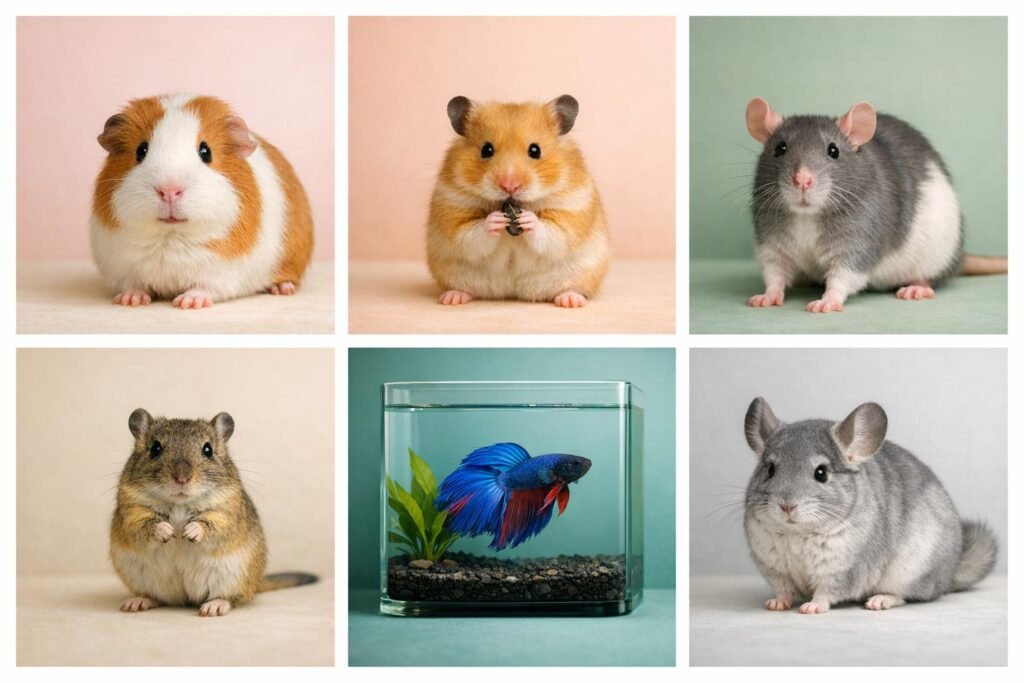
Getting your first pet? Small pets are a great choice for beginners. They’re compact, low-maintenance, and perfect for kids or anyone new to pet ownership. From guinea pigs to betta fish, each type has its own personality, care needs, and costs. Here’s a quick breakdown to help you decide:
- Guinea Pigs: Social and gentle, they need companionship and daily Vitamin C.
- Hamsters: Independent and nocturnal, ideal for small spaces but prefer solitude.
- Rats: Intelligent and interactive, they love learning tricks and bonding with owners.
- Gerbils: Energetic diggers, great for observation and easy to care for.
- Betta Fish: Vibrant and solitary, perfect for those who prefer pets they don’t handle.
- Chinchillas: Long-lived and unique, they require cool temperatures and special care.
Key Tips:
- Match the pet’s habits to your lifestyle (e.g., nocturnal hamsters for night owls).
- Budget for initial setup costs and ongoing expenses like food and vet care.
- Create a safe, clean, and quiet environment tailored to your pet’s needs.
This guide covers everything from choosing the right pet to their daily care, helping you avoid common mistakes and ensuring your new companion thrives.
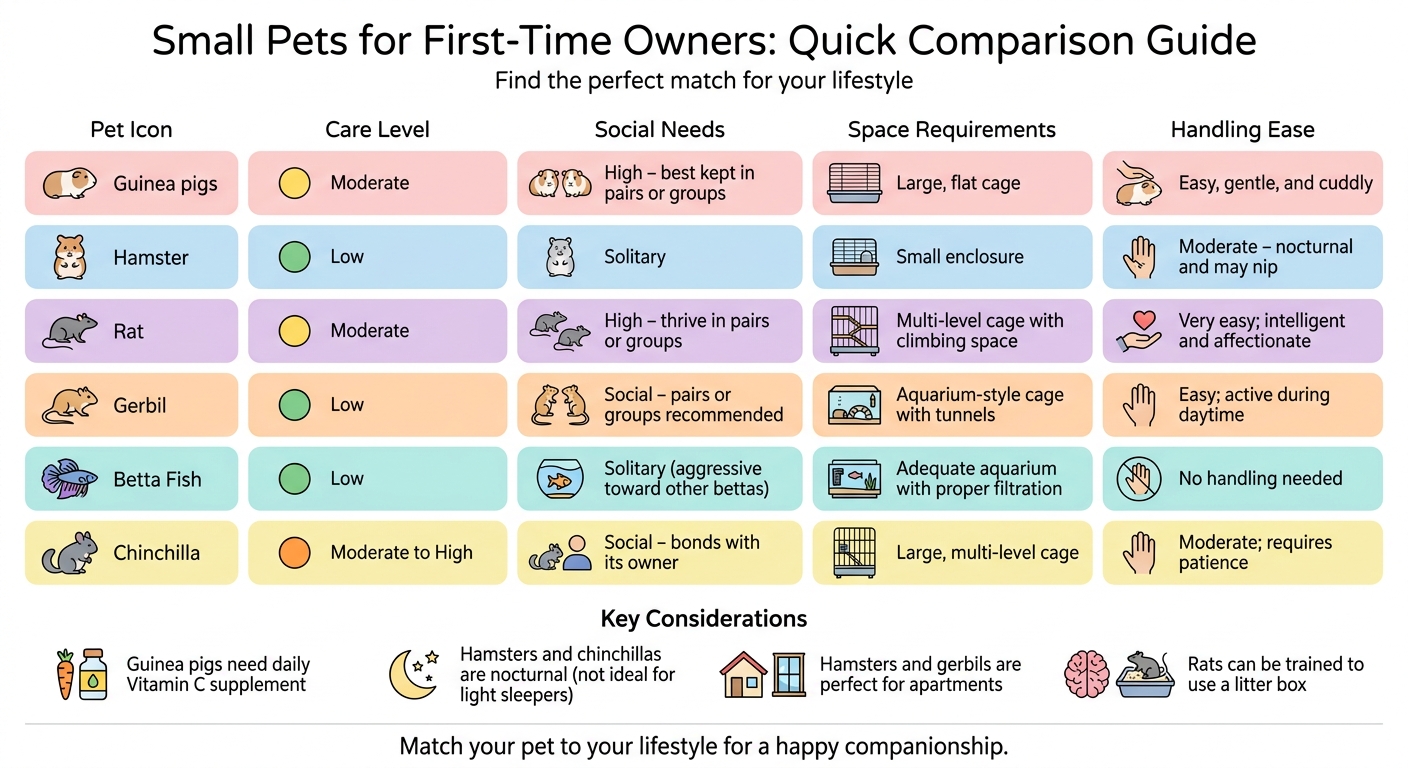
Small Pets Comparison Guide: Care Level, Social Needs, and Space Requirements for Beginners
Tiny Pets That are Easy to Take Care of
sbb-itb-e212914
How to Choose the Right Small Pet
Picking your first small pet isn’t just about how cute they look – it’s about ensuring their needs align with your lifestyle, space, and budget. A mismatch can lead to stress for both you and your new companion. As Nicholas Thomson wisely states, "Choosing the right small pet is about more than cuteness – it’s about compatibility".
Think about your daily schedule. How much time can you realistically spend caring for and interacting with a pet? Are you often away from home, or do you work night shifts? Some pets, like ferrets, require hours of daily playtime outside their cage, while others, like hamsters, are more independent. Your living situation also plays a big role. For instance, a nocturnal hamster running on its wheel might not be ideal in a small apartment if you’re a light sleeper. Once you’ve considered these factors, it’s time to explore the different types of small pets to find the right match.
Types of Small Pets Available
The world of small pets offers a surprising variety, each with its own personality and needs. Guinea pigs, for example, are social and affectionate, making them great for families with children who want an interactive pet. They thrive in pairs, and in some places, like Switzerland, it’s actually required by law to keep them with a companion. Hamsters, on the other hand, are independent and nocturnal, making them a better fit for night owls or those with limited daytime availability.
Rats are incredibly intelligent and can learn tricks while forming strong bonds with their owners. They need a habitat with vertical space for climbing and do best with at least one companion. Gerbils, always busy digging and exploring, are fun to watch and full of energy. If you prefer a pet you don’t need to handle, betta fish are colorful and relatively low-maintenance, offering a more observational kind of companionship. Chinchillas, with their need for cool temperatures and regular dust baths, are a bit more specialized but can be a unique addition to the right home.
Before deciding, check local regulations. Some areas have restrictions or require permits for exotic pets like ferrets and hedgehogs.
Assessing Your Living Space
Your living space plays a huge role in determining which pet will thrive. It’s not just about square footage but about having the right setup. For example, chinchillas need multi-level habitats for jumping, while rabbits require a secure room or a spacious enclosure rather than a small cage.
Temperature is another key factor. Use a thermometer to monitor the area where you plan to house your pet. Hamsters, for instance, can enter a hibernation-like state if it gets too cold, while other small pets may struggle in extreme heat. Avoid placing cages in direct sunlight or near drafts to prevent overheating or chilling.
Also, think about the activity level in your home. As Small Pet Select notes, "Too much activity can stress some small pets, so try to choose a location that minimizes disturbances and loud noises". Social pets like guinea pigs might enjoy being in a central family area, but nocturnal or shy pets may do better in quieter spots. If you live in a studio apartment, consider how late-night activity from your pet might affect your sleep. Ventilation is also critical – good airflow helps reduce odors and keeps your pet healthy, but avoid placing cages near air conditioners, heating vents, or areas with strong cleaning chemicals.
Once your space is ready, it’s time to think about the financial side of pet ownership.
Understanding the Costs
After finding a pet that fits your lifestyle and space, it’s essential to consider the financial commitment. Adoption fees are just the beginning. As Anti-Cruelty reminds us, "It is important to remember that there is more to owning a pet than the initial adoption fee and to be aware of the annual costs of pet ownership before bringing home a new furry friend".
Start-up costs can add up quickly. You’ll need to budget for essentials like cages, bedding, food and water bowls, grooming tools, and an initial vet check. These one-time expenses can be higher for pets requiring specialized habitats.
Then there are the ongoing costs. High-quality food, fresh bedding or litter, and routine veterinary care are non-negotiables. It’s also smart to set aside an emergency fund for unexpected medical issues, as small pets can develop health problems like dental issues or skin infections. Exotic pets, such as hedgehogs and ferrets, often need specialized veterinary care, which can be pricier than standard services.
Finally, think about the total lifetime cost. A hamster might only live 2 to 3 years, but a rabbit could live 8 to 12 years, meaning over a decade of expenses for food, supplies, and medical care. Make sure you’re financially prepared not just for the short term, but for the entire lifespan of your new pet.
Care Basics for Popular Small Pets
Once you’ve chosen a pet that fits your space, lifestyle, and budget, the next step is understanding their daily care needs. Each type of small pet has its own requirements, from diet and housing to social interaction. Getting these details right ensures your pet thrives and makes your experience as a pet owner more enjoyable. Here’s a quick guide to caring for some of the most popular small pets.
Guinea Pigs: Social and Gentle Companions
Guinea pigs are social herbivores that thrive with companionship. In fact, in Switzerland, it’s illegal to own just one guinea pig due to their strong need for social interaction. If you’re bringing guinea pigs home, plan on adopting at least two.
Their diet revolves around unlimited Timothy hay, which supports digestion and keeps their teeth from overgrowing. Add about 1/8 cup of pellets daily and supplement with fresh vegetables. Because guinea pigs can’t produce Vitamin C, they need daily sources of it – either through Vitamin C–rich veggies or specially formulated pellets – to avoid scurvy.
When it comes to housing, guinea pigs prefer wide, flat spaces over multi-level cages, as they are uncomfortable with heights. A pair needs at least 10.5 square feet of space. Use hardwood shavings or hay for bedding, but stay away from cedar and untreated pine, which can harm their respiratory systems. Clean soiled bedding daily and wash food and water bowls to prevent mold. A full cleaning with hot water and soap should be done weekly.
If you’d like a quieter, more independent pet, hamsters might be a better fit.
Hamsters: Independent and Low-Maintenance
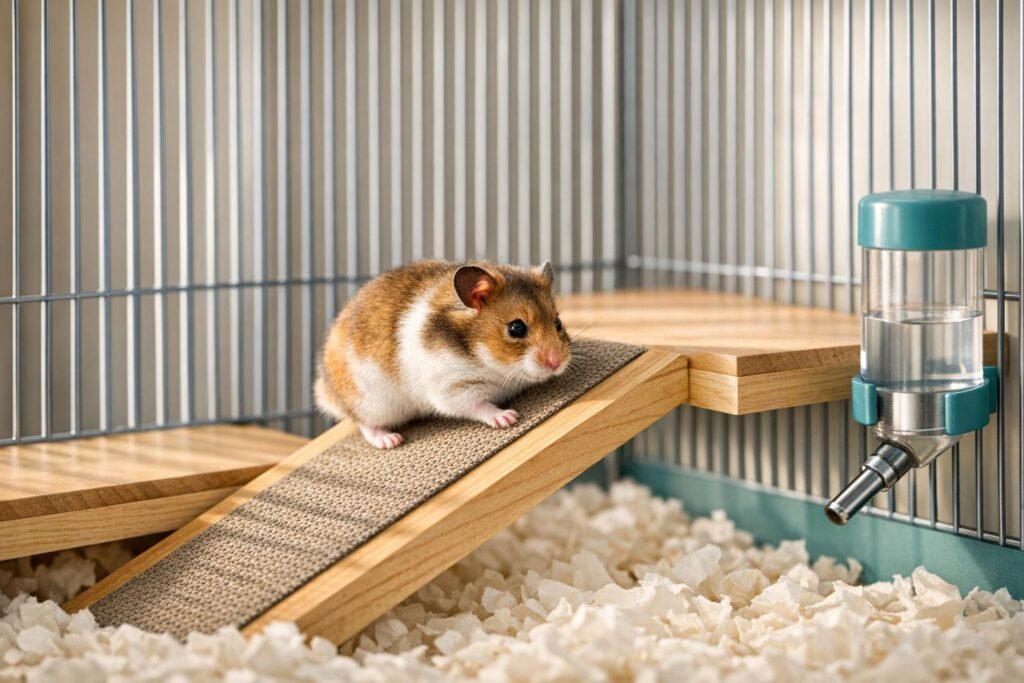
Hamsters are solitary and nocturnal, making them a good choice if you’re not home during the day. Syrian hamsters, in particular, must live alone as they tend to fight if housed together. Their cage should measure at least 24 inches by 16 inches and use hypoallergenic, paper-based bedding.
A running wheel is essential for their nightly 3–4 hours of exercise. Make sure the wheel has a solid surface to prevent injuries to their feet and tail. It should also be large enough to keep their back straight while running.
Hamsters eat a mix of pellets, seeds, and small amounts of vegetables. They’re known for hoarding food in their cheek pouches – up to 50% of their body weight! Remove uneaten fresh produce daily to avoid mold.
Temperature stability is crucial. If the temperature drops below 59°F (15°C), hamsters can enter a dangerous hibernation-like state. Keep their cage in a draft-free area and handle them gently, always supporting their bottom. Handling them properly from the start helps build trust and prevents behavioral issues.
For those seeking a more interactive pet, rats are a fantastic option.
Rats: Smart and Interactive Pets
Rats are intelligent, social, and trainable, forming strong bonds with their owners. Unlike hamsters, they should live with at least one same-sex companion. They require a tall, multi-level cage, ideally 28 inches long by 14 inches wide by 17 inches high, to support climbing and exploration.
Use paper-based bedding or litter pellets, and provide plenty of climbing structures and problem-solving toys. Rats enjoy learning tricks and respond well to training with small treats like fruit or veggies.
Their diet includes pellets and fresh produce, but avoid foods like onions, garlic, avocado, apple seeds, chocolate, and rhubarb, which are toxic to them. Clean their cage daily to remove soiled bedding and uneaten food.
When handling, never pick up a rat by its tail, as this can cause severe pain and injury. Instead, scoop them up with both hands. Gentle, consistent handling builds trust and prevents stress-related behaviors.
If you prefer an active pet that loves to dig, gerbils might be the right choice.
Gerbils: Active and Entertaining
Gerbils are energetic burrowers that thrive in same-sex pairs or groups. Each gerbil needs about 5 gallons of space, so a pair requires a 10-gallon tank.
Deep bedding is essential for their natural digging and tunneling behaviors. Use 4–6 inches of hemp or aspen shavings, filling about one-third of the tank. Gerbils communicate through "thumping" their hind legs, signaling excitement or stress.
Feed them a mix of pellets, seeds, and small amounts of fresh vegetables. Gerbils drink very little water – an adult typically consumes just 4 mL per day. Always ensure fresh water is available.
Include a solid-surface exercise wheel and untreated wood chew toys to help manage their ever-growing teeth. Weekly deep cleaning with hot water and soap keeps their environment healthy.
For a low-maintenance, colorful companion, consider betta fish.
Betta Fish: Colorful and Easy to Care For
Betta fish are vibrant, low-maintenance pets ideal for those who enjoy observing rather than handling their pets. They need a minimum 5-gallon tank with a heater to maintain a water temperature of 76°F to 82°F. A gentle filter is best, as strong currents can stress them and damage their fins.
Feed them high-quality betta pellets once or twice daily, giving only what they can finish in 2–3 minutes. Overfeeding can lead to water quality issues and health problems. Perform partial water changes (25–30%) weekly to keep the tank clean.
Bettas are territorial and should be housed alone or with carefully chosen tank mates. Provide hiding spots with live or silk plants – avoid plastic decorations that might tear their fins. Observing your betta regularly helps you catch health issues early.
If you’re up for a long-term commitment and specialized care, chinchillas might be the perfect pet.
Chinchillas: Exotic Pets with Special Needs
Chinchillas are long-lived exotic pets, often reaching 15–20 years. They require a cool environment, thriving in temperatures between 55°F and 70°F. Heat above 80°F can cause fatal heat strokes, so air conditioning may be necessary in warmer climates.
Provide a tall, multi-level cage (minimum 2′×2′×4′) to accommodate their love of jumping. Use a solid-bottom setup with 1–2 inches of paper-based bedding or aspen shavings to protect their feet. Avoid wire mesh floors, which can cause pressure sores.
"Chinchillas have a delicate skeleton. Never grab a chinchilla by the tail or limbs and be careful not to hold them too tightly." – Melissa Witherell, DVM
Chinchillas need unlimited Timothy hay and specialized pellets. They also require dust baths 2–3 times a week for 10–15 minutes to maintain their dense fur. Leaving the dust bath in the cage can lead to eye irritation, so remove it after each use. Provide chew toys like untreated wood or pumice stones to manage their growing teeth.
Keep humidity below 50% and ensure good ventilation to prevent respiratory issues. Spot-clean daily and deep clean weekly to maintain a healthy environment.
Supplies and Setup You’ll Need
Once you’ve sorted out your living space and budget, it’s time to prepare your pet’s home. A well-thought-out setup from the start can help reduce stress for your new companion and keep them healthy. Here’s a breakdown of the essentials you’ll need to ensure your pet is comfortable and safe.
Cages and Enclosures
The right enclosure is key to supporting your pet’s natural behaviors. For instance, a Syrian hamster needs a minimum of about 24 inches by 16 inches, though a larger space of 31 inches by 20 inches is even better. Guinea pigs need enclosures starting at 24 inches by 16 inches, but they’ll thrive with more room, like 32 inches by 20 inches. Chinchillas require tall, multi-level cages measuring at least 24 inches by 18 inches by 32 inches to allow space for jumping.
Material matters. Metal or glass enclosures are ideal for pets like rats and hamsters that love to chew. Avoid wire flooring – solid bases are much safer for their delicate feet. For burrowing animals like hamsters and gerbils, tanks or plastic habitats with mesh lids are great options, as they allow for 6–8 inches of bedding depth.
Bar spacing is another crucial consideration. Keep gaps under 0.4 inches (about 1 cm) to prevent escapes. Place the enclosure in a quiet spot, away from direct sunlight, drafts, and noisy areas. Most small pets thrive in temperatures between 68°F and 79°F, but chinchillas are particularly sensitive to heat and should stay in cooler conditions, under 77°F (25°C).
For bedding, stick to paper-based or aspen options. Cedar and pine can harm your pet’s respiratory system. Paper-based bedding works well for hamsters and hedgehogs due to its hypoallergenic properties, while aspen shavings are highly absorbent and great for guinea pigs and rabbits, who also benefit from the best small pet beds for extra comfort.
Once the enclosure is ready, focus on setting up a proper diet and hydration system.
Food and Nutrition
Heavy ceramic bowls are a smart choice – they’re sturdy and won’t tip over. For pets with hay-based diets, like guinea pigs, rabbits, and chinchillas, hay racks are essential to keep Timothy hay clean and accessible. Water bottles with metal sipper tubes work for most species, but some pets may prefer shallow bowls. Just make sure to clean them daily to avoid bacteria buildup.
Before your pet arrives, stock up on species-specific food. Guinea pigs, for example, need unlimited Timothy hay and Vitamin C-rich vegetables like bell peppers. Hamsters thrive on a mix of pellets, seeds, and small amounts of fresh veggies, while rats enjoy pellets paired with fresh produce. Chinchillas require specialized pellets and unlimited Timothy hay.
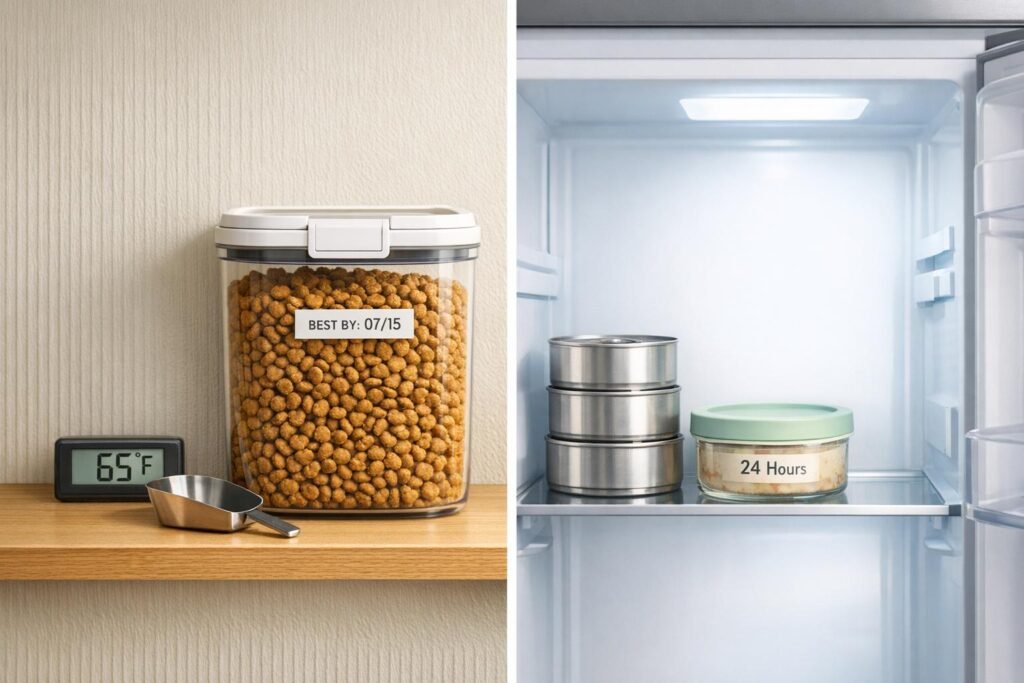
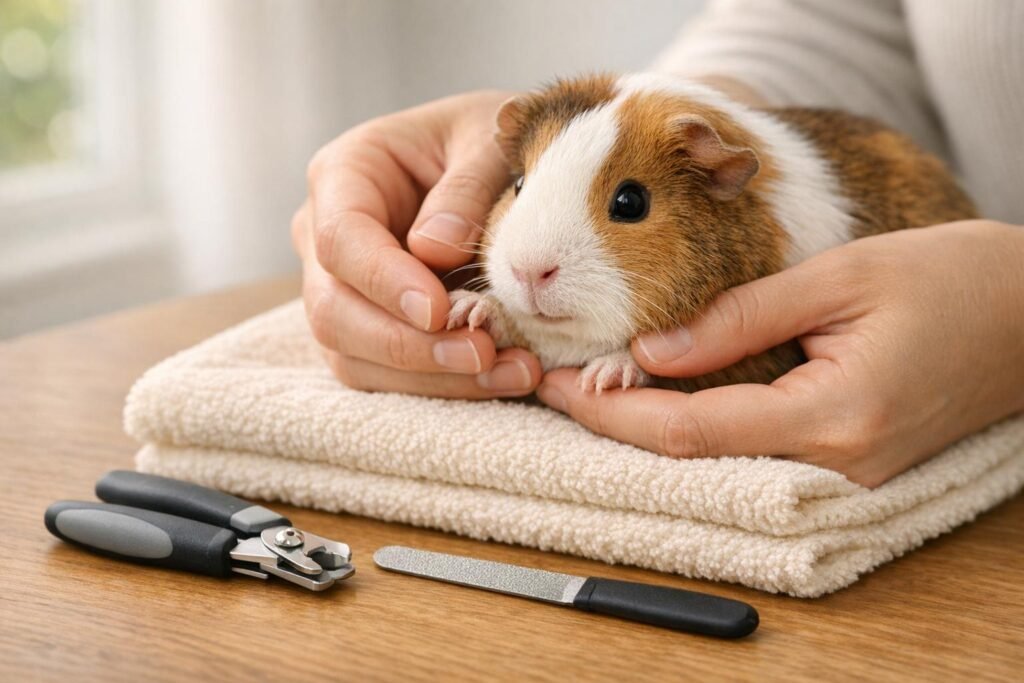
It’s also a good idea to have a small first aid kit on hand. Include items like gauze, antiseptic wipes, and styptic powder for minor injuries during nail trimming. Store food in airtight containers to keep it fresh and discourage pests.
Once food and water are sorted, focus on keeping your pet entertained and active.
Toys and Enrichment
Enrichment is essential for reducing stress and encouraging natural behaviors like sniffing, chewing, and playing. It also helps prevent boredom and destructive habits.
Exercise is a must. For hamsters and gerbils, a solid-surface exercise wheel at least 8 inches in diameter prevents spinal stress and foot injuries. Rats and chinchillas enjoy climbing structures and multi-level platforms, while guinea pigs prefer tunnels and hideouts for horizontal exploration.
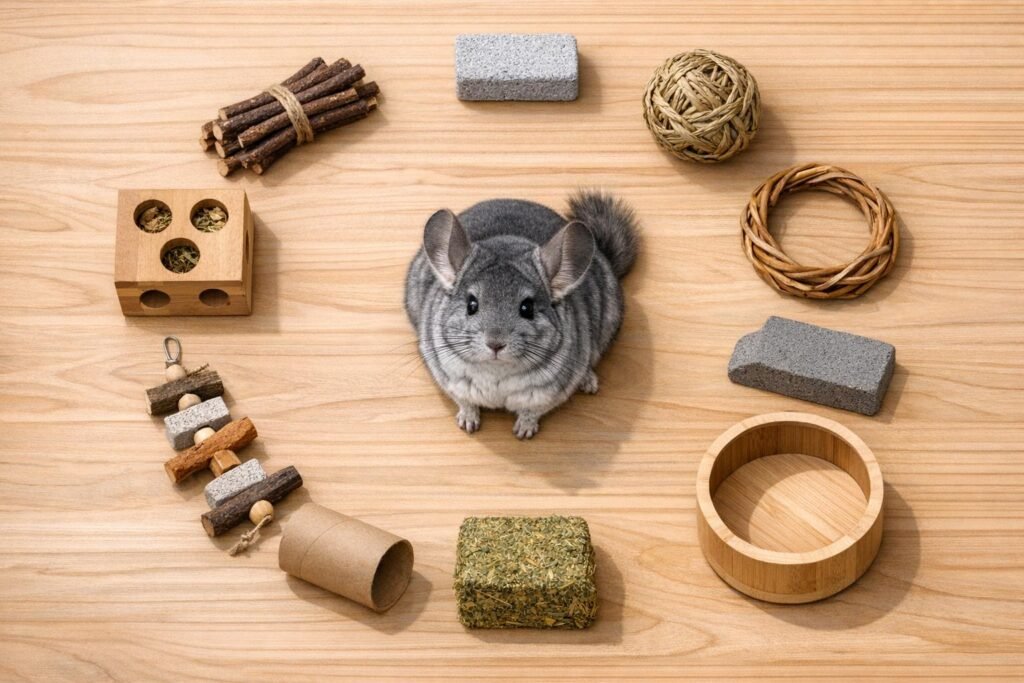
Chew toys are another necessity for pets with continuously growing teeth. Untreated wood blocks and cardboard tubes are excellent options for promoting dental health.
For a fun DIY project, try rolling treats inside a toilet paper tube to encourage foraging. Always supervise your pet with new toys and remove anything that becomes worn or unsafe.
If you have a chinchilla, don’t forget their dust baths. These are critical for keeping their dense fur clean. Offer dust baths regularly and clean up any leftover dust to avoid eye irritation.
Mistakes New Owners Should Avoid
Bringing a new pet into your home is exciting, but it’s also a big responsibility. Even after choosing a pet that suits your lifestyle, avoiding common mistakes is crucial for their health and happiness. Let’s look at some of the most frequent errors and how to steer clear of them.
Skipping Regular Health Checks
One common mistake is waiting until your pet looks sick before visiting the vet. This can be risky because small animals are masters at hiding illness. By the time symptoms become obvious, the condition might already be severe.
Make sure to schedule a vet visit soon after adoption. This initial checkup helps confirm your pet’s health and establishes a relationship with a veterinarian. Routine exams can catch potential issues early, like dental problems or other risks, before they escalate into emergencies. Emergency vet visits can range from $100 for an exam to as much as $5,000 for surgery and hospitalization. Considering that around 35% of adults lack the funds to cover unexpected expenses over $400, regular checkups are a smart way to save money in the long run.
"When it comes to your pet’s health, the best offense is a good defense. Eating well, exercising, and regular doctor visits are all good advice for humans, and the same goes for our dogs [and other pets]."
- Dr. Efrem Hunter, DVM, MBA, Director of Veterinary and Scientific Affairs at Blue Buffalo
Pay attention to subtle signs of illness, like reduced appetite, lethargy, or changes in droppings. Catching these early makes treatment easier and less costly.
Now, let’s talk about how handling your pet the right way can make a big difference.
Improper Handling and Socialization
Another mistake new owners make is rushing to handle their pet right away. For small mammals, being picked up can feel like a predator attack, causing them significant stress. Forcing interaction too soon can damage trust and lead to long-term behavioral problems. Instead, follow the 3-3-3 rule: give your pet 3 days to decompress, 3 weeks to settle into a routine, and 3 months to build a bond. During those first few days, create a quiet, safe space where they can relax without distractions from other pets or visitors. Using small treats like fruits or veggies during handling sessions can help your pet associate human interaction with positive experiences.
When you do start handling your pet, proper technique is essential. Gently grasp small mammals around their shoulders while supporting their bottom with your other hand. Never pick up a rat, gerbil, or mouse by its tail, as this can cause severe pain and injury. It’s also a good idea to handle pets while seated to prevent accidental falls.
Social needs vary widely by species. Guinea pigs and rats thrive with companions of their own kind, and in some places, like Switzerland, it’s illegal to own just one guinea pig because of the risk of loneliness. On the other hand, Syrian hamsters are solitary and may fight if housed together. Research your pet’s specific social requirements to ensure their well-being.
"Inconsistency can lead to confusion, which can lead to a lack of trust."
- Jasmine Sawatzky, Author
Daily handling, even for just a few minutes, helps build trust and keeps your pet comfortable with human contact. It also makes it easier to notice any changes in their health or behavior.
Finally, creating a safe and appropriate environment is just as important as handling and socialization.
Ignoring Environmental Requirements
One of the biggest misconceptions about small pets is that they’re "low-maintenance." This assumption can lead to neglect of their needs. Maintaining a clean and properly ventilated enclosure is essential. Poor hygiene can cause serious health issues like respiratory infections or wet tail. For example, rats kept in poorly ventilated cages are more likely to develop chronic respiratory problems. Avoid cedar or pine bedding, as their aromatic oils can harm small animals’ respiratory systems.
Nutrition is another critical factor. Feeding table scraps or sugary treats might seem harmless but can cause severe problems like diarrhea in rodents. Make sure your pet’s diet meets their specific nutritional needs.
Mental stimulation is equally important. Without enough enrichment, pets can develop behavioral problems such as biting, bar chewing, overgrooming, or even pica (eating non-food items). Provide species-appropriate toys, tunnels, and climbing structures to keep them engaged. Pay attention to any sudden changes in behavior or appearance – these could signal that something in their environment, like lighting or diet, needs adjustment.
Comparison Table: Small Pets for Beginners
Comparison Table Details
Here’s a quick reference table to help you weigh the pros and cons of various small pets. It highlights care needs, social behaviors, and practical factors to make your decision easier.
| Pet Type | Care Level | Social Needs | Space Requirements | Handling Ease |
|---|---|---|---|---|
| Guinea Pig | Moderate | High – best kept in pairs or groups | Large, flat cage | Easy, gentle, and cuddly |
| Hamster | Low | Solitary | Small enclosure | Moderate – nocturnal and may nip |
| Rat | Moderate | High – thrive in pairs or groups | Multi-level cage with climbing space | Very easy; intelligent and affectionate |
| Gerbil | Low | Social – pairs or groups recommended | Aquarium-style cage with tunnels | Easy; active during daytime |
| Betta Fish | Low | Solitary (aggressive toward other bettas) | Adequate aquarium with proper filtration | No handling needed |
| Chinchilla | Moderate to High | Social – bonds with its owner | Large, multi-level cage | Moderate; requires patience |
Key considerations:
- Guinea pigs need a daily Vitamin C supplement.
- Rats can be trained to use a litter box.
- Nocturnal pets like hamsters and chinchillas might not suit light sleepers.
- Hamsters and gerbils are ideal for compact living spaces, such as apartments .
"Rats as pets might not immediately come to mind if you’re not familiar with them, but they can actually make very loving and loyal companions."
This summary complements the care advice shared earlier, helping you align your pet choice with your lifestyle. With these details in mind, you’re one step closer to welcoming the ideal pet into your home.
Conclusion: Bringing Your Small Pet Home
You’ve explored various small pets, their care needs, and the essentials required to welcome them into your life. Now, it’s time to prepare your home for their arrival. Make sure the cage is fully set up before your pet comes home – install all accessories, fill water bottles, place food bowls, and, for burrowing species like hamsters, lay down at least 6–8 inches of bedding. Position the enclosure in a quiet spot, away from direct sunlight, drafts, and loud noises. This thoughtful preparation helps ease your pet’s transition into their new environment.
The first few days are especially important for your pet’s adjustment. During this time, they may seem shy, eat less, or hide more often. Keep the surroundings calm and give them space to settle in. As Sarah A. Neikam, Marketing Director at SPCA Albrecht Center, notes:
"The initial days in a new home can be very overwhelming for your small pet. Expect signs of stress, such as hiding or hesitating to eat."
Within the first week, it’s a good idea to schedule a check-up with a veterinarian who specializes in small animals. This initial visit helps catch any early health concerns and provides you with guidance to establish the best care practices.
Building trust with your new pet takes time and consistency. The 3-3-3 rule is a great guideline to follow: three days to decompress, three weeks to settle in, and three months to truly bond. Once your pet has adjusted, you can begin gently handling them and maintaining a routine for feeding and playtime. For social species like guinea pigs or rats, companionship – whether from humans or another of their kind – can greatly enhance their well-being.
With the right preparation, patience, and commitment, your small pet will soon become a cherished part of your life. By following the care tips outlined in this guide, you’ll create a safe and nurturing environment where your new companion can thrive.
FAQs
Which small pet is best for my daily schedule?
The best small pet for your lifestyle depends on the time you can commit to their care. Hamsters and similar rodents are great for busy individuals since they only need basic daily upkeep. On the other hand, pets like rabbits or ferrets thrive with more interaction and regular grooming, making them a better match for those with more flexible schedules. It’s important to align your routine with the care requirements of the pet to create a happy and healthy bond.
How much does it cost per month to own a small pet?
The monthly expense of having a small pet generally falls between $20 and $50. This can vary based on factors such as the type of pet, its unique requirements, and where you live. Typical costs include essentials like food, bedding, and other necessary supplies.
What are the first signs my small pet needs a vet?
Changes in your small pet’s behavior can be an early signal that something’s not right. Look out for things like sleeping more than usual, being less active, or changes in litter box habits. These subtle shifts might point to underlying health issues that need attention. It’s always a good idea to consult a veterinarian quickly to keep your pet healthy and happy.