
Choosing the right brush for your pet is more than just keeping them looking good – it’s key to their comfort and health. Using the wrong brush can irritate their skin or leave tangles, while the right one reduces shedding, improves circulation, and keeps their coat healthy. Here’s how to match the right brush to your pet’s coat type:
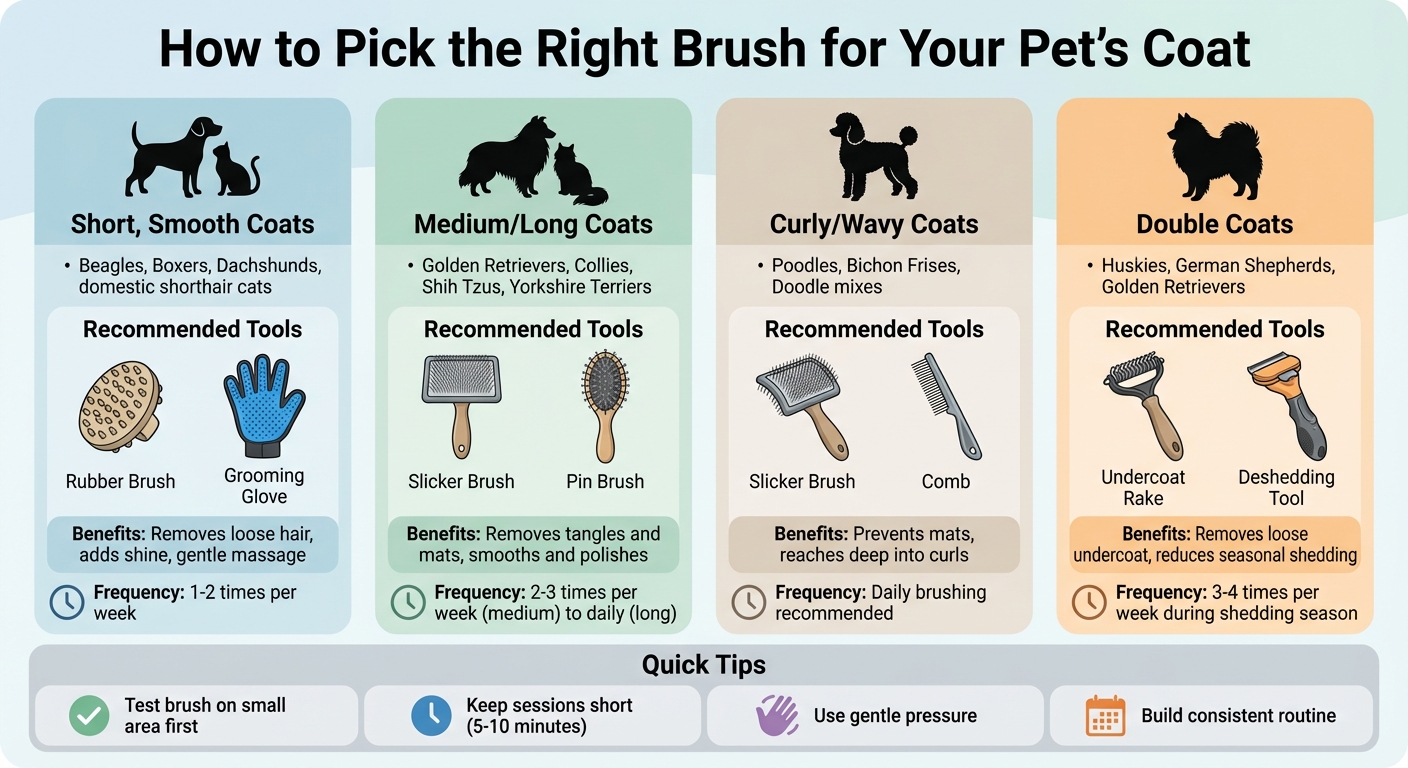
- Short, smooth coats: Use rubber brushes or grooming gloves to remove loose hair and add shine.
- Medium or long coats: Slicker brushes tackle tangles and mats, while pin brushes smooth and polish.
- Curly or wavy coats: Curved slicker brushes prevent mats and reach deep into curls.
- Double coats: Undercoat rakes or deshedding tools remove loose fur during shedding seasons.
Start by identifying your pet’s coat type (length, texture, and undercoat) and check for skin sensitivity. Use gentle brushing techniques, keep sessions short, and create a regular grooming routine. Proper brushing not only keeps your pet’s coat healthy but also strengthens your bond with them.
Pet Brush Selection Guide by Coat Type
What Kind of Brush Should You Use for your Pet? – Grooming Brushes Overview – Gina’s Grooming
Step 1: Identify Your Pet’s Coat Type
Before choosing the right brush, it’s important to understand your pet’s coat. Pick a calm moment when your pet is relaxed, and take a close look at their fur in good lighting. From there, you can assess the coat’s specific characteristics to determine which brush will work best.
Check Coat Length and Texture
Start by observing how the fur lies on your pet’s body, then gently run your fingers through it to get a sense of its texture. Short coats are close to the skin, with hair typically less than 1 inch long, like those of Beagles or smooth-coated guinea pigs. Medium coats have a bit more volume and may show feathering around areas like the tail, ears, chest, or back legs, which is common in many mixed-breed dogs. Long coats are easy to spot, with hair that flows over the sides and tangles easily, as seen in Persian cats or Yorkshire Terriers.
Texture is just as important as length. A silky coat feels smooth to the touch, while curly coats have springy, bouncy hair. Plush coats are dense and soft, while coarse coats feel rough and wiry.
For a thorough assessment, check multiple areas of your pet’s body – like the neck, behind the ears, the belly, and the tail – since coat length and texture can vary across different spots.
Check for an Undercoat
To see if your pet has an undercoat, gently part the fur all the way down to the skin in good lighting. Pets with a double coat will have two layers: a soft, fluffy undercoat close to the skin beneath longer, coarser guard hairs. Double coats often feel thick and padded, and during shedding seasons, you might notice clumps of loose, soft hair – commonly called a "coat blow." On the other hand, pets with a single coat have one consistent layer of fur from root to tip, with more predictable shedding throughout the year.
Since undercoat thickness can differ in various areas, check spots like the neck, shoulders, and thighs for a more accurate evaluation.
Consider Skin Sensitivity and Temperament
While examining the coat, pay attention to how your pet reacts. Signs of sensitive skin include flinching, pulling away, or visible redness, dry flakes, or scabs when you part the fur. Pets with sensitive skin might also lick, chew, or scratch frequently and may dislike firm brushing or stiff bristles.
Take note of your pet’s behavior during grooming. If they hide, tremble, pant, have dilated pupils, or try to escape when a brush appears, they may feel anxious about grooming. In these cases, keep your inspection brief and gentle. Start with soft petting, let them sniff the grooming tools, and offer treats to create a positive experience.
To guide your brush selection in the next steps, jot down a quick description of your observations, such as "short, smooth, single coat, mildly anxious" or "long, silky, double coat, calm." This will help you choose the best tools for your pet’s needs.
Step 2: Learn About Different Brush Types
Now that you’ve figured out your pet’s coat type, it’s time to dive into the world of grooming tools. Each tool serves a specific purpose, and knowing which one to use can make grooming much easier for both you and your furry friend. Let’s break down the main brush types and what they’re best for.
Slicker Brushes
Slicker brushes are designed with a flat or slightly curved head covered in fine, closely spaced metal wires. These wires are angled to glide through fur without snagging, making them ideal for medium to long coats, curly coats, or dense, wooly coats that are prone to tangling. If your pet has a coat like a Poodle, Shih Tzu, or a doodle mix, this is the tool for you.
The main job of a slicker brush is to tackle tangles, mats, and loose undercoat before they become tight or painful. Groomers often use a technique called "line brushing", working in small sections and layers to ensure they reach deep into thick coats. After using a slicker, many professionals follow up with a fine-toothed metal comb to catch any leftover tangles.
When using a slicker brush, apply light pressure to avoid irritating your pet’s skin. If you come across a stubborn mat, it’s better to work it out by hand or use a mat splitter instead of repeatedly brushing the same spot.
Bristle and Pin Brushes
Bristle and pin brushes look similar to human hairbrushes, but they serve different purposes depending on your pet’s coat type.
- Bristle brushes are perfect for pets with smooth, short coats. The densely packed bristles – either natural or synthetic – work on the surface of the coat to remove dust, dander, and loose hair. They also help distribute natural oils, leaving the coat shiny and healthy-looking.
- Pin brushes have longer, widely spaced metal pins, often with rounded tips to protect the skin. These brushes are great for long, silky, or fine coats, as they can detangle knots and give the coat a polished finish.
Many pet stores sell double-sided brushes with bristles on one side and pins on the other, giving you a two-in-one option for detangling and finishing your pet’s coat.
Rubber Brushes and Grooming Gloves
Rubber brushes and grooming gloves are gentle tools with soft rubber or silicone nubs. They’re designed for pets with short, smooth coats, like pit bull–type dogs, short-haired mixed breeds, or domestic shorthair cats. These tools massage the skin while removing loose hair, making them a good option for pets that are nervous about traditional brushes.
Rubber brushes are also great for bath time. The nubs help work shampoo into the coat, ensuring a thorough clean. For smaller pets like guinea pigs or rabbits, grooming gloves can be a gentle alternative that feels more like petting than brushing.
In many households, these tools are a go-to for managing shedding. Loose fur sticks to the rubber, making cleanup easy. They’re especially handy for quick grooming sessions after a walk or for keeping shedding under control in smaller living spaces.
Undercoat Rakes and Deshedding Tools
If you have a pet with a thick, double coat – think shepherds, huskies, or retrievers – undercoat rakes and deshedding tools are your best bet. These tools are designed to pull out loose fur from the undercoat, helping to prevent mats and reduce shedding.
- Undercoat rakes feature long, sturdy metal teeth that reach through the topcoat to the undercoat.
- Deshedding tools, like the popular FURminator, have tightly spaced metal teeth or edges that are more aggressive in removing loose undercoat fur.
These tools are particularly useful during seasonal shedding periods, like spring and fall, when double-coated breeds tend to "blow" their coats. When choosing one, make sure the tooth length matches your pet’s coat. Teeth that are too long can scrape the skin, while teeth that are too short might not reach the undercoat effectively.
Use slow, gentle strokes following the direction of hair growth, and limit use to heavy shedding periods or a few times a week. Overuse can irritate the skin, so keep an eye out for redness, flaking, or signs that your pet is uncomfortable.
sbb-itb-e212914
Step 3: Match Brushes to Your Pet’s Coat
Now that you understand what each brush is designed to do, it’s time to pair the right tool with your pet’s coat type. Choosing the right brush makes grooming easier, more comfortable for your furry friend, and ensures better results. By identifying your pet’s coat characteristics and aligning them with the proper tools, you’ll streamline the grooming process.
Short, Smooth Coats
If your pet has a short, smooth coat – like Beagles, Boxers, Dachshunds, or domestic shorthair cats – you can skip heavy-duty detangling brushes. Rubber brushes or grooming gloves are your go-to options. These tools feature soft rubber nubs that effectively lift loose hair, dead skin, and dirt while gently massaging the skin. This not only keeps your pet clean but also helps distribute natural oils, leaving their coat with a healthy shine. Plus, they’re gentle enough to avoid scratching or irritating your pet’s skin.
Start with a rubber brush to remove loose fur and debris, then finish with a bristle brush to enhance shine. Be sure to move the brush consistently and avoid staying in one spot for too long to prevent friction burns.
Long or Dense Coats
For pets with long or dense coats – think Golden Retrievers, Collies, Shih Tzus, Yorkshire Terriers, or even long-haired rabbits – you’ll need brushes that can reach deeper layers of fur. Slicker brushes are a must-have for this type of coat. They’re designed to penetrate the topcoat and gently remove tangles, mats, and loose undercoat before these issues worsen. Work carefully in small sections, brushing gently to avoid pulling or irritating the skin.
Once you’ve addressed tangles with a slicker brush, switch to a pin brush for the final touches. Pin brushes have widely spaced, rounded pins that glide through long fur without snagging. They’re excellent for smoothing the coat, spreading natural oils, and giving your pet a sleek, polished appearance. Combining a slicker brush and a pin brush will help you manage long coats effectively.
Curly or Wavy Coats
Curly and wavy coats, like those found on Poodles and Bichon Frises, are prone to matting because the curls easily trap loose hair and debris. For these coats, a curved slicker brush works best. Its curved design follows the natural contours of your pet’s body, making it easier to work through dense curls without causing irritation. Opt for brushes with shorter pins and protective tips to keep the grooming experience gentle.
Work in small sections, brushing from the skin outward to prevent tangles from forming. After using the slicker brush, follow up with a fine-toothed comb to catch any remaining knots. This step ensures you’ve reached down to the base of the coat, where mats often begin to form in curly-haired pets.
Step 4: Brush Safely and Build a Routine
Once you’ve chosen the right brush for your pet’s coat, the next step is all about proper technique and consistency. Safe brushing habits paired with a regular schedule can make grooming a positive experience for both you and your pet.
Test the Brush First
Start by testing the brush on a small, non-sensitive area like your pet’s back or side. Do this for about 10–20 seconds to see how they react. If your pet seems uncomfortable, adjust the pressure or try a gentler tool.
For pets that are nervous or have sensitive skin, make this process easier with treats, praise, or even a quick play session to create positive associations. Keep these initial sessions short – under a minute – and stop immediately if your pet shows any signs of distress. When using brushes with wire pins, like slicker brushes, use a light hand to avoid scratching the skin, especially on medium to long coats. A helpful tip: test the brush on your own hand first to get a feel for its pressure before using it on your pet. Once you’re confident the brush is gentle, you can move on to forming a routine.
Establish a Grooming Routine
Consistency is everything. Stick to short sessions – just 5–10 minutes – to keep the experience stress-free. For pets with short, smooth coats, like Beagles, brushing once or twice a week with a bristle or rubber brush usually works well. Medium coats may need brushing two to three times a week with a slicker brush, while long or dense coats often require daily attention to prevent matting. Double-coated breeds that shed heavily benefit from three to four sessions a week using an undercoat rake.
Try to groom your pet during calm moments, like after a walk, to make the process smoother. If your pet is particularly anxious, shorter daily sessions of just 3–5 minutes can be more effective than longer weekly ones. Keeping track of your routine on a simple calendar can help you stay consistent without overwhelming your pet.
Keep an Eye on Skin and Coat Health
Brushing should improve your pet’s coat, making it shinier and reducing shedding. Pay attention to any redness, irritation, or bald spots. If these issues persist for more than 24–48 hours, it’s time to check in with your veterinarian. For example, overusing a rubber curry brush in one area for too long – more than 10 minutes – can cause brush burn. If you notice these signs or if your pet seems unusually lethargic, seek professional advice right away.
Conclusion
Selecting the right brush for your pet boils down to one key idea: choose a tool that suits their coat type. Pets with short, smooth coats typically benefit from rubber or bristle brushes, while medium to long-haired pets often require slicker or pin brushes. For double-coated or heavy-shedding pets, undercoat rakes or deshedding tools are the way to go. Using the wrong brush – like a rough rake on sensitive, thin fur – can cause discomfort or even skin irritation. On the other hand, the right brush makes grooming quicker, safer, and more enjoyable for both you and your furry friend.
Here’s a quick recap to guide your grooming routine: first, assess your pet’s coat for length, density, and texture. Then, pick a tool that matches those traits. Start brushing gently, paying attention to your pet’s reactions, and adjust your technique if needed. Finally, stick to a grooming schedule that works for your pet’s coat type – short coats may only need weekly sessions, while long or curly coats often require daily care.
Regular brushing isn’t just about keeping your pet looking good. It prevents painful mats, removes loose hair, spreads natural oils for a healthy shine, and promotes better skin health. Plus, grooming gives you the chance to check for lumps, hot spots, or parasites, helping you catch potential issues early. For many pets, especially when you introduce brushing gradually and reward them with treats, grooming can become a relaxing bonding experience. This can even make vet visits or professional grooming appointments less stressful.
Keep in mind that your pet’s grooming needs can change over time. Older pets may develop thinner, more delicate skin and need softer brushes, while seasonal shedding might mean adding an undercoat rake to your toolkit. It’s okay to tweak your routine as you learn what works best for your pet. A single, well-chosen brush paired with short, consistent grooming sessions can make a big difference in reducing shedding and keeping their coat healthy.
For more advice on caring for dogs, cats, and other small pets – or to read reviews on brushes, grooming gloves, and other tools – visit Little Pet Corner at https://littlepetcorner.com. This U.S.-based blog offers reliable, well-researched tips and product recommendations for pet owners.
FAQs
How can I tell if my pet has an undercoat?
To determine if your pet has an undercoat, simply run your fingers through their fur. If you notice a soft, thick layer beneath the rougher outer fur, that’s their undercoat. Pets with undercoats tend to shed more, particularly during seasonal transitions. You might even spot clumps of fur scattered around your home during these times. Observing how and when your pet sheds can give you a clearer idea if they have an undercoat.
How can I groom my pet if they have sensitive skin?
When grooming a pet with sensitive skin, stick to mild, hypoallergenic grooming products made specifically for pets. Steer clear of anything containing harsh chemicals or strong scents, as these can easily aggravate their delicate skin.
Make grooming sessions brief and as calm as possible, keeping an eye on your pet’s skin throughout. Watch for any signs of irritation, like redness, dryness, or visible discomfort. If you spot any of these, pause the grooming right away and reach out to your veterinarian for guidance on better products or methods to use.
How often should I brush my pet’s coat?
The frequency of brushing your pet depends on their coat type:
- Short coats: Aim to brush every day or at least several times a week. This helps remove loose fur and keeps their coat looking sleek and shiny.
- Medium coats: Brush about once or twice a week to minimize shedding and keep tangles at bay.
- Long or thick coats: Brush 2–3 times a week to prevent mats from forming and to better control shedding.
Brushing regularly does more than just keep their coat in good shape – it’s also a great way to strengthen your bond with your furry friend. Be sure to use a brush designed for their specific coat type to get the best results.