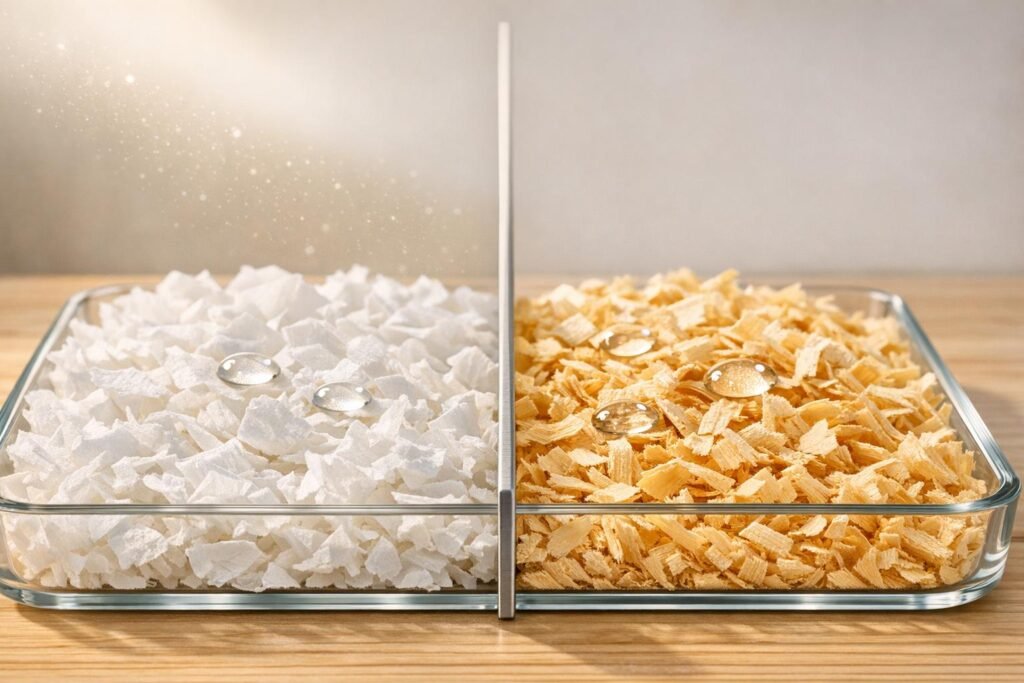
When choosing the best hamster bedding products, cleaning efficiency and pet safety are key factors. Paper bedding absorbs up to 5× its weight in liquid, offers low dust levels (99.9% dust-free), and requires less frequent full changes (7–14 days). It’s softer, safer for sensitive respiratory systems, and easier to spot-clean. Wood bedding, particularly aspen, provides moderate absorbency, excellent ammonia control, and is budget-friendly, but it generates more dust and requires weekly changes. Avoid cedar and untreated pine due to potential toxicity.
Quick Comparison
| Feature | Paper Bedding | Wood Bedding (Aspen) |
|---|---|---|
| Absorbency | High (up to 5× its weight) | Moderate |
| Dust Levels | Low (99.9% dust-free) | Moderate to High |
| Odor Control | Good | Excellent |
| Spot Cleaning | Quick and easy | Moderate effort |
| Full Change Frequency | Every 7–14 days | Weekly |
| Cleanup Difficulty | Easy | Harder (sticks to corners) |
Key Takeaway
Choose paper bedding for ease of maintenance and respiratory safety, or aspen wood bedding for cost-effectiveness if dust isn’t a concern. Regular cleaning is essential for your hamster’s health.
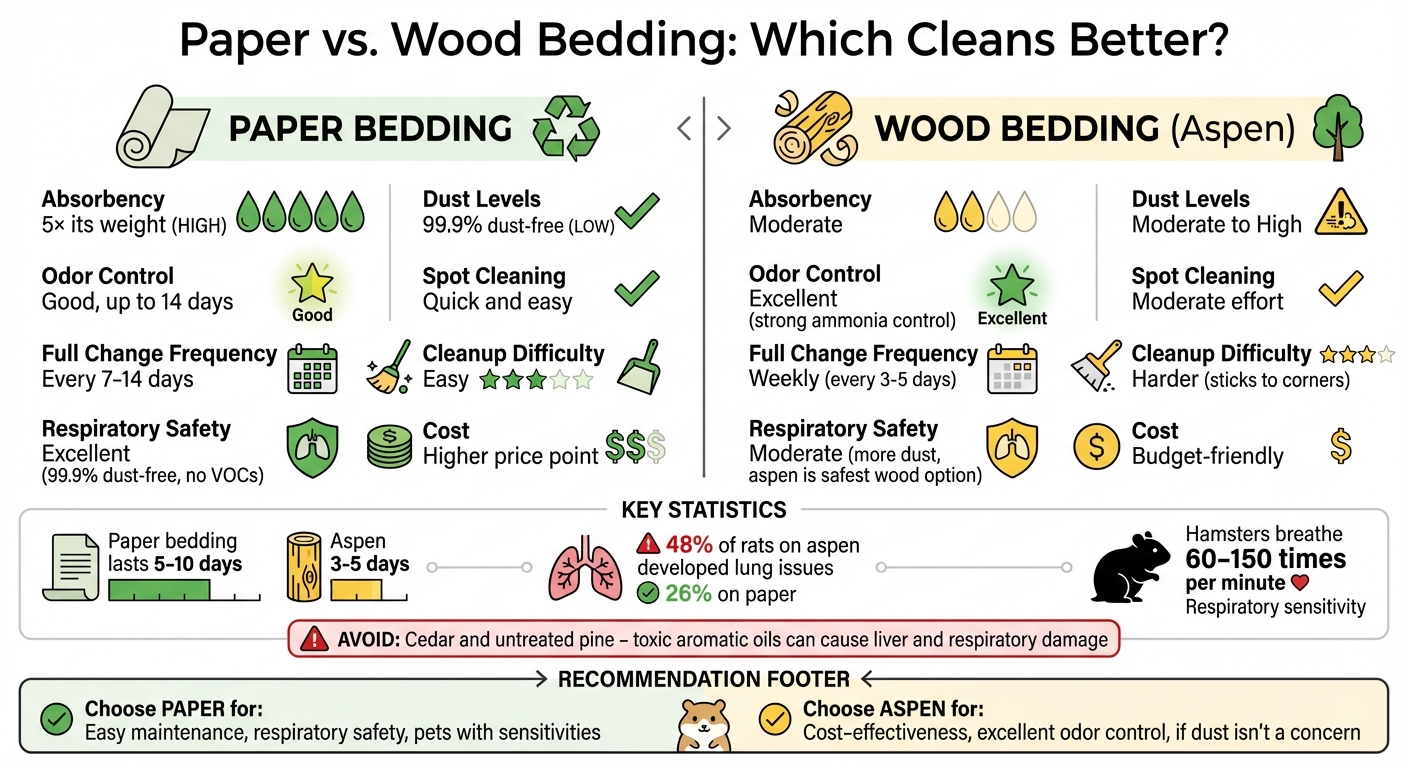
Paper vs Wood Bedding Comparison Chart for Hamsters
Paper Bedding: Cleaning and Maintenance
Absorbency and Odor Control
High-quality paper bedding is a game-changer when it comes to absorbency. It can soak up to five times its weight – that’s about three times more than traditional wood shavings. This means it locks in moisture effectively, preventing it from pooling and keeping your pet’s feet dry. This feature is especially important for reducing skin irritation caused by damp environments.
Paper bedding also tackles odor by absorbing urine and suppressing ammonia buildup. Some premium brands even promise up to 14 days of odor control. However, skipping daily spot cleaning can lead to issues like sogginess, unpleasant "wet paper" smells, or even mold – especially with lower-grade paper bedding. Beyond moisture and odor management, its low dust content adds another layer of safety for your furry friend.
Dust Levels and Respiratory Benefits
One standout feature of paper bedding is its low dust content. Many top-tier brands boast being 99.9% dust-free. This is a big deal for small pets like hamsters, which breathe at a rapid rate of 60–150 times per minute. These tiny creatures are highly sensitive to airborne particles. Dr. Paola Cuevas, a veterinary consultant at Petkeen, underscores this:
"It is important to carefully choose the bedding materials for your pet as dusty bedding can cause respiratory irritation. I like to avoid pine or cedar bedding which put off chemicals, fumes and dust."
The production process for paper bedding – shredding, heating, and vacuuming – removes fine dust and harmful pathogens. This means fewer airborne particles when cleaning or when your pet burrows. Unlike pine or cedar, paper bedding is free from volatile organic compounds (VOCs) and phenols that could harm your pet’s liver and lungs. These respiratory benefits make it a safer choice for your pet and an easier one for you during cleaning.
Ease of Spot Cleaning and Full Changes
Maintaining paper bedding is straightforward. Its moisture-wicking properties make soiled areas visibly darker and clumped, making daily spot cleaning quick and easy. Removing soiled spots, droppings, and uneaten food helps prevent bacterial growth and controls ammonia buildup.
For full cleanings, most pet owners replace bedding weekly, though larger hamster cages may only need a complete change every 1–2 weeks. The low dust content not only simplifies the process but also keeps it cleaner and less messy than wood shavings. A handy tip? Leave a small amount of clean bedding behind during a full change. This helps maintain familiar scents, reducing stress for your pet. Dr. Sara Ochoa, veterinarian and co-founder of How To Pets, emphasizes the importance of regular maintenance:
"A highly absorbent bedding product is critical to keep your pet’s living space clean and dry."
With its ease of cleaning, odor control, and respiratory safety, paper bedding continues to be a reliable choice for small pet care.
sbb-itb-e212914
Wood Bedding: Cleaning and Maintenance
Absorbency and Longevity
Wood bedding options like aspen or kiln-dried Douglas fir are known for their reliable absorbency and odor control while maintaining their structure over time. This durability makes it easier to stick to a regular cleaning schedule, but it’s still essential to replace all bedding at least once a week to keep the environment clean and safe.
When evaluating wood bedding’s absorbency, it’s more useful to focus on how much liquid a specific depth can hold (volumetric absorbency) rather than its weight. Aspen is a popular choice because it doesn’t contain the harmful aromatic oils found in cedar or untreated pine, making it safer for pets. However, wood shavings can be a bit of a hassle during deep cleaning. They tend to stick to cage corners and even cling to your pet’s fur, adding an extra layer of effort. Despite its sturdiness, managing dust can still be a concern with wood bedding.
Dust Levels and Cleaning Challenges
Dust is one of the main drawbacks of wood bedding. Even safer options like aspen tend to release more dust compared to paper-based alternatives. The dust can easily become airborne when your pet burrows or during cleaning, which can pose respiratory risks.
Pattie Larson, LVT at Oxbow Animal Health, highlights this issue:
Wood bedding is moderately absorbent and is fairly good at odor control. However, it can be dusty and difficult to clean up.
To reduce dust exposure, pour the wood shavings gently into the cage to keep dust from spreading. Opt for products labeled as "dust-extracted" or "kiln-dried" to limit fine particles. After replacing the bedding, let it settle for a few minutes before allowing your pet back into the cage.
Safety Considerations for Small Pets
Safety is another critical factor when using wood bedding. Cedar shavings should never be used, as their aromatic oils can cause liver damage and respiratory issues. If you prefer pine, make sure it’s kiln-dried to remove harmful volatile oils. Aspen remains the safest choice because it’s phenol-free and non-toxic.
That said, some research has shown that aspen bedding may lead to higher sneezing rates and lung issues in rats compared to paper bedding. To keep your pet healthy, daily spot cleaning is crucial to remove soiled areas and prevent ammonia buildup, which can harm your pet’s lungs, liver, and other organs. Watch for signs of respiratory distress, like coughing or wheezing, especially during cleaning, and adjust your maintenance routine to minimize dust and ammonia exposure. Additionally, disinfect the habitat thoroughly during weekly cleanings to maintain a healthy environment.
Paper vs. Wood Bedding: Side-by-Side Comparison
Cleaning Performance Comparison Table
Looking at absorbency and dust control, the table below outlines how paper and wood bedding differ when it comes to cleaning performance. Paper bedding absorbs up to 5× its weight, while aspen wood bedding stands out for its ability to manage ammonia effectively.
| Feature | Paper Bedding | Wood Bedding (Aspen) |
|---|---|---|
| Absorbency | High (up to 5× its weight) | Moderate |
| Dust Levels | Low (99.9% dust-free) | Moderate to High |
| Odor Control | Good (may develop a "wet paper" smell if not changed often) | Excellent (strong ammonia control) |
| Spot Cleaning | Needed daily to avoid sogginess | Daily |
| Full Change Frequency | Every 7–14 days | Weekly |
| Cleanup Difficulty | Easy to remove, but can scatter | Harder to clean; sticks to corners |
The dust levels are particularly important for your pet’s health. Small animals are highly sensitive to airborne dust, and studies show this can have real consequences. For instance, one lab study found that 48% of rats on aspen bedding developed moderate to severe lung issues, compared to just 26% of those on paper bedding.
These differences in performance directly affect how much time and money you’ll spend on keeping your pet’s habitat clean.
Time and Cost Considerations
To keep paper bedding fresh and dry, daily spot cleaning is a must. This prevents the buildup of soggy patches, which can encourage mold or mildew growth. Wood shavings, on the other hand, are easier to sift during spot cleaning but can stick to the corners of cages during full cleanings. Some higher-quality paper bedding can control odors for up to 14 days, potentially reducing the frequency of deep cleans.
When it comes to cost, paper bedding is often pricier than traditional wood shavings. But because it expands up to three times its size, you might use less per change. A smart way to manage costs and performance is to layer bedding – place a base of pelleted material for ammonia control, then add softer paper bedding on top for comfort and burrowing.
Hygiene and Pet Comfort
Your pet’s health and comfort are just as important as cleaning efficiency and cost. Paper bedding is non-toxic and free of chemicals, making it a safer option for pets with sensitive respiratory systems. Wood bedding, while effective, can pose risks unless you choose aspen, which is free of harmful phenols. Cedar and pine should be avoided due to documented toxicity.
For comfort, paper bedding is softer and ideal for burrowing and nesting. In contrast, wood shavings can get tangled in long fur, potentially leading to more grooming. Regardless of the type, both beddings need to be replaced weekly to prevent ammonia buildup, which can harm your pet’s liver, spleen, and brain.
Conclusion: Which Bedding Cleans Better?
Key Takeaways
When it comes to cleaning efficiency, paper and wood bedding each bring something different to the table. Paper bedding stands out for its ease of maintenance and absorbency. It can soak up to 5× its weight in liquid and lasts 5–10 days between full changes. In contrast, aspen shavings typically need replacing every 3–5 days. Plus, paper bedding allows for spot cleaning, so you can freshen up specific areas without disrupting your pet’s entire living space.
Dust levels are another important consideration – for both you and your pet. Premium paper bedding is 99.9% dust-free, which helps protect sensitive respiratory systems during cleaning. Aspen shavings, on the other hand, generate moderate to high dust, which can make cleanup messier and may irritate pets like hamsters, who breathe 60 to 150 times per minute.
"A highly absorbent bedding product is critical to keep your pet’s living space clean and dry." – Dr. Sara Ochoa, Veterinarian, Animal Hospital of West Monroe
Recommendations
When deciding on bedding, consider your pet’s specific needs, as well as your own cleaning preferences.
- Pick paper bedding if you want a low-maintenance option and have a pet prone to respiratory issues. It’s highly absorbent, requires full changes only every 10 days, and makes daily spot cleaning a breeze. Just be sure to remove any wet spots regularly to prevent mildew.
- Opt for aspen shavings if you’re looking for a budget-friendly choice and don’t mind more frequent cleanings. Aspen is a safe wood option but will need a complete refresh twice a week. Steer clear of cedar and non-kiln-dried pine, as their aromatic oils can be harmful to small animals.
For pets with long fur, paper bedding is particularly useful, as it avoids tangles and minimizes grooming challenges. Regardless of the bedding type, aim for full cage changes at least weekly to keep ammonia levels in check.
Small Animal Bedding Comparison
FAQs
How much bedding should I use?
The right amount of bedding varies based on your small pet and the type of material you use. For hamsters, around 2 inches (5 cm) of bedding provides enough depth for nesting and burrowing. Guinea pigs, rabbits, and rats typically do well with 2–3 inches (5–7.5 cm), particularly when using absorbent options like paper or wood shavings. This depth strikes a balance, offering comfort, effective nesting, and waste absorption without overdoing it.
Can I mix paper and aspen bedding?
Yes, you can combine paper bedding with aspen bedding. This mix can offer advantages, such as the absorbency and odor control of paper bedding paired with the natural nesting properties of aspen. However, it’s important to ensure that the mixture is safe for your pet, as certain wood bedding types, including aspen, could pose risks over time. Keep an eye on your pet’s health and habitat cleanliness, and always follow guidelines specific to your pet’s species to create a safe and cozy environment.
What signs mean my hamster is reacting to bedding dust?
Signs that your hamster might be affected by bedding dust include wheezing, nasal discharge, sluggish behavior, or a noticeable drop in appetite. These symptoms can indicate that dust or chemicals in the bedding are irritating their respiratory system. If left unchecked, this irritation could develop into respiratory infections. To help protect your hamster’s health, keep an eye on their breathing and opt for bedding that’s low in dust and free from harmful substances.