
Small exotic pets like rabbits and guinea pigs rely on water for digestion, urinary health, and temperature regulation. Without enough water, they risk severe health issues like gastrointestinal stasis and bladder stones. While their hydration needs vary by size, both require 50–150 mL of water per kilogram of body weight daily. Rabbits generally drink more due to their larger size, while guinea pigs need steady hydration to support their less efficient digestion. Environmental factors like heat and diet also influence water consumption.
Key Points:
- Daily Water Needs: Rabbits (4.2–12.7 fl oz for 5.5 lbs) vs. Guinea pigs (1.7–5.1 fl oz for 2.2 lbs).
- Health Risks: Dehydration can lead to GI stasis, bladder sludge, or stones.
- Water Delivery: Rabbits prefer bowls; guinea pigs favor bottles. Offering both ensures access to clean water.
- Diet Impact: High-fiber diets increase water needs. Wet greens can help boost hydration.
Quick Comparison:
| Feature | Rabbits | Guinea Pigs |
|---|---|---|
| Daily Water Intake | 4.2–12.7 fl oz (5.5 lbs) | 1.7–5.1 fl oz (2.2 lbs) |
| Key Risks | Bladder sludge, GI stasis | Bladder stones, constipation |
| Preferred Method | Bowls | Bottles |
| Diet Influence | High-fiber diets require more water | Wet greens aid hydration |
Hydration is critical to keeping these pets healthy and active. Monitor their water intake and provide clean, accessible sources to avoid complications.
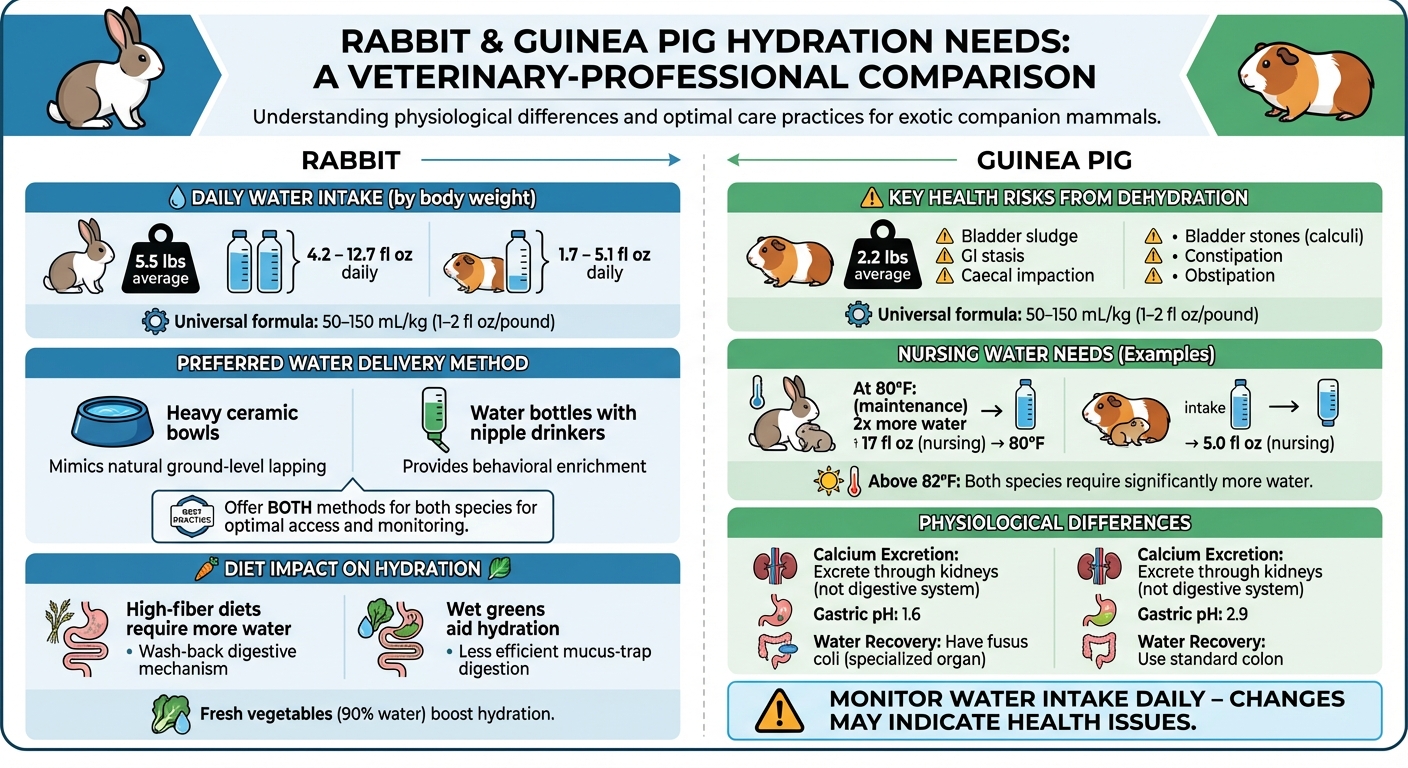
Rabbit vs Guinea Pig Daily Water Requirements and Hydration Comparison Chart
Daily Water Consumption Requirements
Water Needs by Body Weight
Both rabbits and guinea pigs have specific water requirements based on their body weight. On average, they need 50–150 mL of water per kilogram of body weight daily, which translates to about 1–2 fl oz per pound.
Since rabbits are generally larger, their overall water consumption is higher. Dr. Lisa Karr-Lilienthal from the University of Nebraska-Lincoln highlights:
A 5‑pound rabbit consumes at least 40 teaspoons of water a day. This is a very high water intake for an animal of this size.
For guinea pigs, the minimum daily requirement is 80–100 mL. To put that into perspective:
- An adult guinea pig weighing around 2.2 lbs needs 1.7–5.1 fl oz daily.
- A domestic rabbit weighing approximately 5.5 lbs requires 4.2–12.7 fl oz daily.
Water needs increase significantly during nursing. Nursing mothers from both species often double their usual water intake. For example:
- A giant breed rabbit may go from drinking 8 fl oz during regular maintenance to 17 fl oz while nursing.
- Similarly, guinea pig sows drink noticeably more during pregnancy and lactation.
Comparison Table: Daily Water Requirements
The table below provides a quick overview of daily water intake for maintenance and nursing, categorized by species and body weight.
| Species | Body Weight / Category | Daily Water Intake (Maintenance) | Daily Water Intake (Nursing) |
|---|---|---|---|
| Guinea Pig | 2.2 lbs (average adult) | 1.7–5.1 fl oz | 5.0 fl oz |
| Rabbit | 5.5 lbs (average) | 4.2–12.7 fl oz | – |
| Rabbit | Small Breed | 4.0 fl oz | 7.0 fl oz |
| Rabbit | Large Breed | 6.0 fl oz | 11.0 fl oz |
| Rabbit | Giant Breed | 8.0 fl oz | 17.0 fl oz |
Impact of Temperature on Water Consumption
Environmental temperature greatly affects water consumption. Rabbits, for instance, may drink twice as much water at 80°F compared to 60°F. When temperatures exceed 82°F, both rabbits and guinea pigs require significantly more water to maintain their body temperature. This increased water need helps them regulate heat through evaporation and panting.
In the next section, we’ll delve into how other physiological factors influence hydration needs.
sbb-itb-e212914
How Physiology Affects Hydration Needs
Kidney and Bladder Health
Rabbits and guinea pigs share an important physiological trait: they excrete excess calcium through their kidneys, not their digestive systems. This makes staying hydrated essential to prevent urinary complications.
When hydration levels drop, the kidneys are forced to work harder, leading to concentrated urine. This can encourage the formation of calcium crystals, which may develop into sludge or stones.
"By increasing water intake, urine is diluted and eases stress on the kidneys by helping them flush out. When more fluid is pushed through the bladder, calcium sediment is also minimized, reducing the risk of bladder stone formation." – Oxbow Animal Health
The impact of this process differs between species. Rabbits are particularly vulnerable to bladder sludge, a thick, sandy material in their urine. Guinea pigs, on the other hand, are more prone to recurring bladder stones. Neither species can rely on diet alone to reverse these conditions, making consistent hydration a critical preventative measure.
A healthy rabbit typically produces around 120-130 mL of urine per 2.2 lbs of body weight daily. This shows how actively their kidneys process fluids, emphasizing the need for constant water availability.
Here’s a quick comparison of some physiological traits that influence water management in rabbits and guinea pigs:
| Physiological Feature | Rabbits | Guinea Pigs |
|---|---|---|
| Calcium Excretion | Primarily via kidneys | Primarily via kidneys |
| Gastric pH | 1.6 (highly acidic) | 2.9 |
| Colonic Mechanism | Wash-back (fluid-based) | Mucus-trap |
| Water Recovery Organ | Fusus coli (specialized) | Standard colon |
| GI Water Content | 153g | 51g |
| Primary Urinary Risk | Bladder sludge & stones | Bladder stones (calculi) |
Proper hydration doesn’t just protect the urinary system – it also plays a vital role in digestion.
Digestive System and Water Requirements
Water is equally crucial for efficient digestion in both rabbits and guinea pigs. As hindgut fermenters, they depend on bacterial fermentation in their caecum to break down fiber. Without enough water, this system can grind to a halt.
Rabbits rely on a "wash-back" mechanism in their proximal colon, which secretes fluid to move bacterial matter and small particles back into the caecum for fermentation. Guinea pigs, however, use a less efficient "mucus-trap" method, making them less adept at reabsorbing water. This difference means rabbits are especially reliant on steady hydration to maintain digestive efficiency.
"The rabbits’ colonic separation mechanism is very efficient, allowing them to have a lighter digestive tract and therefore maintain the ability to be fast and agile, in comparison to other herbivores." – The Guinea Pig Vet
Rabbits also possess the fusus coli, a specialized organ that functions like an intestinal pacemaker. It extracts water and electrolytes from hard feces before they’re expelled, making rabbits highly efficient at water recovery. Guinea pigs lack this feature, which further highlights the differences in their digestive systems.
When water intake is insufficient, the consequences can be severe. The GI tract may pull fluids from the body’s tissues or bloodstream to process dry foods like hay and pellets. This can lead to systemic dehydration, slow digestion, and even life-threatening gastrointestinal stasis.
Water Delivery Methods: What Works Best
Open Dishes vs. Nipple Drinkers
When it comes to keeping rabbits and guinea pigs hydrated, the method of water delivery plays a crucial role in their overall well-being. These small animals have distinct drinking habits, and understanding their preferences can make a big difference.
Rabbits, for instance, naturally lap water from ground-level sources. They don’t instinctively look upward to drink, so using bottles often forces them into an uncomfortable position.
"There is plenty of research that has shown that water bowls are the ideal way of providing water… because it’s easier for rabbits to drink from a bowl than a water bottle, because they don’t naturally look upwards." – Micah Woods, DVM, Exotic Pets Veterinarian
Guinea pigs, on the other hand, tend to favor nipple drinkers. A 2017 study by Balsiger et al. at the University of Zurich revealed that 9 out of 10 guinea pigs chose nipple drinkers over open dishes when given the option. Interestingly, eight of them consumed more water using the nipple drinker, likely because the chewing-like jaw movements provide a form of behavioral enrichment.
Open dishes are particularly advantageous for rabbits, as they encourage higher water consumption and are easier for elderly or dental-impaired pets to use. They’re also simple to clean and refill daily. However, they have their downsides – bowls can tip over and often collect bedding, fur, or feces. Meanwhile, nipple drinkers keep water cleaner, making them a practical choice for travel or outdoor setups. That said, they’re not without flaws; guinea pigs can backwash food particles into the nozzle, leading to clogs or malfunctions.
For rabbits with large dewlaps, bottles can help keep the fur dry and prevent skin infections. To ensure pets always have access to clean water, the best solution is often to provide both a heavy ceramic bowl and a nipple bottle. This dual approach guarantees hydration even if one source becomes soiled or fails.
Ultimately, the key is to align water delivery methods with the natural behaviors and needs of each species, ensuring their hydration and health are always prioritized.
Comparison Table: Water Delivery Methods
| Feature | Open Dishes (Bowls) | Nipple Drinkers (Bottles) |
|---|---|---|
| Rabbit Preference | High; mimics natural lapping behavior | Low; requires unnatural head tilt |
| Guinea Pig Preference | Lower; less behavioral stimulation | High; mimics chewing/oral processing |
| Water Intake Volume | Generally higher for rabbits | May be higher for guinea pigs |
| Hygiene | Prone to debris (hay, bedding, feces) | Protected from environmental debris |
| Maintenance | Easy to clean; requires daily scrubbing | Harder to clean; nozzle can clog |
| Stability | Can be tipped (unless heavy ceramic) | Securely attached to enclosure |
| Health Outcomes | Better hydration for rabbits | May reduce urolithiasis risk in guinea pigs |
Guinea Pig Water Bottle vs Bowl | What’s Best For Your Guinea Pig
How Diet Affects Water Intake
Diet plays a key role in keeping pets hydrated, working alongside their physiological needs to maintain proper hydration levels.
Moisture Content in Food
The moisture level in your pet’s food can significantly impact how much water they need to drink. Dry foods like hay and pellets contribute very little moisture, which means your pet will need to drink more water to stay hydrated. On the other hand, fresh vegetables and leafy greens – packed with up to 90% water – can help boost hydration levels.
If pets don’t drink enough water, their gastrointestinal (GI) tract compensates by pulling fluids from the body, which can lead to dehydration.
"If direct water consumption is inadequate, the GI tract pulls fluids from internal tissues or blood to properly hydrate these food items, increasing the animal’s risk of dehydration." – Oxbow Animal Health
A simple trick to help with hydration is to leave fresh vegetables wet after washing them. This adds a bit of extra moisture to their diet. However, steer clear of relying on iceberg lettuce. While it’s mostly water, it offers little nutritional value – something both rabbits and guinea pigs need. For guinea pigs, fresh greens are particularly important as they not only aid in hydration but also supply essential Vitamin C.
But moisture content isn’t the only dietary factor affecting water needs. Fiber intake plays a big part too.
Fiber Intake and Water Consumption
High-fiber diets are essential for rabbits and guinea pigs, promoting proper digestion and dental health. However, these diets also increase water requirements. Water is crucial for lubricating the digestive tract, helping high-fiber foods move smoothly. Without enough hydration, pets can develop GI stasis, a dangerous condition where food stops passing through the digestive system.
Research by Prof. E. L. Kennaway (1926) highlights this relationship. A 5.5 lb rabbit on a dry diet was found to drink about 160 mL of water daily. Rabbits given fresh greens alongside water showed better growth and avoided issues like cecal impaction, which occurred in those fed dry mash without water.
"Because the GI tract relies on water to keep itself lubricated and moving, poor hydration puts rabbits, guinea pigs and other small pets at risk of GI stasis." – Oxbow Animal Health
To prevent such risks, always ensure unlimited access to fresh water, especially when feeding dry foods like pellets and hay. Positioning food near water sources can encourage pets to drink while eating, supporting their digestion. Keep an eye on their water consumption – reduced drinking may signal early GI issues, while excessive thirst could point to kidney problems or other health concerns.
Health Risks of Insufficient Water Intake
Water plays a crucial role in digestion and kidney function, and when rabbits and guinea pigs don’t get enough, their health can take a serious hit. Dehydration doesn’t just slow things down – it can lead to severe, even life-threatening, complications across multiple organ systems.
One of the first problems to arise is gastrointestinal (GI) stasis. Without enough hydration, the body pulls water from tissues, worsening dehydration and leaving food dry and prone to blockages.
"If ingested food is too dry, it can be difficult to pass through the digestive system, possibly creating a blockage which can lead to serious health complications." – Living World Green
Beyond digestion, dehydration puts a strain on the kidneys and bladder. Both rabbits and guinea pigs absorb large amounts of calcium from their diets. Without sufficient water to flush out this calcium, concentrated urine can lead to the formation of calcium deposits. Over time, this can result in kidney damage or even kidney failure. In rabbits, prolonged dehydration can also cause a 20% decline in fur growth.
Here’s a closer look at how dehydration impacts rabbits and guinea pigs differently.
Dehydration-Related Health Problems in Rabbits
Rabbits face unique challenges when it comes to hydration. Because they absorb nearly all the calcium they consume, they are especially prone to bladder sludge – a thick, gritty buildup of calcium in the urinary tract. Dehydration increases the concentration of calcium in their system, which can lead to painful stones.
"Dehydration can rapidly become life threatening. To make sure that your rabbit is sufficiently hydrated, you will need to commit to frequent monitoring of urine output and water intake throughout the day." – PetMD Editorial
Another risk for rabbits is caecal impaction. When their diet is too dry and water intake is low, the contents of the caecum can compact and stop moving altogether, requiring immediate veterinary care. Rabbits also rely heavily on water for thermoregulation. Without it, they are vulnerable to heat stroke, especially in warmer climates. Signs of dehydration in rabbits include dark urine, hard or reduced fecal matter, lethargy, and appetite loss.
Dehydration-Related Health Problems in Guinea Pigs
Guinea pigs share some hydration-related risks with rabbits but also have their own vulnerabilities. Urolithiasis, or bladder stone formation, is a common issue. Without enough water to keep minerals dissolved, these painful stones can form, sometimes requiring surgery to remove.
In the digestive tract, dehydration can lead to obstipation, where the lack of lubrication causes severe constipation or blockages. Symptoms in guinea pigs often develop more gradually than in rabbits, with reduced appetite and lethargy being early warning signs. To check for dehydration, you can gently lift the skin on your guinea pig’s neck – if it tents and doesn’t quickly return to normal, your pet needs immediate hydration.
| Health Risk | Primary Cause Related to Hydration | Species Affected |
|---|---|---|
| GI Stasis | Lack of lubrication for food movement | Both (High risk in Rabbits) |
| Bladder Sludge | Concentrated urine causing calcium buildup | Primarily Rabbits |
| Cystic Calculi | Mineral crystallization in the bladder | Both (Common in Guinea Pigs) |
| Caecal Impaction | Dry diet and water deprivation | Rabbits |
| Heat Stroke | Inability to cool via evaporation | Both |
Conclusion
Rabbits and guinea pigs have distinct hydration needs due to their unique physiological traits. Rabbits, being larger and equipped with efficient water recovery systems, require greater water intake, while guinea pigs need steady hydration to support their less efficient digestion and reduce the risk of bladder stones. Both animals drink significantly more water when temperatures rise above 82°F, making it crucial to monitor their hydration closely during hot weather.
The way water is provided should reflect each species’ natural habits. Rabbits prefer heavy ceramic bowls that suit their ground-level drinking posture, whereas guinea pigs benefit from water bottles that keep water clean from bedding and droppings. Dr. Micah Woods of Ooltewah Veterinary Hospital emphasizes:
There is plenty of research that has shown that water bowls are the ideal way of providing water [for rabbits].
Offering both a bowl and a bottle gives your pet options and ensures a backup water source is always available.
Maintaining clean water sources is key to keeping your pet healthy. Guinea pigs, in particular, tend to backwash food into water bottle nozzles, so these need to be checked and cleaned at least twice a week. Regularly tracking water levels – by marking bottles or measuring bowl refills – can help you spot changes that might indicate dental issues, kidney concerns, or dehydration. You can also boost hydration by providing fresh greens that are still damp after washing.
FAQs
How can I tell if my rabbit or guinea pig is dehydrated?
Look out for dehydration symptoms like sunken eyes, a dry nose, dry or sticky gums, lethargy, or reduced skin elasticity – sometimes referred to as skin tenting, where the skin doesn’t bounce back quickly when pinched. If you spot any of these signs, make sure to address hydration needs right away to help maintain proper health.
Should I give my pet a bowl, a bottle, or both?
When it comes to keeping your pet hydrated, it’s smart to offer both a bowl and a bottle. Rabbits tend to prefer drinking from bowls but can adapt to bottles, while guinea pigs usually lean toward bottles but might use bowls if they’re familiar with them. By providing both options, you ensure your pet always has access to fresh water, while also giving you a chance to observe their drinking habits. This approach helps lower the chances of dehydration.
When should I worry about sudden changes in water intake?
If your rabbit or guinea pig goes without drinking for more than 12–24 hours, it’s time to worry. This can lead to severe dehydration and potentially serious health problems. On the flip side, if they suddenly start drinking a lot more than usual, it could be a sign of issues like kidney disease or diabetes. Keep a close eye on their water intake, and if you notice anything out of the ordinary, reach out to a veterinarian right away.