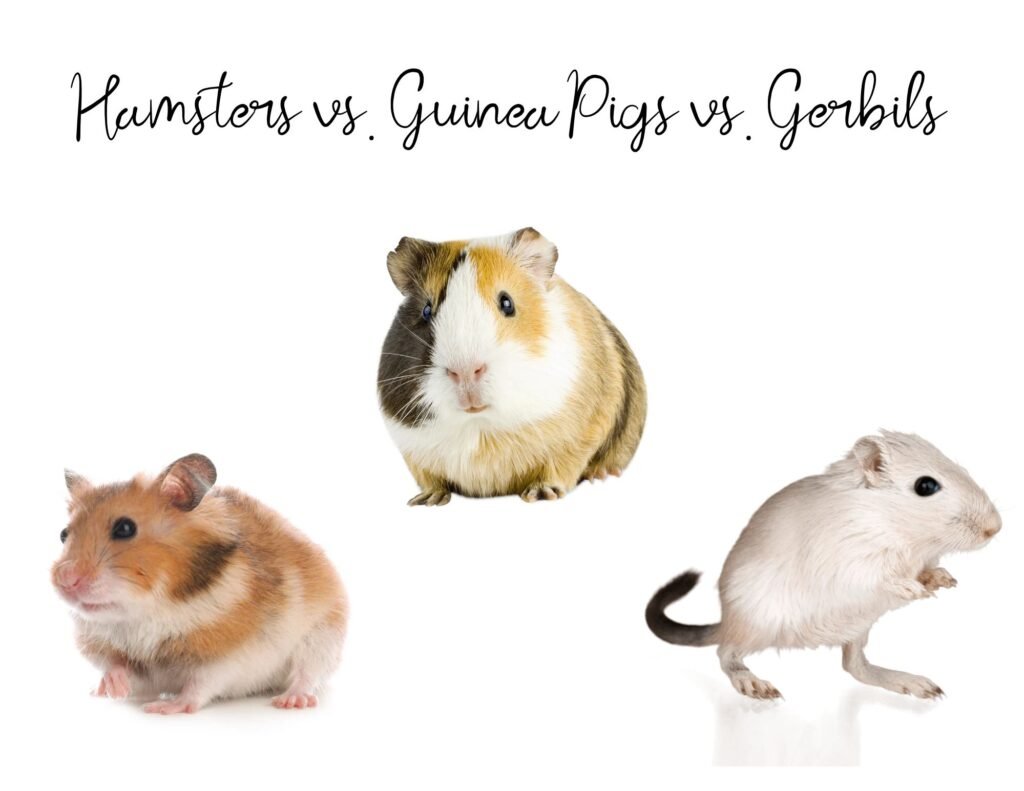
Having tiny animals as pets is one of the best feelings you can get! Not only are you providing your new furry friend with a home, but you also gain a newfound joy in your life! However, if you are considering getting a hamster, guinea pig, or even gerbil, you might want to consider the differences between the three little pets. So, what are they and how can you tell which one is right for you? Keep reading to find out more!
At a glance, you might find it hard to tell the differences between these three cute little critters. Rest assured, there are quite a few differences, from eating habits and reactions to people and their environment to even their lifespans.
However, before you think all of them would be a perfect addition to your home, you should have a better understanding of what makes them great pets, and which ones might not mesh well with your current living arrangement.
In this article, we will discuss the differences between all three tiny creatures and explain which animal is right for you. We encourage you to continue reading for more information!
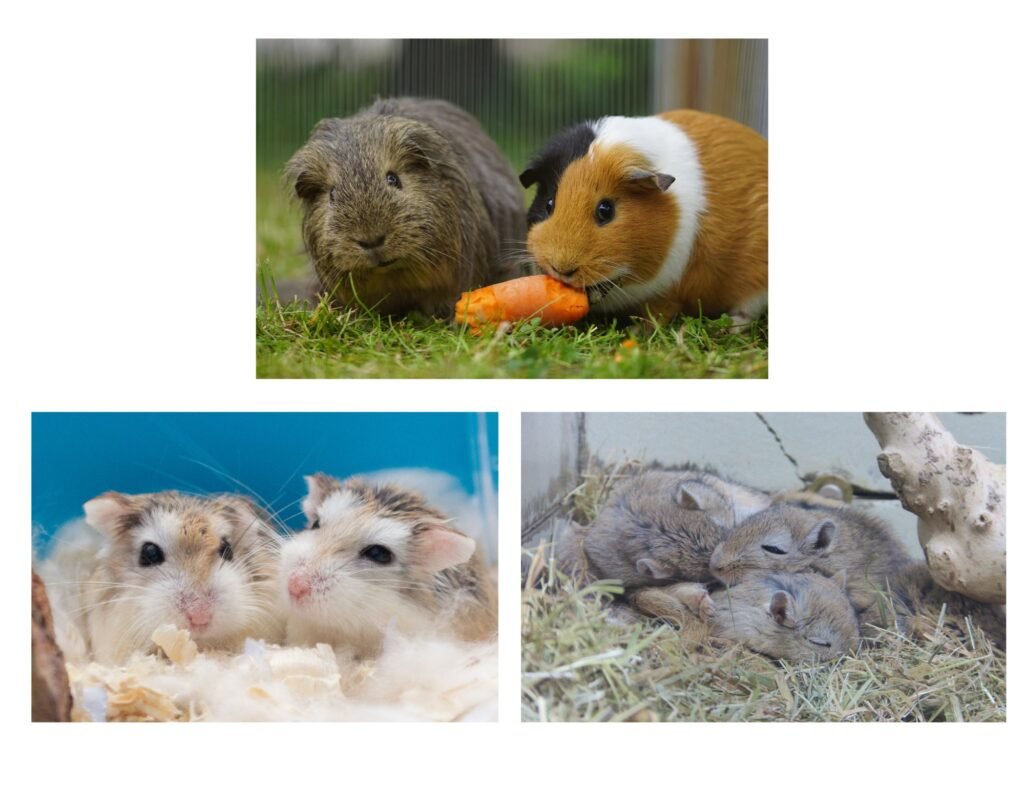
What Are the Differences Between Hamsters, Guinea Pigs and Gerbils?
The biggest differences boil down to size, diet, and aesthetics. Beyond that, how they get along with one another (or, in some cases, want to fight when sharing an enclosure) can be one of the biggest tells between them. It’s also worth noting there is no single dietary regimen that works seamlessly for all of these cuddly fellows, but we’ll dive into that later.
1. Difference in Size
While some circles might lead you to believe size doesn’t matter, in the animal kingdom it certainly does, and guinea pigs across all breeds typically dwarf hamsters and gerbils. As a result, you can expect them not to make good playmates purely based on raw power dynamics. If we set aside the fact that they all potentially live together, we’d see a certain level of individuality that comes from these size differences, allowing them to move more quickly through their chosen habitats.
Hamsters
Compared to the other two, hamsters take the middle ground: not larger than a guinea pig by any stretch of the imagination, with certain breeds reaching a maximum of 8 inches long; they are also more compact, have very stubby tails, and typically weigh up to 200 grams in some breeds.
It’s important to note the flexibility in size among different breeds because the smallest hamster breed is technically 2 inches long, making it the smallest of the three. Still, the law of averages dictates it takes the middle ground.
Guinea Pigs
Larger than life fluffy fellows that take the crown when it comes to unyielding size and girth, these big boys reign proud at 8 to 12 inches long, and no tail to offset that length, meaning it is simply their body being accounted for, not only that, but the most rotund of these gentlemen can weigh in at over 1,000 grams, meaning there is plenty of them to love, but there are breeds of them that are obviously smaller.
Gerbils
Finally, we have gerbils, and even though they might be the smallest of the three, their hearts are definitely in the right place, as they are full of spunk and enthusiasm, usually measuring anywhere from 3 to 7 inches in length and weigh in at a meager 60 to 130 grams, making them absolutely microscopic in comparison to the other fluffballs.
2. Looks
Each of these small rodents have a certain aesthetic that might allow them to look the same, but peering deeper into things like their tails, body shape, limb length, and even cheeks can allow you to discern one from the other, these individualized looks don’t inherently change their day to day life as a pet. Even so, things like a hamster’s inflated cheek pouches have a functional use beyond being cute.
Hamsters
When you first lock eyes on a hamster, you’ll notice their fur is thicker than the other two we’ll be going over, and a tiny tail often hides beneath the same bundle of fluff.
A hamster’s ears are typically rounded, and its small, stubby legs can almost vanish under its tufts of stomach fur; it also has noticeably dark eyes, which help it discover its favorite snacks while roaming around dark areas.
Hamsters can come in any number of different colors ranging from white, black, and orange to fanciful blends with unique patterns that dot their entire body, in the hamster community, some people are willing to pay lavishly for unique patterns and colorings, with the colors themselves being limited depending on the breed of hamster.
Guinea Pigs
While hamsters and pigs do share some vague similarities because they’re both rodents, pigs are often far larger and have bigger heads to swivel around their rotund bodies. Unlike hamsters, they lack the stubby little tail at their rear end. Pigs also have the same short, rounded ears hamsters are known for, but their feet are a tad different, with three toes on their back feet and four on their front!
Guinea pigs have an extreme amount of expression when it comes to how they look, with everything ranging from their fur colors; and, on the topic of their fur, it can also be short and tapered to their body. Still, some breeds have long, flowing manes that make them look glamorous. However, longer-haired breeds need more attention and care to keep their hair from matting.
Assuming you have allergies or simply don’t want to deal with it, there are hairless breeds as well. Even so, you’ll be trading the upkeep on hair for a change in keeping their skin taken care of, closely monitoring for any injuries that crop up. Regardless of what kind of hair type you go for, you can get lost in their eyes as well, as they can have different eye colors too, ranging from dark brown or black to ruby red and pink.
Gerbils
Last but certainly not least, we have gerbils, which look much closer to a mouse than they do the other two on this list, featuring long tails, and very tiny bodies, alongside larger ears that help them pick up on threats at a distance, you can tell that gerbils are built for more active lifestyles purely due to their body shape, and reactive demeanor.
Gerbils are incredibly mobile, and their little limbs showcase that brilliantly, with hind legs that are long and perfect for bounding from one place to another, you can imagine they are capable of very respectable speeds for their size, most of their features, ranging from their pointed noses that rarely seem to stop moving, to their large eyes constantly scanning their surroundings.
A gerbil’s coat isn’t quite as varied as a hamster’s or guinea pig’s, as gerbils in nature rely on their fur to help them blend into their environment, and not attract attention, with those that do have more unique colorings often getting caught, and thus not passing that coloring on, rules of nature aside, gerbils can be brown, white, gold, black, or an assortment of these different colors, arranged in unique patterns.
3. Lifespan
As with most pets, lifespan doesn’t directly determine anything specific about the pet itself, but knowing how much time you have with your furry friend can directly correlate with how long you get to forge a lasting bond, or how long you have until you have to endure a painful loss, it’s important to know these timeframes however, as you’ll be able to make changes to their diet, activity, and lifestyle to help them live longer too.
Hamsters
You can expect a hamster to have a lifespan of anywhere between one and a half to three years depending on its overall health, species, well being, and how in tune with its dietary needs you are, general activity, and living situation can also heavily impact how long a hamster can live, as a more stressful environment can put more tension on their heart and mind.
Guinea Pigs
A larger size doesn’t necessarily grant these big guys a longer lifespan, but it doesn’t hurt either, on average a guinea pig can live for roughly five to seven years. Still, these rates can actually be increased if an owner is incredibly diligent in their pigs care, things like a well balanced diet, proper check ins with a vet, and once again, keeping stress to a minimum, and engaging with them can get that number up to ten years!
Gerbils
These tiny titans have a larger than life attitude. It can be observed in every facet of their existence, if you are wanting their lifespan to accurately reflect their personalities, you’ll want to stay on top of their healthcare, give them an enriching life with plenty to do, and even incorporate foraging into their diet, you can expect them to live for anywhere between two to four years on average, but this number is largely dependent on genetics and care, and a few exceptionally long-lived gerbils have reportedly reached around eight years.
4. Socialization / Behavior
Everyone loves getting to know your new pet on a personal level, especially during that time when you are both exploring each other’s personalities, likes, dislikes, and favorite methods of interaction. Of course, there is such a thing as too much attention, so when delving into socialization for these three, we’ll keep two different aspects of behaviour in mind, one, being how they interact (or don’t) with us, as owners, and two, how they treat others that may live with them, or other pets depending.
Hamsters
Despite being incredibly fluffy and adorable, hamsters are primarily solitary both in regards to their interactions with owners, as well as other hamsters, with the difference being, hamsters can learn to tolerate being pet, and interacted with by humans, often being slightly comforted by our presence, or accepting small, respectful pets.
The opposite is true when it comes to trying to cohabitate hamsters together, as they are more likely to start fighting one another than ever reaching a place of mutual respect, with the worst of these fights potentially becoming fatal if left unattended, it’s for these reasons and more it’s ideal to keep all hamsters you own in their own enclosures.
If you are attempting to breed hamsters, you’ll want to keep the male and female together in the same cage. However, only under extremely supervised settings, as things can still get ugly after the deed is done, so you’d be wise to remain on standby for both hamster’s safety.
Guinea Pigs
A uniquely loving heart for a very large rodent, guinea pigs are undeniably social creatures, as in the wild they opt to live in very close knit groups, partially for protection, but primarily for emotional stability, guinea pigs rely on one another to play together, keep each other company, and feel safe as part of the pack, when left to their lonesome, pigs are known to get depressed, stressed, and exhibit lethargy.
If you are considering getting a guinea pig, it would be incredibly wise to get a friend for them, as they will play together, clean one another, and simply “discuss things” with their little grunts and groans, making for some truly interesting behavior to observe.
The specific pairings you choose do matter, however; you’ll ideally want same-sex pairings to keep things from getting rowdy, or you could opt for a neutered male with females if you so desire. Pigs behave differently when the opportunity to mate is on the table; removing that from the equation lets them have all the company they please, without having to support an entire community in a few years when they overpopulate your house!
Gerbils
If hamsters are solitary, you can consider gerbils the polar opposite in almost every regard; for starters, gerbils have a far higher quality of life when housed in groups or even small pairings, as they desperately need interaction and company, most notably from fellow gerbils. Still, this playful, inquisitive nature can naturally lead to a very satisfying relationship with their owners.
Fostering a healthy connection with your gerbil will allow you to interact with it regularly, sometimes having them scamper around or climb on you, and, in time, build confidence not only in who you are but potentially with your friends and family as well.
Be attentive on when your gerbils do opt to get more reclusive, or if they are simply too comfortable in where they are trying to clamber and scurry too, as their small stature can easily let them get into places they shouldn’t, or attempt an interaction with a pet that isn’t nearly as kind, or simply doesn’t know its own strength (Labrador mentality).
5. Sleep Schedule
In the wild, hamsters, guinea pigs, and gerbils display slightly different sleeping schedules than their domesticated counterparts. These changes aren’t too different for pets; it’s important to respect each pet’s sleep schedule, as forcing them to stay awake to accommodate you can have adverse health effects.
Hamsters
If you were hypothetically wanting to single one of these fluffs out as the party animal, it would most certainly be the hamster, as they are not only nocturnal, but you can expect them to get a little rowdy when you are attempting to get your beauty sleep, unfortunately enough the same is true for them.
While we might have beautiful morning starts, they do not enjoy being woken up unexpectedly for any reason, and doing so may have them feeling scared, or at the very least guarded for something that may, or may not happen, in certain cases hamsters have been known to wake up during dusk or dawn. Again, you’ll have to observe your hamster and find out which sleeping schedule they settle on.
Guinea Pigs
Reared and ready to go at daybreak is one of the mantras a guinea pig lives by, alongside being in dire need of a hug (from others of its kind) and actively being ready for their next snack, guinea pigs are crepuscular, which simply means you can expect them to be most active when the sun is either coming, or going, either way, that’s when they’ll be waking up, perhaps for the third time that day.
Guinea pigs sleep in quick bursts, instead of elongated, restful sleeps like we are accustomed to, this is due in no small part to them being prey animals, having them genetically wired to be ready to go at a moment’s notice, and never staying in one spot for too long, lest a predator catch them exposed.
One of the more unique quirks about guinea pigs is their ability to sleep with their eyes open, which may be very startling to first time owners. While it isn’t guaranteed to be something your pig does, it can help you understand why your pig sometimes reacts to your approach or interaction as if startled, despite seemingly being awake.
Gerbils
Similarly to guinea pigs, gerbils too are crepuscular, preferring to move when everything else is either going to sleep or getting up, but ideally, too out of sorts to effectively do whatever their niche in the animal kingdom is, which is ideal for them when attempting to avoid predators in the wild, but not necessarily true of when they live under your care.
You can expect your gerbils to be incredibly hyperactive when they are awake. Gerbils constantly retreat and take periodic naps in odd corners throughout the day and night, getting most active at either the start or the end of the day.
6. Diet
A well-balanced diet can make all the difference in the world from a mental standpoint, but even more so when it comes to determining how active your pet can be and when they may need something to help them heal faster if they become sick.
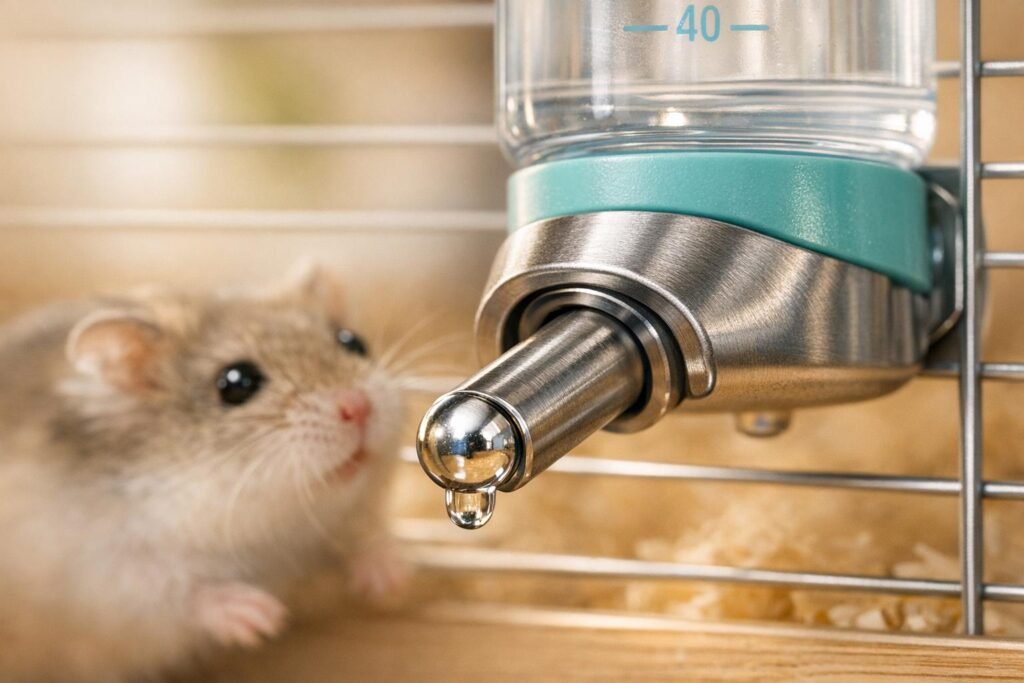
The amount of food your pet eats, as well as its overall quality will make a big difference in how long their lifespan is, and what the expectation should be when it comes to figuring out if they are overeating, under eating, or simply having one too many treats, potentially leading to obesity despite them not eating a very large quantity of food, it should go without saying. Still, all three of these little creatures will require clean water to be readily available.
Hamsters
As omnivores, hamsters can have a very wide spread diet. Still, the components of that diet should be balanced with all the minerals, vitamins and fiber they need to have a regularly balanced bowel movement, micromanaging that diet can become very difficult however, as hamsters are known to stash things in cheek pouches, which could lead to them over indulging on treats they’ve squirreled away on top of full meals.
If you want to take the guesswork out of balancing your hamster’s diet, you could go with pellets that offer perfectly blended meals (when dished out in the appropriate amount) and easily meet all of your hamster’s nutritional needs. Still, if you want a more balanced diet, you can give them Timothy hay and other similarly balanced foods, with treats like vegetables, eggs, and even freeze-dried mealworms on the menu.
While some people believe you can give your hamster any assortment of seed mixes and they will be fine, that simply isn’t true, as some seeds have more oils, and fats in them than others, and can quickly ruin your hamsters diet, with them showing favoritism towards whatever tastes best out of the choices offered.
Guinea Pigs
You can’t expect these bundles of love to be that size without good reason, most guinea pigs are very blessed that their diet should be very much at their own discretion, meaning you should give them access to as much hay as they like, around the clock, and while this initially sounds like a horrible idea, it’s a two-pronged approach.
On the one hand, having readily available hay to gnaw on actively combats their ever-growing teeth, which have to be worn down lest they become a health issue, secondly, they won’t eat themselves into a coma, they are keen on knowing when enough is enough, especially on just hay alone.
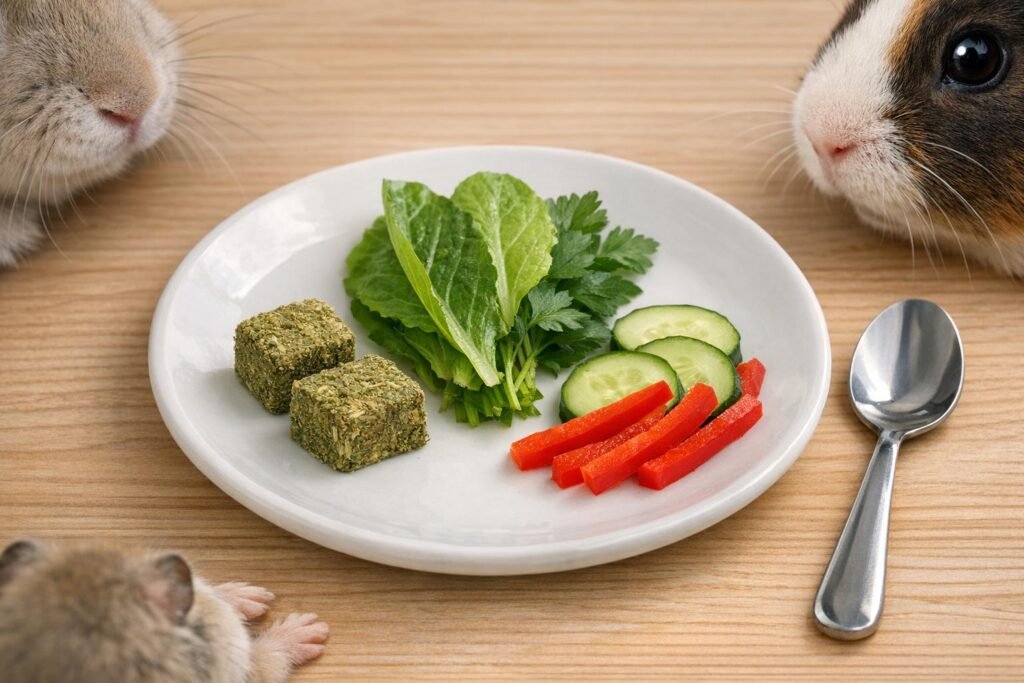
The limitation on food truly comes into the equation when you consider the additional food metrics, things like fresh veggies, supplemental pellet foods, or treats. Keep in mind that guinea pigs can’t make their own vitamin C, so they need a daily source of it from fresh vegetables (bell peppers are a favorite) and a quality guinea pig pellet.
Gerbils
Like hamsters, gerbils are omnivores and often share many of the same staple foods, such as pellet mixes, seed mixes, and even cuttings of vegetables and fruits, as part of their expected diet. Like hamsters, they can also eat small insects as treats, never as a full meal.
Because of their size, seed oils and other foods can pose an innate threat, either because they aren’t easily digested or because they’re too toxic for their small frame to handle; we won’t list everything under the sun. Still, things like grapes, garlic, avocado, and even apple seeds can be dangerous to gerbils (see our list of foods harmful to small pets), but may easily be given to them because they seem like safe treats.
It is imperative that you do extra research on the exact measurements of whatever food you choose when deciding how much to give your gerbil, hamster, or guinea pig, as not all pellet mixtures are the same, nor are their tolerances for similar treats.
7. Cost
Money may indeed make the world go round. It costs money to get yourself a nice round furry friend, with even more of it needing to leave your pocket to ensure you give them the life they deserve, everything ranging from the animal itself to the enclosure, food, and toys will run you a pretty penny, we’ll spare you those horrifying amounts, as the latter are largely up to you, but focus more on how much the pets themselves will cost you, on average.
Hamsters
Hamsters are usually incredibly cheap to obtain, with some people even being willing to give some from a litter for free to good homes, assuming you don’t find yourself in such a circumstance however, you can expect to spend anywhere from $10 to $40 on a normal hamster, with this price going up exponentially if you want things like specific colors, or even better, documentation from a breeder, which may be the best route to go with, as you can verify health genetics.
Guinea Pigs
You’d be hard pressed to say guinea pigs are “rarer” than hamsters, but that doesn’t stop them from costing more, which could make sense if you viewed the price from a weight standpoint, a normal guinea pig can cost about $25 to $65 from a vendor, with that price skyrocketing depending on those same visual aesthetics we mentioned earlier, but keep in mind, that price is purely for the animal itself, veterinarian visits and more can easily triple that price.
Gerbils
Finally, we have gerbils, which oddly enough may be the proving point for rodents having a raw value equivalent to how much they weigh, as the cheapest gerbils around might cost you $5, with the more lavish “normal” ones costing about $25. Again, breeds, colorings, and other specific requests can drive the price up; it is worth noting you’ll probably want to get at least two, as they are best in pairs, so plan accordingly.
What Is the Best Animal to Get for Yourself?
The best pet to get depends entirely on your living situation, free time, and how much effort you can put into the animal itself, because owning your pet just isn’t enough if we are being entirely honest, each animal deserves a lifetime of happiness, with all of its core needs being met, and having proper company and care given to it throughout its lifetime.
If you spend a vast majority of your existence at the office, with mandatory overtime eating away at you, owning a rodent, or any pet probably isn’t the best idea, even if you do want company when you have down time.
If you are still weighing your options, our guide to small pets for first-time owners and our rabbits vs. guinea pigs comparison cover space, cost and handling for other popular options.
Alternatively, if your household is chaotic, with people shouting, coming and going at all hours, or you already have a veritable zoo worth of animals, you shouldn’t get any of these little creatures, as they all depend on having a certain level of normalcy and calm to live a sustainable life.
Conclusion
Regardless of if you are hoping to go with a larger than life guinea pig, the adorably common hamster, or rambunctious gerbil, they each have unique qualifiers, needs, and expectations on what will give them a great life, and complement yours by association. Ensure that you have the time, patience, and funds required to give both you, and your pet the life you deserve, together.