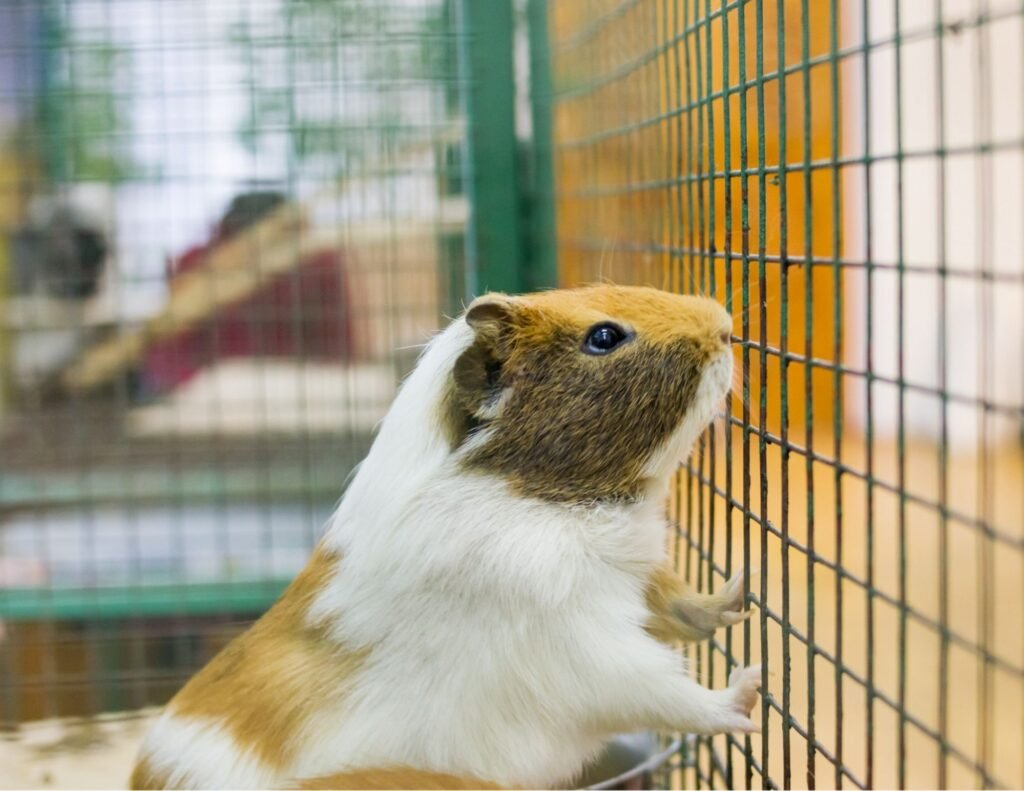

Rabbits and guinea pigs are popular pets, but their care needs differ significantly. Rabbits live longer (8–12 years) and require more space, while guinea pigs have shorter lifespans (4–8 years) and are easier to house. Rabbits are quieter, form strong bonds with humans, and need more attention to their living environment and diet. Guinea pigs are vocal, thrive in groups, and require daily Vitamin C supplementation. Both species need specialized vet care and regular grooming, but guinea pigs are generally more manageable for families with young children. Choose based on your space, time, and commitment.
Quick Comparison:
| Feature | Rabbits | Guinea Pigs |
|---|---|---|
| Lifespan | 8–12 years | 4–8 years |
| Space Needs | 12+ sq. ft. + exercise area | 7.5–10.5 sq. ft. |
| Diet | High hay, leafy greens, pellets | Hay, Vitamin C, veggies, pellets |
| Social Behavior | Bond with humans, need a rabbit companion | Thrive in groups, more timid |
| Handling | Fragile, need careful support | Delicate, but enjoy lap time |
| Grooming | Weekly (more during shedding) | Weekly for short hair; daily for long hair |
| Vet Care | Spaying/neutering, dental care | Vitamin C management, dental care |
Rabbits demand more long-term commitment and space, while guinea pigs are better suited for smaller spaces and families looking for a medium-term pet.
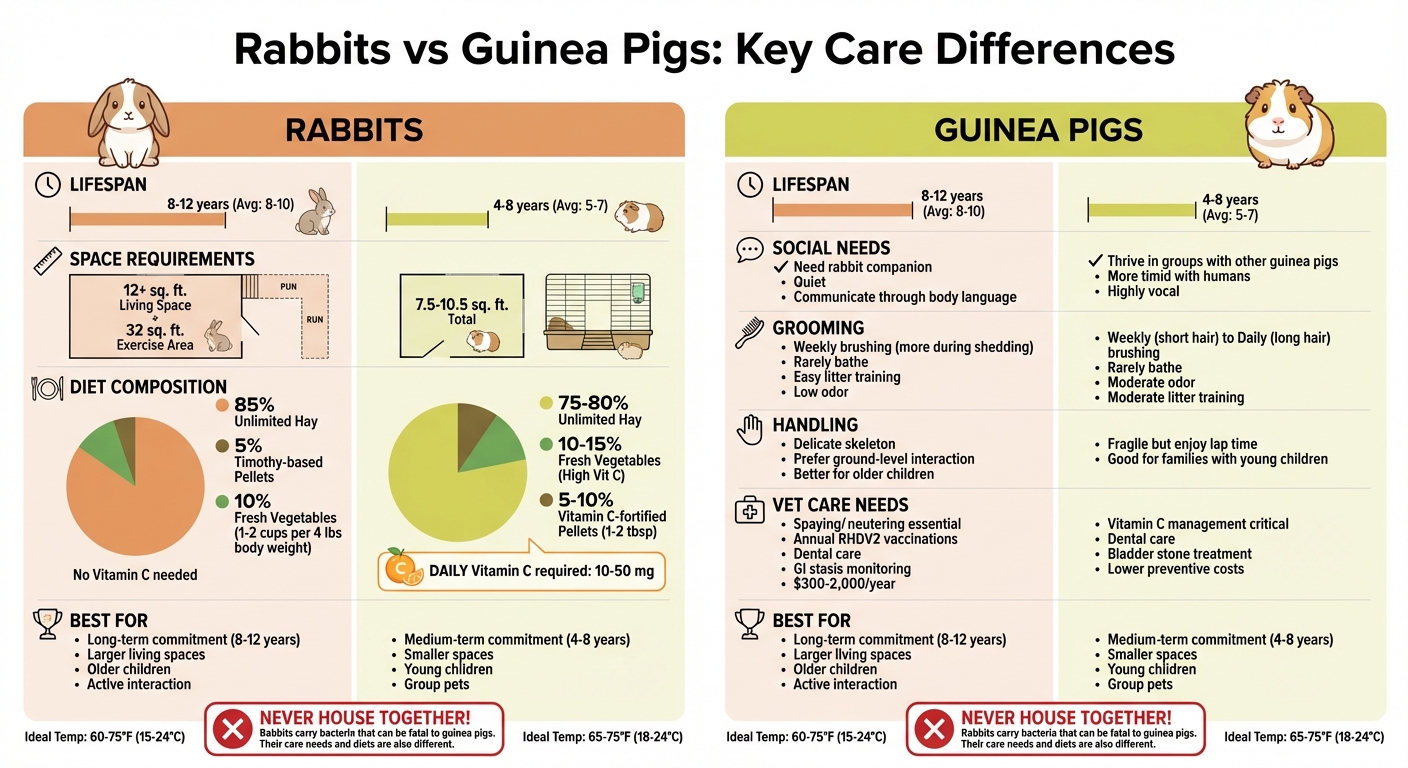
Rabbits vs Guinea Pigs: Complete Care Comparison Chart
RABBITS VS GUINEA PIGS: Which one is better for you?
Lifespan and Long-Term Commitment
When deciding between a rabbit and a guinea pig, it’s essential to consider the years of care each requires. Rabbits typically live between 8 and 10 years, with some reaching up to 12 years if spayed or neutered. Guinea pigs, on the other hand, usually live around 4 to 8 years, although rare cases have seen them live as long as 14 years. This means rabbits demand a long-term commitment, while guinea pigs may be a better fit for those looking for a medium-term responsibility.
Lifespan Comparison
Several factors influence the lifespan of rabbits and guinea pigs, which directly impacts the care they need. For rabbits, spaying female rabbits early is crucial. Without it, they face a high risk of uterine cancer, which can significantly shorten their lives. As Dr. Melissa Witherell, DVM, points out:
"Unspayed female rabbits have a high risk for uterine cancer and often have a shorter lifespan".
Another factor is breed size. Smaller rabbit breeds, like dwarfs, tend to live longer than larger breeds such as the Flemish Giant, which often have a lifespan of just 5 to 8 years.
Guinea pigs, meanwhile, have their own unique considerations. Since they cannot produce Vitamin C naturally, their diet must include adequate amounts to prevent scurvy, which can drastically reduce their lifespan. Coat type also plays a role: hairless guinea pigs often live 7 to 8 years, while long-haired breeds usually average closer to 4 years. As Angelina Childree, LVT, explains:
"The guinea pig’s lifespan can be impacted by genetics, diet, environment, and overall care".
Here’s a quick snapshot of their lifespans and factors that can influence longevity:
| Feature | Rabbits | Guinea Pigs |
|---|---|---|
| Lifespan Range | 7–12 years | 4–8 years |
| Average Lifespan | 8–10 years | 5–7 years |
| Factors Affecting Longevity | Spaying/neutering, breed size, indoor housing, dental health | Vitamin C intake, coat type, genetics, and environment |
Rabbits are considered seniors between 5 and 8 years of age, while guinea pigs reach senior status by 4 years. Both species benefit from climate-controlled indoor environments to extend their lives. Rabbits thrive in temperatures between 60°F and 75°F, while guinea pigs, being more temperature-sensitive, do best in a range of 65°F to 75°F. Regular checkups with an exotic animal veterinarian are essential for catching age-related health issues early. Paying attention to these factors ensures you’re prepared for the level of care each pet requires over their lifetime.
Diet and Nutrition
Rabbits and guinea pigs are strict herbivores, and their diets rely heavily on high-quality grass hay. For guinea pigs, hay should make up about 75% to 80% of their daily intake, while for rabbits, it’s even higher – around 85%. Hay, such as Timothy, orchard, or meadow varieties, is crucial for maintaining healthy digestion and naturally wearing down their ever-growing teeth.
A major difference between the two species lies in their Vitamin C requirements. Guinea pigs cannot produce Vitamin C on their own, so they need to consume 10–20 mg daily, or up to 50 mg for pregnant or stressed animals, to avoid scurvy. Dr. Gregory Rich emphasizes this point:
"The most critical aspect of the guinea pig’s diet is their requirement for vitamin C. Like primates, guinea pigs can develop scurvy, so they must have vitamin C in their pelleted foods and vegetables".
Rabbits, however, naturally synthesize Vitamin C in their bodies, so they don’t require supplementation. This is why feeding rabbit pellets to guinea pigs is a bad idea – rabbit pellets lack the fortified Vitamin C that guinea pigs need.
Both animals benefit from fresh vegetables daily, but their needs differ. Guinea pigs require 1/2 to 1 cup of mixed vegetables rich in Vitamin C, such as red bell peppers (150 mg per 1/2 cup) and kale (100 mg per 1/2 cup). Rabbits, on the other hand, need 1 to 2 cups of leafy greens per 4 lbs of body weight, with less focus on Vitamin C content. Pellet portions should also be limited: guinea pigs need only 1–2 tablespoons of Vitamin C–fortified pellets, while rabbits should have a small serving of high-fiber Timothy-based pellets. These differences highlight the importance of tailoring their diets to meet their unique nutritional needs.
Main Dietary Differences
When giving Vitamin C to guinea pigs, avoid adding it to their water. Vitamin C breaks down quickly when exposed to light and can alter the taste of water, discouraging them from drinking and potentially causing dehydration. Instead, opt for stabilized Vitamin C tablets or rely on Vitamin C–rich vegetables. Keep in mind that the Vitamin C in commercial pellets loses potency within 90 days, so always check expiration dates and store pellets in a cool, dark place.
Here’s a quick comparison of their daily dietary needs:
| Component | Rabbits | Guinea Pigs |
|---|---|---|
| Hay | Unlimited (85% of diet) | Unlimited (75-80% of diet) |
| Pellets | Limited (Timothy-based, high fiber) | 1-2 tbsp (Vitamin C fortified) |
| Veggies | 1-2 cups per 4 lbs body weight | 1/2 to 1 cup daily (high Vitamin C) |
| Supplements | Not required | Daily Vitamin C (10-50 mg) |
| Daily Proportions | ~85% Hay, ~10% Veggies, ~5% Pellets | ~75-80% Hay, ~10-15% Veggies, ~5-10% Pellets |
When introducing new vegetables, do so gradually to monitor for any digestive issues. Avoid "gourmet" pellet mixes containing seeds, nuts, or dried fruits, as these are high in fat and sugar and can lead to serious health problems. Lastly, always provide fresh water through a sipper bottle to keep it clean and free from contamination.
Housing and Space Requirements
Rabbits need considerably more room to thrive compared to guinea pigs. While rabbits require at least 12 sq. ft. of living space plus 32 sq. ft. for exercise, guinea pigs need between 7.5 and 10.5 sq. ft. This difference reflects their distinct movements: rabbits hop in wide arcs, while guinea pigs rely on open floor space to scurry around. Providing adequate space is crucial for their health and behavior.
For rabbits, the enclosure should allow 3–4 consecutive hops and include vertical space (2–3 ft) so they can stand upright without their ears touching the top. The Rabbit Code of Practice highlights this:
"The living area should be as large as possible. At least: big enough for your rabbit to lie down and stretch out comfortably in all directions; be high enough for it to stand up on its back legs without its ears touching the top".
Guinea pigs, on the other hand, require an enclosure height of 12 to 18 inches. However, the Humane Society cautions against many store-bought cages:
"Most cages marketed for guinea pigs are way too small. Guinea pigs need appropriate room to roam, with separate spaces for a nest, bathroom area and food and water".
Cramped spaces can lead to serious health issues for both species. Rabbits may develop spinal problems, muscle atrophy, and obesity, while guinea pigs face risks like obesity, heart disease, and bumblefoot – a painful bacterial infection on their feet. To prevent injuries, always use solid flooring; wire mesh can cause severe foot damage. For rabbits, connecting their living area to an exercise run with a ramp or tunnel lets them move freely, especially during their most active times: early morning and late evening.
Space and Enclosure Comparison
| Feature | Rabbits | Guinea Pigs |
|---|---|---|
| Minimum Enclosure Size | 12 sq. ft. (living) + 32 sq. ft. (exercise) | 7.5 to 10.5 sq. ft. |
| Exercise Requirements | Room for 3–4 hops, jumping, and running | Daily supervised floor time |
| Indoor vs Outdoor Suitability | Both (with proper protection) | Indoor only; sensitive to temperature |
| Litter Training Ease | Easy; rabbits naturally use one corner | Moderate; requires patience |
sbb-itb-e212914
Grooming and Hygiene
Guinea pigs with short hair need weekly brushing, while long-haired breeds require daily grooming to keep their coats in good shape. Rabbits, on the other hand, need brushing once a week, with extra attention during their shedding periods. Interestingly, bonded rabbits often groom each other, which naturally helps maintain their fur.
Bathing should only be done when absolutely necessary, as it can be highly stressful for both guinea pigs and rabbits. The RSPCA emphasizes:
"Bathing is quite stressful for guinea pigs but thankfully there are only a few reasons why your guinea pigs would ever need to get a bath".
For guinea pigs, baths are usually only needed if they’re heavily soiled, dealing with parasites, or preparing for a show. In most cases, a "butt bath" (cleaning just the hindquarters in a shallow pan of warm water) is enough. Always use shampoos formulated for small animals or kittens, avoid getting water near their ears and eyes, and never use a hair dryer. Instead, towel-dry them thoroughly and keep them warm until they’re completely dry.
Guinea pigs tend to produce more odor compared to rabbits. This is due to their spinal grease gland – more pronounced in males – and their high urine output, which can lead to ammonia buildup. Rabbits, however, are generally easier to litter train. They usually pick one spot for elimination, making waste management simpler and helping to keep odors to a minimum.
Both species benefit from daily spot-cleaning and a thorough weekly cleaning. For households with multiple guinea pigs, a deep clean twice a week is recommended. Nail trimming is another essential part of their grooming routine. Trims should be done at least once a month to prevent overgrowth and reduce the risk of foot infections like bumblefoot. Use human nail clippers or those designed for small animals, and have styptic powder or cornstarch handy in case you accidentally cut the quick. Regular grooming not only keeps your pets comfortable but also allows you to spot potential health issues early, which we’ll discuss further in the next section.
Grooming Needs Comparison
| Feature | Rabbits | Guinea Pigs |
|---|---|---|
| Bathing Frequency | Rarely (only when medically necessary) | Rarely (only if heavily soiled, have parasites, or for shows) |
| Brushing Needs | Weekly (more during shedding periods) | Weekly for short-haired; daily for long-haired breeds |
| Odor Level | Low (with proper litter training) | Moderate (due to grease gland and high urine output) |
| Litter Habits | Typically easy to train; favor one designated spot | Can be trained, though consistency may vary |
| Cleaning Frequency | Daily spot-cleaning; weekly deep cleaning | Daily spot-cleaning; weekly deep cleaning (twice per week for multiples) |
Social Behavior and Handling
Rabbits and guinea pigs have distinct needs when it comes to their care and social behavior. Rabbits often develop strong, almost dog-like bonds with their human companions, seeking attention and enjoying interaction with the family. They communicate through body language – thumping their feet when alarmed, performing joyful binkies when happy, and grooming as a way to show affection.
Guinea pigs, on the other hand, are naturally more social with their own kind. They thrive in groups and rely on the company of other guinea pigs. While they can grow comfortable with humans and may enjoy gentle lap time, they tend to be more timid. Communication for guinea pigs is largely vocal – you might hear them wheek with excitement, squeal when happy, or chatter their teeth when annoyed or scared.
The RSPCA sums it up perfectly:
"A rabbit’s best companion is another friendly rabbit. A guinea pig’s best companion is another friendly guinea pig."
It’s crucial to never house rabbits and guinea pigs together. Rabbits can carry Bordetella bronchiseptica, a bacterium that doesn’t affect them but can cause severe respiratory illness in guinea pigs. Additionally, rabbits have strong hind legs that can unintentionally injure or bully guinea pigs. Their differing communication styles – rabbits relying on subtle body language and guinea pigs depending on vocalizations – can lead to stress and misunderstandings when forced to coexist. These differences highlight why separate enclosures and careful handling are essential for their well-being.
If you own both species, the best approach is to house them in separate enclosures while placing these enclosures side-by-side. This allows them to see and smell each other safely through a barrier. Handling also requires special care for both animals. Always support their entire body with both hands to prevent injury. Guinea pigs are especially fragile and can suffer spinal fractures if dropped, while rabbits also have delicate skeletons that need proper support. Understanding these distinctions is key to ensuring their health and happiness.
Social and Behavioral Comparison
| Feature | Rabbits | Guinea Pigs |
|---|---|---|
| Human Interaction | Form strong bonds with humans, enjoying family interaction and attention. | Friendly but generally more timid; may enjoy gentle lap time once comfortable. |
| Companionship Needs | Best kept with another friendly rabbit. | Thrive in pairs or small groups with other guinea pigs. |
| Vocalization | Quiet; communicate through body language like thumping and binkying. | Highly vocal; use sounds like wheeking, chattering, and squealing to express feelings. |
| Handling Fragility | Delicate skeletons; improper support or handling can cause injury. | Extremely fragile; prone to spinal injuries if mishandled or dropped. |
| Playtime | Energetic; enjoy binkying and need plenty of space to hop. | Show bursts of energy with "zoomies" or "popcorning." |
Veterinary Care and Health
Beyond daily care, specialized veterinary attention is a must for both rabbits and guinea pigs. These animals require vets trained in exotic species due to their distinct anatomies and sensitivities. For example, guinea pigs are highly sensitive to certain antibiotics, specifically the "P.L.A.C.E." group (Penicillin, Lincosamide, Amoxicillin, Cephalosporins, and Erythromycin). These medications can disrupt their gut bacteria, potentially causing fatal digestive problems. Additionally, as prey animals, both species tend to hide signs of illness, making regular vet visits essential for early detection.
For rabbits, spaying or neutering is key to promoting health and managing behavior. Guinea pigs, on the other hand, need careful Vitamin C management to prevent deficiencies and related health issues. Dental problems are a common concern for both pets – 29.9% of rabbit vet visits involve dental issues, while skin conditions account for 37.6% of guinea pig cases. Regular at-home monitoring, such as weekly weigh-ins, checking droppings, and observing eating habits and behavior, can help catch potential problems early.
Oxbow Animal Health emphasizes the importance of vigilance:
"As prey animals, rabbits and guinea pigs are both experts at hiding signs of illness or discomfort. Unfortunately, this inherently stoic disposition means even the most well-meaning pet parent can miss the subtle signs of a brewing health issue."
When selecting a vet, look for someone certified as a Diplomate of the American Board of Veterinary Practitioners (ABVP) with expertise in Exotic Companion Mammals, or find a clinic focused solely on exotic pets. Keep in mind that veterinary care for these animals can be more expensive than for traditional pets. Rabbit owners, for instance, report spending anywhere from $300 to $2,000 annually, depending on their pet’s specific health needs.
Healthcare Needs Comparison
| Feature | Rabbits | Guinea Pigs |
|---|---|---|
| Vet Specialization | Specialized exotic vet | Specialized exotic vet |
| Common Procedures | Spaying/neutering, annual RHDV2 vaccinations, dental trimming, treatment for gastrointestinal stasis | Dental procedures, management of bladder stones, ovarian cyst treatment, and Vitamin C supplementation |
| Health Monitoring | Monitor fecal output, weight, appetite changes, and signs of GI stasis | Regular weigh-ins, ensuring adequate Vitamin C intake, and watching for signs like rapid weight loss or respiratory infections |
| Cost Considerations | Higher routine costs – including spay/neuter ($150–$300), annual vaccinations, and emergency GI care | Lower preventive costs, though chronic dental or urinary issues can increase expenses |
Conclusion
The space, lifespan, and handling needs of rabbits and guinea pigs highlight their different care requirements. Rabbits need much more room to roam and exercise compared to guinea pigs, making guinea pigs a better fit for homes with limited indoor space.
When it comes to lifespan, rabbits live longer, which means a bigger time commitment. Handling is another key factor – guinea pigs are generally laid-back and enjoy being held, making them a great choice for families with young children. On the other hand, rabbits have delicate skeletons and prefer interactions at ground level, making them a better match for families with older children who can handle them carefully.
Both pets need specialized care from exotic animal veterinarians. Guinea pigs require daily Vitamin C supplements, and both species rely on unlimited grass hay to maintain healthy teeth. While guinea pigs are considered medium-maintenance, rabbits demand more time and effort. Before adopting either, ensure you can access a qualified exotic vet and are ready for the financial responsibility.
With the right care, both rabbits and guinea pigs can be wonderful companions. Choose the pet that aligns best with your living space, lifestyle, and family needs.
FAQs
What are the main dietary differences between rabbits and guinea pigs?
Rabbits and guinea pigs may both be herbivores, but their dietary needs aren’t identical. Here’s how their diets differ:
- Hay as the foundation: For rabbits, hay is the cornerstone of their diet, making up about 85% of what they eat. Guinea pigs also rely heavily on hay, but it accounts for roughly 75% of their diet. The remaining portion for guinea pigs includes pellets, vegetables, and a small amount of fruit.
- Vitamin C matters for guinea pigs: Unlike rabbits, guinea pigs can’t produce their own vitamin C. This means they need foods rich in this nutrient, like bell peppers or kale, or even a supplement. While rabbits don’t have this specific requirement, they still enjoy and benefit from leafy greens as part of their meals.
- Pellets and occasional treats: Rabbits consume a small amount of pellets and rarely indulge in sugary treats such as fruit. Guinea pigs, however, have a slightly different approach. They need about two tablespoons of species-specific pellets daily and can enjoy fruit occasionally – though it should remain less than 5% of their overall diet.
In essence, rabbits thrive on a hay-heavy diet with minimal extras, while guinea pigs require a bit more variety, especially to meet their vitamin C needs.
What are the differences in space and exercise needs between rabbits and guinea pigs?
Rabbits need a lot more room to move around compared to guinea pigs. Their enclosure should cover at least 8 square feet – about the size of a small pen – and they’ll also need extra space for a supervised play area where they can stretch and explore. Ideally, their living space should be 4–6 times their fully stretched body length, giving them enough room for comfort and mobility.
Guinea pigs, while still needing a spacious setup, have slightly smaller space requirements. A single guinea pig needs a cage that’s at least 7.5 square feet, though larger enclosures are better, especially if you’re housing more than one. Many store-bought cages are too cramped, so it’s worth investing in or building a more suitable setup. Like rabbits, guinea pigs also need daily time outside their cage for exercise, but their activity levels tend to be lower.
To sum it up, rabbits thrive with a room-scale pen or free-roaming setup, while guinea pigs are comfortable in a roomy cage paired with shorter, supervised play sessions.
What health care needs should you consider when choosing between rabbits and guinea pigs?
Rabbits and guinea pigs both need consistent veterinary care, but their specific health needs vary based on their characteristics.
Rabbits can live over 10 years and require regular check-ups to keep an eye on their teeth, digestion, and reproductive health (spaying or neutering is often recommended). These animals are naturally active and need daily exercise as well as mental stimulation, like chew toys or tunnels, to avoid problems like obesity, dental issues, or gastrointestinal stasis – a potentially life-threatening condition.
Guinea pigs, on the other hand, typically live 4–8 years. Their diet should be rich in fiber, including unlimited hay, fresh leafy greens, and plenty of clean water. Caring for them also involves daily cage spot-cleaning, trimming their nails regularly, and occasional grooming. Like rabbits, guinea pigs benefit from routine vet visits and dental checks to maintain good health.
Both rabbits and guinea pigs thrive when given attentive care and prompt medical attention if issues arise. Owning either pet is a commitment, so it’s important to be prepared for their needs.