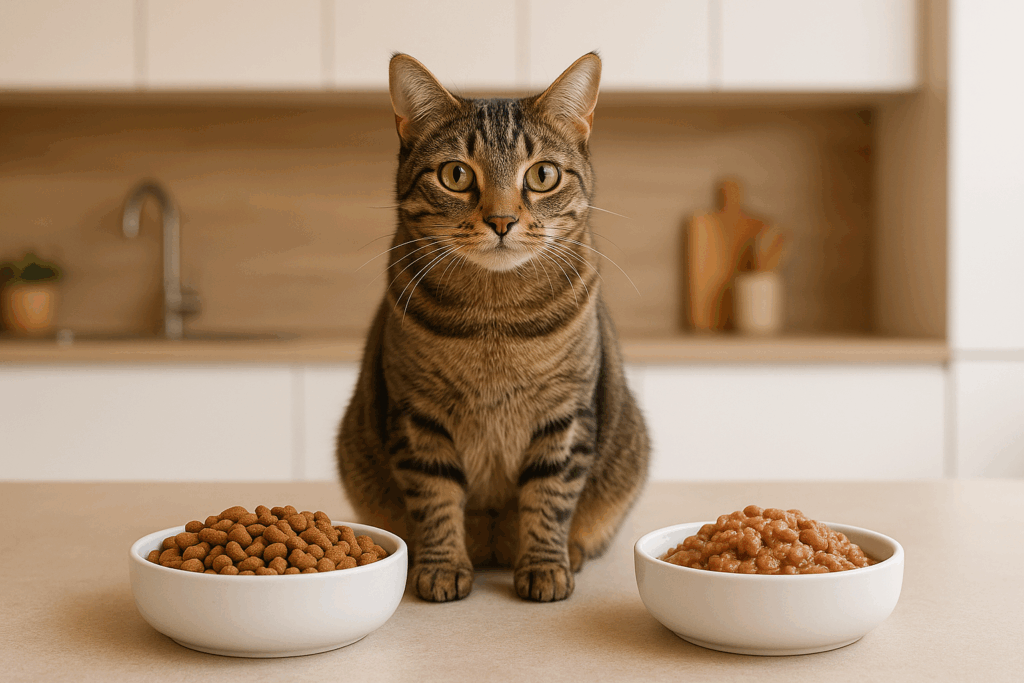
When choosing between dry and wet cat food, the decision often comes down to your cat’s needs and your lifestyle. Here’s a quick breakdown:
- Dry food: Low moisture (9-12%), higher in calories (300-500 per cup), more affordable ($0.50-$2.00/day), and convenient for storage and free-feeding. However, it has higher carbohydrate content (30-50%) and may not hydrate cats well.
- Wet food: High moisture (75-85%), lower in calories (70-100 per 3 oz can), costs more ($1.50-$7.00/day), and requires refrigeration. It offers higher protein (40-60%) and lower carbs (3-10%), making it better for hydration and weight control.
Quick Comparison
| Aspect | Dry Cat Food | Wet Cat Food |
|---|---|---|
| Moisture | 9-12% | 75-85% |
| Calories | 300-500 per cup | 70-100 per 3 oz can |
| Carbs | 30-50% | 3-10% |
| Cost | $0.50-$2.00/day | $1.50-$7.00/day |
| Convenience | Easy to store, free-feeding | Needs refrigeration, timed meals |
For hydration and specific health needs, wet food is often better. For convenience and cost, dry food wins. You can also combine both to balance benefits.
1. Dry Cat Food
Moisture Content
Dry cat food contains about 9-12% water, which means your cat has to drink more to stay hydrated. Cats naturally have a low thirst drive, so this can sometimes be a challenge. The dehydration process used to make kibble gives it that crunchy texture, extends its shelf life, and packs in concentrated nutrients.
Nutritional Profile
Dry food tends to have higher carbohydrate levels than wet food, usually falling between 30-50%. These carbohydrates come from ingredients like rice, corn, or potatoes, which help bind the kibble during production. While cats don’t need high amounts of carbs in their diets, most healthy adult cats can handle these levels without issues.
When it comes to protein, dry food typically offers 26-40%, with premium brands leaning toward the higher end of that range. Thanks to the moisture removal process, it’s easier to concentrate protein into smaller portions.
Fat content in dry food generally ranges from 8-22%, providing essential fatty acids that support a healthy coat and energy levels. Manufacturers often add fat after cooking to improve the taste and ensure even distribution.
Now, let’s see how all these nutrients translate into calorie content.
Calorie Density
Dry cat food is calorie-dense, offering roughly 300-500 calories per cup, depending on the brand and formula. For an average adult cat weighing about 8 pounds, which needs 200-250 calories daily, this means feeding around 1/2 to 3/4 cup of dry food per day. However, the exact amount depends on factors like your cat’s age, activity level, and metabolism.
Because of its high calorie concentration, dry food can be a great option for active cats that burn a lot of energy. But it also means portion control is crucial – overfeeding is easy if you’re not careful about measuring.
Aside from its nutritional aspects, dry food also stands out for its practicality.
Cost and Convenience
Dry cat food is often more affordable, costing around $0.50-$2.00 per day for an average cat, compared to wet food, which can run between $1.50-$4.00 daily. While premium dry foods might have a higher upfront cost, they often deliver better value per serving.
Another big win for dry food is storage convenience. It can stay fresh in your cat’s bowl for hours without spoiling, making it a great choice for free-feeding or for pet parents with busy schedules. Unlike wet food, it doesn’t need refrigeration after opening and typically stays fresh for 6-8 weeks when stored in a sealed container.
The crunchy texture of dry food might also help with dental health, though it’s not a replacement for proper dental care. Plus, portioning is straightforward, allowing you to measure exact amounts and leave food out without worrying about spoilage. This convenience makes dry food particularly handy for multi-cat households or cats that prefer to graze throughout the day.
All these factors combine to make dry food a practical and flexible feeding option that supports consistent routines and dietary needs.
2. Wet Cat Food
Moisture Content
Wet cat food is made up of 75-85% water, closely resembling the hydration cats would get from their natural prey. This high moisture content is especially helpful for cats that don’t drink enough water on their own – a common issue since cats evolved from desert-dwelling ancestors. Including wet food in their diet can significantly improve their hydration levels.
The soft texture of wet food is also ideal for senior cats, those with dental problems, or picky eaters who might struggle with the crunchiness of kibble. Proper hydration not only supports their overall health but also aids in better nutrient absorption, which ties into the food’s nutritional profile.
Nutritional Profile
Wet cat food generally packs higher protein levels, ranging from 40-60% on a dry matter basis. This protein is derived from meat, fish, or poultry, making it highly digestible. The cooking process used in canning helps retain these proteins while making them easier for cats to process.
Another key advantage is the low carbohydrate content, typically between 3-10%, which aligns more closely with a cat’s natural dietary needs. Since cats aren’t built to handle large amounts of carbs, this makes wet food a better option for diabetic cats or those who are prone to weight gain.
The fat content in wet food usually falls between 2-8%, which is lower than dry food. However, the fats in wet food are more bioavailable, thanks to the cooking and canning process. These fats, including essential fatty acids, promote a healthy coat and skin.
Calorie Density
Wet cat food is far less calorie-dense than dry kibble, with around 70-100 calories per 3-ounce can. For an average 8-pound cat, this means you’d need to provide about 2.5-3.5 cans daily to meet their caloric needs of 200-250 calories. This lower calorie density can be a great tool for weight management, as cats feel fuller while consuming fewer calories.
The high water content also helps prevent overeating, making wet food a smart choice for indoor cats or those prone to obesity. However, the flip side is that you’ll need to feed a larger volume to meet their energy needs. For cats with higher energy demands or those needing to gain weight, you might need to add extra cans or mix in some dry food to ensure they’re getting enough calories.
Cost and Convenience
Wet cat food tends to cost more than dry food, with daily expenses ranging from $1.50 to $4.00 per cat. Premium or specialty options, such as therapeutic diets, can cost even more – up to $5.00–$7.00 daily. Despite the higher price tag, many pet owners find the benefits worth the cost, particularly for cats with specific health concerns.
Storage and handling require a bit more effort. Opened cans need to be refrigerated and used within 2-3 days to avoid spoilage. While unopened cans have an excellent shelf life of 2-5 years, they do take up more storage space compared to dry food bags.
One important note: wet food shouldn’t be left out for more than 30-60 minutes, as it spoils quickly. This eliminates the option of free-feeding and requires more structured meal times. For busy pet owners, this might mean adjusting daily routines or investing in automatic feeders designed for wet food.
On the upside, wet food’s pre-measured portions make it easier to control serving sizes. Many cats also prefer their wet food at room temperature, so you may need to warm up refrigerated portions before serving. While wet food requires a bit more effort, the benefits it offers – hydration, balanced nutrition, and palatability – are often worth the added time and cost.
Wet vs. Dry Cat Food: Which is Better? (Pros and Cons)
sbb-itb-e212914
Advantages and Disadvantages
Deciding between dry and wet cat food involves weighing their pros and cons to find the best fit for your cat. Building on the earlier nutrient and calorie breakdown, here’s a practical look at what each option brings to the table.
| Aspect | Dry Cat Food | Wet Cat Food |
|---|---|---|
| Moisture Content | Low (9-12%) – cats need to drink more water | High (75-85%) – helps with hydration |
| Nutritional Profile | Higher in carbs (30-50%), moderate protein (26-40%) | Higher protein (40-60%), low carbs (3-10%) |
| Calorie Density | High (300-500 calories per cup) | Low (70-100 calories per 3-oz can) |
| Cost | Affordable ($0.50-$2.00 daily) | Pricier ($1.50-$7.00 daily) |
| Convenience | Easy to store, long shelf life, free-feeding | Needs refrigeration, spoils quickly, structured meals |
Dry food stands out for its affordability and ease of use, making it great for busy pet owners or households with multiple cats. Its long shelf life and free-feeding option add to its convenience.
On the downside, dry food has low moisture content, which can lead to dehydration or urinary tract problems in cats that don’t drink enough water. Its higher carbohydrate levels also make it less ideal for cats with diabetes or those prone to gaining weight.
Wet food, on the other hand, offers better hydration and a more balanced nutritional profile. This makes it an excellent choice for cats with specific health needs, like diabetes or urinary issues. However, wet food is more expensive and requires careful handling – refrigeration and timely feeding are necessary to prevent spoilage.
For cats with health concerns, the decision often becomes clearer. Diabetic cats benefit from wet food’s low-carb composition, while cats with dental issues may find it easier to eat. That said, the crunch of dry kibble can help with dental health, though it shouldn’t replace regular dental care.
When it comes to weight management, wet food’s lower calorie density makes it a better option for overweight cats aiming to slim down. Meanwhile, dry food’s higher calorie content can help underweight cats gain weight more effectively.
Ultimately, the choice depends on your cat’s specific health needs, lifestyle, and your own routine. Balancing these factors will help you make the best decision for your feline friend.
Conclusion
Deciding between dry and wet cat food comes down to your cat’s unique needs. Wet food typically offers higher moisture content and a richer protein profile, which can be beneficial for hydration and overall nutrition. On the other hand, dry food is often appreciated for its convenience and affordability.
Factors like your cat’s age, health, and activity level should play a role in your decision. For example, older cats or those with health issues may benefit from the softer texture and added moisture of wet food. Meanwhile, active and healthy adult cats might thrive on dry food, as long as fresh water is readily available. Tailoring your choice to these specifics ensures your cat gets the right nutrition.
Another option to consider is a mixed feeding plan. Combining wet food for hydration and dry kibble for convenience can offer the best of both worlds, giving your cat a balanced diet that meets their needs.
FAQs
What’s the best way to balance dry and wet food in my cat’s diet?
When deciding on the right mix of wet and dry food for your cat, it’s important to consider their individual needs, health, and preferences. A common approach is to aim for a daily ratio of about two-thirds wet food and one-third dry food. This balance ensures your cat gets the hydration benefits of wet food while still enjoying the dental advantages of dry kibble. That said, the ideal ratio can vary depending on factors like your cat’s age, activity level, and overall health.
Be sure to check the feeding recommendations on the packaging to determine appropriate portion sizes. If your cat has specific dietary requirements or you’re uncertain about the best feeding plan, consult your veterinarian for personalized guidance.
Are there any health risks to feeding my cat only dry food?
Feeding your cat exclusively dry food can pose some health concerns. Dry food has a low moisture content, which might not provide your cat with enough hydration. Since cats naturally tend to drink less water, this could lead to dehydration or urinary problems over time. Proper hydration is also essential for maintaining kidney health, which may not be fully supported by dry food alone.
Another consideration is that some dry foods are higher in carbohydrates. If not carefully monitored, this could contribute to weight gain or even diabetes in your cat. To help maintain their health, you might want to include wet food in their diet or make sure they always have access to fresh, clean water. If you opt for dry food, prioritize a high-quality option that meets your cat’s specific nutritional needs.
How can I make sure my cat stays hydrated if they mostly eat dry food?
To keep your cat hydrated while on a dry food diet, try adding a little warm water to their kibble. This not only adds moisture but can also make their meal more appealing. Always ensure your cat has access to fresh water by placing multiple bowls throughout your home – cats are more likely to drink when water is easy to find.
If your cat needs a bit more persuasion, you can flavor their water with a splash of low-sodium chicken broth or unsalted tuna juice. Another great option is a pet water fountain, as many cats are naturally drawn to running water. These simple changes can go a long way in supporting your cat’s hydration and overall health.