Affiliate disclosure: Little Pet Corner is reader-supported. Some links on this page are affiliate links, including Amazon Associates links. If you buy through them, we may earn a small commission at no extra cost to you. It never changes what we recommend.
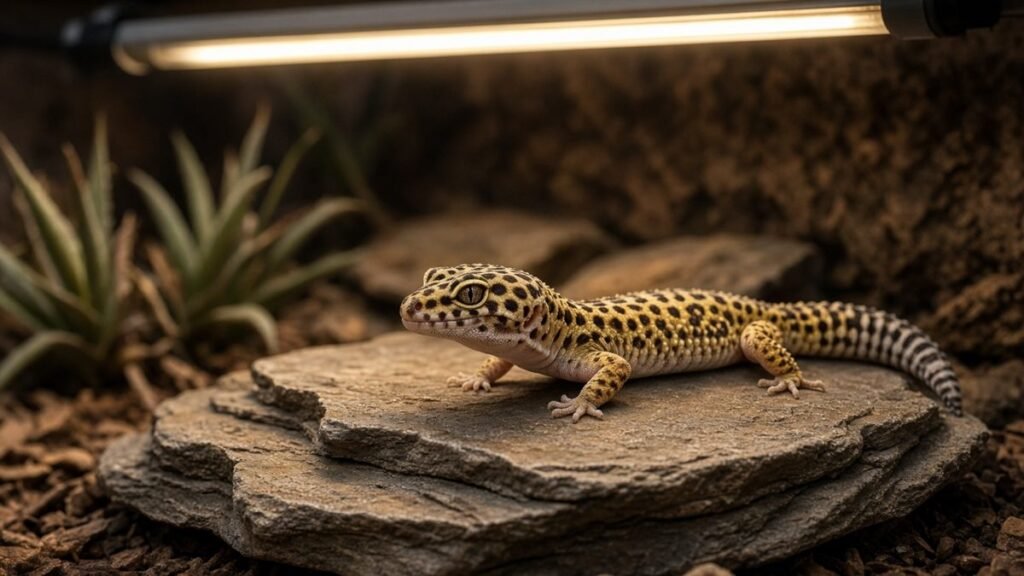
Short answer: a leopard gecko can survive without UVB if it gets a calcium supplement with vitamin D3, but most reptile vets and care references now recommend low-output UVB because geckos use it to make their own vitamin D3. The simplest safe setup is a 12-inch, low-output T5 UVB lamp (such as the Arcadia ShadeDweller 7% kit or a Zoo Med ReptiSun T5 HO 5.0) mounted over the warm side, aiming for a basking UV Index of about 0.5-1.5 for normally pigmented geckos and 0.5-0.7 for albino and other low-pigment morphs.
That is the whole decision in one paragraph. The rest of this guide explains why the advice changed, how to pick a bulb and distance, and how to adjust your calcium routine once UVB is in place.
How we put this together: we did not measure UVI in our own enclosures for this article. The numbers below come from published care guidance: ReptiFiles’ leopard gecko lighting guide (which uses UVI zones from reptile vet Frances Baines), VCA Animal Hospitals, and the manufacturers’ own lamp charts. If your gecko is sick, losing weight, or has soft or bent bones, see an exotic pet vet first.
Does a Leopard Gecko Really Need UVB?
Leopard geckos are crepuscular: they are most active around dawn and dusk, when sunlight is weak. For years that led keepers to say they “don’t need UVB.” The more accurate version is:
- Required? Not strictly. VCA says UVB is “not required, but is recommended,” and geckos can avoid metabolic bone disease on a well-dosed calcium + D3 supplement.
- Beneficial? Yes. Studies summarized by ReptiFiles show leopard geckos will bask under UVB when it is offered and can produce vitamin D3 from it. UVB also supports normal day-night rhythm and lets the gecko regulate its own exposure instead of depending on powder dosing.
- Risky if done wrong? Yes. Too strong a lamp, or one placed too close, can damage the eyes and skin, especially in albino, patternless and other low-pigment morphs. That is why the “low-output” part matters.
Target UV Index for Leopard Geckos
| Gecko type | Basking UVI target | Notes |
|---|---|---|
| Normal / well-pigmented morphs | 0.5-1.5 | Measured at the top of the basking spot |
| Albino, patternless, other low-pigment morphs | 0.5-0.7 | Use a weaker lamp or more distance |
| Cool side and hides | ~0 | Always give full shade to retreat to |
The only way to know your real UVI is a UV Index meter like the Solarmeter 6.5. It is not cheap, but if you keep several reptiles it pays for itself. If you do not have one, use the distance ranges below as a starting point and err on the side of more distance.
Best Low-Output UVB Setups
Best overall: Arcadia ShadeDweller 7% UVB kit (12-inch)
Arcadia designed the ShadeDweller kit specifically for crepuscular species like leopard geckos, with a basking distance of about 12 inches in mind. It is a complete T5 kit (fixture, reflector and lamp), which removes the guesswork of matching parts. ReptiFiles’ rough distances for normally pigmented geckos are about 10-18 inches with the lamp on top of mesh, or 12-20 inches mounted inside the enclosure.
Best for albino and low-pigment morphs: Arcadia ShadeDweller Max (2.5%)
The weaker Max version is the easier way to stay in the 0.5-0.7 UVI zone for sensitive morphs. ReptiFiles suggests roughly 12-14 inches over mesh or 14-18 inches inside the enclosure for hypo-pigmented geckos.
Best widely available alternative: Zoo Med ReptiSun T5 HO 5.0
Often easier to find in stores. It is stronger per inch than the ShadeDweller, so it needs more distance. The Bio Dude’s guide lists about 13-24 inches with the Zoo Med T5 hood over mesh. Always pair it with a proper T5 HO fixture, not a hardware-store under-cabinet light.
Optional: a UV Index meter
How to Set Up UVB in a Leopard Gecko Tank
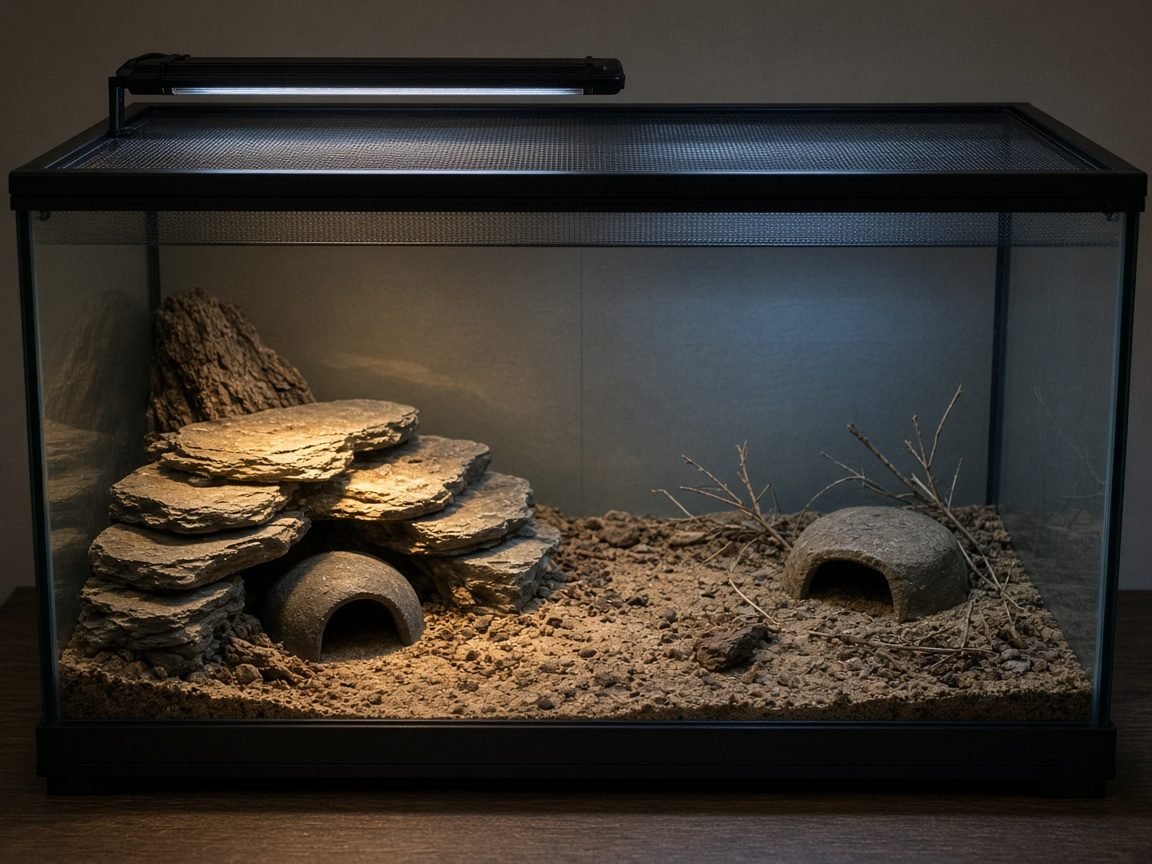
- Pick a lamp about one-third to one-half the length of the enclosure. A 12-inch T5 is usually right for a 36-inch tank. See our leopard gecko enclosure guide if you are still choosing a size.
- Mount it on the warm side, next to the heat lamp, so the gecko gets heat and UVB in the same place, just like sunlight. Our guide to leopard gecko heat lamps covers the heat side.
- Account for mesh. Screen tops typically block around 30% or more of UVB. Arcadia notes stainless mesh can cut UVI by 30%+.
- Set the distance from the top of the basking platform (plus your gecko’s height) to the lamp, using the ranges above.
- Leave plenty of shade. Hides and the cool side should get little or no UVB, so your gecko can choose.
- Run it on a timer with the day lights, about 12 hours on, and turn everything off at night.
- Replace the lamp every 12 months. UVB output fades long before the visible light does.
Keep your heat under control while you are at it. A thermostat is non-negotiable for heat lamps and mats. See our best leopard gecko thermostats and ideal leopard gecko tank temperatures.
UVB and Calcium: What Changes
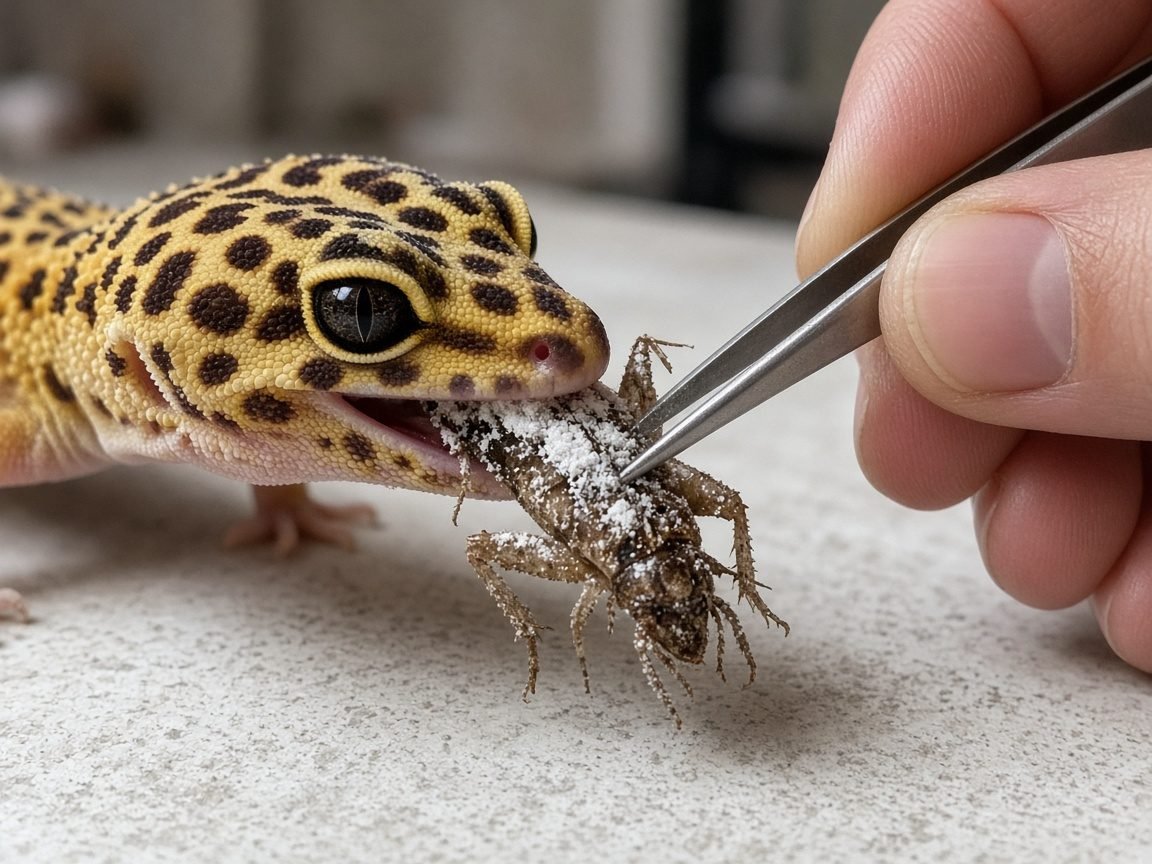
UVB and dietary vitamin D3 do the same job, so you adjust the powders once the lamp is in:
- Without UVB: dust feeders with a calcium powder that contains vitamin D3, on the schedule your vet or the product label recommends.
- With UVB: many keepers switch most feedings to plain calcium (no D3) and use a reptile multivitamin occasionally. Ask your vet before changing a routine for a young, gravid or sick gecko.
Common UVB Mistakes
- Using a high-output “desert” lamp (10-14%) meant for bearded dragons at short distance.
- Coil or “UVB” bulbs from unknown brands. Output varies widely. Stick with reputable reptile brands and published charts.
- Putting UVB on the cool side only, away from the basking spot.
- Blocking it with glass or plastic. Glass and acrylic block UVB almost completely.
- Forgetting the yearly bulb swap. Write the install date on the fixture.
Setting up your first tank? Our leopard gecko shopping checklist and bedding guide cover the rest.
Frequently Asked Questions
Can a leopard gecko live without UVB?
Yes. Leopard geckos can survive without UVB if they get a calcium supplement with vitamin D3, but low-output UVB is now recommended by most care references because geckos benefit from making their own vitamin D3.
What UVB percentage is best for a leopard gecko?
A low-output lamp, such as a 5-7% T5 like the Arcadia ShadeDweller 7% or Zoo Med ReptiSun T5 HO 5.0, set at the right distance. For albino and other low-pigment morphs, a weaker lamp like the ShadeDweller Max is safer.
How far should a UVB light be from a leopard gecko?
It depends on the lamp and mesh. As a rough guide, a ShadeDweller 7% over mesh is about 10-18 inches from the basking spot for normally pigmented geckos. A UV Index meter gives the most accurate placement.
Should the UVB light be on at night?
No. Run UVB and day lights for about 12 hours a day on a timer, and turn them off at night.
How often do you replace a leopard gecko UVB bulb?
Replace T5 UVB lamps every 12 months, even if they still light up, because their UVB output declines over time.
The Bottom Line
UVB is not mandatory for leopard geckos, but it is the better way to keep them. A 12-inch low-output T5 kit on the warm side, a basking UVI of 0.5-1.5 (0.5-0.7 for low-pigment morphs), plenty of shade, a 12-hour timer and a yearly lamp change cover almost every setup.