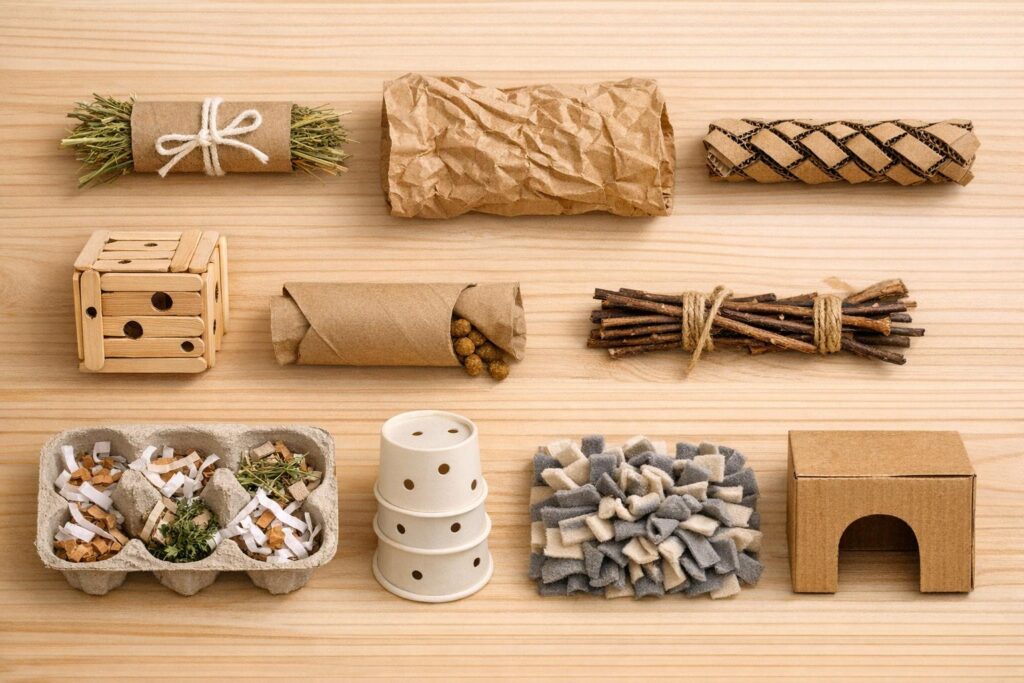
Want to keep your small pets happy and active without spending a fortune? DIY toys are a simple solution. Using everyday items like cardboard tubes, paper bags, and old towels, you can create fun activities that encourage natural behaviors like chewing, foraging, and hiding. These toys are not only affordable but also safer since you control the materials used.
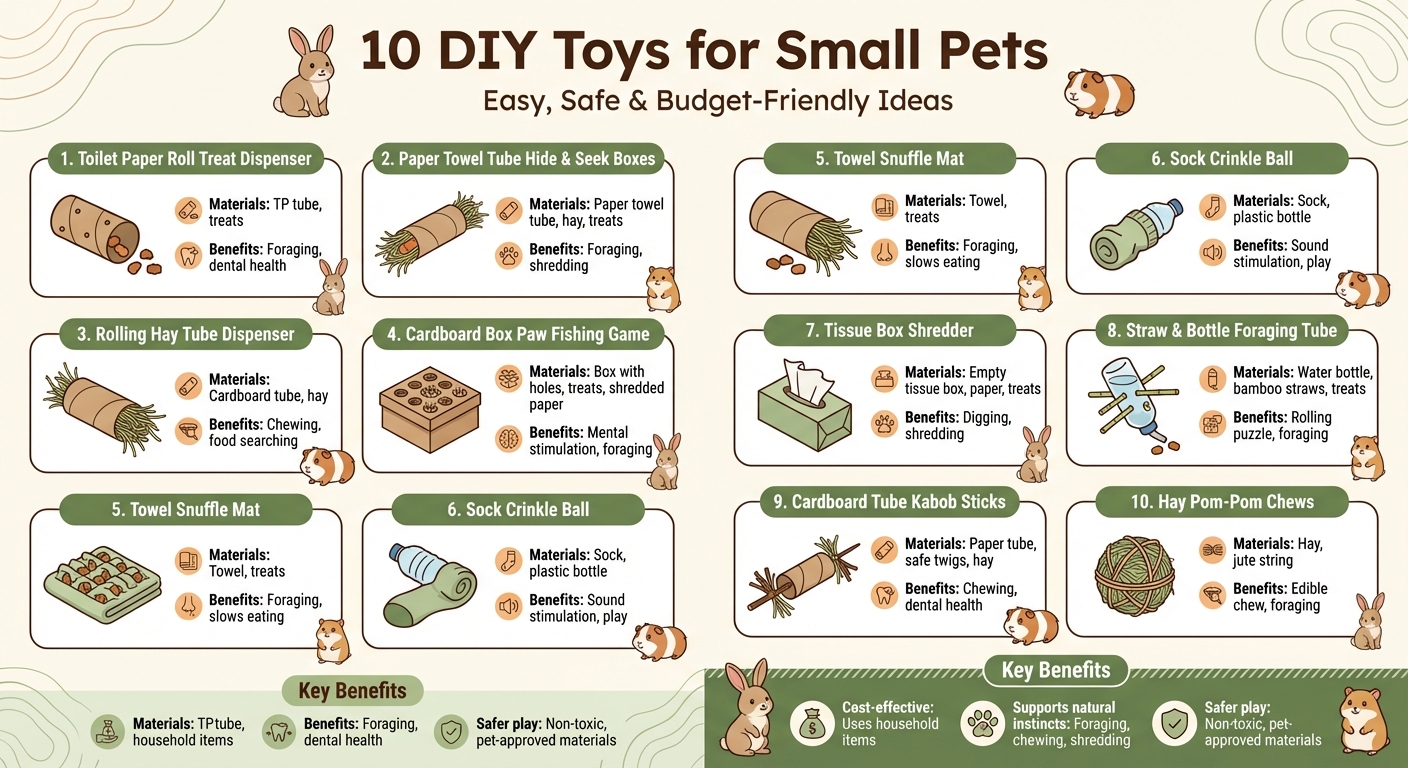
Here’s a quick overview of the ideas in the article:
- Toilet Paper Roll Treat Dispenser: A chewable toy that doubles as a treat puzzle.
- Paper Towel Tube Hide and Seek Boxes: A foraging challenge that combines treats and shredding.
- Rolling Hay Tube Dispenser: Encourages chewing and food searching.
- Cardboard Box Paw Fishing Game: Turns treat time into a puzzle.
- Towel Snuffle Mat: A rolled towel hiding treats for foraging fun.
- Sock Crinkle Ball: Uses a sock and bottle to create a crinkly sound toy.
- Tissue Box Shredder: A treat-filled box for digging and chewing.
- Straw and Bottle Foraging Tube: A rolling puzzle with treats and shredded paper.
- Cardboard Tube Kabob Sticks: Combines chewing and foraging with safe wooden sticks.
- Hay Pom-Pom Chews: Edible chew toys made from leftover hay.
Key Benefits:
- Cost-effective: Most toys use household items.
- Supports natural instincts: Foraging, chewing, and shredding.
- Safer play: Materials are non-toxic and pet-approved.
DIY toys are easy to make, keep your pets entertained, and help maintain their physical and mental health. Let’s dive in!
10 DIY Toys for Small Pets: Quick Reference Guide
1. Toilet Paper Roll Treat Dispenser
Materials
You’ll need a clean toilet paper or paper towel tube, scissors, and a handful of small treats. For a "treat ball" style dispenser, cut the tube into rings about ½ inch wide and reassemble them into a sphere that dispenses treats as it rolls. Another option is to create a "shredder tube" by folding the ends inward to trap the treats inside.
Once you’ve put it together, double-check that the toy is safe for your pet to use.
Safety and Non-Toxicity
Before using the tube, make sure to remove any adhesive residue to prevent your pet from accidentally ingesting it . Stick to plain cardboard and avoid tubes with ink, glossy coatings, or other decorative finishes . Since small exotic pets like to chew on cardboard or use it as bedding, supervise their first play session to ensure they’re interacting with the toy safely.
Encouraging Natural Behaviors
This simple toy encourages your pet’s natural foraging instincts. Rolling, tossing, and chewing the dispenser not only keeps them engaged but also helps maintain their dental health .
"The goal for this toy is to create a simple food dispenser… so your rabbit has a chance to roll it and toss it around while they figure out how to get the treats out."
– Amy Pratt, Bunny Lady
Cost-Effectiveness
Using household items like toilet paper rolls is an affordable way to entertain your pet. Compared to store-bought toys, which can be expensive and less durable, this DIY option provides hours of fun without breaking the bank .
sbb-itb-e212914
DIY Small Pet Toys
2. Paper Towel Tube Hide and Seek Boxes
This next DIY toy takes the fun up a notch by combining treat dispensing with interactive hide-and-seek play, offering your pet a more engaging enrichment experience.
Materials You Already Have at Home
Start by cutting a paper towel tube into three equal pieces. You’ll need scissors, small bits of hay (or your pet’s daily food), and tiny treats. Cut a square opening on the side of each tube section, then fold the ends inward to seal in the goodies. For an extra challenge, punch holes in the top and bottom of each section, and string them together using untreated paper string or jute, leaving about an inch of space between each box. Remember to prioritize safety by using pet-friendly materials.
Safe and Non-Toxic for Small Pets
Always check that the cardboard is plain and free from adhesives, tape, or sticky labels. Stick to untreated materials without heavy inks or chemical coatings to protect your pet. If you’re creating a hanging version, make sure to use untreated paper string or jute to prevent any risks of entanglement or ingestion. Supervision is key when introducing any new toy to your pet.
Encourages Natural Instincts
This toy speaks to your pet’s natural foraging and shredding instincts. By hiding treats and hay inside, you’re encouraging your pet to work for its food – just like they would in the wild. The square cutout acts as a scent vent, guiding your pet to the hidden treats, while the closed ends create a fun little puzzle. Plus, your pet can repurpose the chewed-up cardboard for nesting material. If your pet breezes through the challenge, try hanging the boxes in their enclosure for an added layer of difficulty.
"Enrichment toys encourage natural animal behaviors such as chewing, shredding, jumping, play stalking and hiding."
– Pet Supplies Plus
Budget-Friendly Fun
This project makes clever use of household items like paper towel tubes and leftover pet food or hay, meaning it won’t cost you a dime. Toys like this are a great way to keep your pet entertained and active without shelling out for store-bought options. They’re also an effective way to combat boredom, which can lead to issues like depression or obesity. Simple yet effective, this DIY toy is a win for both you and your pet.
3. Rolling Hay Tube Dispenser
This interactive toy combines movement and mental stimulation, encouraging your pet to work for its hay and treats.
Materials
For this project, you’ll need a paper towel tube (or a toilet paper tube for smaller pets), scissors or a razor, and a filling of Timothy hay or grass hay. To make it more challenging, you can add a few pellets or small treats. Want to up the difficulty? Try inserting smaller folded tubes into the larger one, cutting treat-sized holes, and folding the ends inward to secure everything inside. Before handing it over to your pet, double-check that the toy is free from hazards .
Safe and Non-Toxic for Small Pets
Safety comes first! Remove any leftover glue from the cardboard seam to avoid accidental ingestion. Stick to plain brown cardboard and steer clear of tubes with glossy coatings or heavy ink. If you’d like to add some texture with wooden twigs, choose safe options like apple or willow wood. Always supervise your pet during play to ensure they’re engaging with the toy safely .
Encourages Natural Behaviors
Just like other DIY toys, this dispenser supports your pet’s natural instincts. It promotes foraging, chewing, and tossing behaviors, all of which are important for their mental and physical health. The rolling motion mimics the way animals search for food in the wild, while the cardboard provides a safe surface for chewing. Plus, chewing on the tube helps wear down their teeth, which grow continuously, reducing the risk of painful dental issues . As Amy Pratt, The Bunny Lady, puts it:
"The goal for this toy is to create a simple food dispenser. You can put rabbit pellets or treats inside of it so your rabbit has a chance to roll it and toss it around while they figure out how to get the treats out".
Budget-Friendly Fun
This project makes great use of everyday cardboard rolls, giving your pet mental and physical enrichment without breaking the bank. It provides a similar experience to pricey store-bought toys but at no extra cost. And because these toys are disposable, you can easily replace them once they’re too soiled or shredded, guilt-free.
4. Cardboard Box Paw Fishing Game
This DIY toy makes treat time an engaging puzzle, offering both mental and physical stimulation for your small pet.
Materials You Probably Already Have
Start with an untreated cardboard box – something like a tissue box, shoebox, or a small shipping box works perfectly. Cut several holes in the box and fill it with hay, hay fines, or shredded paper to hide the treats. For the rewards, you can use small treats, daily pellets, or fresh, pet-safe veggies such as cucumber or zucchini.
Safe and Pet-Friendly Design
Safety is key when making this toy. Stick to untreated, non-glossy cardboard and avoid anything with heavy ink, coatings, or strong odors. Make sure the box is free of tape, staples, and labels, as these can pose risks to your pet. The holes should be appropriately sized – at least 2 inches wide for larger pets like Syrian hamsters and 1.25–1.6 inches for smaller ones like dwarf hamsters – to prevent them from getting stuck. If your pet seems uninterested at first, try rubbing a little of their used bedding on the box to give it a familiar scent.
Promotes Natural Instincts
The "paw fishing" motion mirrors how animals forage in the wild, searching through burrows or undergrowth for food. This activity engages their sense of smell, coordination, and problem-solving abilities. It’s a great way to challenge their mind while keeping them active. As Pet Supplies Plus notes:
"Enrichment toys encourage natural animal behaviors such as chewing, shredding, jumping, play stalking and hiding. These activities keep small animals from getting bored, making them healthy and happy".
The cardboard itself provides a safe outlet for chewing, which helps wear down their ever-growing teeth. Plus, the shredded bits can double as nesting material. This simple toy transforms everyday items into a fun and stimulating activity, seamlessly fitting into your pet’s enrichment routine.
Budget-Friendly Fun
This toy costs nothing since it’s made from repurposed materials you already have at home. Just be sure to replace the box if it becomes damp, dirty, or overly shredded to ensure your pet’s environment stays clean and safe.
5. Towel Snuffle Mat
If you’re looking for another fun and simple DIY project for your small pet, the towel snuffle mat is a fantastic option. This activity transforms mealtime into a foraging adventure, encouraging your pet to use their nose to hunt for treats, much like they would in the wild. The best part? You can make one in under five minutes using items you likely already have at home.
Materials You’ll Need
The easiest version of a snuffle mat requires just two things: a clean towel and some treats. Here’s how to make it:
- Lay the towel flat.
- Sprinkle the treats evenly across the surface.
- Roll the towel tightly and tie it loosely into a knot.
As pet parent Mackenzie says:
"All you need is a towel and some treats!"
For a sturdier option, you can use strips of old t-shirts or bandanas. Tie these strips through holes in an 8×8-inch cardboard or rubber sink mat. Make sure the holes are spaced 1–1.25 inches apart to create plenty of spots to hide treats.
Keeping It Safe for Your Pet
When choosing materials, stick to fleece or cotton fabrics. Avoid anything stretchy, thick, or chemically treated, as these could pose a risk if chewed. Steer clear of items with tape, staples, glitter, paint, or coatings that might be harmful. Fabrics like polar fleece or cotton knit are ideal because they don’t fray easily, reducing the chance of loose threads being swallowed. Always supervise your pet while they’re using the mat to ensure their safety.
Promotes Natural Instincts
This snuffle mat is more than just a toy – it’s a way to encourage your pet’s natural behaviors. Foraging for food mimics how they would search for sustenance in the wild. According to Green Matters:
"Snuffle mats are an easy solution to this problem [boredom]. All of the sniffing and searching helps alleviate boredom, anxiety, and stress".
This activity stimulates your pet’s sense of smell and provides mental enrichment, keeping them engaged for 30 minutes or longer. It’s also a great way to slow down pets that eat too quickly. Start with a few treats on the surface and gradually hide them deeper as your pet gets the hang of it.
Budget-Friendly Fun
If you’re using items you already have, this project costs nothing. Even if you need to buy materials, the cost is about $8, which is far cheaper than the $15 to $40 you’d spend on a store-bought version. Just remember to wash the mat regularly, especially if you use moist treats, to keep it clean and safe for your pet.
6. Sock Crinkle Ball
A sock crinkle ball is a simple yet engaging way to enrich your pet’s playtime using items you likely already have at home. This DIY toy uses a clean sock – whether crew or ankle length – and a crinkly filler like an empty plastic water bottle or crumpled plastic grocery bags. The crinkling sound mimics rustling prey, naturally sparking your pet’s curiosity and encouraging playful behavior.
Materials You Already Have at Home
To start, remove any plastic labels and adhesive residue from the bottle, squeeze out excess air, and tightly screw the cap back on to enhance the crinkling effect. For added fun, you can include small treats, beans, or rice inside the bottle to create a crunchy noise before sealing it. Once prepared, slide the bottle or crinkly filler into the sock and tie a secure knot at the open end. This quick project transforms household items into an exciting toy for your pet. Before handing it over, double-check that everything is safe for play.
Safe and Non-Toxic for Small Pets
Safety should always come first with DIY pet toys. Make sure to remove all plastic labels and adhesive residue to prevent your pet from ingesting loose pieces. Ensure the bottle’s cap is tightly secured to avoid choking hazards. Use clean socks that are free from harsh detergents or chemicals. As Fox Creek Veterinary Hospital notes:
"Creating toys at home allows you to monitor the materials, ensuring they are safe and free from harmful chemicals".
Supervise your pet during playtime, as some animals may chew on the sock or plastic, which could lead to potential issues like intestinal blockages.
Encourages Natural Behaviors
The crinkling noise from the toy stimulates mental activity and keeps your pet engaged. You can also turn it into a treat-dispensing toy by placing a few pieces of kibble inside the bottle before sealing it in the sock. This encourages your pet to toss, chew, and manipulate the toy to retrieve the food. For small animals like rabbits, guinea pigs, and chinchillas, this toy also provides a safe chewing outlet, which can help maintain their dental health. As Pet Supplies Plus explains:
"Enrichment toys encourage natural animal behaviors such as chewing, shredding, jumping, play stalking and hiding".
Budget-Friendly Fun
This project is a fantastic way to upcycle everyday items into something fun and enriching for your pet. It’s practically free to make, requiring only items you already have on hand. The Atlanta Humane Society highlights the benefits of these DIY creations:
"There are so many DIY toys you can make at home that are not only cost effective, they are also fun and easy for everyone to make".
To ensure the toy remains safe, inspect it regularly. If the fabric becomes frayed or the bottle starts to crack, it’s time to replace it.
7. Tissue Box Shredder
Transform an empty tissue box into an engaging foraging toy for your small pet. This easy DIY project taps into your pet’s natural instincts to dig, tear, and forage for food, providing hours of mental stimulation. All it takes is a tissue box, some shredded paper or crumpled tissues, and a few hidden treats or hay. It’s a fun, interactive way to keep your pet entertained while encouraging their love for shredding and exploring.
Materials
You’ll need an empty tissue box – either square or rectangular will work. For the filling, gather plain paper products like shredded newspaper, white paper, or even crumpled tissues. Add small treats, hay fines, or bits of your pet’s daily food to encourage foraging. Before assembling, make sure to remove any plastic film from the box opening, along with any tape or labels. As Blue Cross puts it:
"Putting together a destruction box is simple and cheap to do… your dog [or small pet] will love digging out their favourite treats."
For extra fun, scatter the treats at different depths inside the box to make the activity more challenging.
Safe and Non-Toxic for Small Pets
Safety is key. Double-check the tissue box for any plastic, adhesive, staples, or sharp edges that could harm your pet. It’s also important to avoid paper materials with coatings, heavy ink, or other treatments. Pet Supplies Plus warns:
"Avoid paper-based materials that have been treated with some sort of coating or has ink on it. Also keep an eye out for tape or sticky labels. They can be lethal to your small pet if ingested."
Always supervise your pet while they play to ensure they’re shredding the materials safely and not consuming large pieces of cardboard.
Encourages Natural Behaviors
Using simple items like tissue boxes for enrichment supports your pet’s natural instincts. Small animals such as rabbits, hamsters, and gerbils love to chew and shred, which helps keep their teeth healthy and their minds active. Tearing apart paper and cardboard mimics burrowing behaviors, and many pets even repurpose the shredded material for bedding or nesting. Hiding treats inside the box adds a problem-solving element, encouraging them to sniff out the rewards. Marriottsville Animal Hospital highlights this need:
"One thing these guys have in common is a need to chew."
Budget-Friendly Fun
This DIY toy is practically free, as it uses items you’d normally throw away. By upcycling a tissue box into a foraging station, you’re saving money while giving your pet something fun and enriching. Just be sure to inspect the box regularly for any sharp edges or worn-out areas, and replace it when needed.
8. Straw and Bottle Foraging Tube
Looking for a fun way to keep your pet entertained while encouraging natural behaviors? Try turning a clean plastic water bottle into a foraging toy! By adding shredded paper, bamboo straw pieces, and small treats, you can create a stimulating puzzle for your pet. To make it, cut or drill holes into the bottle, fill it with the materials, and let your pet explore. Place it on the floor for a rolling challenge, or hang it in their cage for a new twist.
What You’ll Need
- A clean plastic water bottle (make sure all labels and adhesive are removed)
- Paper or bamboo straws (skip plastic ones)
- Small treats or pellets
- A drill or sharp scissors
Cut the straws into small pieces – about 1–2 inches long – to add different textures inside the bottle. Make sure the holes are just the right size: big enough for treats to fall out but small enough to keep the challenge going.
Safe and Engaging Playtime
Safety first! Only use bottles that have held water and are free of any sticky residue. Stick with paper or bamboo straws to avoid harmful materials, and always supervise your pet during play to ensure they don’t chew on anything they shouldn’t.
Why Your Pet Will Love It
This simple toy taps into your pet’s natural instincts to forage, chew, and shred. For small animals like rabbits, guinea pigs, and hamsters, chewing helps keep their teeth healthy, and shredding mimics behaviors like nest-building. Plus, the puzzle aspect keeps their minds active, helping to prevent boredom. Switching out this toy every few days can keep it feeling fresh and exciting for your pet.
Easy on Your Wallet
The best part? This toy is practically free, using items you likely already have at home. It’s a low-cost way to enrich your pet’s environment while reusing materials. Win-win!
9. Cardboard Tube Kabob Sticks
Here’s a simple yet effective way to keep your small pet entertained while promoting dental health. Take a paper towel tube, poke holes in it, and insert safe wooden sticks – like willow or apple twigs – so they stick out from both ends. Hang the tube using jute string and fill it with hay fines or slices of fresh cucumber or zucchini for added fun. This DIY toy combines chewing and foraging, using items you probably already have at home.
Materials You Likely Already Have
This project is all about reusing everyday household items. You’ll need a paper towel tube, scissors, and some untreated jute or paper string. As for the sticks, you can often find safe options like willow or apple twigs in your backyard – just make sure they’re non-toxic. Check that the cardboard is clean, free of tape, glue, or stickers before you begin.
Safe Materials Are Essential
Safety is the top priority when crafting for your pet. Stick to non-toxic woods like willow or apple and avoid harmful ones such as pine, cedar, or hemlock. Use plain, unprinted cardboard to avoid the risk of harmful inks or coatings. Always supervise your pet during playtime to ensure they don’t ingest large pieces or get tangled in the string.
Supports Chewing and Foraging Instincts
This toy is more than just fun – it taps into your pet’s natural instincts. As Dr. Duncan Houston, a veterinarian, notes:
"DIY enrichment is fun, cost-effective, and deeply rewarding for both pet and owner. By using everyday items… you stimulate your pet’s instincts – chewing, exploring, problem-solving – while strengthening your bond".
The wooden sticks help wear down your pet’s teeth, which grow continuously, while the hidden hay or veggies turn snack time into an exciting challenge.
A Budget-Friendly Option
Why spend money on store-bought toys when you can make something just as engaging for free? This project repurposes materials you’d otherwise throw away, offering a cost-effective way to keep your pet entertained while meeting their physical and mental needs.
10. Hay Pom-Pom Chews
Transform leftover hay into a fun, edible chew toy that doubles as a foraging challenge. All it takes is a bundle of hay strands – or even the dusty hay fines left at the bottom of your hay bag – tied together with untreated jute or paper string. The result? A fluffy pom-pom that’s as entertaining as it is practical. Patricia Larson, LVT, and Kellie Hayden from Oxbow Animal Health suggest:
"Tie bundles of shorter hay strands together in knots to make small ‘poms’ … Tie the poms to the side of your pet’s habitat as a form of edible decoration!"
Simple Materials You Already Have
All you need are scissors, untreated jute or paper string, and some hay – long strands or fines – making this an easy way to reuse materials that might otherwise go to waste.
Safe for Small Pets
Safety is key. Make sure to use untreated string, like natural jute or plain paper string, to avoid any harmful chemicals. And always keep an eye on your pet while they’re playing with toys that involve string to prevent tangling or accidental ingestion.
Encourages Natural Behaviors
These hay pom-poms are more than just toys – they tap into your pet’s natural instincts. Chewing, for example, is vital for managing the ever-growing teeth of rabbits and guinea pigs . You can also hang the pom-poms at different heights in their habitat to encourage stretching and reaching. Shanleigh Knittel, a Licensed Educator with the House Rabbit Society, highlights the benefits:
"Enrichment is an activity that increases your rabbit’s mental and/or physical health. The best enrichment toys encourage a rabbit’s natural behaviors such as digging, chewing, and foraging."
This makes hay pom-poms a great addition to any enrichment routine.
A Budget-Friendly Solution
Why throw out hay fines when you can turn them into a free enrichment tool? This DIY project not only saves money but also maximizes the value of your hay purchase, giving your pet a toy that’s both entertaining and practical.
Safety Tips for DIY Toys
When crafting DIY toys for your pet, safety should always come first. Carefully inspect every toy for potential hazards like loose threads, staples, or small plastic parts that could become choking risks.
Avoid using commercial glues, tapes, or sticky labels. Dr. Smith, a veterinarian, cautions:
"There are NO commercial glues that are completely safe for your small pet".
Chewing on adhesives can lead to toxicity or choking, making it essential to skip these materials altogether.
Material choice is equally important. Steer clear of toxic metals like lead, zinc, or galvanized materials, as well as softwoods like pine and cedar, which can release harmful phenols.
Once your toy is assembled, regular checks are crucial to ensure it remains safe. Look out for fraying ropes, cracked plastic, or sharp edges that could harm your pet. Mirrani Houpe, Small Animal Editor at Your Pet Space, advises:
"Toss any toy that becomes damaged, soaked, or dirty beyond cleaning".
Remove any small fragments immediately to prevent accidental swallowing. Supervise your pet during its first play session with a new toy to ensure they don’t ingest any non-edible parts.
Thousands of pets are treated every year for injuries caused by unsafe toys, so staying vigilant can save you from a stressful trip to the vet. Also, pay attention to any signs of distress, like sneezing or labored breathing, especially if the toy contains dusty materials.
Conclusion
Making DIY toys for your small pet is an affordable way to meet their natural instincts like foraging, chewing, and exploring. The American Veterinary Medical Association notes that pets involved in daily enrichment activities show noticeable improvements in mental sharpness. These easy-to-make toys help combat boredom, lower stress, and keep your hamster, rabbit, or bird both physically and mentally active.
DIY toys also offer flexibility – you can tailor them to your pet’s size and preferences. Rotating these toys every 3–4 days keeps things fresh and engaging. As Pet Supplies Plus aptly states:
"Enrichment toys let small pets be who they are: animals".
This hands-on approach not only deepens the bond with your pet but also ensures you have control over the materials, making safety a top priority. It’s a budget-friendly way to keep your pet entertained while saving money.
Everyday household items can transform into enriching toys, proving you don’t need pricey store-bought options to improve your pet’s quality of life.
For more DIY ideas, product reviews, and expert advice, visit Little Pet Corner (https://littlepetcorner.com). Who knows? Your pet’s new favorite toy might already be in your recycling bin!
FAQs
How can I tell if a DIY toy is safe for my pet to chew?
When creating a DIY toy for your pet, safety should always come first. Stick to non-toxic materials such as untreated cardboard, plain paper, or natural fabrics like cotton and fleece. Steer clear of anything with coatings, inks, adhesives, or sticky labels, as these could be harmful if swallowed. Always keep an eye on your pet during playtime to avoid choking hazards or accidental ingestion of larger pieces. If you’re uncertain about the materials or the toy’s safety, it’s a good idea to check with your veterinarian.
Which DIY toys are best for rabbits, hamsters, and birds?
Creating DIY toys for your pets can be a fun and rewarding experience, but it’s important to tailor them to your pet’s species and natural behaviors. Here’s how you can make toys that align with their instincts:
- Rabbits: Set up digging playpens, fill treat holders with their favorite snacks, or craft cardboard hideouts. These encourage natural behaviors like foraging and digging.
- Hamsters: Build tunnels, design mazes, or provide chewable cardboard pieces. These activities cater to their love for running, climbing, and chewing.
- Birds: Make foraging toys, hang treats, or create simple obstacle courses. These stimulate their curiosity and mimic their natural exploratory instincts.
You don’t need fancy materials – household items like cardboard, hay, and natural fibers work perfectly to craft these engaging toys.
How often should I rotate or replace DIY toys?
To keep your pet interested and avoid boredom, make it a habit to switch out or replace DIY toys on a regular basis. A solid guideline is to rotate toys every 1–2 weeks. Always check toys for any signs of wear or damage, and if they seem unsafe or overly worn, replace them right away. This way, your pet stays entertained while staying safe from potential risks.