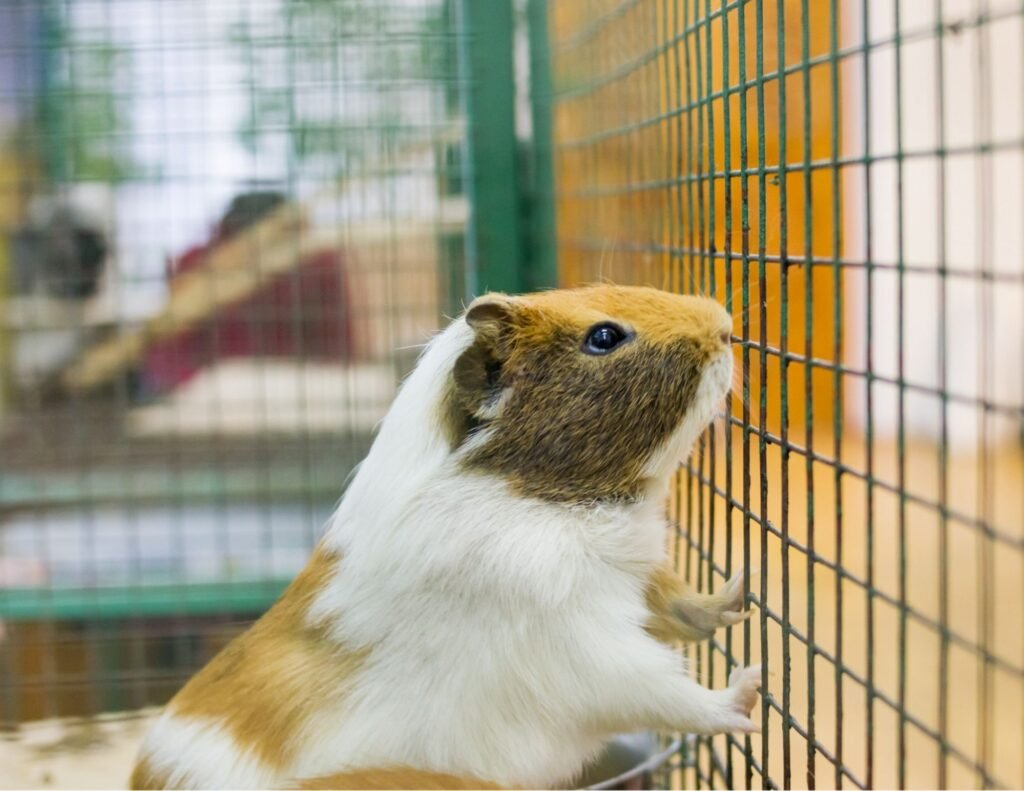

Guinea pigs are fun creatures to have in your home because they provide you with a wide variety of entertainment, joy, and love. However, if your guinea pig (or cavy) does not squeak a whole lot, it can be a bit concerning on your end when you know guinea pigs are typically chatterboxes, especially when it comes to getting your attention for wanting food.
Nevertheless, having a quiet guinea pig might not always indicate a problem. So, what are some reasons your guinea pig might not squeak?
The reasons why your guinea pig might not squeak are usually because of the environment, personality, medical conditions, or a lack of stimuli. To get them to speak more, there are several things you can do. If it’s an illness-related issue, we recommend taking them to a veterinarian for a checkup.
In this article, we will go into more depth on everything mentioned above. The reason for your guinea pig’s silence might be simpler than you think. Find out why below.
Should Guinea Pigs Squeak?
It is not necessary that guinea pigs “should” squeak. However, because they are considered extremely vocal animals, guinea pigs will typically squeak. However, due to certain pig personalities, circumstances, or illnesses, guinea pigs might not squeak.
In fact, squeaking is not their primary way of communicating, especially with each other in the wild. However, they will squeak (or wheek) with humans as a form of communication.
Usually, a wheeking means a few things. The biggest form of communication is when your guinea pig tells you they are hungry or want a treat. However, at other times, they may be excited to get some playtime in. Essentially, this squeak means they are eager or joyful about something specific.
On the other hand, guinea pigs also make a high-pitched, shrill noise when they are feeling fearful, in pain, or in distress. In this case, it is crucial to determine why they are acting this way. Sometimes, it could be because a new guinea pig doesn’t know their surroundings. In this case, it is crucial to spend quality time with your pig to help them adapt to their surroundings.

Why Does Your Guinea Pig Not Squeak?
As mentioned previously, there can be multiple reasons why your guinea pig does not squeak (or wheek). However, it is essential to note that it might not always mean a bad thing, so keep that in mind moving forward.
1. Lack of Stimuli
Sometimes your guinea pig might be bored. This could be due to a lot of reasons, including, but not limited to, the following:
The Cage is Too Small
Sometimes your guinea pig might have a small cage and not enough room to roam. Usually, a guinea pig’s cage should be at least 30-by-36 inches or 7.5 square feet for one pig. However, if you have two cavies, it is vital to ensure they have at least 10.5 feet of space to roam. Another thing to keep in mind is that the larger the cage, the better it will be for your furry friend.
Boredom
Another reason your guinea pig might not be vocal is that they’re bored. In this case, it is vital to provide them with ample stimulation to prevent boredom. Some examples of toys and stimulating items could be, but are not limited to, the following:
- Spending time with your guinea pig every day
- Puzzles for your guinea pig to solve
- Wooden hideouts
- Chew toys
- Other toys with tunnels
- Play balls
- Hanging toys
Social Isolation
Suppose you have offered your guinea pig a variety of toys, let them hang out with you, and provided a large enclosure, but they are not very vocal. In this case, it is time to bring in extra reinforcements. By this, we mean that you need to give them a friend! Introducing a companion might encourage your guinea pig to make more sounds.
If you have not done all of the above and want to help your pig further along the process, it is vital to note that these animals are very social and herd animals. This means that they stay in small colonies out in the wild, so why not do so in a domesticated way as well?
For those who have not yet gotten a cavy, we recommend investing in two cavies at once. Still, if you already have one and want another, we recommend introducing them to each other gradually to ensure they do not fight or hurt each other.
2. Medical Conditions
If your guinea pig is usually a vocal animal but has suddenly become quieter, this could be a clear indicator that something is medically wrong. Because guinea pigs are prey animals, they will instinctively hide if they show signs of illness or pain to avoid predators.
Because of this, it can be hard to indicate that a guinea pig is sick, so it is crucial to monitor their behaviors like eating habits, restroom usage, poop color, etc., to ensure they remain healthy. Before we go over some common illnesses, it is important to note that if you think your guinea pig is sick, take them to the veterinarian to be sure.
Dental Problems
Guinea pigs’ teeth are constantly growing. Because of this, it is vital to ensure they have plenty of chew toys. This can include a treat, a natural wood toy, and Timothy hay. However, if your guinea pig’s teeth are overgrown, it can be hard for them to be vocal and decipher what they want. On top of this, they might be eating less due to this very reason.
Gastrointestinal (GI) Stasis
Did you know that guinea pigs can get GI stasis? This is where a guinea pig’s digestive system backs up, leading to gas buildup, lethargy, potential pain, and decreased vocal activity. This can be caused by poor diet, stress, or another underlying health issue. Because of this, it is essential to take them to the vet to get a proper diagnosis.
Respiratory Infection
Lastly, your guinea pig might be suffering from a respiratory infection. Because of their difficulty breathing, they might not be as vocal as they usually are. Symptoms of this might include the following:
- Labored breathing
- Coughing
- Low appetite
- Sneezing
- Nasal discharge
If this is the case, we recommend seeking veterinary care immediately.
3. Environmental Factors
Suppose you just moved or live in a large city, near a busy roadway, or in the suburbs, where lots of commotion is going on. In that case, it is imperative to help your guinea pig avoid being frightened by loud noises or social dynamics.
This can be, but is not limited to, the TV or radio blasting, construction going on outside, a car horn honking, or other factors we might not have mentioned. It is vital to provide your guinea pig with a calm and peaceful environment to ensure they feel safe and cared for.
4. Individual Personality
Sometimes the quietness of your guinea pig might not be caused by anything that is happening around them, but it might be their personality. Just like how some people love to talk, and others don’t, the same goes for guinea pigs. They also might be so calm and chill that no matter what happens, your guinea pig knows they will be taken care of. This can be said of many other animals, too, like cats and dogs. Overall, this doesn’t mean anything bad; it is just how they are, personality-wise.

How Can You Encourage Your Guinea Pig to Be More Vocal?
Because the issue is not always due to health concerns, there are some ways you can encourage your guinea pig to become more vocal. The most important thing to consider is to spend quality time with them. In this way, your guinea pig will know they are loved, cared for, and will not feel scared of a lot of things. For those looking for specific details, read below.
1. Feeding Techniques
There are a few feeding techniques you can try with your guinea pig. You can use this at any time, but it’s essential to know when you are bonding with your furry friend from the very beginning.
Monitor Portions
It is crucial to offer a specific amount of food for your guinea pig regularly. Make sure you also provide them with special treats like apples, carrots, celery, or dark, leafy greens, often. On top of this, guinea pigs desire to have their treats in a fun and special way, so offering them puzzles, hanging toys, and other ways to help them would be a fantastic way to encourage your guinea pig to speak more.
It is important to note that when it comes to providing your cavy some hay, they can have as much as they want. Also, make sure you remove any uneaten food your guinea pig refused within a few hours to prevent it from going rotten.
Provide Plenty of Hydration
Make sure you always keep your guinea pig’s water fresh and clean. You can use a no-drip water bottle to help prevent tipping, since giving your animal a bowl of water can easily get knocked over, making their cage harder to clean.
Introduce New Foods Slowly
When introducing your guinea pig to a new food, do so slowly to help prevent digestive issues. For example, when you introduce solids to a baby, you want to ensure you do so for a few days to monitor their reaction to said food. Similarly, we recommend a similar method for guinea pigs.
It is also essential to ensure your furry friend does not have more than one cup (per pig) each day. We recommend dividing these up into smaller portions throughout the day to ensure they get a treat in the morning and another later in the evening.
2. Remain Consistent
Giving your guinea pig a consistent daily routine will help them understand what to expect throughout the day. On top of this, your guinea pigs might wheek at you in the morning and evening, especially when they are expecting some good, tasty food! Doing so will provide a good bonding experience for you and your pet. Here are some other ways to remain consistent:
- Handle them gently: Let your guinea pig approach you, not the other way around. Allow them to sniff you before you pick them up. It is also important to support their bodies properly, so one hand should remain on their bellies.
- Positive reinforcement: Use treats to reward good behavior, such as when they remain calm. Doing so encourages a positive association and experience while they are near you.
- Spend quality time together: Make it a habit to spend extra time with your guinea pig each day. This can be done by gentle handling, providing treats, and talking with them.
- Respect their boundaries: Consider your cavies’ body language when you approach them. Are they coming out to say hello or running and hiding? It is important to respect your guinea pig’s boundaries and give it time to establish their trust.
- Provide multiple hideouts: Guinea pigs are prey animals. Because of this, they need plenty of places to hide. If everything is “out in the open,” so to speak, your furry friend will feel threatened and more afraid. Giving your guinea pig hideouts helps them feel safe and secure.
- Consistent setup: Although it is good to keep things new and fresh every so often, it is important to keep their living space familiar and organized. For example, if you have multiple new toys to introduce to your guinea pig, it is wise to gradually do so to ensure they are not going to get “freaked out.” Make sure to give them familiar items while also providing new stimulation from time to time.
- Cleaning: Regularly clean your guinea pig’s enclosure to maintain good hygiene. Make sure you remove soiled hay and change their bedding each day. For deeper clean-ups, we recommend doing so at least once a week.
- Feeding schedules: Consider when you will feed your furry friend and stick with it. We recommend doing so two or three times a day. Once in the morning and once in the early evening should do the trick. Make sure you provide your guinea pig with high-quality hay each day as well.
3. Create an Engaging and Comfortable Environment
As mentioned earlier, it is important to provide your guinea pig with plenty of space and engaging activities. This can be done with puzzles, toy balls, chew toys, tunnels, etc. It is important to gradually introduce an item to your guinea pig to ensure they are not afraid of it.
4. Provide More Social Interaction
Giving your guinea pig a companion and your attention is a must. Guinea pigs thrive on relationship stability. Because of this, it is very important to show them that you are someone they can trust and depend on.
Another thing to do is give your cavy another one of their kind to become friends with. As briefly mentioned above, they must have another friend to socialize with. However, it is important to note that if you do not do this when they are young, they might argue or fight. Because of this, make sure you gradually introduce them to one another.
Alternatively, you can provide (or create) two different cages and separate them with plexiglass. That way, they can still communicate without hurting each other. Not only that, but you can get them used to each other in this way and reintroduce them (without the glass) at another time to see if they will become better friends.
Consult a Veterinarian if It Continues
If your guinea pig continues to refuse to speak, it is important to let your local veterinarian know. In this way, they can truly determine whether it is an illness or simply their personality. Just remember that if your guinea pig seems to be acting fine, then more often than not, it means they might not be as talkative as you want them to be, and that is perfectly fine!
For more questions regarding guinea pigs and how to care for them, we recommend checking out all of our articles on them. We hope this article was helpful, and we wish you the best in encouraging your guinea pig to communicate more with you!