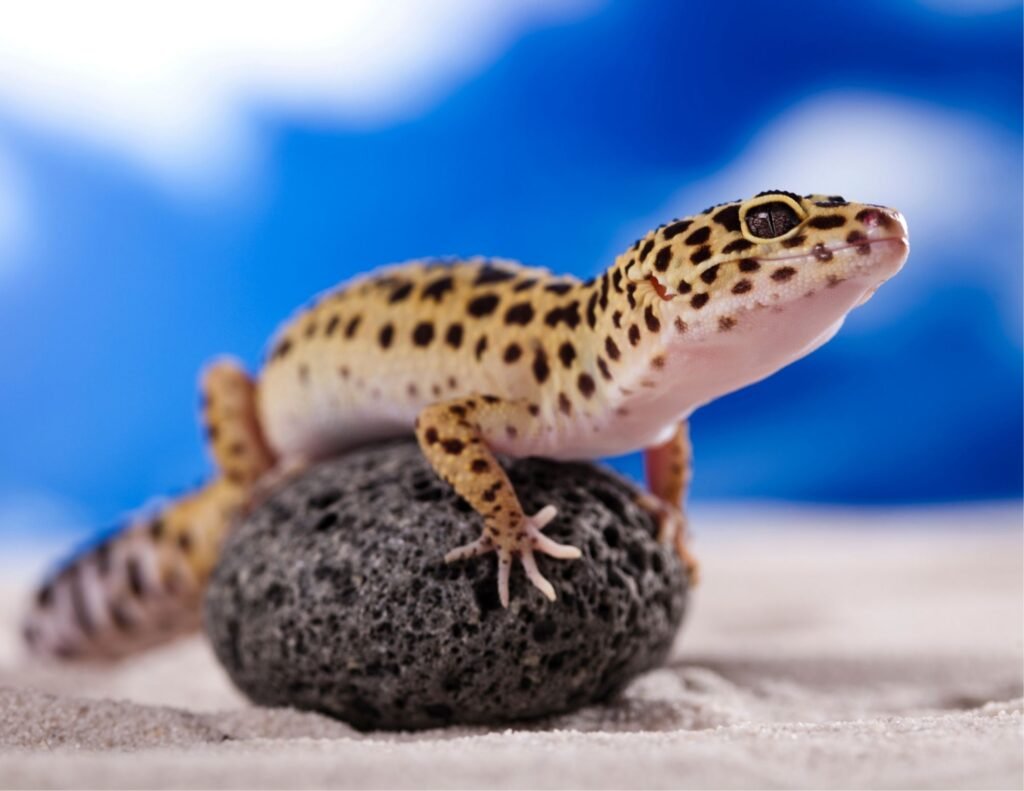
Owning small animals can be a huge blessing, especially if you do not have much room or if there are specific fees for owning large animals. In other cases, you might have an ongoing condition like asthma or allergies that might prevent you from having a furry friend, especially if you really wanted one in the past. Leopard geckos are an excellent choice for many reasons, but one thing to consider is what you need before owning one.
There are many things you need to get before owning a leopard gecko. You must buy these things beforehand to ensure you are prepared. Here is a small list of things you will need:
- Large terrarium
- Terrarium cover
- Hideouts
- Terrarium decor
- Heating mat
- Thermostat
- Thermometer
- Hygrometer
- Uvb light
- Food
- D3 and calcium
- Bowls
- Water conditioner
- Material for them to walk on
- General knowledge
In this article, we will discuss further which essentials you will need and why. Furthermore, if this is your first time considering owning a leopard gecko, we recommend moving on to the next section to ensure you know the basics of caring for one. Although they are considered low-maintenance animals, it is still wise to know what to expect.
What Essentials Do You Need for a Leopard Gecko?
As mentioned above, there are quite a few essentials you need for owning a leopard gecko. When purchasing everything upfront, it would be roughly $160 to $670, depending on the materials you choose and where you buy them. However, it is important to note that although these items might be out of budget for some, the monthly maintenance for caring for your gecko does not cost nearly as much.
If you are on a tight budget, we recommend using an online platform like Facebook Marketplace to ensure you get exactly what you need for the price you can afford. Not only that, but you can often negotiate the cost as well.
However, if you want to purchase everything at once, your local pet store or somewhere online like Chewy is your best bet. Overall, with a plan for getting the items you need, you will already be a successful leopard gecko owner!
1. Large Terrarium
When it comes to a leopard gecko, the floor size will matter much more than its height. This is because these reptiles spend the majority of their time on the ground, with occasional climbs onto branches or large rocks. Providing climbing opportunities for leopard geckos offers plenty of stimulation and enhances their overall well-being.
Leopard geckos should have a minimum of a 20-gallon tank (30x12x12 inches), but the best recommendation is a 40-gallon tank (36x18x18 inches), as it provides ample space to move around (roughly 4.5 square feet). Leopard geckos will use every inch of their enclosure, so the bigger the space you can provide, the better!
One thing to keep in mind is that although leopard geckos can survive in a 20-gallon tank, providing them with a bigger enclosure allows them to thrive to the best of their ability. What we mean by this is simply that leopard geckos will have plenty of hiding spots and places to climb, and that the heat from the lamps or pads can be distributed more evenly throughout the cage.
Here are some excellent enclosures you can purchase online:
- unipaws 50 Gallon Reptile Tank: 36″L x 17.5″W x 18″H
- REPTI ZOO 50 Gallon Reptile Glass Terrarium: 36″ x 18″ x 18″
- Prolee Wooden Reptile Tank: 39″ x 18″ x18″
2. Terrarium Cover
A terrarium cover is essentially a screen that covers the top of the cage. Although most cages already provide this, some might not. For example, if you purchase a terrarium on Marketplace, it might not be provided to you. Because of this, you must get the right size. You can order the cover online, at a pet store, or sometimes at your local grocery store, like Walmart.
3. Hideouts
Leopard geckos like to hide out in different spots in their enclosures. However, it is important to provide your leo with some options. Here are the three main hideouts to provide for them:
- Hot hides: This helps your gecko digest food by soaking up belly heat. This is usually made of ceramic or plastic and is usually right above the heat mat.
- Humid hides: A humid hide is essentially somewhere your gecko can go and hide during their shedding phase. It is wise to keep this close to the heat mats but not directly on top of it. Also, make sure it stays moist inside and clean it frequently to prevent mold from forming.
- Cool hides: These hides are usually made from plastic, resin, or wood. These hides should be kept away from any heat source and are used to escape heat while also providing a sense of safety.
When choosing a hide for your leopard gecko, ensure it has only one opening, not multiple. On top of this, hides should not have numerous stairs or stories, as your leo will not feel safe or secure in them.
Here are some good hides you can purchase for your little friend:
- REPTIZOO Reptile Hide
- CAVACHEW 3-in-1 Reptile Hide Cave
- Anli Market Resin Rock Reptile Hide Cave Set with 2 Bowls
4. Terrarium Decor
Terrarium decor is important to have in your leopard gecko cage because it mimics their natural habitat. In doing so, it boosts your leo’s quality of life and, overall, helps them behave naturally. On top of this, it is important to determine what kind of terrarium decor your gecko needs to thrive.
Backdrop
Although a backdrop may not seem entirely necessary, it helps you visualize what your leopard gecko’s habitat should look like if it were out in the wild. On top of this, leopard geckos will often become stressed when all of the walls are clear, so having a backdrop will reduce their anxiety immensely. There are multiple backgrounds to choose from, so we recommend going through them to see which one you feel is best for your little friend.
Plants
Although there aren’t many plants in leopard gecko environments, it’s wise to provide the appropriate types for them. Many leopard gecko owners give them live plants. Not only does this provide them with oxygen, but it also gives them a good amount of mental stimulation. Some plants you can choose for their enclosure are as follows:
- Snake plants
- Air plants
- Festuca grass
- Haworthia
- Sphagnum moss
- Pothos
- Aloe
- Echevieria
Alternatively, you can give your leopard gecko fake plants, which you can find on Amazon for an affordable price. Going down this route means you are not doing any super high-maintenance on them whatsoever. Just be careful that at the time of purchase, there are no sharp, pointy objects on these leaves.
Rocks and Stone
Leopard geckos love a good rock where they can lie, climb on, and hang out. To put things into perspective, stacking stone pieces with one to two inches of space between them simulates the cracks they usually use for hiding in their natural environment. Here are some good options for you to choose from:
- relaqcc Gecko Hide Shale Scape Step Ledge
- relaqcc Reptile Rock Basking Platform
- JIHAQUA Large Resin Reptile Hideouts Cave
- Voulosimi Natural Slate Rocks
Hides and Caves
Although we discussed it earlier, leopard geckos need spaces to hide to feel safe and secure. You can also find these online, at your local pet store, or on a buy, sell, and trade group.
Wood & Branches
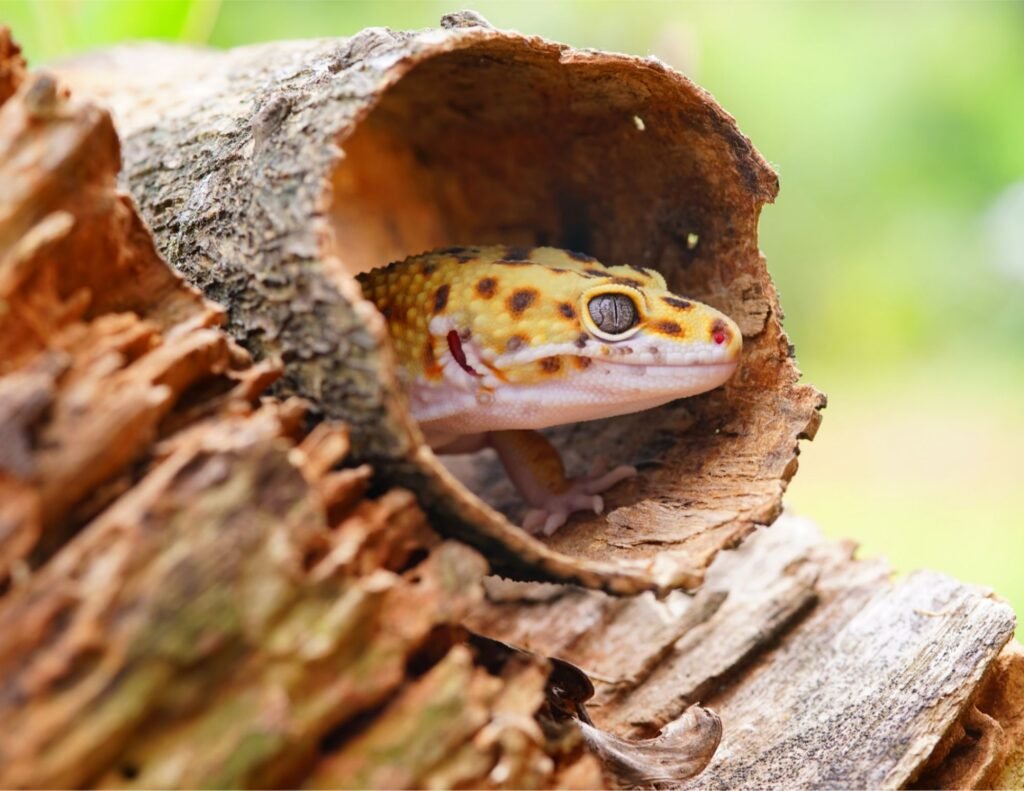
Not only do wood and branches look attractive in your leopard gecko enclosure, but they can also be used as a climbing opportunity for them. 52464This helps make the item(s) you are using highly functional.
You can use tubes/hollows and cork flats as hiding places and low, sturdy barnwood branches as climbing opportunities. It is wise to place at least one large piece in your enclosure, but if you have space for more, we recommend getting multiple. Here are some great options we have below:
- majoywoo Natural Driftwood
- Exo Terra Forest Branch
- Jorewood Natural Driftwood for Reptile Terrariums
5. Heating Mat
The next thing that would be wise to get for your leopard gecko is a heating mat. Although it is wise to get a heat light, which we will review in a moment, a heating mat would be good for your little friend’s stomach, helping them digest their food better. If their belly does not stay warm, it can slow digestion, which can cause them stress. Not only that, but inadequate warmth can also lead to illness.
Below, we have some good options for you to choose from:
- BN-LINK Reptile Heat Pad 6″X8″ 8W for 10-20gal tank
- BN-LINK Reptile Heat Pad 8″X12″ 16W for 30-40gal tank
- Aiicioo Reptile Heating Pad
- Pymeter Reptile Heating Pad
6. Thermostat
Suppose your home is too hot or too cold. In that case, your leopard gecko’s home might also be the same. Having a thermostat inside their enclosure will help avoid this problem. Not only does it help prevent overheating, but it also helps maintain a stable temperature. Also, if you notice the tank getting too hot or too cold, adjust it accordingly to keep your leo safe. Here are some good thermostats you can invest in:
7. Thermometer
Thermometers help you know the temperature in your lizard’s cage. Overall, it helps you determine whether the enclosure is too hot or too cold. The ideal temperature for your little friend is anywhere between 88 and 92 degrees Fahrenheit on the hot side and 75 to 80 degrees Fahrenheit on the cooler side. It is wise to have two thermometers: one on the hot side and the other on the cold side. With that being said, we recommend getting these items:
8. Hygrometer
A hygrometer is a tool used to measure the amount of moisture in a surrounding area. In this case, a hygrometer determines whether it is too damp or too dry for your lizard. Maintaining the right humidity levels helps your gecko maintain healthy skin and breathe well.
Not only that, but proper humidity levels affect their respiratory systems and overall health. A proper humidity level in your gecko’s tank should be between 30 and 40%.
9. UVB Light
Leopard geckos are considered crepuscular, meaning they are active primarily during twilight. When they are in their natural habitat, leopard geckos do not have access to ultraviolet light, so providing access to it is essential for their overall health for multiple reasons.
The first is that it helps prevent metabolic bone disease (MBD). Without a sufficient amount of UVB, leopard geckos can develop bone weakness and skeletal issues, and calcium deficiencies. Secondly, having a UVB light also helps them absorb vitamin D3, which they get from their diet.
We recommend getting a 5-6% UVB light that is mounted high enough and positioned towards one end of the enclosure to create a UV slope. Also, we recommend investing in a T8 or T5 tube. Here are some suggestions below:
- REPTIDLDB 8W T5 10.0 UVB Reptile Light Fixture 12″
- QZQ T5 10.0 UVB Reptile Light Fixture Combo Kit 8W
- Hygger zoo UVB Light for Reptiles
10. Food
It goes without saying that all living creatures need to eat, and leopard geckos are no exception to this. Leopard geckos eat a variety of insects, which provide a range of nutrients, making this diet crucial for their survival.
When they are young, they need to be fed daily. Otherwise, you will need to feed them every 5 days (if their tails are thicker than their neck) or every 2 to 3 days. Here are some insects you can give your leopard gecko:
- Hornworms
- Crickets
- Black soldier fly larvae
- Silkworms
- Mealworms
- Superworms
- Butterworms
- Dubia roaches
- Waxworms
11. D3 and Calcium
In addition to their weekly feeding, it is imperative to give your leopard gecko D3 and calcium. You can do this by dusting calcium powder on the insects and applying vitamin D3 2 times a week. By giving them these two items, you can help prevent metabolic bone disease.
On top of this, calcium is an essential support for nerve signaling and muscle contractions, which allow the body to function normally. Lastly, calcium levels are important for egg production in female geckos (if you are trying to reproduce leopard geckos) and healthy growth.
In terms of vitamin D3, your gecko will need this because it enhances their ability to absorb calcium from their diet, which helps them maintain bone mineralization. Overall, it is imperative to provide your lizard with both of these to ensure they live a happy, healthy life!
12. Bowls
Bowls are necessary because you will use them for food and water. Although you might want to save space by using a water bottle instead, the best option is a bowl. With that option, their water will become easily accessible.
It is wise to change out their water every day or so to ensure it remains fresh and clean. For example, if there is a dead insect or another contaminant, then having that fresh water is an absolute must.
13. Water Conditioner
A water conditioner is used to neutralize harmful chemicals, such as chloramine and chlorine, in the water. Doing so not only supports the gecko’s overall health but is also safe for the environment. Using conditioner also improves the water quality.
It is wise to use 1 to 2 drops per gallon of water, so we suggest buying a 1-gallon low-mineral bottled water, placing that amount of drops in the water, and shaking it up to ensure they are getting what they need. Make sure you follow any product labels it suggests instead of going directly by what we suggest. Lastly, it is imperative to use a water conditioner specifically designed for reptiles to ensure you are getting the right one.
14. Material for Them to Walk On
Contrary to what many people believe, reptiles do not need sand as a surface to walk on. This is because it can cause blockages in their digestive tract, which may require veterinary intervention and cost more than you would want to spend. However, here are some better alternative brands for you to choose from:
15. Knowledge on How to Take Care of Them
The very last thing you need to have before owning a leopard gecko is general knowledge on how you need to take care of them. If this is your first time researching them as a whole, we recommend going even deeper to learn how to care for them. One of the best ways to learn about this is to watch a YouTube video or read an article. Here is a great video about it now:
Other Things to Know Before Owning a Leopard Gecko
Speaking of how to take care of your gecko properly, here are some tips for you to know before owning a leo for yourself.
1. How to Handle Them Properly
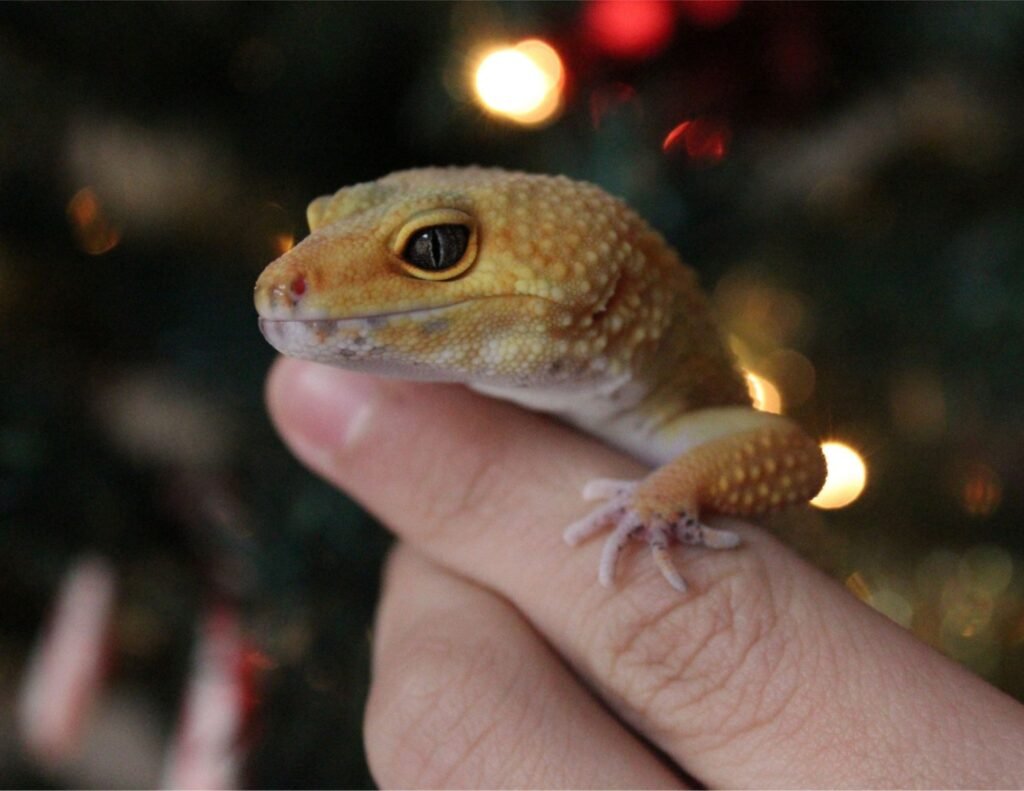
Learning how to pick up your leopard gecko is important because you want to build trust and avoid harming them. For example, you do not want to pick them up by the tail, especially the end, because it could hurt or damage them.
You can hold them by gently placing your hands in front of them and nudging their backs to move them forward a bit. This will provide your gecko with a simulation of climbing onto something.
Once they are up, you can hold them without grabbing too tightly. It is important not to overdo it, as they can get stressed easily, especially young geckos. On top of this, it is important not to force your will on the geckos themselves, as this will cause even more anxiety. Below is a video explaining what you should do.
2. What Kind of Food They Eat
As we know, a leopard gecko’s diet consists of bugs. Although we will not go into detail since we covered this above, it is worth noting that you must feed them live bugs, as feeding them dead bugs may lead to nutrient degradation and bacterial contamination.
3. Temperature and Housing
Make sure you provide your leopard gecko with the right temperature and housing. Remember, the bigger the enclosure, the better it is for your gecko!
4. How Long They Live
Leopard geckos usually live 10 to 20 years in captivity, but some have been known to live longer. Because of this, you must ask yourself if you can take care of a leopard gecko for that number of years. For example, if you are a teenager wanting to go to college, it is wise to create a plan for how you will take care of it during that time. On top of this, it is wise to consider whether moving will be a factor, as well as other lifetime changes that may occur.
5. Keep Away From the Sand
As we know, sand can cause digestive issues, especially when it is accidentally ingested. For example, if you put their food in the enclosure instead of giving it to them directly to mimic their natural hunting behavior, your gecko might accidentally eat sand, which can cause health problems.
6. Leopard Geckos Are Solitary
Leopard geckos are not very social animals, like rabbits or guinea pigs. Because of this, leopard geckos need to be kept in separate tanks to prevent aggression or stress.
Conclusion
In conclusion, there are so many wonderful memories you can make with your leopard gecko, but it is imperative to make sure you have all of the proper things to get started beforehand. If you enjoyed this article, we recommend checking out our other articles on leopard geckos. If you enjoyed this, share it with your other friends who are also interested in little pets. We hope you enjoyed it and took something away from it!