The best heat lamps are ones that don’t inherently break the bank on purchasing one, but also provide ample warmth for your gecko, without potentially hurting it or overloading the plug that it’s in, when shopping for your first lamp, you should be aware of required height minimums, durability of the lamp itself, and how to position it accurately as not to damage the enclosure as well.
To fully gauge the height you’ll need, first look at the various kinds of light fixtures available and choose one that matches the height and size you’ll require for your enclosure. Keep in mind that most of these fixtures can accommodate a myriad of bulb types, but by no means are they all interchangeable.
Best Leopard Gecko Heat Lamps
Covering the large umbrella concept of “Best Heat Lamp” will require a good understanding of both the fixtures themselves, and secondly the bulbs that go into them, think of it as a two fanged system, and if either side comes up short, you will have invested quite a bit of time, and money to create either an unsafe, or dimly lit enclosure for your adventurous little friend.
Lamp Fixtures
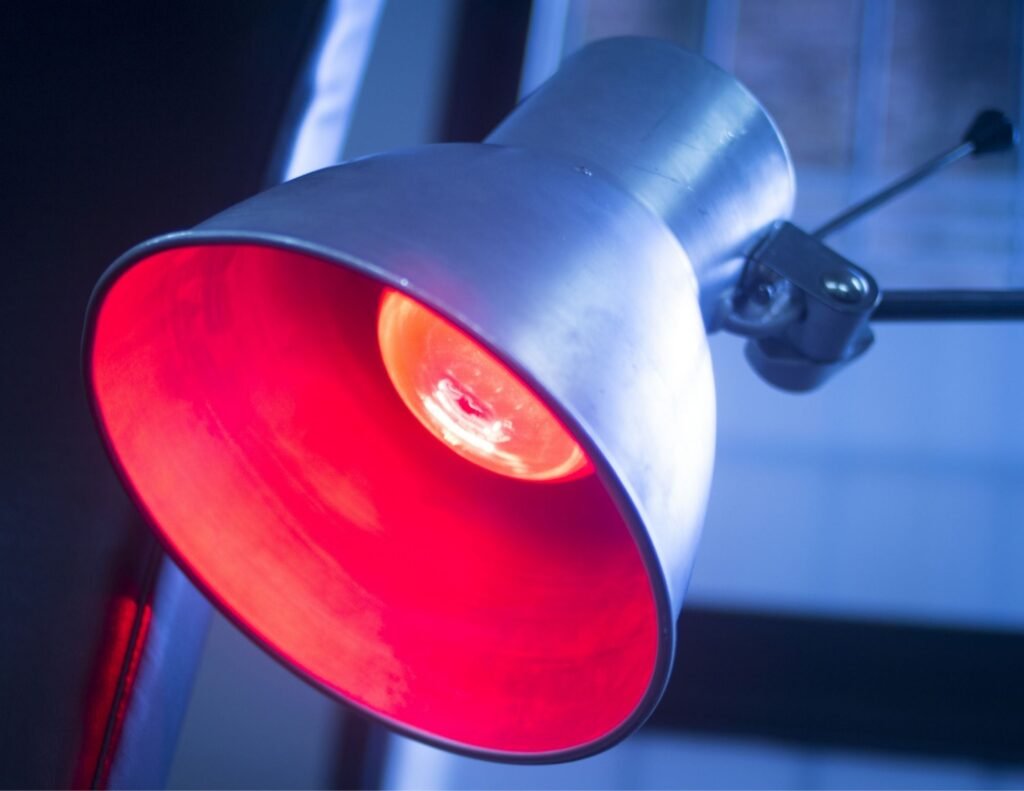
A lamp fixture, by definition, is a small dome-shaped lamp, usually metallic, that houses a bulb that can generate a sufficient amount of heat to keep your gecko’s body temperature regulated. It does this by using an inner coating of either porcelain or heat-resistant ceramic to hold whatever bulb you opt to attach.
The lamp you choose must have these specialized coatings, as without them the bulb can generate an immense amount of heat and begin melting normal lamps, potentially catching the entire area on fire, so diligence is a must when shopping for these.
Even when you do purchase the right lamp fixture, bulb, and enclosure that can handle these kinds of lighting systems, height and size matter; you’ll need to measure everything and take time to guarantee that your lamp fixtures are fastened securely, as them falling into the enclosure can prove dangerous for both your pet and yourself.
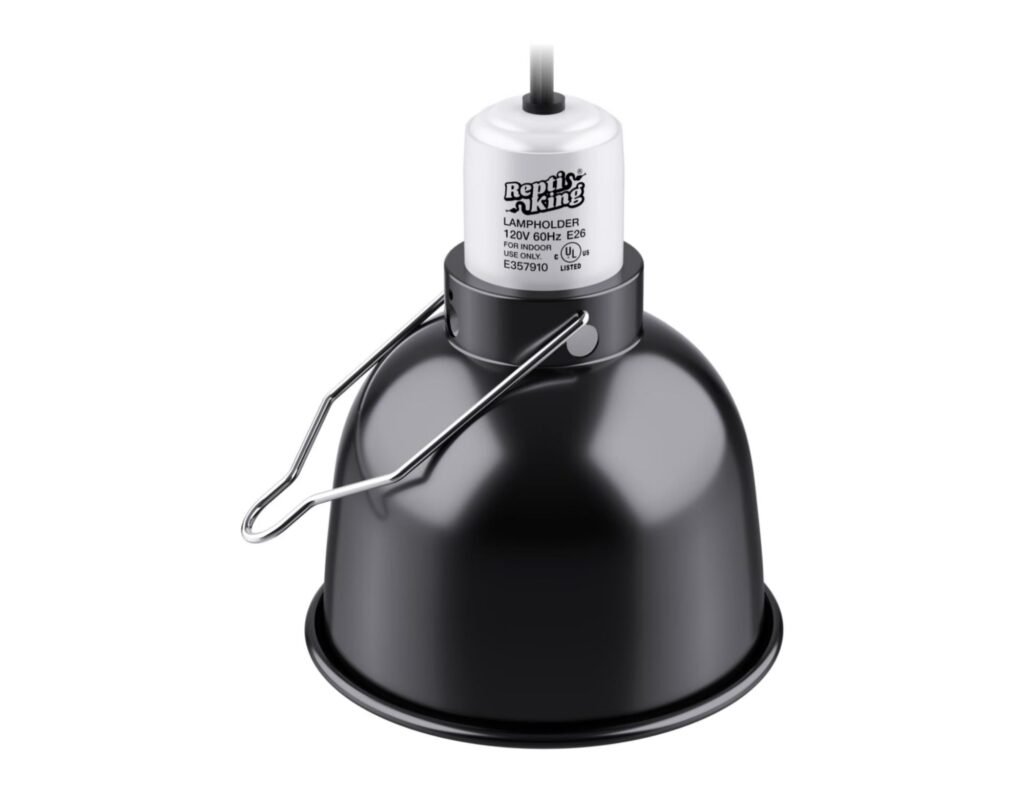
1. ReptiKing Reptile Light Fixture
ReptiKing’s light fixture is the perfect place to begin because it comes in a no-nonsense black finish, supports a few bulb types, and is very affordable. It can be purchased in a one- or two-pack selection, letting you get the same value in larger domes, assuming you can fit them in. The fixture comfortably supports up to 150 watts and has a ceramic lining for safety.
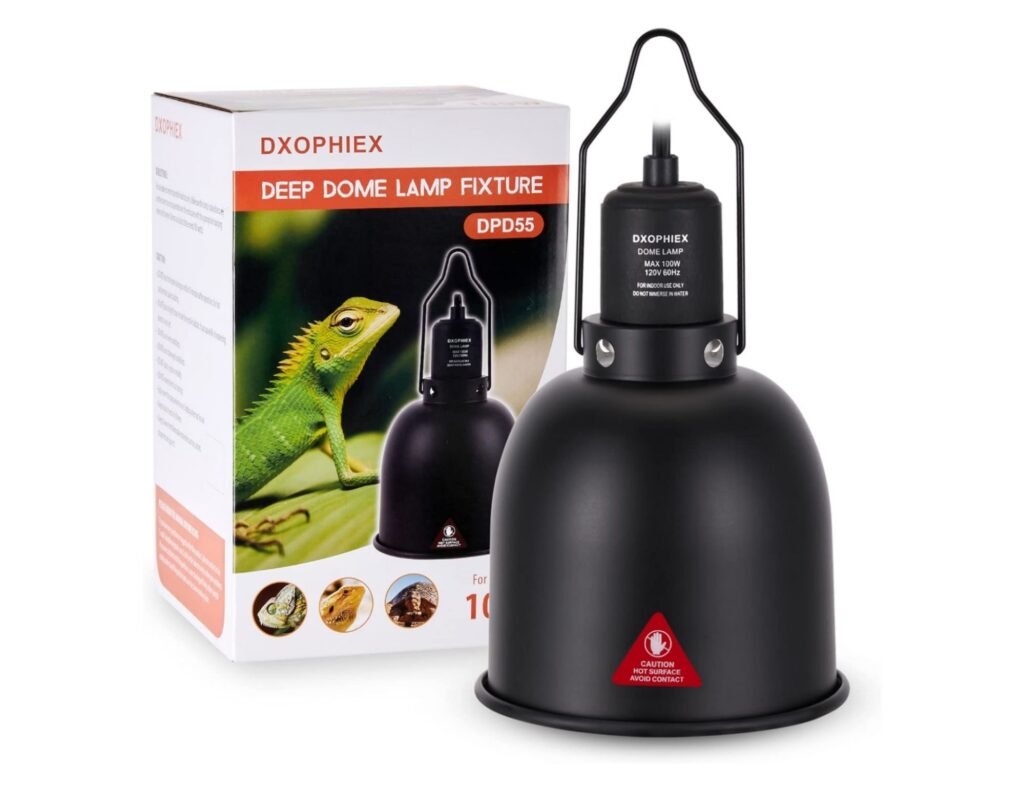
2. DXOPHIEX 5.5inch Deep Dome Reptile Lamp
DXOPHIEX takes things to the next level with a slightly more refined dome lamp, initially measuring 5.5 inches, but can be scaled up to 8.5 inches, with cost increasing as size increases.
The fixture itself sports a high-reflection finish, several cooling vents, and a standalone hook that lets you station it where you need it most. Potentially, the fixture also has a 1mm thickness, which prevents warping or overheating after prolonged use, and is made of aluminum. Be aware, however, that this fixture is only rated up to 100 W.
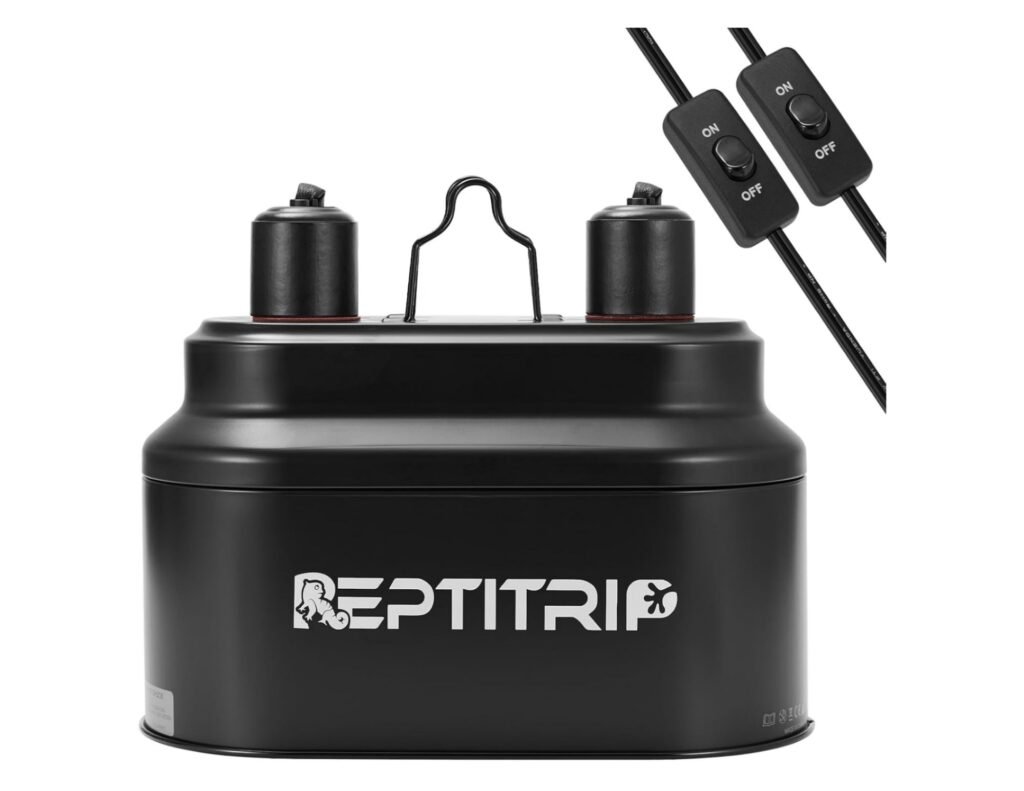
3. REPTITRIP Dual Reptile Light Fixture
Reptitrip makes its grand entrance with something a little different from the other fixtures, featuring a dual-light design that makes it perfect for creating heating rocks and other delightful locations using the two-bulb focal points. The case itself is made of aluminum and comes with a removable lampshade to focus the light at the center of the enclosure rather than casting it around your entire room.
Despite using multiple bulbs, the case’s design has several strategically placed ventilation points that prevent either the bulb or the case from overheating, making it a sound purchase for stretching each bulb to its maximum lifespan.
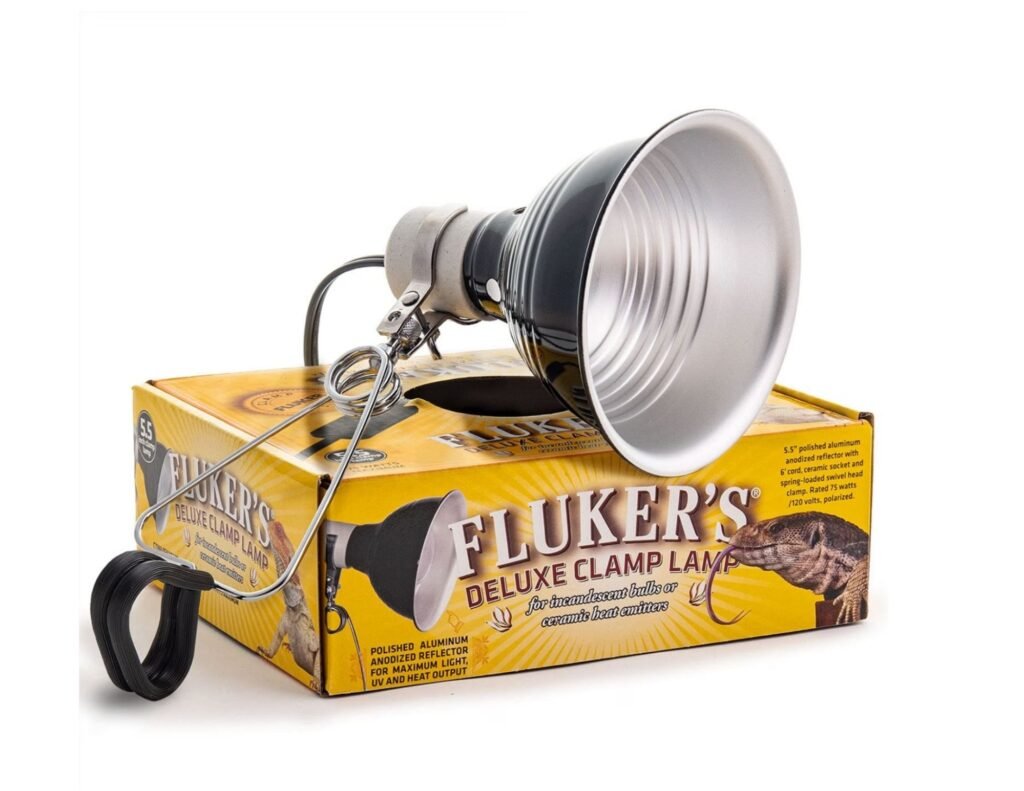
4. Fluker’s Repta-Clamp Lamp
Lastly we have Flukers, bringing things to an affordable, and simplistic close, the lamp produces fluorescent lighting and goes up to a maximum of 75 Watts, comes with a safety clamp to attach the lamp to the edge of an enclosure, and allow you to angle to whatever point you need, the lamp itself is constructed out of heavy gauge painted aluminum, and boasts an impressive reflective coating on the inside.
Lamp Lights
Keeping a long explanation short, the lamp lights are needed to produce the life-saving heat your geckos need to feel comfortable in their enclosures, but not all lights are built the same. Some offer energy-efficient features or specialized material coatings that can amplify the heat produced or last longer than others.
When you purchase your fixture of choice, be sure the make and model support the bulb you plan to use; more often than not, the fixtures themselves offer several “plug and play” options for their lamps, taking out most of the guesswork.
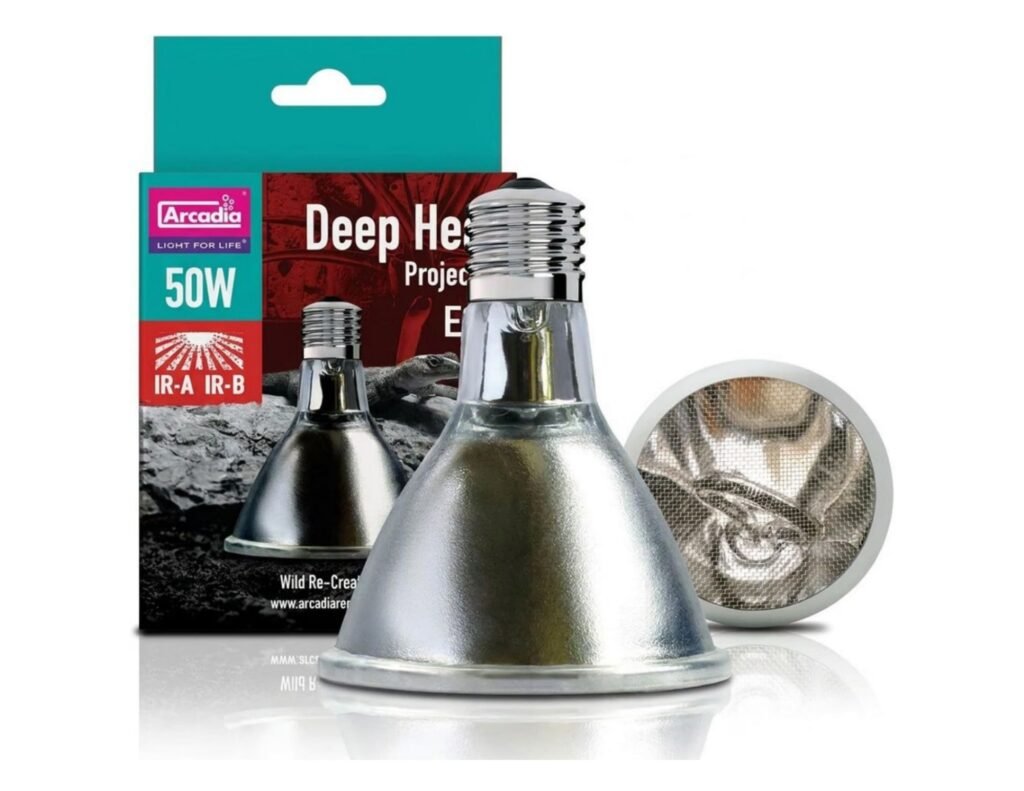
1. Arcadia Deep Heat Emitter 50 Watt
The Arcadia is capable of producing natural infrared heat, going across A& B wavelengths and offers all essential UVA, and full-spectrum light exposures to keep your gecko healthy, the bulb itself is rated 50 watt, and utilize deep heat technology to guarantee the heat is being directed precisely as intended, the bulb itself is made out of aluminum, and as such can get quite hot to the touch, so be careful!
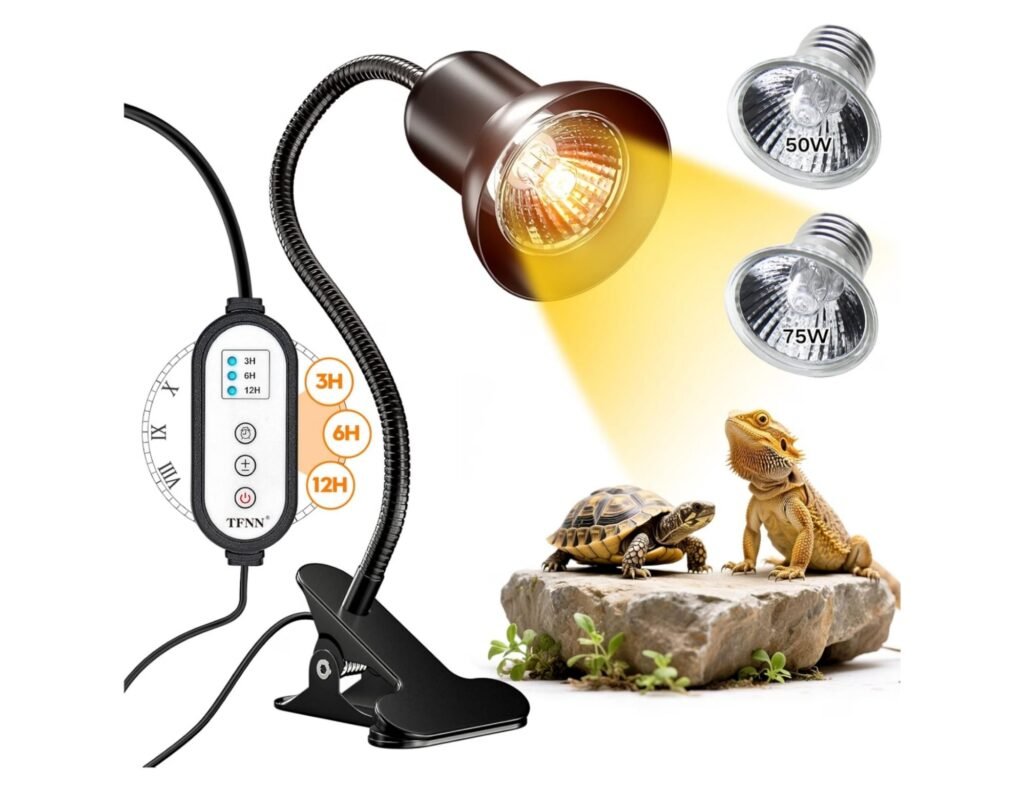
2. TFNN Reptile Heat Lamp with Clamp
TFNN’s Reptile Heat Lamp is unique in that it combines the fixture and bulb into a single, reasonable price. This is perfect for a lot of first-timers, as it removes all the confusion about which bulb will work with which fixture, and it is incredibly affordable, often costing less than most fixture-and-bulb combos combined.
Just because this “bulb” isn’t destroying your wallet doesn’t mean it comes with no features either; the lamp itself has a timer for how long you want the light to be on, options to replace the bulb in the future, interchangeable brightness settings, and a rotating swivel neck that will allow you to position it directly where you need it.
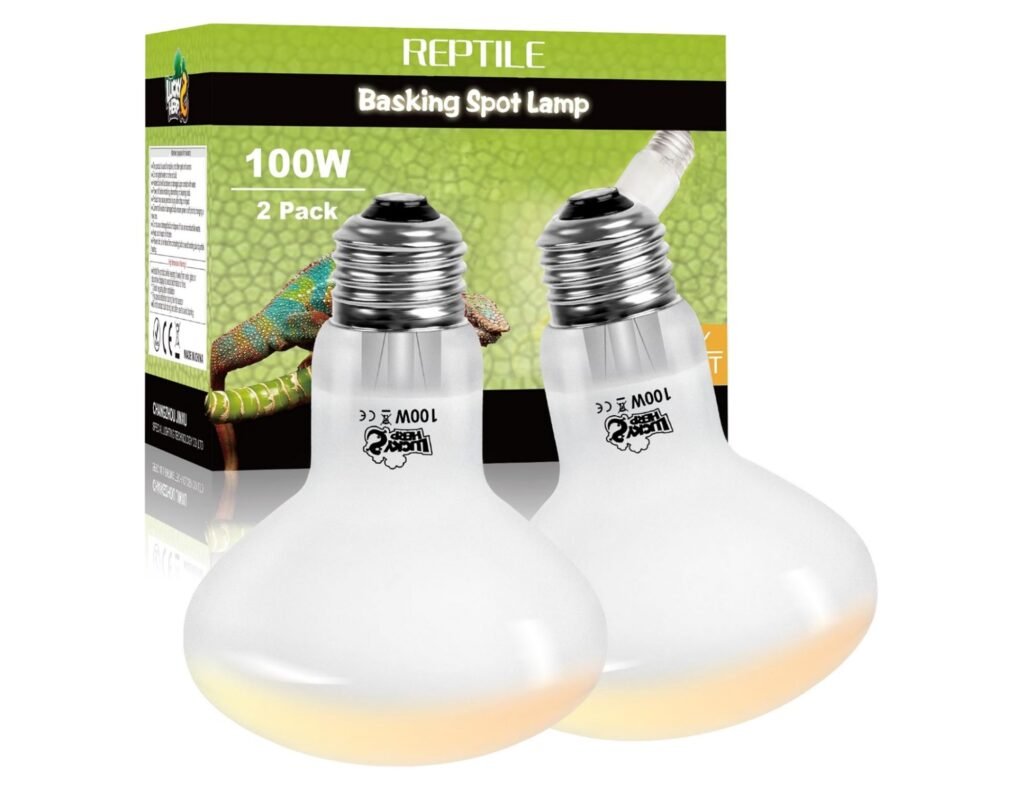
3. LUCKY HERP Reptile Heat Lamp Bulbs (2pk)
Lucky Herp may have a simplistic name and even plainer marketing style. Still, they are incredibly cheap, durable, and offer dimmable options, perfect for enclosures that might be in the same area where you sleep, or for those who don’t want the extra eye strain.
The bulbs themselves are rated at 100 watts and typically last about 2000 hours before needing to be replaced; best of all, because they come in a pair, that is 4000 hours of heating for your gecko for a one-time investment.
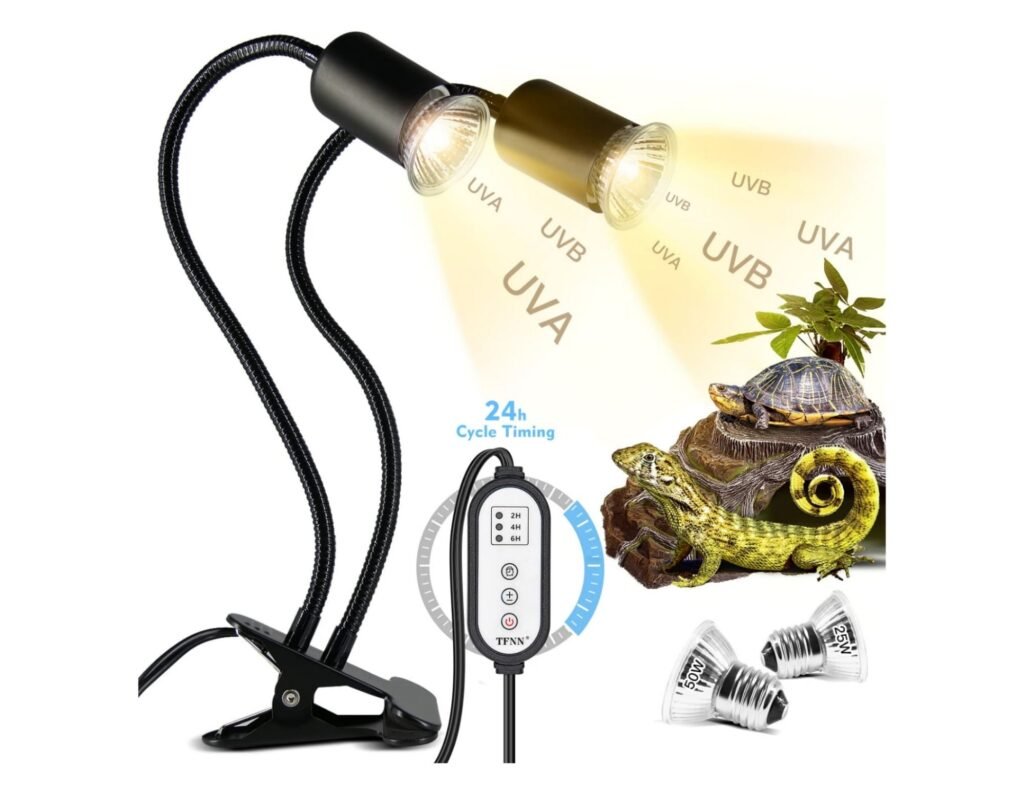
4. TFNN Reptile Heat Lamp Double Lamp
Saving your best for last really doesn’t do TFNN’s triple threat lamp justice; not only does the price itself match the singular lamp above, but it does so in style, offering two separate heads that also utilize the same swivel technology, letting you anchor them on opposite sides of your gecko’s enclosure, creating unique heating zones.
What Are the Different Types Suitable for Leopard Geckos?
As most gecko owners can tell you, these little guys need extra heat to stabilize their internal body temperature, as they cannot do it themselves. To that end, if you are the proud owner of one, it becomes your responsibility to not only feed these adorable little fellows, but also care for their lodgings and heating solutions, for that matter.
Keeping in step with that, there are truthfully only two methods of keeping your geckos nice and toasty, regardless of the temperature your house, or climate naturally rests at, and those fall on either infrared heat lamps or ceramic heat emitters, with the lamps producing light, whilst the heat emitter only ambiently raising the temperature of the area, with no increase in visibility.
1. Infrared Heat Lamps
Ditching any illusion that you can get away with not using a heat lamp, these beacons of light and warmth are your gecko’s bread and butter when it comes to having temperature stability throughout the day, and the best choice assuming you want to guarantee your gecko’s way of life and overall safety.
Heat lamps can be angled and positioned to hit any number of angles throughout an enclosure, creating small pockets of warmth that your gecko can perch on to regain its footing should it feel a little chilly or need a nice artificial sun bath.
Unfortunately, you cannot rely entirely on a heat lamp for every aspect of your gecko’s thermal needs, as they do function on a night and day cycle, meaning you’ll want to turn the lights off eventually so they can get some much-needed sleep; thankfully enough, that is where CHEs come into play.
2. Ceramic Heat Emitters (CHEs)
If you haven’t heard of them before, CHEs are the nighttime-friendly way of keeping your gecko nice and toasty when they do inevitably need to get some shut-eye. These small objects will radiate heat in the background without creating any light pollution, help stabilize your gecko overnight, and bring any enclosure into a perfectly balanced habitat when used in tandem with a solid heat lamp.
In the broadest sense, you can run a CHE 24/7, and they are known for having a very long lifespan regardless of how you utilize them, but if you do opt to leave them on, be sure to keep the CHE in a remote part of the enclosure so as not to overheat your gecko due to exposure.
What to Look for in a Leopard Gecko Heat Lamp?
The best heat lamps any gecko owner can utilize are affordable, easily positioned, and won’t risk putting your gecko in danger throughout its use. The easiest way to understand these features is to break down the specific kind of heat your gecko is exposed to, how hot the method can get, and, finally, how far across the enclosure the device can tangibly warm.
1. Type of Heat Source
As noted above, there are a few different kinds of heat sources you can choose; in most cases, you’ll be leaning towards either a heating lamp or a CHE. Still, in a perfect scenario, you opt to utilize both, primarily because the lamp can be turned off, and the CHE can be used throughout the night, without interrupting you or your gecko’s sleep routine.
Failure to invest in a CHE can cause isolated portions of your enclosure to get incredibly hot; worse still, the constant light will affect your gecko’s ability to sleep, making it irritable and opening the door to a litany of other health complications.
2. Temperature Control
In much the same way that there are times throughout the year when we want things to be a little warmer or cooler, your gecko can experience the same changes. During the summer, your room may get sweltering, meaning you’ll want a lamp that can be dimmed, or a CHE with features that make it slightly less blistering.
If you don’t regulate the temperatures in your gecko’s enclosure, you run the risk of a CHE getting too hot and burning your gecko, or a lamp overheating and potentially exploding. This is a rather worst-case scenario in both cases, but the possibility is there, so be warned.
3. Temperature Gradient
In case you don’t know, a temperature gradient is the length a heat-generating structure can extend across a given space, creating pockets or “sides“ of hot and cool areas, with spots closer to the heating source being “warmer“ and those farther away being cooler by association.
The gradient itself is the precise temperature difference between these areas and where they land; for example, basking spots can reach upwards of 90 degrees Fahrenheit, and the cooler side of a heating area can be around 70-75 degrees Fahrenheit. To capture these values, you’ll want to get an infrared thermometer to check the temperature in real time before placing your gecko inside.
Doing so will let you set up an optimal habitat that covers the full spectrum of heat ranges your gecko needs to thrive, from a beautiful basking spot to a nice shady overhang to lounge and sleep if they so choose.
How Do You Safely Set Up a Heating Lamp?
Unfortunately, there is no simple how-to that works for any heating lamps, as they all use different clamps, hooks, and other devices that let them get established in, or around an enclosure (hooks, for example, need to have the lamp itself hung directly over an enclosure, requiring even more setup.
In most cases, the heating lamp you purchase will provide step-by-step instructions for setting up the device safely, with some offering pictures for guidance or linking you to their accompanying website, where a professional often has a video you can follow.
There are some relatively common-sense practices you can check for to know you are at least on the right track; for instance, the metallic portion of a lamp should never be resting directly on a wall, against the glass, or bracing on any portion of the enclosure, as this poses a safety risk with how hot the lamps themselves can get.
Alternatively, lamps that do hang should always be firmly attached by their hooks and should be closely examined for anything that may compromise the cord, wire, or chain. This is because if the link on any of those breaks, the lamp will fall in, potentially dropping directly onto your pet, or heating the internal decorations and setting them ablaze.
Do Leopard Geckos Need a Heating Lamp at Night?
No, Leopard Geckos need a proper night-and-day schedule, and as such, they will need to use a CHE for their heating at night to avoid disrupting their sleep or keeping them awake.
Where Is the Best Place to Put a Thermostat Probe?
Assuming your tank is leveled, you’ll want to place it in the same general area your gecko will be absorbing a vast majority of its heat, ideally at the same height your pet will be at; if it is higher up, generally speaking, it will be hotter, giving you a false reading.
What Temperature Is Too Hot for a Leopard Gecko?
The temperature varies depending on who you are asking. Still, most veteran owners settle on somewhere between 92 and 95 degrees Fahrenheit as the absolute maximum you’d ever want to expose your gecko to; anything hotter than that runs the risk of giving your little friend heat stroke or heat stress, both of which can put your pet in danger.
What Is the Best Wattage to Get for a Leopard Gecko?
Anything from 75 to 100 watts should do just fine in most circumstances. In comparison, you can get by with some bulbs that run on 50 watts; consistency and stability are what you want to aim for, and with most owners shopping for bulbs in that wattage area, these are where you’ll find the most concrete information that will pair well with whatever lamp you opt to purchase.
Final Thoughts
There are a multitude of great lamps that you can purchase for your gecko that will keep them plenty warm throughout the day; remember their night and day cycle must be respected, and to that end, ceramic heat emitters are absolutely pivotal in keeping the excess light away from your cold-blooded friend when they are in dire need of a nap.