

Caring for small pets like rabbits, birds, and rodents can be affordable if you plan ahead. On average, annual costs range from $600–$1,000 for rabbits, $200–$400 for birds, and $150–$500 for rodents. Rising veterinary costs, which increased by 7.1% from 2023 to 2024, make budgeting more important than ever.
Key Takeaways:
- Routine Care Costs: Rabbits need specialized care, birds require grooming and parasite prevention, and rodents often need dental check-ups.
- Emergency Visits: Costs can range from $500 to $1,500+ depending on treatment.
- Cost-Saving Tips: Schedule regular wellness checks, compare clinic fees, consider pet insurance, and set up an emergency fund of $1,000–$2,000.
By focusing on prevention and planning, you can keep your pet healthy without breaking the bank.
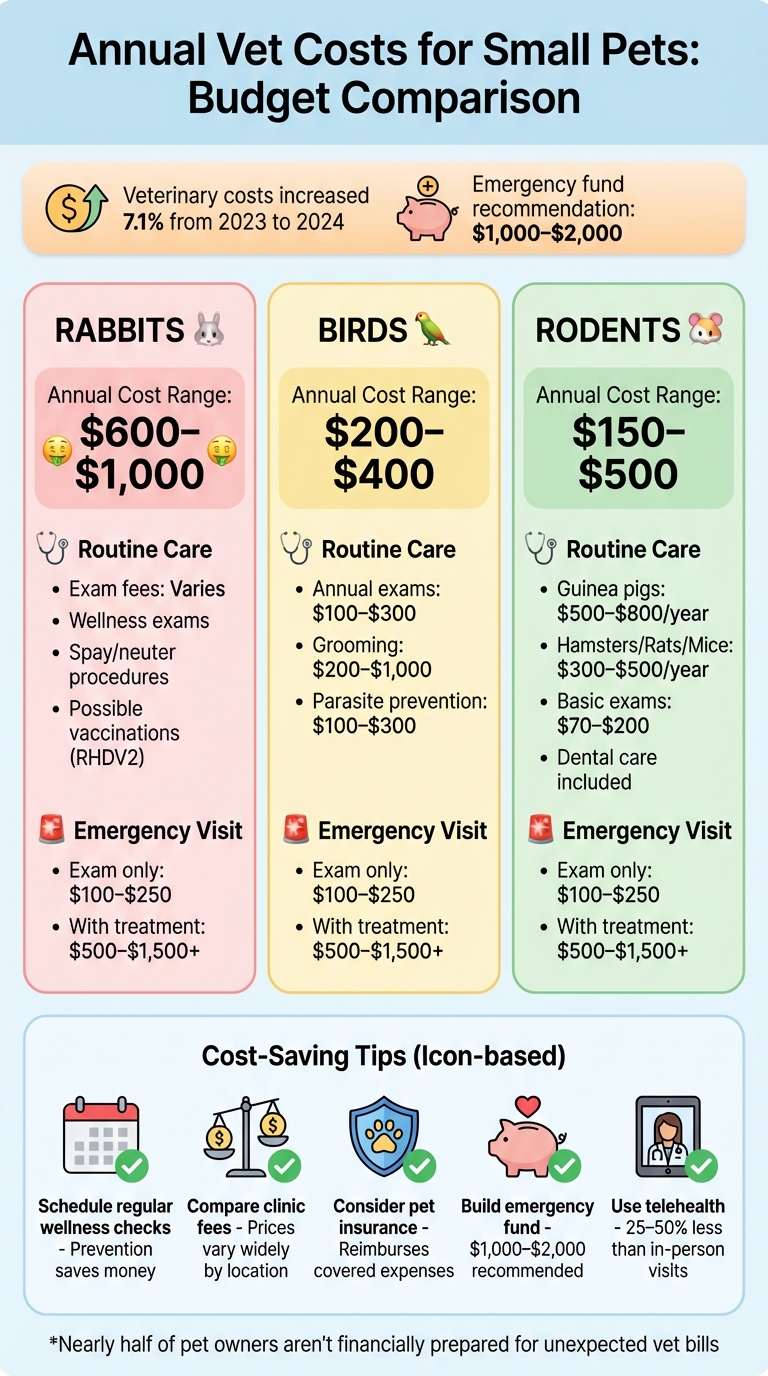
Annual Vet Costs Comparison for Small Pets: Rabbits, Birds, and Rodents
Routine Vet Visit Costs by Pet Type
Understanding routine vet costs can help you plan your pet care budget more effectively. Here’s a closer look at typical expenses for various types of pets.
Rabbits: Exams, Vaccinations, and Spay/Neuter Procedures
Rabbits often need specialized veterinary care, but detailed cost data is less commonly documented compared to dogs or cats. Spaying or neutering is usually advised to prevent reproductive health issues. In addition, some veterinarians may recommend vaccinations against diseases like Rabbit Hemorrhagic Disease Virus (RHDV2). For precise costs, it’s best to consult your veterinarian, as prices can vary widely.
Birds: Annual Check-Ups, Parasite Testing, and Grooming
Birds require care from veterinarians experienced in avian health. Routine annual exams typically cost between $100 and $300, while grooming services can range from $200 to $1,000. Parasite prevention adds another $100 to $300 to the annual expenses. Some veterinary clinics may offer bundled packages that include grooming alongside regular check-ups, which could help streamline care.
Rodents: Basic Exams and Dental Care
Rodents generally have lower vet care costs compared to other pets. Routine exams and any necessary vaccinations usually fall between $70 and $200. Guinea pigs, however, can cost more, with annual care expenses averaging $500 to $800, while other rodents like hamsters, rats, or mice cost around $300 to $500 annually. Regular check-ups are crucial for monitoring dental health, as rodents’ continuously growing teeth may require attention to prevent serious issues.
Cost Comparison Table: Routine Vet Visits
| Pet Type | Exam Fee | Preventative & Extra Care | Notes/Overall Estimate |
|---|---|---|---|
| Rabbits | Data varies | Wellness exams, spay/neuter, and possible vaccinations | Specific costs are not widely documented |
| Birds | $100–$300 | Parasite prevention ($100–$300) and grooming ($200–$1,000) | Some services may be bundled into packages |
| Guinea Pigs | $70–$200 | Annual care included in overall estimate | Overall annual cost: $500–$800 |
| Hamsters/Rats/Mice | $70–$200 | Annual care included in overall estimate | Overall annual cost: $300–$500 |
Common Veterinary Procedures and Their Costs
Caring for small pets goes beyond routine check-ups. These tiny companions often require specialized procedures that can quickly add up. Knowing what to expect can help you plan for both routine and unexpected veterinary expenses.
Vaccinations and Preventative Care
When it comes to vaccinations and preventive care, information for small pets is less widely available compared to larger animals. However, preventive care is crucial. Recommendations often depend on your location and the specific needs of your pet. It’s best to consult a veterinarian who has expertise in small or exotic animals to determine the right preventive care plan. After vaccinations, dental health is another key area to consider for your pet’s overall well-being.
Dental Care and Oral Health Expenses
For small pets like rabbits and rodents, dental health is a priority since their teeth grow continuously. Without regular care, dental issues can cause pain, tooth loss, and other serious health problems. Unfortunately, there aren’t clear cost benchmarks for small pets, which makes routine exams even more important. Early detection of dental problems can save your pet from discomfort and help you avoid expensive treatments later. Once dental care is addressed, reproductive health is another area to focus on.
Spay/Neuter and Reproductive Surgeries
Spaying or neutering is highly recommended for rabbits to lower the risk of reproductive illnesses and certain cancers. These surgeries require veterinarians skilled in handling small pets, and costs can vary significantly depending on your location and the clinic. A small pet specialist can provide specific pricing and guidance tailored to your pet’s needs.
Emergency Visits and Diagnostic Testing
Emergency care for small pets can be costly due to the specialized equipment and staff required, especially during off-hours. Exam fees typically range from $100 to $250, but a full emergency visit, including treatment, can cost anywhere from $500 to over $1,500. Complex cases might even exceed these amounts. Additional diagnostic tests like blood work or X-rays can further increase the bill.
Cost Comparison Table: Veterinary Procedures
| Procedure | Rabbit | Bird | Rodent |
|---|---|---|---|
| Vaccinations/Preventative Care | Varies by region; consult a small pet specialist | Costs vary; often included with routine exams | Typically part of routine care |
| Dental Care | May be addressed during routine exams; cost varies | Beak trimming may be bundled with grooming; cost varies | Usually included in routine exams |
| Spay/Neuter | Varies widely; consult an exotic pet vet | Not typically applicable | Rarely performed; consult your vet |
| Emergency Visit (exam only) | $100–$250 | $100–$250 | $100–$250 |
| Emergency Visit (with treatment) | $500–$1,500+ | $500–$1,500+ | $500–$1,500+ |
sbb-itb-e212914
How to Budget for Veterinary Care
Planning ahead for veterinary expenses can help you avoid financial stress while ensuring your small pet gets the care they deserve. The trick lies in knowing what to expect and finding practical ways to manage those costs.
Annual Veterinary Budget Estimates by Pet Type
To help you plan, here are some typical annual costs for small pets based on routine visits and care:
- Rabbits: $600–$1,000
- Birds: $200–$400
- Rodents: $150–$500
Setting aside a monthly amount based on these ranges can prepare you for both routine checkups and unexpected medical needs.
Factors That Affect Veterinary Costs
Several factors can influence how much you’ll spend on veterinary care. For instance, your location and the type of clinic you choose play a big role. Urban clinics and exotic animal specialists often charge more than general vets in rural areas. Age also matters – pets over seven years old generally need more attention, sometimes doubling the cost of care compared to younger animals.
Between April 2023 and April 2024, veterinary service costs rose by 7.1%, marking the steepest increase in pet-related expenses during that time. Rising economic pressures have also driven up the price of vet services and pet food, making it even more important to plan carefully.
Ways to Reduce Vet Costs
Luckily, there are plenty of ways to manage veterinary expenses without compromising your pet’s care:
- Don’t skip annual wellness checks. Early detection of health issues can save you from higher costs down the road.
- Focus on prevention by providing nutritious food, regular exercise, and a safe, toxin-free environment.
- Shop around. Veterinary fees can vary widely, so it’s worth calling multiple clinics to compare prices.
- Consider pet insurance. Many plans reimburse a percentage of covered expenses, especially for unexpected major treatments. Keep in mind, though, that most policies don’t cover pre-existing conditions, and you’ll usually need to pay upfront before being reimbursed.
- Use telehealth consultations for non-emergency situations. These can cost 25% to 50% less than in-person visits.
To prepare for emergencies, set up a dedicated emergency fund. Statistics show that nearly half of pet owners aren’t financially ready for unexpected vet bills. You can also look into financial assistance programs like CareCredit or Scratchpay for medical credit options. Organizations like the United Spay Alliance offer low-cost spay and neuter services, which can help reduce long-term expenses. Lastly, check with your vet about payment plans or discounts that might be available.
Conclusion
Bringing a small pet into your life is a decision that comes with financial responsibilities reaching well beyond the initial adoption. Over a pet’s lifetime, veterinary expenses alone can add up to tens of thousands of dollars, making careful financial planning essential. Keeping this long-term perspective in mind underscores the importance of the budgeting strategies outlined earlier.
Taking control of your pet’s expenses starts with proactive budgeting and preventive care. As the American Veterinary Medical Association (AVMA) explains:
The cost of preventive care usually is much less than the cost of treating the diseases or problems it targets.
Routine wellness visits, good nutrition, and catching health issues early can save you from facing hefty bills later on.
Another key step is setting up an emergency fund of $1,000 to $2,000. This safety net ensures you’re prepared for unexpected situations without sacrificing your pet’s well-being. Andrew Latham, Certified Financial Planner and Managing Editor of SuperMoney.com, emphasizes:
When you are in an emergency, your emotions and stress levels can be heightened, making it more difficult to think clearly and make good decisions.
With an emergency fund in place, you can focus on what truly matters – your pet’s health – without the added weight of financial stress.
FAQs
How can I save money on emergency vet bills for my small pet?
Planning ahead is one of the smartest ways to manage emergency vet costs for small pets like rabbits, hamsters, or birds. Pet insurance can be a huge help, often covering 70% to 100% of emergency expenses after you’ve met the deductible. If insurance isn’t feasible, consider starting an emergency fund. Even setting aside $50 to $100 from each paycheck can go a long way in preparing for unexpected vet bills.
Another option to consider is telehealth consultations. Virtual vet visits tend to be more affordable than in-person appointments and can help you decide if your pet truly needs emergency care. It’s also worth asking your regular vet about low-cost emergency clinics or charitable programs that assist with small pet healthcare.
Don’t overlook the importance of preventive care, either. Routine checkups and addressing health concerns early can make a big difference. By catching potential issues early, you can reduce the chances of costly emergency visits while keeping your pet healthy and your budget intact.
What are the advantages of getting pet insurance for small animals?
Pet insurance can be a game-changer when it comes to caring for small animals like rabbits, birds, or hamsters. It helps cover unexpected veterinary costs, reimbursing anywhere between 70% and 100% of eligible expenses. This means you can focus on your pet’s well-being without stressing over hefty bills for emergencies, surgeries, or medications. Plus, you’re not tied to specific providers – you’re free to visit any licensed veterinarian, which is especially helpful if your pet needs specialized care.
On top of financial relief, insurance offers peace of mind. Surprise veterinary expenses can easily climb beyond $1,500, but having coverage ensures you won’t have to hesitate when your pet needs attention. Considering that annual care costs for small pets typically range from $570 to $937, having insurance can also help you manage your budget while avoiding difficult decisions about treatment.
To make sure you’re getting the best plan for your pet, take the time to review policy details carefully. Pay attention to factors like waiting periods, coverage limits, and exclusions for pre-existing conditions. This way, you can choose a plan that fits your pet’s specific needs and ensures they get the care they deserve.
How can I find a veterinarian who specializes in small pets?
Finding the right veterinarian for small pets like rabbits, birds, or rodents is crucial to keeping your pet healthy and happy. Begin your search by looking for clinics that specifically mention services for exotic pets or pocket pets. Keywords like exotic pet care or small mammal vet can help you narrow down options. When you find a clinic, confirm they treat your pet’s species and ask about the vet’s experience working with small animals.
Another great way to find a reliable vet is by seeking recommendations. Local pet owners, rescue organizations, or even pet stores can often point you in the right direction. Don’t forget to check online reviews to get a sense of the clinic’s reputation for caring for small pets. Vets with specialized training or certifications in handling exotic animals and clinics that offer routine check-ups for small pets are usually excellent options to consider.