
When traveling with rabbits, preparation is key to ensuring their safety and comfort. Rabbits are sensitive to stress, temperature changes, and unfamiliar environments, making the right travel accessories essential. Here’s what you need to know:
- Carriers: Choose hard-sided, chew-proof carriers with good ventilation. Add non-slip bedding for comfort and stability. For car travel, secure the carrier on the floor behind the passenger seat.
- Temperature Control: Keep rabbits cool below 75°F in summer with frozen water bottles, and warm in winter with fleece blankets or heat pads.
- Hydration & Food: Rabbits may drink less while traveling, so pack water bowls, wet leafy greens, and their regular hay.
- Comfort Items: Familiar blankets, hay, and safe chew toys reduce anxiety. Cover the carrier with a breathable cloth to create a cozy, burrow-like environment.
- Air Travel: Only a few airlines allow rabbits in the cabin. Use soft-sided carriers that meet airline size limits and pack essentials like hay and water for the trip.
- Outdoor Adventures: Strollers and backpacks are great for walks but ensure proper ventilation and avoid bubble-style carriers to prevent overheating.
Key Tip: Practice short trips with your rabbit to build their confidence and make the carrier a familiar, safe space.
These steps will help you create a secure and stress-free travel experience for your rabbit.
TRAVELING WITH RABBITS: How to Travel with Your Bunny | Packing, Long Car Ride, and Hotel Stay
What to Look for in Rabbit Travel Accessories
Rabbit Travel Carrier Types Comparison Guide
When it comes to traveling with your rabbit, the right gear is essential to keep them safe and comfortable. Thoughtfully chosen accessories can prevent injuries, escape attempts, and heat-related issues, while also reducing stress for your furry companion. Below are the key features to consider when selecting rabbit travel accessories.
Safety Features
Durability is a must. Opt for carriers made from chew-resistant materials like hard plastic or metal wire. These are far more reliable than options made of wicker, cardboard, or soft fabric, which rabbits can easily gnaw through. To prevent accidental escapes, look for carriers with double-locking doors or spring-loaded latches that your rabbit can’t nudge open. If you’re considering a soft-sided carrier for short trips, make sure the zippers can be secured with safety clips.
Ventilation is another critical factor. A carrier with openings on at least three sides helps prevent overheating, especially when temperatures rise above 75°F. For added safety, choose carriers with a solid, non-slip floor. Wire-bottom cages can cause foot injuries or even trap your rabbit’s limbs, so line the carrier with puppy pads or towels for cushioning and traction.
A top-loading door is a game-changer when it comes to getting your rabbit in and out of the carrier. This design makes handling easier and reduces the chances of your rabbit getting stuck or injured during removal. As Russell from Rabbitip.com puts it:
The right transport cage is not just a box – it’s a safe space that protects your bunny’s physical and mental health during stressful journeys.
Comfort and Space
Your rabbit’s comfort is just as important as their safety. The carrier should provide enough room for your rabbit to lie down, stand up, and turn around, without being so large that they slide around during travel. For example, a 19-inch carrier is ideal for medium-sized rabbits, while a 24-inch carrier works better for larger or bonded pairs.
To help your rabbit feel secure, create a cozy, den-like environment. Rabbits naturally feel safer in darker, enclosed spaces, so draping a breathable cloth over part of the carrier can help block out stressful visual stimuli while maintaining airflow. Adding absorbent, non-slip materials like fleece or towels to the floor not only provides extra comfort but also manages any accidents that might happen during the trip.
Portability and Convenience
Ease of transport is another factor to keep in mind. Lightweight and flexible designs are particularly handy for different travel situations. Frameless soft-sided carriers, for example, weigh as little as 3.7 pounds and can fit under airplane seats, making them great for air travel.
For hands-free convenience, backpack-style carriers are a popular choice, especially for outdoor adventures. These typically range in price from $85 to $170 and often include features like padded straps for comfort. If you’re navigating an airport, carriers with trolley sleeves that attach to rolling luggage can make your journey smoother. For car travel, look for a carrier with a sturdy handle and a design that allows you to secure it with a seatbelt, ideally on the floor behind the passenger seat.
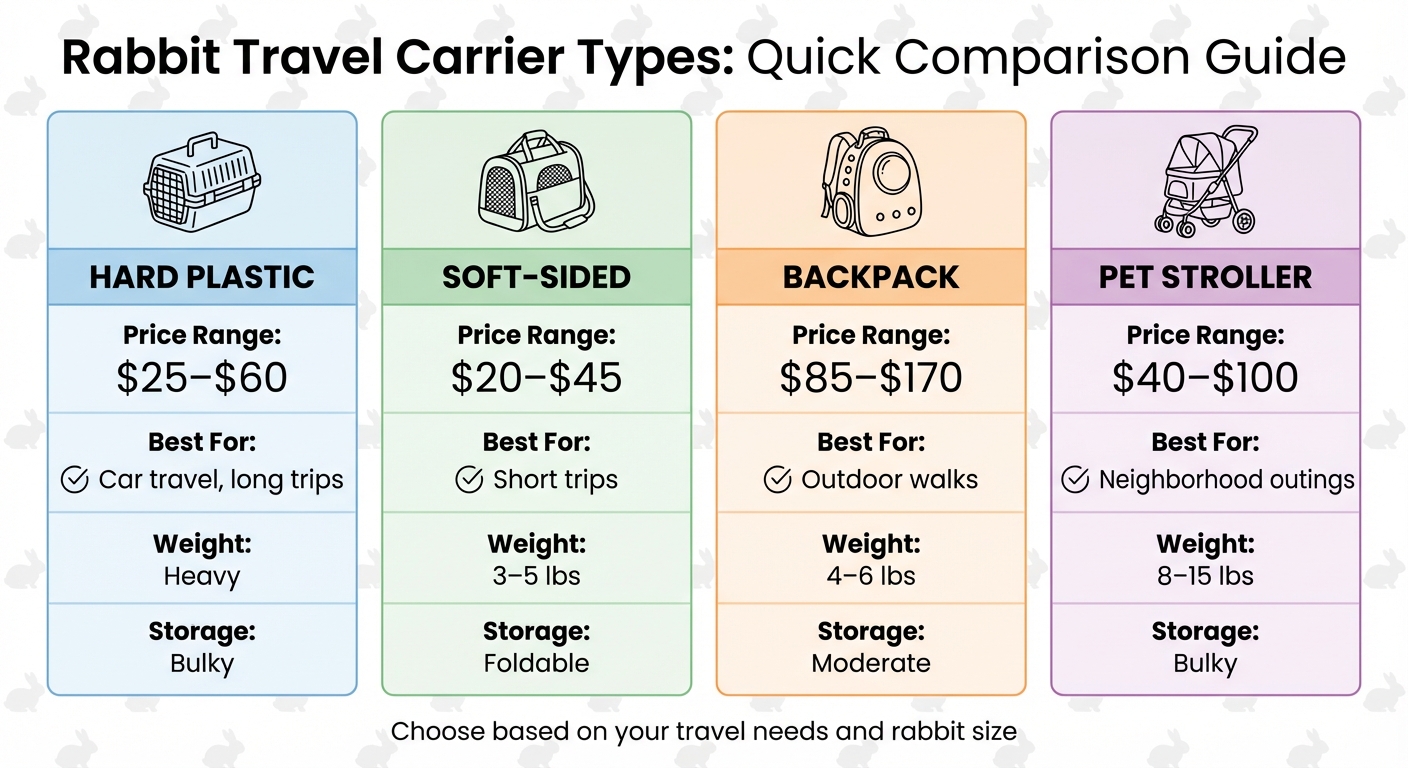
Here’s a quick breakdown of common carrier types:
| Carrier Type | Price Range | Best For | Weight | Storage |
|---|---|---|---|---|
| Hard Plastic | $25–$60 | Car travel, long trips | Heavy | Bulky |
| Soft-Sided | $20–$45 | Short trips | 3–5 lbs | Foldable |
| Backpack | $85–$170 | Outdoor walks | 4–6 lbs | Moderate |
| Pet Stroller | $40–$100 | Neighborhood outings | 8–15 lbs | Bulky |
Each carrier type has its strengths, so choose one that fits your travel plans and your rabbit’s specific needs.
Best Rabbit Travel Accessories by Travel Type
Car Travel: Carriers and Accessories
When it comes to car travel, hard-shell carriers like the Petmate 2-Door Top Load Kennel and Van Ness Calm Carrier are solid choices. These carriers are chew-proof and impact-resistant, with features like a sliding drawer base for easy access. For a medium-sized rabbit (around 5 pounds), a 19-inch carrier works well. Larger rabbits or pairs will need a 24-inch model, with prices typically ranging from $25 to $60. If you’re looking for crash-tested safety, the SleepyPod Mobile Pet Bed – which earned a 5-star rating from the Center for Pet Safety – offers top-tier protection, though it comes with a higher price tag of $150 to $200.
Position the carrier on the floor behind the front passenger seat, placed lengthwise so your rabbit faces sideways. This setup minimizes the impact during sudden stops. Amy Pratt from BunnyLady.com explains:
By placing the carrier on the floor tucked between the front and back seats, the initial impact is reduced and absorbed by the surrounding seats.
To keep your rabbit comfortable, line the carrier with a towel or fleece to prevent slipping. Instead of a water bowl, which might spill, consider hydration alternatives like water bottles.
If you’re planning to fly with your rabbit, you’ll need to meet specific airline requirements for carriers.
Air Travel: Airline-Approved Carriers
Currently, only Frontier and Spirit Airlines allow rabbits in the cabin for U.S. flights. Alaska Airlines discontinued this option in July 2025. Frontier Airlines permits carriers up to 18″ L x 14″ W x 8″ H for $99 each way, while Spirit Airlines allows slightly taller carriers, up to 18″ L x 14″ W x 9″ H, for $125 each way.
Soft-sided carriers are ideal for air travel, as they can compress to fit under-seat spaces (usually about 8.5 inches tall). The Mr. Peanut’s Gold Series carrier, rated 4.9/5, features self-locking zippers and a frameless design, making it a great option for tight spaces. Prices for this carrier range between $103 and $129. Another excellent choice is the Roverlund Out-of-Office Carrier, which has a 4.97/5 rating from 415 reviews and includes a removable insert to reduce its height by half an inch if needed.
If you prefer a hard-sided carrier, consider the Petmate Cabin Kennel, which measures 17″ x 12″ x 8″. It fits under most airline seats and features a clamshell opening for easy access. Michael Strianese from Mr. Peanut’s Pet Carriers highlights the importance of flexibility in airline carriers:
The priority for an airline capable carrier is the ability and pliability necessary to accomplish under seat requirements.
To make the trip more comfortable for your rabbit, pack hay or chew toys in the carrier and aim for direct flights to reduce travel stress.
Outdoor Adventures: Strollers and Backpacks
For outdoor outings, strollers can be a great option for rabbits. Look for models with multiple mesh windows for ventilation and smooth-rolling wheels to minimize jolts. These strollers typically cost between $40 and $100 and often include storage space for essentials. Keep in mind, though, that strollers are only suitable for walking and are not secure enough for car travel.
Avoid bubble carrier backpacks, as they often lack proper ventilation and can trap heat, creating a greenhouse effect. This can lead to heatstroke in less than 30 minutes. If you opt for a soft-sided backpack for shorter trips, make sure it’s made from thick, chew-resistant material and has plenty of mesh panels for airflow. These backpacks usually range in price from $20 to $45.
During outdoor adventures, ensure that your rabbit’s gear maintains a temperature below 75°F to prevent heat stress. Adding a familiar towel to the bottom of the stroller or backpack can provide extra comfort and traction. Including chew toys can also help keep your rabbit entertained and discourage them from chewing on the fabric.
sbb-itb-e212914
Seasonal Travel Accessories for Rabbits
Winter Travel: Warming Accessories
Traveling with your rabbit in cold weather? Keeping them warm is a top priority. Line their carrier with soft fleece blankets or consider self-warming mats (ranging from $13.99 to $26.99) that reflect your rabbit’s body heat without needing electricity. For longer trips, the SnuggleSafe Microwave Heat Pad is a fantastic option, providing up to 10 hours of cordless warmth for $29.99. This product has received glowing feedback, boasting a 4.6/5 rating from over 5,900 Amazon reviews.
If you’ll have access to electricity during your trip, the K&H Pet Products Outdoor Heated Pad is another excellent choice. It features waterproof construction and chew-resistant cords, with a 4.6/5 rating from over 1,500 reviewers.
Before hitting the road in winter, pre-heat your car for at least 15 minutes to create a cozy environment. Place any heat sources under a layer of fleece or a towel to avoid direct contact with hot surfaces, adding an extra layer of comfort. As Shana Abé suggests:
If it’s cold and the heat isn’t reaching them? Extra towels or blankets they can snuggle against.
Summer Travel: Cooling Products
When summer rolls around, keeping your rabbit cool becomes just as important as staying warm in winter. Rabbits are highly sensitive to heat, with temperatures above 85°F putting them at risk of overheating. To help regulate their temperature, place frozen 2-liter water bottles in the carrier, wrapping them in towels to prevent your rabbit from getting wet.
Hydration is critical during hot weather. Rabbits often prefer drinking from open water bowls rather than bottles, so be sure to include a secure, spill-proof bowl for the trip. Brett Kriefels from the University of Nebraska-Lincoln emphasizes:
Water is the single most important thing you can give your rabbit during the hot summer days.
You can also offer water-soaked leafy greens to increase hydration. For longer journeys, pack an insulated cooler with extra frozen bottles and ice packs. Adjust your car’s air conditioning vents so they direct airflow upward, away from the carrier, to maintain a comfortable environment. Keep an eye out for signs of heatstroke, such as panting, hot red ears, or drooling. If you notice these symptoms, immediately dampen your rabbit’s ears with cool water to help them cool down.
Rainy Weather: Waterproof Covers and Gear
Rainy weather brings its own set of challenges when traveling with your rabbit. Hard plastic carriers are the best choice in wet conditions – they resist moisture and are easy to clean. Avoid using cardboard carriers, as they can weaken when wet and may develop unpleasant odors.
If you’re venturing outdoors with a stroller, a Pet Gear Weather Cover is a great investment. Priced between $21.72 and $31.03, it offers protection from rain while still allowing visibility through its clear windows. Just make sure there’s enough airflow under any waterproof cover to prevent overheating.
What to Pack for Rabbit Travel
Food and Water Supplies
Keeping your rabbit well-fed and hydrated is crucial for reducing travel-related stress. Pack their regular hay, pellets, and water from home. For car trips, loose hay works well as it doubles as padding, while compressed hay cubes are a better option for air travel since they’re less messy and save space. Having hay available at all times is not only essential for fiber but also provides a comforting, familiar scent.
Rabbits might drink less while in motion, so offering wet leafy greens like romaine lettuce or cilantro can help keep them hydrated. Feed them pellets and vegetables a couple of hours before you leave – this helps keep them calm and satisfied during the trip. To avoid spills, use heavy ceramic bowls that can be secured to the carrier’s side.
As Rabbit.org wisely points out:
Do not try to drive with a hanging water bottle attached to a cage. No matter how you position it, it will make a huge mess and soak everything.
During stops, offer water in a bowl every 2–3 hours. When flying, empty water containers before TSA checkpoints and carry a collapsible bowl along with a sealed water bottle to refill after security. Always have Critical Care recovery food and a feeding syringe on hand in case your rabbit stops eating due to stress. If they haven’t eaten for more than 8 hours, check for signs of bloating and assist-feed if necessary.
Cleaning and Hygiene Products
A plastic carrier is your best bet for travel – it’s easy to clean and can be taken apart if needed. Line the bottom with newspaper, towels, or unscented puppy pads to absorb any accidents. Puppy pads are especially handy since they can be rolled up and thrown away at rest stops.
Inspect the carrier every few hours and replace any soiled bedding to keep your rabbit comfortable and dry. Pack extra towels and keep a sealed container or sturdy trash bags for storing soiled items until you can wash them. As Shana Abé suggests:
Bring extra towels for them, even more than you think they’ll need, and a sealed container for the soiled ones.
For overnight stays, bring a carpet spot cleaner and paper towels to handle any accidents in pet-friendly accommodations. Pet-safe cleaning wipes are also useful for quick cleanups of the carrier or temporary housing. To protect your car seats, place a towel or puppy pad under the carrier.
Once cleanliness is taken care of, focus on making the carrier a cozy and familiar space to ease your rabbit’s anxiety.
Comfort Items and Toys
Familiar scents can do wonders for calming a rabbit during travel. Bring along their favorite blanket or even a piece of your clothing. Line the carrier with plenty of hay or soft blankets to allow burrowing, which mimics their natural instincts and helps them relax. As Pets That Travel notes:
Hay will give your rabbit something to burrow into and a burrowed rabbit is a calm rabbit.
Cover the carrier with a breathable blanket to create a cozy, den-like environment that reduces visual stress. If your rabbit is used to being alone, a familiar stuffed animal can provide comfort – just make sure it’s safe from chewing hazards. Keep your rabbit entertained with chew toys or cardboard sheets to prevent them from gnawing on the carrier itself.
To make the carrier feel less intimidating, introduce it to your rabbit weeks before the trip. Leave it open in their play area with treats inside to create positive associations. Avoid hard or sharp toys that could cause injuries during sudden stops. During the journey, speak gently to your rabbit and offer their favorite treats as rewards for calm behavior.
Conclusion
Whether it’s a quick car ride or a long flight, having the right accessories can make all the difference when traveling with your rabbit.
Thoughtful preparation can turn a potentially stressful experience into a smooth journey. Essentials like a sturdy, chew-resistant carrier ensure safety, while reliable temperature control keeps your rabbit comfortable in the ideal range of 50°F to 75°F. Don’t forget comfort items to ease anxiety. As Rabbit.org wisely notes:
Traveling with a rabbit is definitely no small task. Quite a bit of preparation and consideration is needed…
Familiarize your rabbit with its carrier ahead of time and always pack an emergency kit. Include items like Critical Care and the contact information of a rabbit-savvy veterinarian. Whether it’s a short trip or a cross-country adventure, these precautions help protect your rabbit from issues like heatstroke or gastrointestinal stasis, especially during sudden stops or delays.
Safety-certified gear offers extra peace of mind. Start with short practice trips to build your rabbit’s confidence, keep routines consistent to reduce stress, and, if possible, travel with a bonded partner to provide comfort. These small but meaningful steps create a secure and calming environment for your rabbit, reflecting the principles of safety and comfort highlighted throughout this guide.
Armed with these tips and the right tools, you’ll be ready to travel confidently, knowing your rabbit is well-cared for and comfortable every step of the way.
FAQs
How can I keep my rabbit calm while traveling?
To help your rabbit stay calm while traveling, start by choosing a sturdy, hard-sided carrier that mimics the feel of a snug burrow. Line it with a soft blanket, some hay, or even a favorite toy to make it feel like home. Ensure the carrier has good ventilation and stays steady – secure it with a seat belt or place it on the floor behind a seat to prevent sudden jolts.
Before hitting the road, let your rabbit get comfortable with the carrier at home. Gradually introduce short practice drives to ease their nerves. During the trip, keep the environment quiet and soothing. Speak softly, avoid loud noises, and make sure there are no drafts. A darker, cozier interior can also help your rabbit feel secure.
Temperature management is crucial. If it’s hot, add a frozen water bottle or a cool pack to the carrier. In colder weather, extra towels or a blanket will help keep your rabbit warm. Familiar items like their usual bedding and water bottle can also provide comfort and help them stay relaxed throughout the journey.
How do I keep my rabbit hydrated during travel?
Keeping your rabbit hydrated during travel is essential for their well-being. Start by packing a refillable water bottle that securely attaches to their carrier, filled with fresh, cool water before you hit the road. Make it a habit to check the bottle every 30–60 minutes and top it off as needed. For extended trips, you can add a frozen water bottle or ice packs to the carrier. These not only help keep your rabbit cool but also provide extra moisture as the ice gradually melts.
If your rabbit isn’t a fan of drinking from a bottle, bring along a small needle-free syringe to gently offer water or an oral rehydration solution like Pedialyte. Don’t forget to pack plenty of fresh hay – it not only keeps their digestion on track but also contributes to hydration. To make things easier, opt for a BPA-free water bottle with a secure lid and pair it with a lightweight, spill-proof carrier. This way, your rabbit stays comfortable, safe, and hydrated throughout the trip.
What should I bring for my rabbit’s first airplane trip?
When flying with your rabbit for the first time, careful preparation is key to keeping them comfortable and safe. Start by choosing an airline-approved carrier that fits under the seat. For smaller rabbits (2–3 lbs), a 19-inch carrier works well. Medium rabbits (around 5 lbs) or larger ones (7+ lbs) may need a 24-inch carrier. Line the carrier with a towel, pee pad, or a bit of litter, and add some hay for both comfort and chewing.
Pack the essentials: hay, a small portion of pellets, a few treats, and a water bottle or syringe for hydration. Make sure to bring along a veterinary health certificate, vaccination records, and the airline’s in-cabin pet fee, which is usually paid in U.S. dollars. To help your rabbit feel secure, include a favorite chew toy or blanket. It’s also smart to pack an ice pack (wrapped in cloth) or a rehydration solution like Pedialyte for emergencies.
Plan to arrive at the airport early to allow extra time for check-in and security. With these thoughtful preparations, you’ll help ensure your rabbit’s first flight is as smooth and stress-free as possible.