

Preventative pet care saves money and keeps your pet healthy. For example, treating parvovirus costs about $687.24, while vaccinations to prevent it range from $73.52 to $85.14. This guide breaks down how routine care like checkups, vaccinations, and parasite prevention can reduce long-term expenses and improve your pet’s quality of life.
Key Takeaways:
- Annual Costs: Dogs: $500–$1,500; Cats: $300–$1,000. First-year expenses are higher, exceeding $2,000 for dogs and $1,174 for cats.
- Preventative Services: Wellness exams ($50–$250), vaccinations ($20–$80 per vaccine), dental cleanings ($500–$2,000 for dogs, $200–$1,500 for cats), and parasite prevention ($120–$420 annually).
- Wellness Plans: Monthly costs range from $30–$90, bundling routine care like exams and vaccines to save about 30%.
- Emergency Preparedness: Save $1,000–$2,000 for unexpected vet bills. Pet insurance can reimburse 70%–100% of expenses, with premiums averaging $46–$62 for dogs and $25–$32 for cats.
Pro Tip: Schedule regular checkups, tailor vaccination schedules, and compare vet prices to manage costs effectively. Preventative care is a small investment that avoids costly emergencies later.
What is Preventive Care and Wellness Plans for Dogs and Cats?
Annual Preventative Care Costs by Pet Type
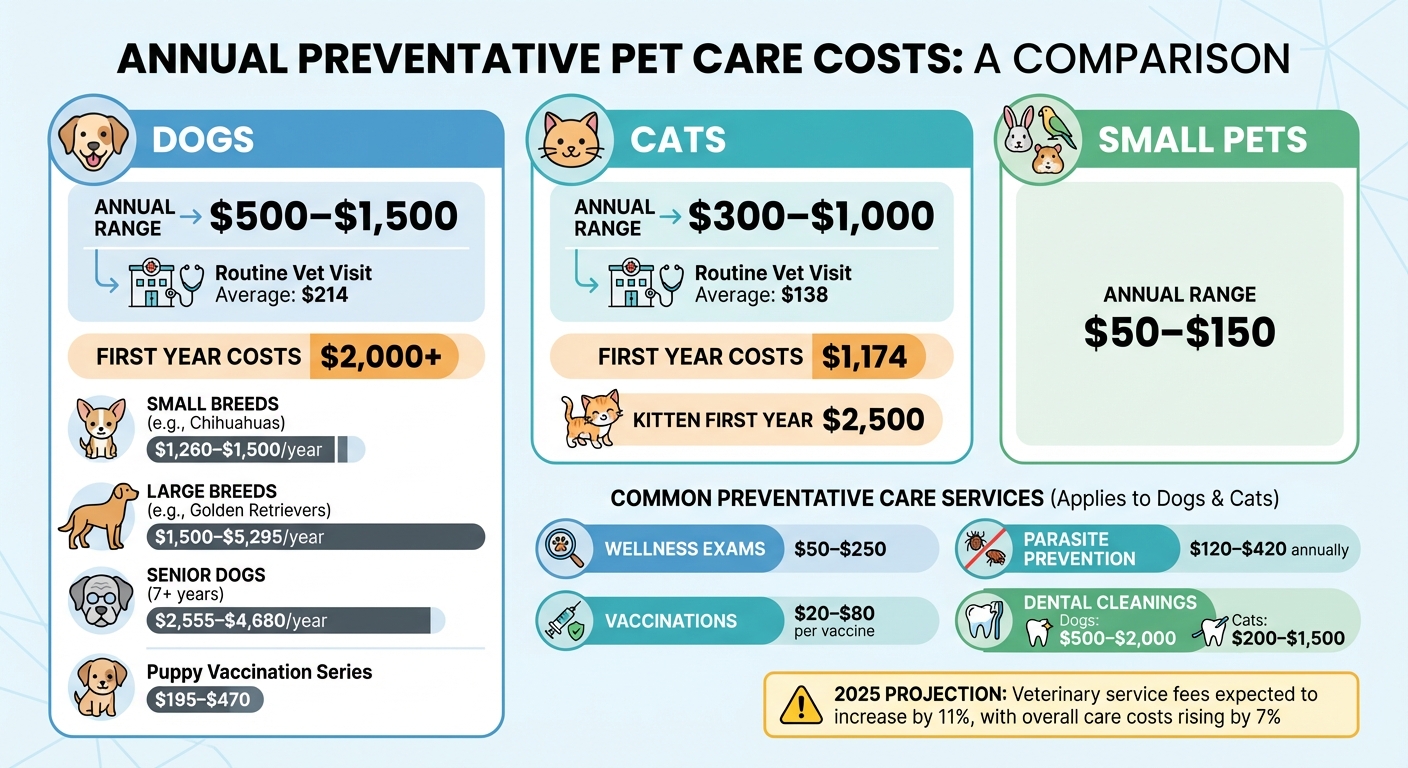
Annual Preventative Pet Care Costs Breakdown by Pet Type and Life Stage
Planning for annual preventative care costs means considering your pet’s type, size, and life stage. Let’s break down the yearly expenses for dogs, cats, and small pets to help you budget wisely.
Dogs and Cats: What to Expect
Routine healthcare costs for pets vary widely. For dogs, annual expenses typically range from $500 to $1,500, while for cats, they fall between $300 and $1,000. Routine vet visits average around $214 for dogs and $138 for cats as of 2025.
A dog’s size plays a significant role in its care costs. Smaller breeds, like Chihuahuas, can cost between $1,260 and $1,500 annually, while larger breeds, such as Golden Retrievers, might cost as much as $1,500 to $5,295 per year. This cost difference stems from larger dogs requiring more medication and anesthesia, which are calculated based on weight.
The first year of owning a pet is often the most expensive. For dogs, first-year costs can exceed $2,000, while for cats, the average is around $1,174. Initial expenses include vaccinations, microchipping, and spay/neuter procedures. For example, a puppy’s vaccination series typically costs between $195 and $470. Senior pets (ages 7 and older) require additional care, such as diagnostic bloodwork, with annual costs for senior dogs ranging from $2,555 to $4,680.
Preventative care costs include wellness exams ($50 to $250), vaccinations ($20 to $80 per vaccine), parasite prevention ($120 to $420 annually, depending on weight), and dental cleanings ($500 to $2,000 for dogs; $200 to $1,500 for cats). Be prepared for rising costs, as veterinary service fees are projected to increase by about 11% in 2025, with overall care costs potentially climbing by 7%.
Small Pets: Rodents, Birds, and Rabbits
Caring for small pets like rabbits, rodents, and birds is generally more affordable, with annual costs ranging from $50 to $150. However, these pets still require routine checkups to spot potential health issues early. Proper nutrition, parasite control, and an enriched environment are essential to keep them healthy and support natural behaviors.
Regular grooming, such as nail trimming and dental care, can prevent more serious and expensive health problems down the road. Early detection through annual exams often means more treatment options and lower costs compared to addressing advanced illnesses.
Veterinary Wellness Plans: Costs and Benefits
Veterinary wellness plans simplify pet healthcare by bundling routine preventive care into fixed monthly payments. Unlike pet insurance, which covers accidents or illnesses, these plans focus on predictable services like vaccines, exams, and parasite testing. Many clinics tailor their plans based on species, size, and life stage, offering different options for puppies, kittens, adult pets, and seniors. Let’s break down the typical costs and what these plans include.
Monthly Fees and What’s Included
The cost of wellness plans generally ranges from $30 to $90 per month, depending on your pet’s specific needs. For example, Paw Springs Health in Wilmington, NC, offers an Essential Care plan at $38 per month, covering two exams, fecal and heartworm tests, and core vaccines. Their Comprehensive Care plan, priced at $90 per month, also includes dental cleaning under anesthesia.
For a more affordable option, many pet insurance providers offer wellness add-ons, averaging around $15 per month (approximately $180 annually). Providers like Spot and ASPCA offer these add-ons for about $10 per month, while Lemonade and AKC charge closer to $16, and Embrace is around $23 per month. These add-ons typically cover comprehensive exams, core vaccinations, fecal exams, and blood work. Some premium options even include perks like unlimited office visits, 24/7 virtual vet consultations, and nutrition advice.
Advantages of Wellness Plans
Paying for routine care in monthly installments can help manage costs and prevent large, unexpected vet bills. On average, pet owners can save 30% or more compared to paying for each service individually. Plus, pre-paying for services like vaccinations and exams makes it easier to stick to recommended schedules.
"I love the [Optimum Wellness Plan] so much. It truly pays for itself after a couple visits." – Bethany N., Banfield Customer
Another key benefit is early detection of health issues. Regular screenings included in wellness plans can catch problems before they become serious or expensive. As Tasha K., a Banfield Customer, shared, "The routine biannual blood work it includes caught a potential future issue we could treat early." Additionally, many plans offer discounts – ranging from 10% to 20% – on services outside the plan, like grooming or boarding. These savings make wellness plans an appealing option for many pet owners.
Deciding If a Wellness Plan Fits Your Budget
Wellness plans are most cost-effective if you use all the services they include. Start by reviewing your pet’s medical history to see if you typically schedule the recommended two exams per year, along with vaccinations and parasite prevention. For pets with minimal healthcare needs, paying for services individually might end up being cheaper than a bundled plan.
Your pet’s age and overall health are also important considerations. For example, first-year costs for puppies can reach $2,800 and $2,500 for kittens, covering exams, vaccinations, and spay/neuter procedures. A comprehensive wellness plan can help offset these initial expenses. However, keep in mind that wellness plans don’t cover emergency surgeries, chronic illness treatments, or after-hours care. Compare clinic-specific plans – which often provide direct discounts – with insurance add-ons that work on a reimbursement basis to find what suits your budget and your pet’s needs best.
sbb-itb-e212914
How to Reduce Preventative Care Expenses
Preventative care is a smart way to keep your pet healthy while managing costs. Here are some practical strategies to help you save money without cutting corners on your pet’s well-being.
Schedule Regular Check-Ups
Routine check-ups are key to catching potential health problems early, which can save you a lot in the long run. A typical wellness exam costs between $50 and $100, while treating advanced health issues can be far more expensive.
To make these visits more budget-friendly, consider scheduling your next appointment before leaving the clinic. Many veterinarians offer in-house payment plans or financing options like CareCredit or Scratchpay. Additionally, community and nonprofit clinics often provide basic services – like wellness exams and vaccinations – at reduced rates, which can be a great option for households earning under $40,000 per year.
Customize Vaccination Schedules
Vaccinations are essential, but tailoring your pet’s vaccination schedule to their specific needs can help cut costs. Work with your veterinarian to determine which vaccines are necessary based on your pet’s lifestyle and exposure risks. Core vaccines, such as rabies and distemper, are a must for all pets, but non-core vaccines like Bordetella (kennel cough) or canine influenza may not be needed if your pet has minimal contact with other animals.
After the initial series of shots, many core vaccines offer protection for up to three years, reducing the need for annual boosters. For routine vaccinations, check out local animal shelters or organizations like the Humane Society or VIP Pet Care, which often host low-cost vaccination clinics.
Compare Veterinary Clinic Prices
The cost of preventative care can vary widely between clinics, so it pays to shop around. Call different veterinary offices to compare prices for services like wellness exams, vaccinations, and fecal tests.
For medications, ask your vet for a written prescription and compare prices at pet stores, licensed online pharmacies, or even human pharmacies. Some veterinary clinics may even match online prices – just make sure the online pharmacy is licensed in your state by checking with your state pharmacy board. If you’re looking for non-urgent advice, telemedicine subscriptions start at around $15 per month, offering another cost-effective option.
Preparing for Unexpected Veterinary Costs
Even with the best preventative care, emergencies can still happen. In fact, one in three pets will need emergency veterinary treatment each year. Adding to the challenge, veterinary service costs rose by 7.9% from February 2023 to February 2024. Since most clinics require full payment upfront – even if you have insurance – it’s crucial to have a financial plan in place.
Setting Up an Emergency Fund
Emergency veterinary care can come with hefty price tags, so being financially prepared is key. Aim to save $1,000–$2,000 in a dedicated account for pet emergencies. This can cover anything from a $100–$200 exam to diagnostics and hospitalization that may reach up to $3,000.
To make saving easier, set up automatic monthly transfers of $30–$100 into a high-yield savings account. It’s also smart to have a credit card set aside exclusively for emergencies. With nearly half of pet owners unprepared for unexpected veterinary costs, starting early can make all the difference.
Understanding Pet Insurance Options
Pet insurance works differently than human health insurance. Typically, you pay the vet bill upfront, then submit a claim to get reimbursed for 70% to 100% of the covered costs. Monthly premiums range from $25–$70, with average costs of $46–$62 for dogs and $25–$32 for cats.
"As most Americans struggle to afford a $1,500 emergency vet bill, and one out of every three pets will require emergency treatment each year, the right pet insurance can be a lifesaver." – Dr. William Hodges, DVM
Combining pet insurance with an emergency fund offers a strong financial safety net. Your savings can handle upfront payments and deductibles, while insurance can protect you from catastrophic expenses, like ligament repair surgery, which can cost $3,000 to $7,000. Enrolling your pet while they’re young helps you avoid exclusions for pre-existing conditions, though keep in mind the typical 2–14 day waiting period before coverage begins.
Conclusion: Investing in Your Pet’s Health
Taking preventative measures for your pet’s health does more than just keep them feeling their best – it can also help you avoid expensive emergency bills later on. On average, dog owners spend between $200 and $500 annually on basic medical care, while cat owners typically pay around $160 per year. These routine costs are a small price compared to what you might face if your pet develops a serious illness or requires emergency treatment that could have been avoided.
"The cost of prevention is often a fraction of the cost of treating a disease or problem once it has become more advanced." – AVMA
This statement underscores the importance of planning ahead when it comes to your pet’s health. Over the course of their life, the total cost of care can add up to tens of thousands of dollars. Regular checkups and preventative care allow you to catch potential issues early, often when treatments are simpler and less expensive.
Financial preparation is just as important as regular care. Setting up an automatic monthly contribution to a dedicated pet health savings account is a great place to start. Another smart move? Enroll in pet insurance while your furry friend is still young, as this helps you avoid exclusions for pre-existing conditions. These steps, combined with routine care, can safeguard both your pet’s well-being and your financial stability.
"Feeding your pet a healthy diet will save you more in the long run by helping to prevent disease." – Dr. Louise Murray, Vice President, ASPCA Animal Hospital
FAQs
How do I choose the right wellness plan for my pet?
A wellness plan is like a subscription for your pet’s routine care. It typically includes preventive services such as exams, vaccinations, parasite prevention, and dental cleanings – all for a set monthly fee. These plans not only help spread out costs but also ensure your pet gets consistent care. Plus, catching potential health issues early often costs less than treating them later.
Here’s how to choose the right plan for your furry friend:
- Think about your pet’s specific needs: Consider factors like their age, breed, health history, and daily habits. For instance, younger pets might need more vaccinations, while older pets could require regular dental cleanings or specialized care.
- Compare pricing and what’s included: Monthly fees for wellness plans can vary widely. Basic plans might start around $12 per month, while more inclusive options could range from $30–$31 for dogs or $11–$12 for cats. Make sure to weigh the cost against the services offered.
- Read the fine print: Check what’s covered, any exclusions, and whether your veterinarian participates in the plan.
It’s always a good idea to talk to your vet about which services are essential for your pet. Then, do the math to see if a wellness plan could save you money compared to paying for services one by one. By choosing a plan that fits your pet’s unique needs, you can keep them healthy and avoid surprise expenses.
How can I save money on preventative care for my pet?
Keeping pet care affordable doesn’t have to be complicated. Start by scheduling annual wellness exams – they can help catch health issues early, saving you from dealing with costly advanced treatments later. A nutritious, well-balanced diet is another key factor. It can help prevent expensive conditions like obesity, diabetes, and allergies. Combine this with regular exercise, controlled portions, and avoiding too many human-food treats to reduce the risk of obesity-related problems. Don’t overlook dental care – brushing your pet’s teeth at home with pet-safe toothpaste can help you avoid dental disease and pricey procedures. Staying on top of vaccinations, flea/tick/heartworm preventives, and routine dental checkups is also essential to keep your pet healthy and protected.
To cut costs on services, shop around for veterinarians who offer transparent pricing or wellness packages that include exams, vaccinations, and preventives at a discount. You can also save money by buying medications like flea collars or heartworm tablets in bulk or through trusted discount programs. Grooming tasks such as brushing, nail trimming, and ear cleaning can easily be done at home with affordable, vet-approved supplies. By combining consistent care with savvy spending habits, you can ensure your pet stays healthy without stretching your budget too thin.
How can pet insurance help with preventative care costs?
Pet insurance can ease the burden of preventative care costs by including optional wellness plans. These plans often cover routine services like annual check-ups, vaccinations, dental cleanings, and parasite prevention. This means fewer out-of-pocket expenses and more incentive to stick to a consistent care routine for your pet.
By covering a portion of these regular treatments, pet insurance helps you stay on top of your pet’s health. It can also lead to early detection of potential issues, which might save you from facing higher medical bills down the road.