
Bathing small birds is a simple yet crucial part of keeping them healthy. Regular baths help clean feathers, hydrate skin, and improve overall well-being. Birds like budgies, cockatiels, and finches benefit from baths 3–4 times a week, especially in dry indoor air. Here’s what you need to know:
- Why Bathing Matters: Keeps feathers clean, supports preening, and promotes respiratory health.
- How Birds Bathe in Nature: Wild birds use rain, puddles, or wet plants, which can inspire your pet bird’s routine.
- Bathing Tools: Use shallow bowls (1–2 inches deep), spray bottles for misting, or wet leafy greens.
- Water Tips: Always use lukewarm, plain water – no soaps or chemicals.
- Methods: Let birds splash in a bowl, mist them gently, or provide wet greens for rolling.
- Post-Bath Care: Dry birds in a warm, draft-free area and avoid nighttime baths to prevent chilling.
The key is to observe your bird’s preferences and make bath time enjoyable and safe. Whether they love misting or splashing, a consistent routine ensures their feathers and skin stay in top condition.
How to Bathe Budgies and Other Small Birds
Tools and Supplies You Need for Bathing Small Birds
When it comes to bathing small birds, keeping it simple and affordable is key. The right tools not only make the process easier but also ensure your bird stays safe and comfortable.
Choosing the Right Bathing Container
For birds that enjoy wading, shallow bowls and pans are an excellent choice. Opt for sturdy, heavy containers, like ceramic bowls or plant saucers, that won’t tip over easily. Fill them with just 1–2 inches of water – enough for splashing without posing a hazard.
If saving space and minimizing mess are priorities, cage-attached baths are a smart option. Products like the JW Pet InSight Bird Bath (US$8.16) and the Caitec Featherland Paradise Birdie Bath Tub (US$9.49) attach to the side of the cage, keeping splashes contained and your cage liner dry.
For birds that enjoy moving water, a shallow sink with a gentle trickle of water can be a fun alternative. Another option is a shower perch, such as Polly’s Pet Products Sandy Window & Shower Bird Perch (US$29.52 for small sizes), which attaches securely with suction cups. These perches let your bird enjoy a light mist from the shower without being exposed to direct water pressure, which can be harmful. Position the perch so your bird gets only a gentle mist.
If your bird isn’t a fan of wading or running water, misting may be the way to go.
Using Spray Bottles for Misting
For birds that prefer misting, a clean, unused spray bottle is a must. Never repurpose bottles that may have held cleaning products, as even small residues can be harmful. Look for a bottle with a fine mist setting to create a soft, rain-like spray rather than a harsh stream. Continuous spray bottles are especially helpful because they provide a steady mist without the startling clicking sounds of standard sprayers.
"Point the mister in a fashion that allows the water to fall down gently like rain. Be careful not to spray directly into the face as this is uncomfortable and may frighten your bird."
Before misting your bird, test the spray pattern and water temperature. Aim the mist upward so it falls naturally, mimicking rain. Basic plant misters work well, or you can try the Mango Pet Parrot Bath Spray (8-fl oz, US$12.90), which is specifically designed for birds.
Water Temperature and Quality
The temperature of the water is crucial for keeping your bird comfortable and safe. Always use lukewarm water – test it on your wrist to ensure it’s neither too hot nor too cold.
"Commercial bathing solutions containing chemicals, soaps, or other ingredients SHOULD NOT be used on birds."
- Gregory Rich, DVM; Laurie Hess, DVM; Rick Axelson, DVM
Stick to plain, clear water. Soaps and shampoos strip the natural oils birds rely on to keep their feathers waterproof. If your tap water contains a lot of chlorine, consider switching to bottled or filtered water to avoid irritating your bird’s respiratory system.
Lastly, cleanliness is essential. Wash all bathing containers daily to prevent bacteria and fungal growth. For outdoor bird baths, scrub weekly with a bleach solution (1 part bleach to 9 parts water) to help reduce the risk of spreading diseases.
How to Bathe Small Birds: Step-by-Step Methods
Once you’ve gathered your supplies, it’s time to let your bird enjoy a bath. Birds in the wild have natural grooming instincts, so the goal is to create an environment that encourages those behaviors while keeping your feathered friend relaxed. Choose a method that suits your bird’s personality and comfort level.
Shallow Bowl Bathing Method
Start by picking a warm, draft-free room to keep your bird cozy during bath time. Fill a sturdy ceramic bowl with about 1–2 inches of lukewarm water. Place the bowl either on the cage floor or near a perch your bird loves, and let your bird approach it on its own terms. If your bird seems unsure, try splashing the water gently with your fingers or place a favorite treat near the bowl’s edge to pique its curiosity. Always supervise the bath and keep it short – about 20 minutes or until your bird decides it’s done.
"Your bird will do most of the work if you supply lukewarm water."
- Gregory Rich, DVM
Once the bath is over, remove the bowl right away to prevent your bird from drinking dirty water. If the cage bedding got wet, swap it out to avoid mold. It’s a good idea to schedule baths during the warmest part of the day, typically early afternoon, so your bird has plenty of time to dry off before nightfall.
Misting Method with a Spray Bottle
For birds that enjoy a gentle mist, use a spray bottle to mimic a light rain shower. Hold the bottle so the mist falls softly over your bird, avoiding direct sprays to its face or eyes. If your bird is new to misting, start with a single light spray from a distance and offer encouragement to build trust. Keep these sessions brief – just a few minutes of misting will hydrate the feathers and skin without overwhelming your bird. Look for signs of happiness, like fluffed feathers or outstretched wings, which show your bird is enjoying the experience.
If your bird isn’t a fan of standing water, misting can be a great alternative to keep them clean and comfortable.
Using Wet Greens and Perches for Bathing
This method mirrors how wild birds use dew-covered leaves to bathe. It’s especially great for small birds like budgies, finches, or canaries, who might find standing water intimidating. Rinse large, leafy greens like kale, Swiss chard, lettuce, or carrot tops with lukewarm water until they’re dripping wet. Lay the greens on a flat surface or directly on the cage floor, and let your bird explore. Many birds will instinctively roll in the damp leaves or rub their feathers against them.
"For small birds, try placing wet lettuce leaves or large leafy green vegetables at the bottom of their cage. Many small birds love to roll in the leaves and get some good nutrition at the same time."
- Avian Enrichment
Another option is to use a shower perch. Set it up in your bathroom and position it so your bird gets a light mist from the shower’s humidity rather than the full spray. Let your bird watch you shower to help it feel more at ease in the new environment. This can be a fun bonding experience while keeping your bird clean and healthy.
sbb-itb-e212914
Solving Common Bathing Problems
Bath time can be a challenge for some birds, requiring a little extra patience and creativity. If your feathered friend seems uneasy or stressed, a few small changes might help make the experience more enjoyable.
What to Do When Your Bird Is Afraid of Water
Start by placing a shallow dish of lukewarm water near your bird’s favorite perch. Let your bird approach and investigate the water at its own pace. If a spray bottle feels too intimidating, try misting the air above the bird so the water falls gently, mimicking rain. Some birds are drawn to the sound of running water, whether from a slow-moving fountain or even a vacuum cleaner, which can activate their natural instincts to bathe.
"Bathing should never be forced or used as a punishment tactic."
Encourage your bird by offering treats and verbal praise for any interaction with water, even if it’s just a curious glance at the bowl. Avoid using water as a form of discipline, as this can create long-term fear. If your bird remains hesitant, try offering wet leafy greens, which some birds enjoy rubbing against. These small adjustments can help create a more positive and stress-free bathing experience.
How to Prevent Over-Bathing and Stress
Once your bird becomes more comfortable with water, it’s important to keep an eye on the frequency and intensity of their baths. Watch for signs of stress, such as panting, frantic movements, or attempts to flee. If you notice these behaviors, end the session right away. Avoid soaking your bird to the point of complete saturation, as this can strip their feathers of natural oils, lead to a dangerous loss of body heat, and temporarily hinder their ability to fly. For most small birds, 3 to 4 baths per week are sufficient, though dusty species like cockatiels may benefit from more frequent bathing.
Caring for Your Bird After a Bath
After bath time, place your bird in a warm, draft-free area to dry naturally. Schedule baths earlier in the day to ensure they have enough time to dry completely. Be sure to replace any wet cage bedding immediately to prevent mold growth.
"Wet birds easily get chilled, which can be a serious health hazard."
- Alyson Kalhagen, Avian Expert, The Spruce Pets
If your bird seems chilly, gently pat them dry with a soft towel or use a hair dryer on the lowest warm setting, keeping it at a safe distance to avoid overheating. Never let your bird go to sleep with damp feathers, as this can put their health at risk.
Do’s and Don’ts for Safe Bird Bathing
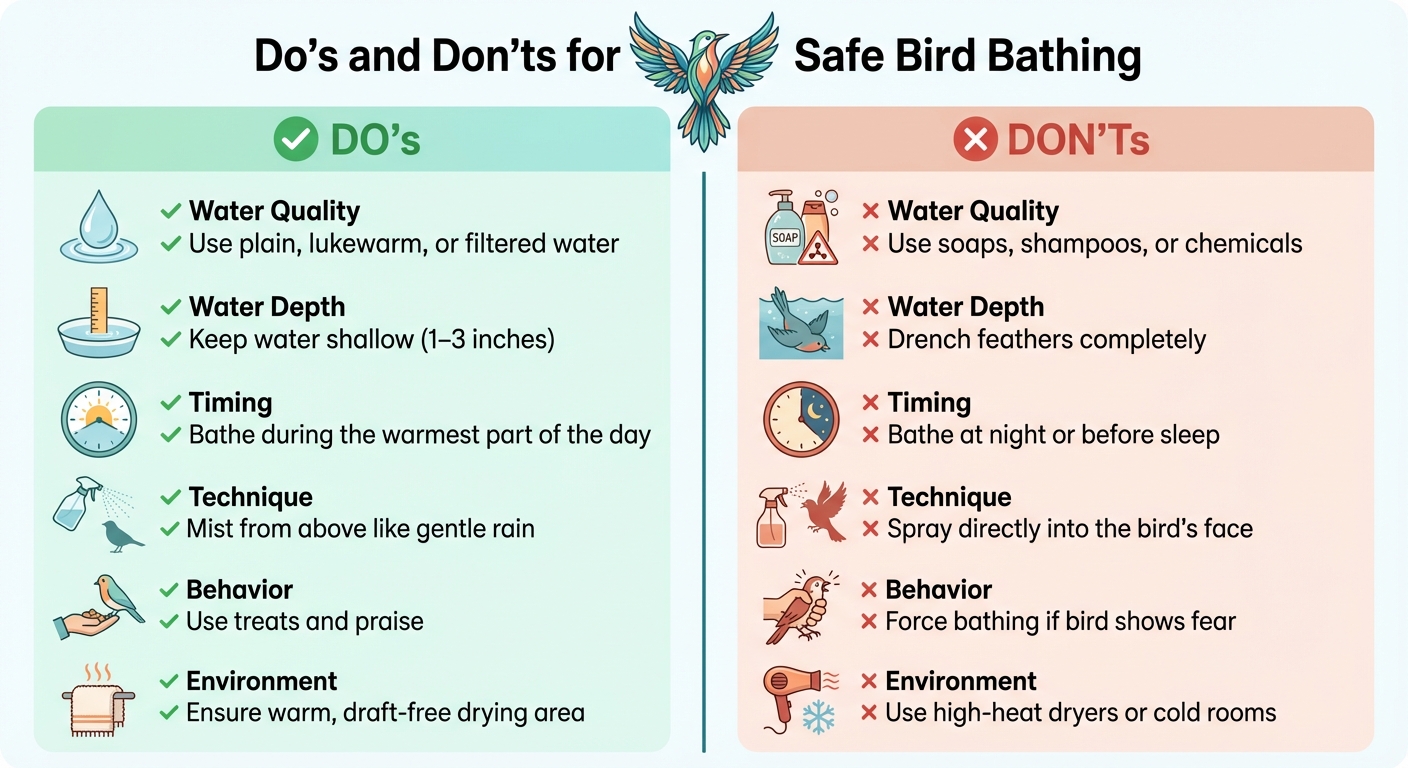
Do’s and Don’ts for Safe Small Bird Bathing
Bathing is essential for your bird’s health, but it needs to be done thoughtfully to ensure safety and comfort. Below, we’ve outlined the key do’s and don’ts to help you establish a consistent and safe bathing routine.
Recommended Bathing Practices
When it comes to water, stick to the basics: plain, lukewarm water is all your bird needs. Avoid soaps, shampoos, or any commercial bathing products. As veterinarians Gregory Rich, Laurie Hess, and Rick Axelson emphasize:
"Commercial bathing solutions containing chemicals, soaps, or other ingredients SHOULD NOT be used on birds" – Gregory Rich, DVM; Laurie Hess, DVM; Rick Axelson, DVM
These products can strip away the natural oils that birds rely on to keep their feathers waterproof and regulate their body temperature. If your tap water is chlorinated, opt for bottled or filtered water instead.
Keep the water shallow – 1 to 3 inches deep is ideal – so your bird feels safe and not overwhelmed. Choose the warmest part of the day for bath time to ensure your bird dries completely before cooler temperatures set in. After bathing, place your bird in a warm, draft-free area to dry. If you’re using a misting spray, aim above your bird to mimic gentle rain, rather than spraying directly at its face. For birds in dry indoor environments, aim to provide bathing opportunities at least 3 to 4 times a week, or even daily if possible.
By following these steps, you’ll create a safe and enjoyable experience for your bird. However, it’s equally important to avoid common mistakes that could cause stress or harm.
Mistakes to Avoid When Bathing Birds
One major misstep is drenching your bird’s feathers. In the wild, birds instinctively avoid getting too wet to maintain their body heat and flight ability. Similarly, don’t bathe your bird late in the evening or just before bedtime, as damp feathers can lead to chilling overnight.
Avoid using high-pressure spray settings or forcing your bird under a showerhead, as this can frighten or even injure them. Never use water as a form of punishment. Avian behavior specialist Diane Burroughs warns against this:
"Never squirt your bird with water as a form of discipline" – Diane Burroughs
Such actions can instill a fear of water and damage the trust you’ve worked to build with your bird. Lastly, remove any bathing containers promptly to prevent issues like soiled water or mold.
| Category | Do | Don’t |
|---|---|---|
| Water Quality | Use plain, lukewarm, or filtered water | Use soaps, shampoos, or chemicals |
| Water Depth | Keep water shallow (1–3 inches) | Drench feathers completely |
| Timing | Bathe during the warmest part of the day | Bathe at night or before sleep |
| Technique | Mist from above like gentle rain | Spray directly into the bird’s face |
| Behavior | Use treats and praise | Force bathing if bird shows fear |
| Environment | Ensure warm, draft-free drying area | Use high-heat dryers or cold rooms |
Conclusion: Building a Healthy Bathing Routine
Creating a bathing routine for your small bird starts with careful observation and a bit of flexibility. Birds have unique preferences – some enjoy splashing in shallow water, others prefer a light mist, and some are drawn to wet greens. By paying close attention to how your bird reacts to water, you can figure out what works best.
In dry indoor environments, aim to offer baths three to four times a week. During molting or colder months, you may need to increase the frequency . Always schedule baths during the warmest part of the day to ensure your bird has plenty of time to dry off before temperatures drop .
Experiment with options like shallow bowls, spray misters, or wet greens to activate their natural bathing instincts. Using lukewarm water can also encourage preening behaviors. Look for signs of enjoyment, such as chirping, spreading their wings, or preening – these are clear indicators that your routine is on the right track. If your bird seems hesitant or fearful, patience is key. Pair the experience with treats and gentle praise to build a positive association over time .
FAQs
How can I tell if my bird enjoys bath time?
Birds give off some unmistakable cues when they’re having a good time in the water. Keep an eye out for fluffed-up feathers, outstretched wings, or enthusiastic splashing. A content bird might even chirp, whistle, or sing during its bath, with a posture that looks calm and at ease – not stiff or hunched over.
On the flip side, if your bird seems uneasy – keeping its feathers tightly tucked, steering clear of the water, or trying to flee – it might be time to tweak things. Check the water temperature, try a different bathing method, or adjust the setup to make bath time a more pleasant experience.
How can I help my bird overcome its fear of water?
If your bird seems uneasy around water, the key is to create a relaxed and pressure-free setting. Start by placing a shallow dish of lukewarm water – about 1–2 inches deep – inside the cage. Allow your bird to observe and explore it at its own pace. To spark curiosity, try dipping your finger or a favorite perch into the water. If your bird shows any interest, reward it with gentle praise or a favorite treat.
For birds that remain cautious, a fine mist from a spray bottle can work wonders. Hold the bottle several inches away, letting the droplets fall softly like rain. Over time, you can gradually increase the amount of water and the duration of each session to build your bird’s confidence. If the hesitation persists, you might try alternatives like offering a damp leaf to play with or letting your bird experience a light shower in the bathroom. With patience, consistency, and positive reinforcement, even the most water-shy birds can learn to enjoy bath time.
Can I bathe my bird every day?
Most small pet birds can handle daily baths without issue, provided the water is lukewarm and the bird seems at ease with the routine. That said, not every bird enjoys frequent baths, so it’s essential to pay attention to their behavior and preferences.
If your bird seems uneasy or avoids bath time altogether, consider scaling back to just a few times a week or whenever necessary. Always prioritize safety during bath time – stick to plain water and steer clear of soaps or chemicals, as they can harm your bird’s delicate feathers.