If your rabbit is shedding heavily, managing the process is crucial for their health and your home’s cleanliness. Rabbits naturally shed year-round, with heavier molts in spring and fall. However, their inability to vomit means ingested fur must pass through their digestive system, making proper care essential. Here’s a quick guide:
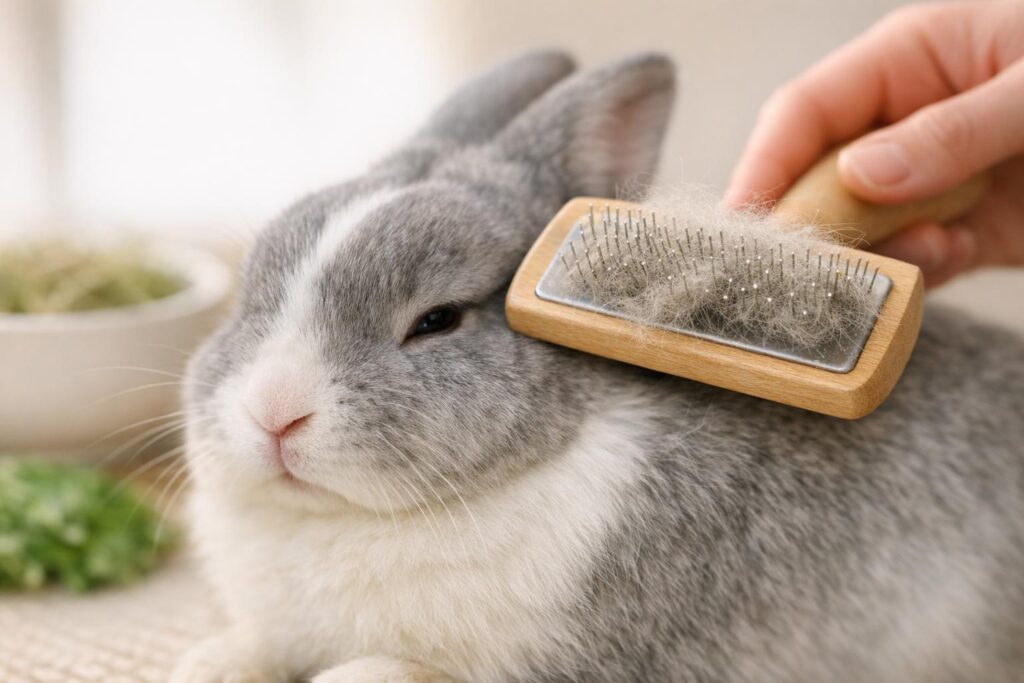
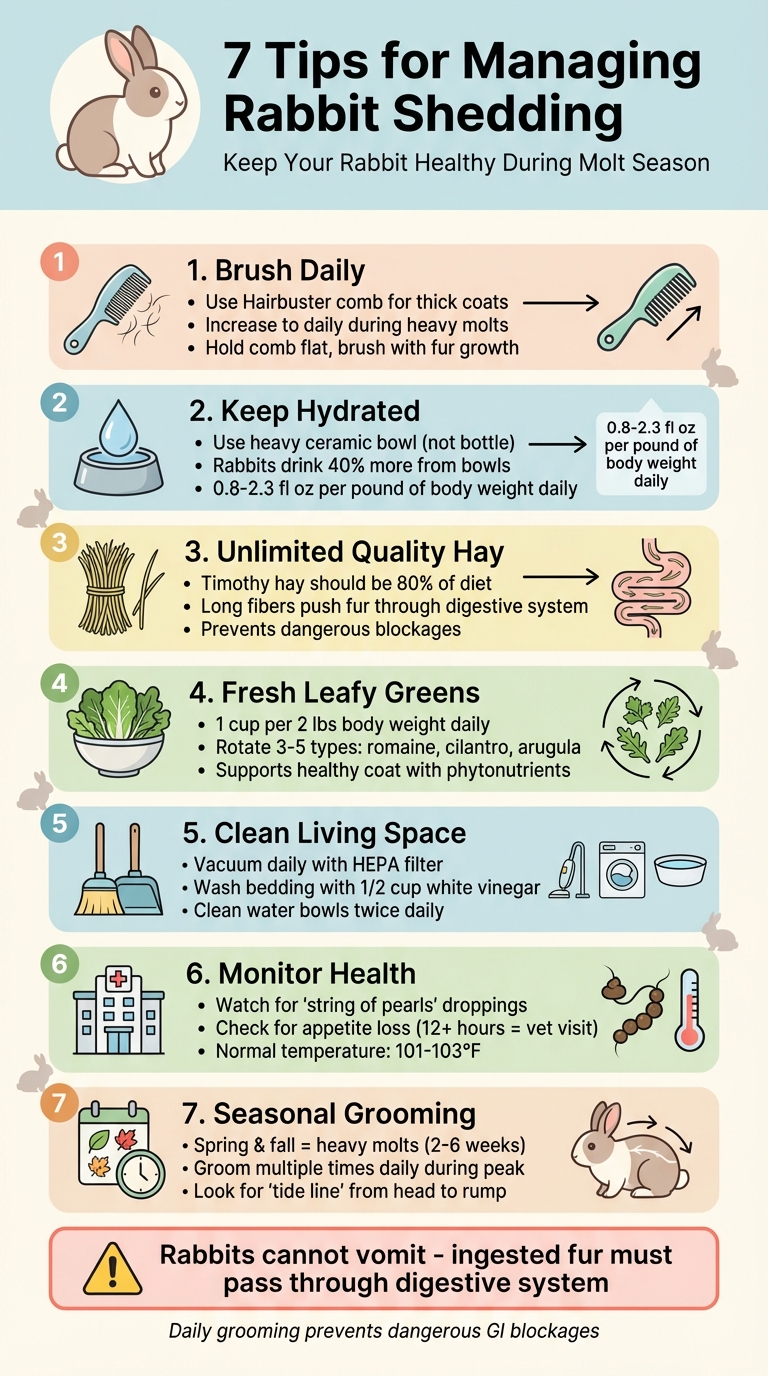
- Brush Daily: Use tools like the Hairbuster comb to remove loose fur, especially during heavy molts.
- Hydration: Ensure access to fresh water in bowls, as hydration aids digestion.
- Unlimited Hay: Timothy hay is key for keeping their digestive system moving.
- Leafy Greens: Add greens like romaine or cilantro for coat health.
- Clean Spaces: Vacuum daily and clean bedding to control loose fur.
- Monitor Health: Watch for signs like reduced appetite or "string of pearls" droppings.
- Seasonal Grooming: Increase grooming during spring and fall molts.
7 Essential Tips for Managing Rabbit Shedding
Rabbit Shedding! How to Deal With All The Fur
sbb-itb-e212914
1. Brush Your Rabbit Daily
Daily brushing is key to managing shedding, especially during those heavy molting periods that happen about every three months. Choosing the right grooming tool can make all the difference. Many rabbit owners and experts recommend starting with the Pet Fur-buster comb (also known as the Hairbuster). Amy Pratt, a Rabbit Specialist at the Humane Rescue Alliance, highlights its effectiveness:
This is generally what I recommend to try first to see if your rabbit will tolerate it.
The San Diego House Rabbit Society also praises this comb:
The Hairbuster is phenomenal because of the purple rubber piece along the teeth of the comb. It allows for grooming thick coated bunnies and really gets to their undercoat without scratching the skin of the rabbit.
For rabbits with more sensitive or fine fur, a rubber brush like the Kong Zoom Groom or a grooming mitt may be better suited, especially if they resist combs. Avoid using soft bristle brushes – they don’t reach the undercoat effectively – or metal slicker brushes, which can irritate your rabbit’s delicate skin.
When brushing, try the "one-hand pet, one-hand brush" technique. Pet and massage your rabbit first to relax them, keep them on the floor where they feel secure, and brush slowly in the direction of their fur growth with the comb held flat.
If your rabbit is particularly active and hard to manage, you can gently confine them in a space like a laundry basket. For those stubborn loose fur tufts, your fingers or a slightly damp hand can work wonders to pick them up.
Always reward your rabbit immediately after grooming with a treat or some fresh greens to create a positive association. If needed, break grooming sessions into 10–15 minute intervals to avoid stress and to check for any skin irritation or other concerns. This daily routine not only helps with shedding but also keeps your rabbit comfortable and healthy. Up next: keeping your rabbit hydrated.
2. Keep Your Rabbit Hydrated
Water is essential for your rabbit’s overall health, especially during shedding. It not only keeps their coat in good condition but also aids in digestion. When rabbits groom themselves during molting, they naturally ingest loose fur. Since rabbits cannot vomit, this fur must pass through their digestive system naturally. Robin Rysavy, Chapter Manager at the Missouri House Rabbit Society, emphasizes:
Hydration is paramount for digestion.
Without enough water, ingested fur can clump together, increasing the risk of gastrointestinal blockages. The Rabbit Welfare Association & Fund explains:
Problems occur when the hair ‘dries out’ due to a sluggish GI tract and/or dehydration. Therefore hair balls are a secondary problem and not usually a cause of GI stasis.
To encourage proper hydration, use a heavy ceramic or glass water bowl instead of a plastic bottle. Rabbits tend to drink up to 40% more water from a bowl than from a sipper bottle. On average, adult rabbits need approximately 0.8–2.3 fl. oz. of water per pound of body weight each day. The Missouri House Rabbit Society advises:
Use either a water bottle or a heavy bowl that is weighted or secured to the side of the cage so that it does not tip over.
Make sure to change your rabbit’s water at least once a day, and clean the container regularly to prevent bacterial growth. During heavy shedding periods, check water levels twice daily and watch for dehydration signs like hard droppings, dark urine, or a reduced appetite. If you see "string of pearls" droppings – fecal pellets connected by strands of hair – it’s a sign to increase grooming and hydration efforts. Keeping your rabbit well-hydrated ensures that any ingested fur moves smoothly through their digestive system, working hand-in-hand with daily grooming.
3. Provide Unlimited Quality Hay
Hay plays a critical role in maintaining your rabbit’s digestive health, especially during shedding periods. Robin Rysavy, Chapter Manager at the Missouri House Rabbit Society, emphasizes this point:
Veterinarians recommend that fresh grass hay such as Timothy hay make up 80% of a rabbit’s diet.
Since rabbits cannot vomit, the long fibers in hay are essential for pushing ingested fur through their digestive system, helping to prevent harmful clumps known as trichobezoars.
For adult rabbits, high-fiber options like Timothy hay and Orchard Grass are ideal. These varieties are rich in fiber but low in protein and calcium, which makes them a safer choice. On the other hand, alfalfa hay should generally be avoided for healthy adults because its higher nutrient content can contribute to issues like kidney stones or bladder sludge. If Timothy hay doesn’t suit your rabbit, Orchard Grass is a softer yet equally effective alternative.
Make sure your rabbit has constant access to fresh hay so they can graze naturally throughout the day. When selecting hay, look for green, fragrant batches and steer clear of anything brown or dusty.
Dana Krempels, Ph.D., from the University of Miami, also highlights the importance of hay in keeping a rabbit’s digestive system functioning smoothly:
The long fibers in the hay push things through the gut and keep the intestinal muscles in good tone.
Lastly, monitor your rabbit’s droppings for signs of trouble. If you notice droppings resembling a "string of pearls", it could mean your rabbit is ingesting too much hair and may need additional fiber in their diet. Keeping an eye on these details can help you manage shedding more effectively.
4. Add Fresh Leafy Greens to Their Diet
Adding fresh leafy greens to your rabbit’s diet can provide the nutrients needed to maintain a healthy coat, especially during shedding. According to Cayla Iske, PhD, and Kellie Hayden from Oxbow Animal Health:
Phytonutrients help to protect the body from stress, boost the immune system, and mitigate some issues commonly associated with aging animals, such as joint or skin and coat health concerns.
These greens are packed with phytonutrients, vitamins, and trace minerals that promote the development of a strong, healthy coat [23,24].
For daily feeding, offer 1 cup of packed leafy greens per 2 lbs of body weight [23,25]. Safe options to include are romaine lettuce, green leaf lettuce, red leaf lettuce, cilantro, arugula, and dandelion greens. Rotate three to five different types daily to provide a variety of nutrients [23,24].
Some greens are better left out of regular rotation. Iceberg lettuce, for example, offers minimal nutrition and contains lactucarium, which can be harmful. While parsley and spinach are safe in small amounts, their high calcium and oxalate levels mean they should be limited, especially for rabbits prone to bladder issues [23,25].
Before serving, ensure all greens are thoroughly washed. To remove surface pesticides, soak them for 5–20 minutes in a solution of 2 teaspoons of baking soda per quart of water. When introducing a new green, add just one type at a time over several days. Watch for any digestive issues, such as soft stools or diarrhea, which can help identify any foods that might not suit your rabbit [23,24]. Keeping a rotation of greens in their diet can further aid coat health during periods of heavy shedding.
5. Clean Their Living Space Regularly
Keeping your rabbit’s living space clean is a must during shedding season. Loose fur tends to pile up quickly on bedding, in corners, and even around water bowls, which can impact your rabbit’s health and the air quality in your home.
During heavy molts, vacuum daily using one of the best vacuums for pet hair with a HEPA filter to effectively trap fine fur and dander. Before vacuuming, sweep up larger hay pieces to avoid clogging your vacuum.
For bedding, consider using washable fleece liners. These are great for trapping loose fur and can be easily cleaned. Rabbit specialist Amy Pratt suggests:
Add 1/2 cup of white vinegar to your wash load. Vinegar helps loosen pet hair from fabrics.
Another tip: toss items in the dryer on low heat for 10 minutes before washing. This helps collect fur in the lint trap.
Make it a habit to clean water bowls or crocks twice a day to remove any fur contamination. Use a damp microfiber cloth to wipe down cage bars daily, as fur often gets stuck there. Lint rollers are also handy for quick cleanups on furniture and clothing, helping you stay ahead of the mess.
If you use a wire-bottom cage with a pull-out tray, it can simplify cleaning by letting fur and debris collect in one spot. Just be sure to remove your rabbit before cleaning to avoid causing them stress or triggering territorial behaviors.
6. Watch for Health Problems During Shedding
Shedding season isn’t just about extra grooming – it’s also a time to keep a close eye on your rabbit’s health. Heavy shedding can sometimes lead to serious issues, with gastrointestinal (GI) stasis being one of the most dangerous. This condition occurs when your rabbit’s digestive system slows or stops, often caused by swallowing too much fur. Hair blockages in the digestive tract can quickly become life-threatening.
One of the first signs of trouble is a loss of appetite. If your rabbit goes without eating for more than 12 hours, it’s time to act fast. Robin Rysavy, Chapter Manager of the Missouri House Rabbit Society, emphasizes:
If your rabbit does stop eating for more than 12 hours, a trip to your veterinarian is necessary.
Pay attention to other signs, too. During heavy molting, check your rabbit’s droppings regularly. Be on the lookout for "strings of pearls" – connected fecal pellets held together by strands of fur. If droppings become very small or stop altogether, this could indicate a blockage, and you should contact your vet immediately.
While grooming, take a moment to examine your rabbit’s skin. Gently part the fur to look for flaky patches, which might suggest fur mites, or redness and irritation, which could signal an infection. Bald spots are another thing to note – these should fill back in within 1–2 weeks. If they don’t or if the skin appears crusty or inflamed, a vet visit is in order.
Stay alert for other warning signs such as lethargy, a hunched posture, or teeth grinding, as these may indicate pain. Wet fur under the chin could point to dental problems, while dampness around the hindquarters might suggest urinary issues. Finally, keep an eye on your rabbit’s temperature. A healthy rabbit’s temperature typically falls between 101°F and 103°F. Any significant changes, especially alongside other symptoms, should be addressed by a professional.
7. Increase Grooming During Seasonal Changes
Adjusting your grooming routine during seasonal changes is key to keeping your rabbit comfortable. Rabbits go through major seasonal molts in spring and fall, shedding their thick coats for lighter ones. For outdoor rabbits, these molts can last anywhere from two to six weeks.
During these heavy shedding periods, daily grooming becomes a must. Lauren from Silver Sons Rabbitry emphasizes the importance of frequent grooming, saying:
"The more that you’re able to groom them, the quicker you can help it [the molt] go."
Instead of sticking to a weekly brushing schedule, aim to groom your rabbit every day – or even multiple times a day during intense shedding phases. This extra effort helps speed up the molting process, often wrapping it up in just a couple of weeks. Plus, it reduces the risk of hair-related health issues, like hernia-inducing blockages. Keep an eye out for early signs of shedding to stay ahead of the game.
As you groom daily, use visible cues to track your rabbit’s progress. Look for the "tide line" where the old, longer fur meets the new, shorter coat. Typically, the molt begins at the head, moves down the neck and back, spreads to the sides, and finishes at the rump. If you notice loose tufts of fur – often called "butt tufts" – gently remove them, but only if they’re ready to come out. Avoid pulling fur that’s still firmly attached. Make sure to brush down to the undercoat rather than just skimming the surface, as this helps prevent mats from forming near the skin.
Conclusion
Managing your rabbit’s shedding effectively comes down to regular grooming, proper nutrition, and maintaining a clean environment. Because rabbits cannot vomit, any fur they ingest can lead to dangerous digestive blockages if not addressed.
The solution is simple: brush your rabbit regularly – at least once a week during normal shedding periods and daily during heavy molts – to remove excess fur before they swallow it. Pair this with a fiber-rich diet, especially fresh grass hay, to help their digestive system move any ingested fur along smoothly. Switching to a heavy water crock instead of a bottle can also encourage better hydration, which keeps their digestion on track.
Grooming daily doesn’t just reduce shedding risks – it’s also an opportunity to catch early signs of health issues, like dental problems, skin parasites, unusual lumps, or discharge. On top of that, vacuuming frequently helps eliminate airborne fur, reducing respiratory irritation for both you and your pet while keeping your home tidy.
For more tips on rabbit care, grooming advice, and trusted product suggestions, check out Little Pet Corner, a resource designed with small pet owners in mind.
FAQs
How can I tell normal shedding from a health problem?
Rabbits typically shed their fur either seasonally or on a consistent schedule, with new fur growing back smoothly and evenly. However, if you observe patchy hair loss, skin irritation, or signs of inflammation, it could indicate a health problem. In such cases, it’s important to reach out to a veterinarian without delay.
What should I do if my rabbit has “string of pearls” poop?
When you notice “string of pearls” poop in your rabbit, it’s usually a sign of a slowdown in their digestive system or an issue with gut motility. This happens when strands of fur or other material get tangled with their droppings, creating a pearl-like appearance.
To help your rabbit, make sure they stay hydrated by offering plenty of fresh water. Their diet should also include lots of fresh hay and fiber-rich foods, which are essential for healthy digestion.
If this condition doesn’t improve or your rabbit starts showing other concerning signs, like discomfort or a loss of appetite, don’t wait. Reach out to a veterinarian who specializes in rabbits right away. Digestive problems can worsen quickly, and early intervention is key.
When should I call a vet during a heavy molt?
If your rabbit’s heavy molting comes with skin irritation, visible changes to the skin, bald patches, or other unusual signs, it’s time to reach out to a vet. These symptoms could point to an underlying health issue that needs professional care.