
Rabbits often hide signs of aging, making it crucial to notice subtle changes early. Most rabbits are considered senior by 5–6 years old, with geriatric stages starting around 8 years. Larger breeds age faster, often becoming seniors by 4–5 years. Key changes include slower movement, thinning fur, reduced grooming, and weight or muscle shifts. Recognizing these signs helps you adjust their care to improve comfort and health.
Key Signs of Aging:
- Mobility Issues: Stiffness, slower hopping, and reluctance to jump often indicate arthritis.
- Coat Changes: Graying fur, coarser texture, and grooming difficulties.
- Eye Problems: Cataracts and vision decline, leading to hesitancy in low light or bumping into objects.
- Weight Fluctuations: Gradual weight loss or gain due to reduced activity or underlying health issues.
- Behavioral Shifts: Lower energy, increased sleep, or changes in social interaction.
Common Age-Related Health Issues:
- Arthritis: Causes stiffness and mobility challenges; look for signs like limping or grooming struggles.
- Kidney Disease: Symptoms include increased thirst and urination.
- Heart Problems: Labored breathing, weakness, or fluid retention.
- Dental Issues: Overgrown teeth, drooling, or difficulty eating.
How to Support Aging Rabbits:
- Vet Care: Schedule checkups every 6 months; monitor weight, teeth, and overall health at home.
- Diet Adjustments: Provide high-fiber hay, reduce pellets if overweight, and consult a vet for changes.
- Environment: Add non-slip rugs, low-sided litter boxes, and ramps to reduce strain on joints.
- Comfort: Ensure soft bedding and easy access to food and water.
By staying attentive to these signs and making small changes, you can help your rabbit enjoy a comfortable and healthy senior life.
8 SIGNS YOUR RABBIT IS GETTING OLD
When Rabbits Become Senior and Geriatric
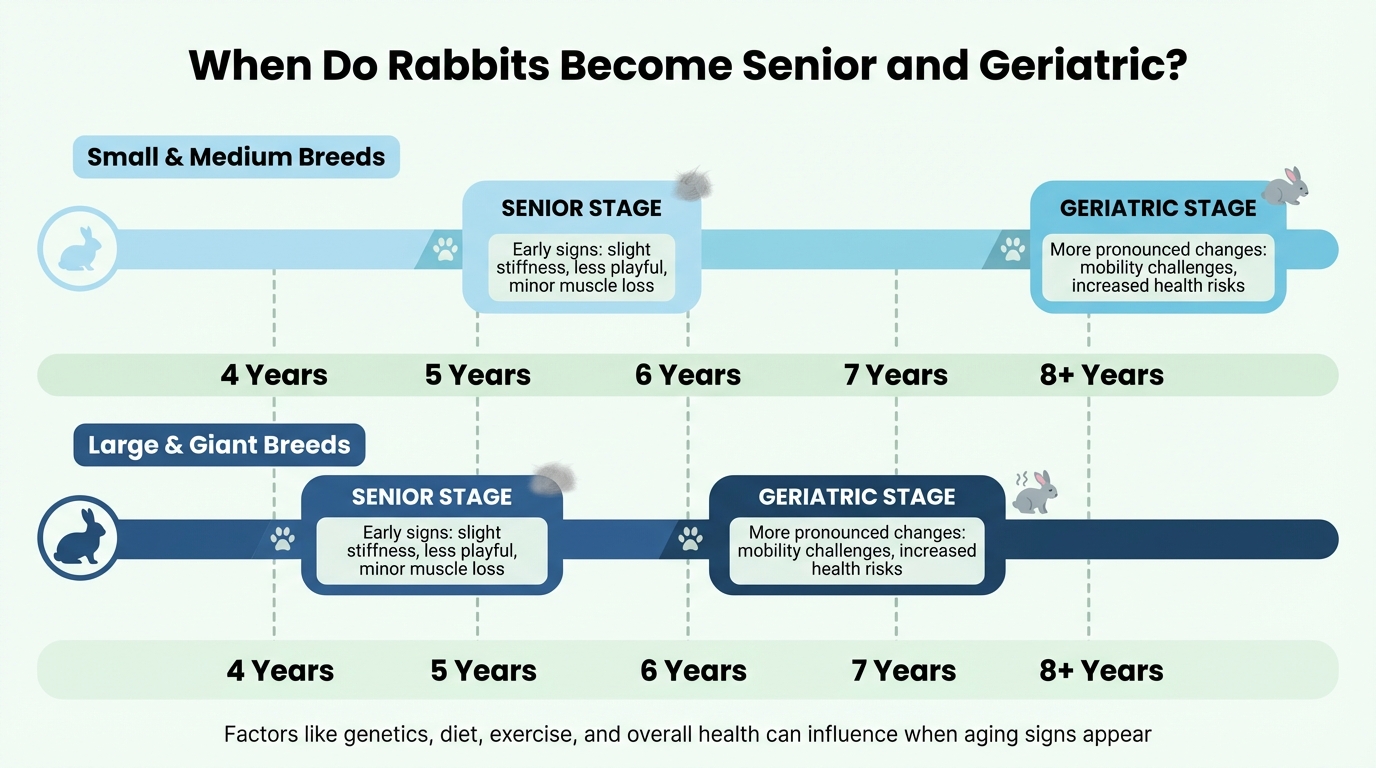
Rabbit Aging Timeline: When Rabbits Become Seniors and Geriatrics by Breed Size
Senior Rabbits: Age and Early Changes
Rabbits are generally considered seniors between 5 and 6 years old. However, this can vary depending on their breed and size. Larger and giant breeds tend to age faster, often reaching senior status as early as 4–5 years, while smaller and medium breeds typically enter this stage around 6 years. It’s important to note that age isn’t the only factor. Genetics, diet, exercise habits, and overall health throughout their life can influence when a rabbit starts showing signs of aging. For instance, a rabbit with chronic dental issues or excess weight might display age-related changes earlier than one in better health.
The early signs of aging in rabbits are often subtle. You might notice they’re slightly less playful, take longer to eat, or seem a bit stiff during routine movements. Their coat may lose some of its shine, and there could be minor muscle loss, especially around the hindquarters. While these changes don’t always signal illness, they’re a good reminder to monitor your rabbit more closely and discuss any adjustments to their care with your veterinarian.
As these early signs progress, rabbits move into the geriatric phase, where the challenges of aging become more apparent.
Geriatric Rabbits: Later Life Stages
Most rabbits enter the geriatric stage around 8 years old for small and medium breeds, while large and giant breeds typically reach this phase between 6 and 7 years. This stage often represents the final third of their lifespan.
At this point, the signs of aging become more noticeable. Geriatric rabbits tend to rest more and move cautiously, especially on slippery surfaces. Muscle loss in the hindquarters and shoulders becomes more pronounced, and tasks like climbing into a litter box, grooming, or navigating ramps can turn into real challenges. They’re also more prone to developing health issues such as kidney disease, heart conditions, and chronic dental problems, which often require consistent veterinary care.
Understanding these changes can help you provide better care and comfort for your aging rabbit, ensuring their later years are as happy and healthy as possible.
Physical Changes in Aging Rabbits
Building on earlier discussions about aging behaviors in rabbits, physical changes offer additional insights into the aging process. While some of these changes are natural and expected, others may point to health issues that could benefit from veterinary care. Understanding these changes can help you differentiate between normal aging and potential problems that might impact your rabbit’s well-being.
Fur and Coat Changes
One of the first noticeable signs of aging in rabbits is the condition of their coat. Many older rabbits develop gray or white hairs, especially around their muzzle and eyes. Their fur may lose its usual luster, feel coarser, and shed unevenly or more slowly during seasonal molts.
Thinning fur, particularly over bony areas like the hocks, hips, and spine, is common as rabbits age and lose muscle mass. This often happens because senior rabbits spend more time lying down. While this is typically harmless, sudden bald spots, scabs, or signs of intense scratching could indicate issues like mites or fungal infections rather than aging.
Another key indicator of aging is reduced grooming ability. Stiff joints or dental discomfort can make it hard for rabbits to reach their back and hindquarters, leading to mats, dandruff, or soiling around the rear. If your rabbit’s coat starts looking unkempt or you notice wetness near the tail, it’s a good idea to consult a vet. Regular brushing sessions not only keep your rabbit comfortable but also give you the chance to catch these changes early.
Movement Problems and Arthritis
As rabbits age, they may show subtle changes in how they move – slower hopping, stiffness when getting up, or hesitance to jump. These signs often point to arthritis, a common condition in senior rabbits.
Research highlights the extent of joint and spinal degeneration in aging rabbits. For instance, a study found that 30-month-old rabbits had 5.5 times more damage in their intervertebral discs compared to 1-month-old rabbits. Additionally, cartilage gene expression, such as COL2A1, was 100 times lower in older rabbits, which helps explain the stiffness and discomfort they experience.
Arthritis Progression in Aging Rabbits
| Stage | Mobility Signs | Grooming & Hygiene Issues | When to Act |
|---|---|---|---|
| Early Arthritis | Mild stiffness, slower hopping, reluctance to jump | Minor grooming difficulties, harder to clean back or hindquarters | Schedule a vet visit to discuss pain management |
| Advanced Arthritis | Pronounced stiffness, limping, frequent slipping, inability to jump | Urine scald or fecal soiling due to poor posture, significant grooming failure | Seek urgent veterinary care for pain relief |
Since rabbits are experts at hiding pain, even minor changes deserve attention. Watch for signs like teeth grinding, reduced appetite, or spending more time hunched up – these can indicate discomfort that needs treatment. Simple home adjustments, such as non-slip rugs, ramps, and low-sided litter boxes, can make life easier and safer for arthritic rabbits.
Eye Health and Vision Problems
Aging also brings changes to a rabbit’s vision. Cataracts, which appear as cloudy or bluish spots in the center of one or both eyes, are a common issue. Other age-related eye problems include lens opacity and corneal degeneration.
Early signs of vision decline can be subtle. Your rabbit might start bumping into furniture, hesitate in low light, or take longer to find treats. Some rabbits may also seem more cautious or startle easily as their eyesight fades.
To monitor your rabbit’s eye health, check their eyes weekly in good lighting. Look for cloudiness, changes in clarity, or hesitancy when navigating familiar spaces. However, excessive tearing, redness, squinting, or discharge are not normal signs of aging and could indicate infections or other painful conditions that require immediate veterinary attention.
Weight and Muscle Loss
Aging rabbits often experience changes in body composition. Some lose weight and muscle mass, while others gain weight due to reduced activity. Weight loss can result from dental problems that make chewing painful, chronic conditions like kidney or heart disease, or simply muscle wasting due to inactivity.
Muscle loss is most noticeable along the spine, hips, and hindquarters. When you run your hands along these areas, you may feel a difference in muscle tone and overall body condition. On the flip side, rabbits that remain on calorie-dense diets but move less may gain weight, which can strain their joints and worsen arthritis.
To keep track of your rabbit’s health, perform monthly hands-on checks and weigh them regularly. You should be able to feel their ribs and spine without them being overly prominent. Use a scale calibrated in pounds and ounces, and record any changes in a simple log. Even small, gradual weight shifts over a few weeks can signal the need for a veterinary checkup to adjust diet or investigate underlying health issues.
Behavioral Changes in Older Rabbits
As rabbits age, they experience subtle behavioral changes that can help differentiate normal aging from issues requiring veterinary attention. These shifts in behavior often accompany the physical signs of aging discussed earlier.
Lower Energy and Activity
Older rabbits naturally slow down, becoming more relaxed compared to their energetic younger days. You might notice they move more slowly, hop less, and spend less time exploring or playing. While they still respond to stimuli, this gradual transition from high energy to a calmer demeanor is typical.
However, reduced activity can also hint at joint stiffness or chronic discomfort. For instance, arthritis might discourage them from activities they once loved, like jumping onto furniture or zooming around during playtime. To keep them moving gently, consider providing low-impact enrichment like foraging mats or puzzle feeders that are easy to access. If your rabbit suddenly stops playing or avoids familiar spaces, it’s a good idea to consult a vet to rule out pain or illness.
Sleep Pattern Changes
Older rabbits tend to sleep more, taking longer and more frequent naps. While they may spend extra time resting, they’ll still wake up easily for food or attention. This increase in sleep is generally a normal part of aging and doesn’t immediately point to depression or illness.
To ensure their comfort, set up cozy resting spots with soft, non-slip bedding, and make sure essentials like hay and water are within easy reach. However, if your rabbit becomes completely lethargic or struggles to wake up, it could signal a health issue that needs veterinary care.
Changes in Social Behavior
Aging can also affect how rabbits interact with humans and other animals. Many senior rabbits grow more affectionate, seeking out gentle petting and enjoying quiet companionship. They may follow you around or settle nearby, finding comfort in your presence. On the flip side, some rabbits might become irritable, less tolerant of handling, or withdraw from social interactions. Often, this grumpiness is a sign of pain rather than just a personality shift.
Interactions with other rabbits may also change. Older rabbits often maintain their bonds but at a slower, more subdued pace. If you notice significant withdrawal or sudden aggression, it could indicate discomfort or pain. Keeping simple daily notes on habits like eating, litter-box use, and activity levels can help you spot gradual changes and address potential age-related issues early.
sbb-itb-e212914
Age-Related Health Problems in Rabbits
As rabbits age, they often encounter specific health challenges that build on the physical and behavioral changes already discussed. Spotting these issues early allows you to adjust their care and treatment, helping to maintain their quality of life.
Kidney Problems
Kidney disease is a common issue in aging rabbits as their organs begin to weaken. Symptoms often include increased thirst and frequent urination. For reference, rabbits with declining kidney function may drink more than 1.5 fl oz of water per pound of body weight daily. Additional signs include lethargy, weight loss, and a noticeable drop in appetite.
Managing kidney issues typically involves dietary changes. Focus on providing high-fiber foods while reducing protein and phosphorus intake. Ensure there’s always fresh water available. In some cases, your veterinarian may suggest administering subcutaneous fluids at home. Regular blood tests, especially for markers like creatinine, can aid in early detection and help slow the progression of the disease.
Heart Problems
The heart, like other organs, weakens with age, making rabbits more susceptible to conditions such as cardiomyopathy. Symptoms may include sudden weakness, labored breathing, and pale or bluish gums. Fluid retention can also lead to a bloated or pot-bellied appearance, with these issues often surfacing in rabbits older than seven years.
If you notice signs like irregular breathing or reduced tolerance for activity, it’s essential to consult a veterinarian promptly. Diagnostic tools like echocardiography can identify specific heart issues. Treatment may involve medications like ACE inhibitors or diuretics, creating a calm, low-stress environment, and adopting a heart-friendly, low-salt diet.
Dental Disease
Dental problems affect more than 70% of aging rabbits. Since rabbit teeth grow continuously, uneven wear – often due to dietary factors or genetics – can lead to overgrown molars or malocclusion. Symptoms include drooling, favoring softer foods, weight loss, and reduced grooming. Painful mouth abscesses may also form, which can result in malnutrition if left untreated.
To minimize dental issues, provide unlimited access to timothy hay, which promotes natural tooth wear, and limit pellet intake to about 1/8 cup per 5 pounds of body weight daily. Regularly check your rabbit’s mouth for spurs or swelling, and schedule dental exams every six months. If problems arise, your veterinarian can trim overgrown teeth or remove problematic ones. After dental procedures, softened food and pain management can help your rabbit recover comfortably.
Health Monitoring and Vet Care for Aging Rabbits
Keeping a close eye on your senior rabbit’s health can make a big difference in their comfort and well-being. Combining regular vet visits with attentive care at home helps catch potential issues before they escalate.
Regular Vet Checkups
As rabbits age, regular vet checkups become even more important. While healthy adult rabbits usually need an annual wellness exam, senior rabbits – those around 5–6 years and older – should see the vet every six months, or more often if they have ongoing health concerns. These visits help spot early signs of conditions like arthritis, kidney problems, or unexpected weight changes. Make sure to choose a veterinarian who specializes in rabbits or exotic pets, as they have unique needs compared to cats or dogs, especially when it comes to anatomy and anesthesia.
During a senior rabbit’s exam, the vet will do a full physical check, including assessing their weight, joints, teeth, heart, lungs, and eyes. Bloodwork and urinalysis may also be recommended to establish health baselines or investigate any concerns.
Home Health Monitoring
Between vet visits, your rabbit relies on you to notice any changes in their health. Regularly monitoring their condition at home can help you catch problems early. Start by weighing your rabbit weekly to track any gradual weight changes. Pay attention to their hay consumption – it should stay consistent and plentiful. Also, keep an eye on how much pellet and fresh food they’re eating. If their eating habits change noticeably over a few days, it’s worth investigating further.
Check their litterbox daily for any changes in droppings or urine. Variations in size, consistency, or quantity could signal an issue. Watch their mobility too – if they seem hesitant to jump or navigate ramps, it might indicate joint pain. Once a week, do a hands-on check for signs of discomfort, such as matted fur, lumps, sore skin, or urine scald, particularly around the hind feet and under the tail. If you notice anything unusual that lasts more than a day, contact your vet.
Adjusting Daily Care
As rabbits age, their dietary and environmental needs may shift. Some may lose weight and muscle, while others might gain too much. For rabbits that are losing weight, your vet might recommend increasing their energy intake by tweaking the quality or amount of pellets, while still prioritizing a high-fiber diet. For those who are overweight, reducing pellet portions and cutting back on calorie-heavy treats can help. Always make dietary changes gradually and consult a rabbit-savvy vet before making adjustments.
To accommodate aging joints and reduced mobility, consider modifying their living space. A low-entry litterbox or one with an adjusted side can make it easier for them to step in. Non-slip rugs or rubber mats can prevent slips on smooth floors, and replacing high jumps with ramps can reduce strain on their joints. Keep essentials like food, water, and the litterbox close to their favorite resting spots to minimize unnecessary movement. While staying active is still important, shorter, supervised periods of free-roam time are often better for senior rabbits than long, exhausting sessions. These small changes can go a long way in supporting their comfort and quality of life.
Conclusion
Noticing signs of aging in your pet rabbit – like thinning fur, slower movements, or changes in appetite – gives you the chance to step in early and improve their quality of life. Studies show that addressing age-related changes promptly can make a big difference, much like it does in humans, emphasizing why attentive care is so important.
By making thoughtful adjustments, you can help your rabbit age gracefully. Simple changes, like tweaking their diet to manage weight, modifying their living space for easier access, or paying close attention to subtle shifts in their behavior, can have a positive impact. Even as they slow down, rabbits can still learn and adapt. For example, lowering the sides of their litterbox can help them maintain their habits with ease.
Regular checkups with a rabbit-savvy veterinarian are essential for catching potential issues, like kidney or heart problems, early on. Between vet visits, keeping an eye on their weight, mobility, and droppings at home is a practical way to stay ahead of any concerns. These small, consistent efforts can make a world of difference in your rabbit’s well-being.
Understanding the changes that come with aging and adjusting your rabbit’s environment accordingly allows them to enjoy their golden years with comfort and dignity. Your attentiveness and care are the foundation of a happy, healthy life for your senior rabbit.
FAQs
What are the signs that my rabbit might have arthritis?
Arthritis in rabbits often manifests through limping, stiff movements, or a clear hesitation to move, jump, or engage in play. Other signs to watch for include swollen joints, discomfort when touched, or a noticeable drop in their usual activity levels.
If you observe these symptoms, reaching out to a veterinarian is crucial. Prompt diagnosis and treatment can make a big difference in easing your rabbit’s discomfort and enhancing their overall well-being.
What should I feed my rabbit as they get older?
As rabbits get older, their nutritional requirements shift to help maintain their health. Make fresh hay the cornerstone of their diet – it’s essential for keeping their digestion running smoothly and their teeth in good shape. Add in some gentle-on-the-stomach veggies, like leafy greens, while cutting back on calorie-heavy treats to avoid weight gain.
Keep an eye on their weight and tweak portion sizes if necessary. For tailored advice, reach out to your veterinarian, who can provide recommendations based on your rabbit’s specific needs.
How often should I schedule vet visits for my aging rabbit?
Senior rabbits should have a vet check-up every 6 to 12 months. If your rabbit starts showing signs of illness or behaves unusually, don’t wait – schedule a visit right away. These regular check-ups are key to keeping an eye on their health and addressing any problems early, helping your rabbit stay healthy and comfortable in their golden years.