When you own a pet, it is easy to want them to have a companion, especially if you are busy and might not have much time to hang out with them, or if you don’t want your animal to get lonely.
However, some animals should never be housed together because they could injure each other or worse. In this case, you may have a leopard gecko and want to make sure it’s well cared for, so you ask, “Should leopard geckos be housed together?” Let’s find out below.
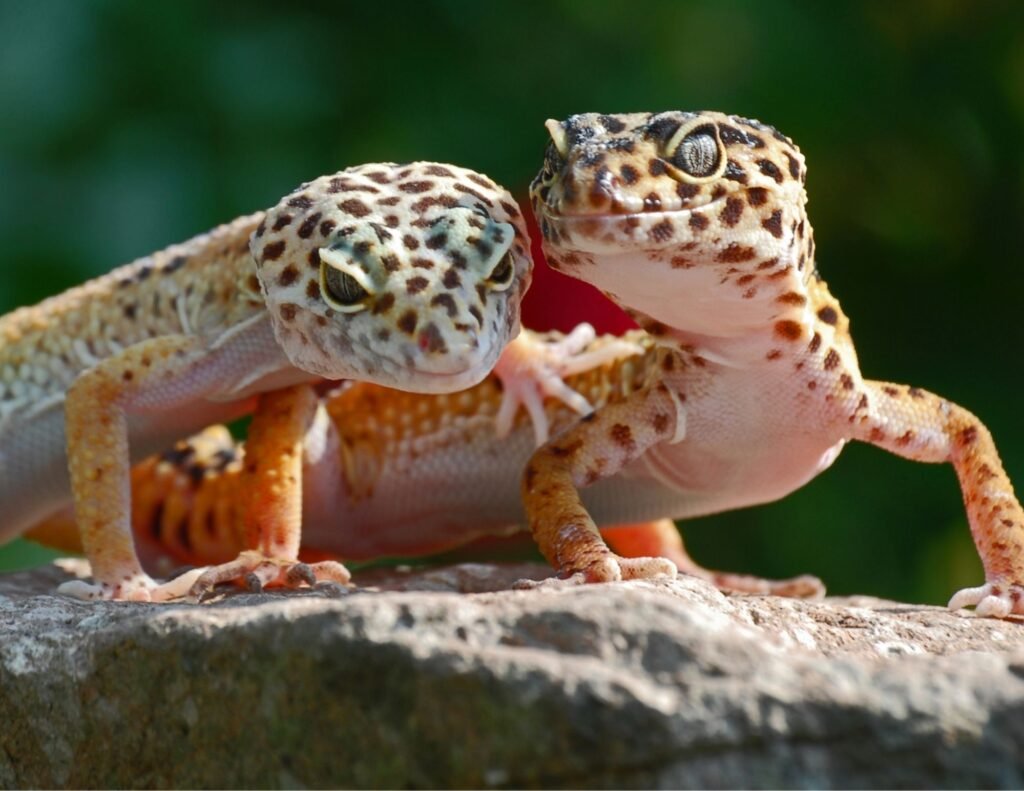
In the most direct answer possible: no, adult leopard geckos should not be housed together, as the common result is often one of them becoming malnourished, stressed, and frequently attacked. This reduces the quality of life for one of them, often the smaller of the pair, because it creates a scenario where one is constantly bullying the other for valuable resources.
In this article, we will discuss several questions about this topic, such as whether leopard geckos can be housed together in a larger tank and whether females or males make good companions. We’ll also cover signs of successful cohabitation, along with other answers you may be looking for. We encourage you to continue reading for more!
Is It Good to Have Two Leopard Geckos Together?
While it isn’t inherently “good” to house two leopard geckos together, it’s possible in certain scenarios. Still, you’ll need the right social dynamic, since these little guys are extremely territorial and have no issue biting, scratching, and hindering the other if given the chance.
There are certain times when two living in the same enclosure can make sense; for example, if you are a gecko breeder, then you’ll obviously need two geckos in the same area for a given period of time, but this is with purpose, not simply allowing the two to mingle indefinitely.
Can Leopard Geckos Live Together?
Yes, but the pairings of these geckos are very specific, with the couplings being either two females, as they aren’t nearly as dominant, territorial, or aggressive as males, or a male and female purely for breeding purposes, with the idea behind that pairing being that they go back into separate, permanent enclosures immediately afterward.
We’ll dive into why gender matching matters later, but more importantly, these choices give your geckos the highest quality of life possible without unnecessary friction or turmoil; they’re also safer and less stressful for you as an owner.
1. Size Matching
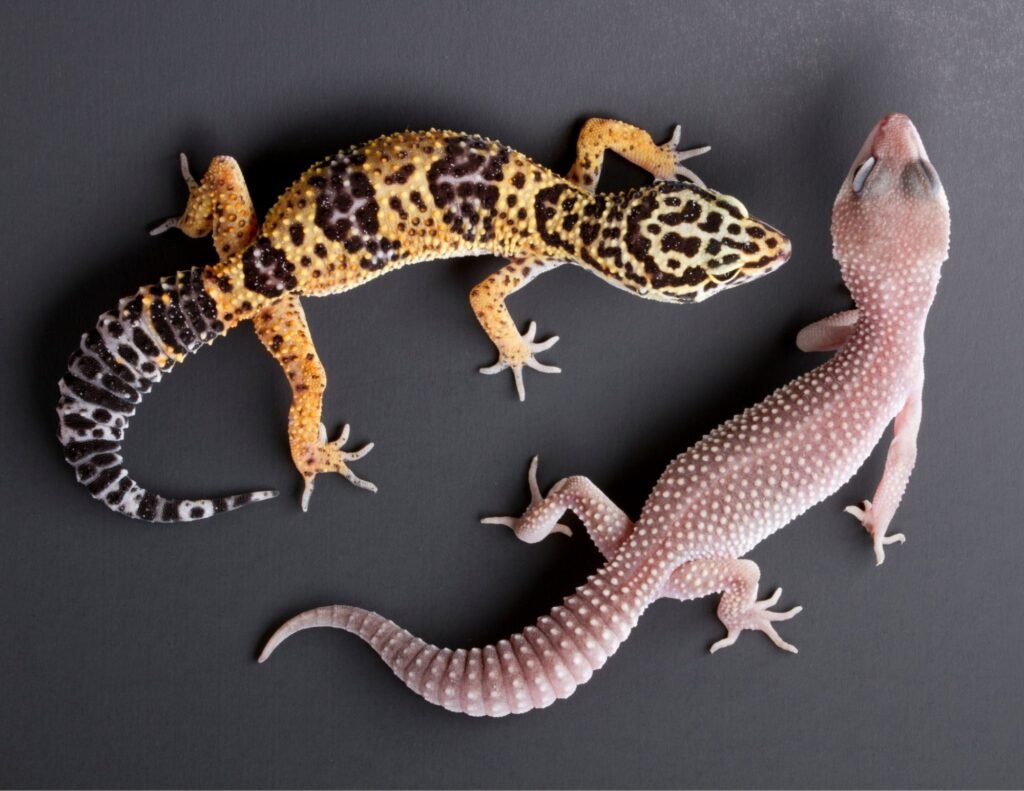
In the circumstance where two geckos vastly outsize one another, you unknowingly create a bully dynamic, where the larger gecko will force the smaller one into a more reclusive lifestyle. As the two already must compete for food, warmth, and shade, the larger will obviously go where it pleases, and the smaller is forced into whatever the whims of the other are.
In this setup, the smaller gecko is much more likely to get injured or malnourished because it cannot defend itself or do so safely, which can lead to injuries for both lizards. Still, the smaller one is prone to scratches, missed meals, or tail injuries, which can dramatically reduce its lifespan.
2. Tank Setup and Space
If you are opting to house two geckos in the same enclosure, you’ll need a vastly larger tank, as the two will need a myriad of options where they can seek refuge from the heat, and plenty of space to stay away from one another, and this remains true of both mating partnerships and dual female living situations.
Crowding of any sort creates that same competitive housing dynamic, forcing the two to fight over anything and everything the enclosure has to offer if their existences overlap too much. As far as size is concerned, a 20-gallon tank is often the go-to for both geckos, giving them enough room to live comfortably without brushing noses too often.
3. Genders
Assuming you want to house two geckos together, you’ll want to follow some simple rules of thumb relating directly to the geckos in question. First, never house two male geckos together under any circumstances.
Male Leopard Geckos are incredibly territorial and fight each other viciously over any resources; unfortunately, even if there’s nothing to fight over, they’ll still attack each other for getting too close (even if there is half an enclosure between them).
Female geckos are relatively passive and can technically be housed with another female. Still, out of respect for the little creature’s patience and well-being, it isn’t ideal, so if possible, two smaller enclosures are preferred, as leopard geckos don’t experience loneliness and are innately solitary.
The final pairing would be a male and female, but this is a temporary arrangement at best and solely for breeding, ideally by someone versed in the entire process, with an emphasis on keeping both geckos happy, healthy, and above all safe. After breeding, place them in their respective enclosures to prevent the male from stressing the female with repeated advances.
4. Prior Relationship
There are some very rare circumstances where geckos that hatched from the same litter are “more” comfortable with each other than strangers dropped into the same enclosure, but this is more often than not a temporary state of affairs. As they mature, the same instincts are likely to surface, causing them to default to more natural territorial dominance behaviors.
Females from the same litter are the most successful co-living pairing available. Still, it cannot be stressed enough that this is never ideal; they would much rather be alone, and the gecko’s quality of life improves when it isn’t constantly stressed by other “housemates” nearby.
What Are Signs of Successful Cohabitation?
The most obvious signs are that neither gecko feels directly intimidated by the other’s presence, both maintain a stable weight, and there are no extreme shifts in eating habits, shedding, or constant fighting throughout the day.
Any signs of hostility should be cause for alarm, and experienced handlers should keep a secondary enclosure “plug and play ready” on standby, since the alternative might mean forcing a very bad pairing because you have no other options.
With that in mind, it’s wise to isolate the two before considering a cohabitation enclosure, for safety at the very least.
What Are Some Warning Signs to Separate Leopard Geckos?
The most obvious signs that you must intervene are aggression, including chasing one another around the enclosure, bite wounds along the body, unexplained weight loss despite ample food, or active competition for warming spots or hides.
Any of the above should immediately indicate you need to relocate one of them for both their sakes. Failure to do so can result in one gecko getting bullied into a diminished state or suffering grievous wounds for no better reason than pure ignorance. You should have a readily available option to relocate either gecko, and keep a keen eye on the entire living situation before fully committing to the idea.
How Big of a Tank Should You Have for Two Leopard Geckos?
A 20-gallon tank will suffice for two geckos in one enclosure, but be sure to brush up on proper heating locations, ample hides, food placement, behavioral changes to watch for, and how to set up the tank properly beforehand.
Do Leopard Geckos Get Lonely?
No, Leopard Geckos are solitary creatures that are perfectly content living on their lonesome and prefer it that way, so they don’t need to compete for living space, food, warming locations, or restful spots to cool off.
While it can’t be called “forced,” there are far fewer reasons to put two geckos together than there are justifiable reasons to pair them. With safety as the top concern, it ultimately boils down to a risk with no gain beyond personal aesthetic pleasure.
Can Two Female Leopard Geckos Live Together?
Technically, yes, two female leopard geckos are the highest possible success rate you’ll get at having two geckos living in the same enclosure. This pairing isn’t guaranteed to work, but it has the best chance. That said, you’ll still need to be incredibly vigilant about both of their well-being, especially in the early stages.
You can artificially improve your chances of success by pairing two females from the same litter, if you can, but this isn’t recommended for first-time owners.
Can Two Male Leopard Geckos Live Together?
Male Leopard Geckos should not live together because they are hostile and territorial; they are prone to biting, scratching, and bullying, and the smaller of the two often lives a tormented life that can prove fatal if left to fend for itself.
Unfortunately enough, there are no magical solutions or alternatives you can do to make this pairing work; it’s only a matter of time until they mature and get hostile towards one another, and yes, this does include males from the same litter, although this might delay the inevitable briefly.
Can You Keep a Male and Female Leopard Gecko Together?
The most common reason to keep a male and female gecko together would be so that they might breed and produce offspring. The creation of these little guys is the sole reason you’d ever want these two to inhabit the same space, and this should be under very close supervision, as too much exposure might end up hurting the female.
Just because you can keep these two together doesn’t mean it’s a permanent living situation; do it only when you have ample time to ensure the male isn’t hurting the female.
Can You Keep Juvenile Leopard Geckos Together?
Yes, Juveniles can definitely live together, but understand this is only for a short time. As the geckos mature, their natures will too, with aggression and territorial tendencies creeping up as they grow, often becoming openly hostile with one another as they reach full maturity, or breeding inappropriately across the sexes.
Final Words
Leopard geckos should not share living spaces; it isn’t ideal or beneficial for them in the slightest, and at best they are simply existing near one another, not sharing meaningful bonds or making each other happier for the company. Leopard Geckos are solitary little guys and gals that enjoy their personal space, and we should do our best to respect that!