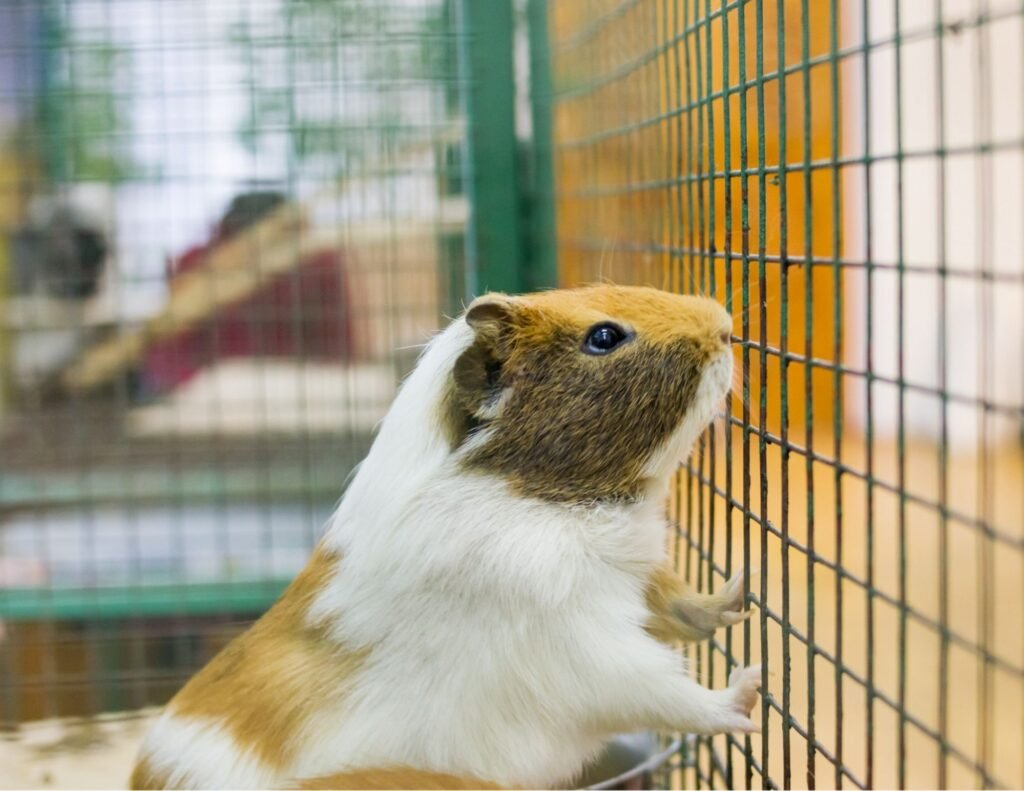
Having guinea pigs can be a huge joy, especially when you want a small critter to play with for several years. As a guinea pig owner, you want to have their best interests at heart. In this case, one might ask if guinea pigs should be on the floor or elevated.
In most situations, it isn’t exactly ideal to have your guinea pig cages on the floor, especially if they aren’t elevated. The primary reason guinea pigs should be above the floor is that there are a litany of safety risks for the pigs, both physically and mentally, and there are far more threats on the floor than if they were slightly higher up.
In this article, we will discuss multiple subjects, like whether it is safe for a guinea pig cage to be on the floor, when it is safe to keep them elevated, and some good floor guinea pig enclosures for you to choose from, if you wish to go that route. We encourage you to continue reading for more information on the subject.
Is It Safe to Place a Guinea Pig Cage on the Floor?
Without dancing around the topic too much, it can technically be safe for your guinea pig cage to be on the floor. Still, it all revolves around a myriad of other factors being checked before actually doing it.
Some of these boil down to your household dynamic; for instance, if you have children or other pets that constantly walk around the same area the pigs are stationed, they can gradually become frightened, leading them into poor mental health, or worse, someone can accidentally step on them.
Alternatively, rogue pets (regardless of how well trained or likable they are) can get curious or a little too playful with the guinea pigs and end up hurting them. Before continuing, it’s worth noting that placing a cage on the floor is not directly a deterrent for larger pets, especially certain breeds of dog that can easily pounce on the cage and break it.
Is There a Time When You Should Not Put a Guinea Pig Cage on the Floor?
As stated above, putting guinea pig cages on the floor is truthfully only appropriate if the room itself is being treated as a sanctuary specifically for the guinea pigs and little else, as too much traffic from people coming in and out of the room poses a risk to making the pigs feel unsafe. Constant airflow changes can also prove to be dangerous.
1. When There Is a Draft in the Air
When guinea pigs are stationed low to the ground, they are bound to be exposed to excess drafts that circulate throughout the house, especially if people are coming and going constantly, and even more so if these are nighttime outings, when the air is bound to be colder than normal.
In these scenarios, guinea pigs are much more likely to get respiratory infections and diseases, as well as common colds purely from being chilled too often.
2. When Your Guinea Pig Is Stressed From Daily Activity
People entering and leaving the vicinity constantly will make your pig feel anxious, this coming and going repetition can leave your pet feeling as if there is no stability, or as if it constantly needs to be on high alert, expecting any number of strangers or animals potentially attacking it, despite this more than likely not being true, it’s what the pig will assume, and the fear will linger.
Anything ranging from sudden bangs (like a door closing a little too late) to constant talking, walking, and shuffling of items around the room can contribute to making your guinea pig feel uneasy about its surroundings, so doing your best to mitigate these kinds of situations would be ideal for keeping your pet happy and healthy.
3. When Other Pets Are in the Home
Assuming you do have other pets in the home, you’ll want to do everything within your power to keep them from actively getting into the room the guinea pigs are stored in, and further try to train them to avoid the general area through whatever training methods you have at your disposal.
Anything acting as a constant deterrent should be first double-checked to ensure it does not affect the pigs themselves; for instance, certain herbs or scents are known to keep cats and dogs at bay, but these same scents can prove to be irritants to your guinea pig and damage their respiratory system.
Unfortunately enough, when you do have other pets in the home, especially larger ones, their presence alone is enough to make your guinea pig feel unsafe, whether it be from size difference or raw tenacity; co-mingling amongst other animals usually isn’t the best idea for guinea pigs.
4. When You Have Difficulty Cleaning Their Cage
In most circumstances, having an issue cleaning the cage can often be reduced down to either utilizing the wrong products or not employing the right methods to get into hard-to-reach places; short of that, cleaning a guinea pig’s cage should be relatively easy to do.
Relocating your pigs while you are cleaning can be difficult (or the entire effort made harder if you aren’t relocating them and trying to clean around them); the easiest way to fix that would be to purchase a small series of gates, or a special cage that only needs to house your pig for ten to twenty minutes at best while you tidy up.
Checking the perimeter of the cage itself and using the proper liners can help expedite the cleaning process too, allowing you to be more efficient with your time and occasionally make things as simple as swapping the lower bedding and liner and being right back to the norm.
5. When Your Guinea Pig Feels Scared and Insecure
Being able to gauge your pig’s emotional stay appropriately is a very important ability in keeping your little pet happy and healthy, the more overstimulated, anxious, or frightened it feels, the more likely it is to develop potentially harmful attributes or behaviours, everything from frantically spriting around the cage, seeking shelter, to desperately trying to escape, to find a more quiet, secluded place, can be avoided by simply monitoring the situation more intently.
Should you notice your guinea pig grunting, snorting, squeaking, or showcasing any behavior that looks erratic, it could be a good sign that it is currently afraid. You need to assess what is causing it to feel this way; look for glaringly obvious loud noises, sudden movements, and things it is directly staring at; these could help pave the way towards you solving this problem.
If you are still unsure, relocating yourself away from the pig (briefly) and observing it unbeknownst to it will allow you to understand better what is happening, as the pig will most likely stare directly at the source of the issue, then attempt to reposition itself as far away from the source as it can.
6. When You Have Children
Because of how frightful guinea pigs can be, children can put them in quite the precarious position, as the child is curious about the small, adorable little creature, and often very excited to interact with it, especially attempting to touch the pig’s fur, often for stimulation themselves, but this same excitement, enthusiasm, and at times, lack of respect for how the animal feels can make it feel unsafe, and threatened, even from the most well behaved, and respectful children.
If you have kids, or have to take care of them occasionally, it’s a good rule of thumb to educate them on the specific ways they need to behave around your pet, so that both they and the animal can remain happy and, most importantly, healthy.
It isn’t unheard of for frightened guinea pigs to potentially lash out and bite when they feel threatened and scared. While these nibbles typically aren’t the end of the world, it can scare your child or become infected in a worst-case scenario, so avoiding either circumstance is ideal.
7. If You Have Difficulty Supervising Your Guinea Pigs
Keeping a vigilant eye on your animals is something most pet owners struggle with. While you do innately want to have a strong sense of trust that your pets will do what is best for their own well-being, they do rely on us for a reason.
If you are struggling to keep an eye on your guinea pigs, you’ll probably want to relocate them into an area where you can glance in from time to time more easily, or have someone else do the same. If allocating this small effort is too much, you may want to get a different pet entirely.
Is Putting Your Guinea Pig Cage on a Stand Better Than on the Floor?
Yes, putting your guinea pig cage on a stand is indefinitely better than simply leaving it on the floor. For one, the vibrations from your footsteps alone (or any company you have) can put your pig into a state of unease, never mind the other complications that can arise from having them sense any movements throughout the house!
1. Allows You to Build a Better Relationship With Your Cavies
When your cavies are placed onto a stand, you can more easily see them and interact with them in passing; anything ranging from a simple “Hey there little one, how are you?” to actually petting your pig briefly can help bolster your bond with the pig.
Being within their vision range, and them getting a better scope than you simply being a towering giant, also helps alleviate some of the fear they feel when attempting to gauge your size, or better, who you are.
2. Less Exposure to Drafts
Elevated height prevents stray drafts from circulating your guinea pig, thus keeping them from being chilled and potentially getting colds and other sicknesses that might be gusted into them from stray particles, dust, and other allergens which might waft through the room directly onto them.
3. It Is a Safer Environment
The greater height means there is far less of a chance that someone stumbles into the cage itself, and other animals will struggle to interact with them as easily, especially pets that would need to lean onto the cage to peer in (think cats), and dogs fall into the same category for this purpose.
Because the cage itself is higher up, drafts won’t circulate as effectively into the cage, and those same germs, allergens, and other potentially damaging exposures are mitigated to some degree, making it safer for your pet by default.
4. May Be a Better Way to Take Care of Your Pigs
The raised elevation makes it easier for you to gauge the overall health of your pig, the state of the cage itself, and constantly interact with them, forging deeper bonds, and letting them know you shouldn’t be perceived as a threat, and can be a source of comfort once they get the ability to recognize you from afar.
Additionally, you can also clean the cage more easily from greater heights, refresh water and food, and observe any potential health hazards that may be creeping up, anything from loose pieces on the cage itself to parts that might need to be replaced altogether.
5. Allows More Storage for Underneath
One of the biggest issues you can face when keeping specific cages for any pet is how much space these environments take up; thankfully, if you use an elevated stand, you can usually manage to squeeze a few things under the stand itself.
In most situations, you’d probably opt to have guinea pig care-related items there, purely for convenience’s sake: the food, perhaps some bedding changes, or snacks and related toys, but the concept remains largely the same.
6. Allows More Comfort for Your Guinea Pigs
Keeping in step with concepts, the height itself grants your pigs a greater sense of peace. It allows them to observe their surroundings from a bird’s-eye view, grasp everything that is going on around them, and embrace the comfort that nothing is creeping up on them or getting ready to pounce.
Are There Any Benefits of Keeping Your Guinea Pig Cage on the Floor?
Technically speaking, there are some benefits, like saving money on a guinea pig cage stand, but that’s more so saving money at the cost of your guinea pig’s overall health, more so than an actual boon to you or the pig itself.
If money is the greatest concern, and purchasing the stand itself will put you in a financially difficult state, it might be best to avoid getting the pet itself, as everyone’s quality of life is likely better for that choice, pets are unfortunately enough expensive no matter how you look at it, and it’s better to have a firm grasp on your own foundation before attempting to establish another.
What Are Some Good Guinea Pig Cages for the Floor?
Knowing what kinds of cages would work best for a guinea pig, regardless of if you plan on keeping them on the floor directly (you shouldn’t), or elevating them with a nice stand (you should), will let you and your fluffy friend have a better chance at forming a timeless bond, to help ease that process, here are some fantastic options that are both sturdy, and affordable.
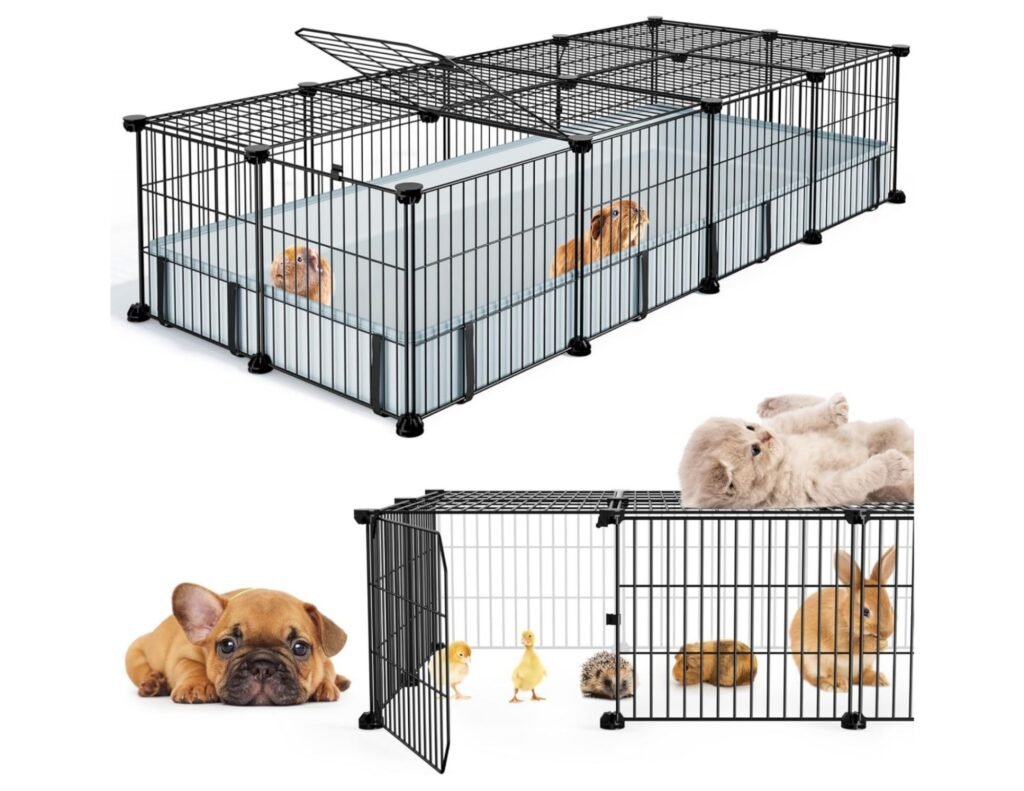
1. BUCATSTATE Guinea Pig Cage
Bucatstate makes a very simplistic but secure guinea pig cage that comes with everything you’ll need to make your new pet, or old friend, feel right at home. Featuring an iron wire outside mesh and a waterproof mat to prevent any accidents, this cage will keep your pig safe and secure.
The cage itself is incredibly rust-resistant, but it will require some assembly; cable ties are mandatory for the setup, and best of all, most people can have the entire enclosure set up in just twenty minutes.
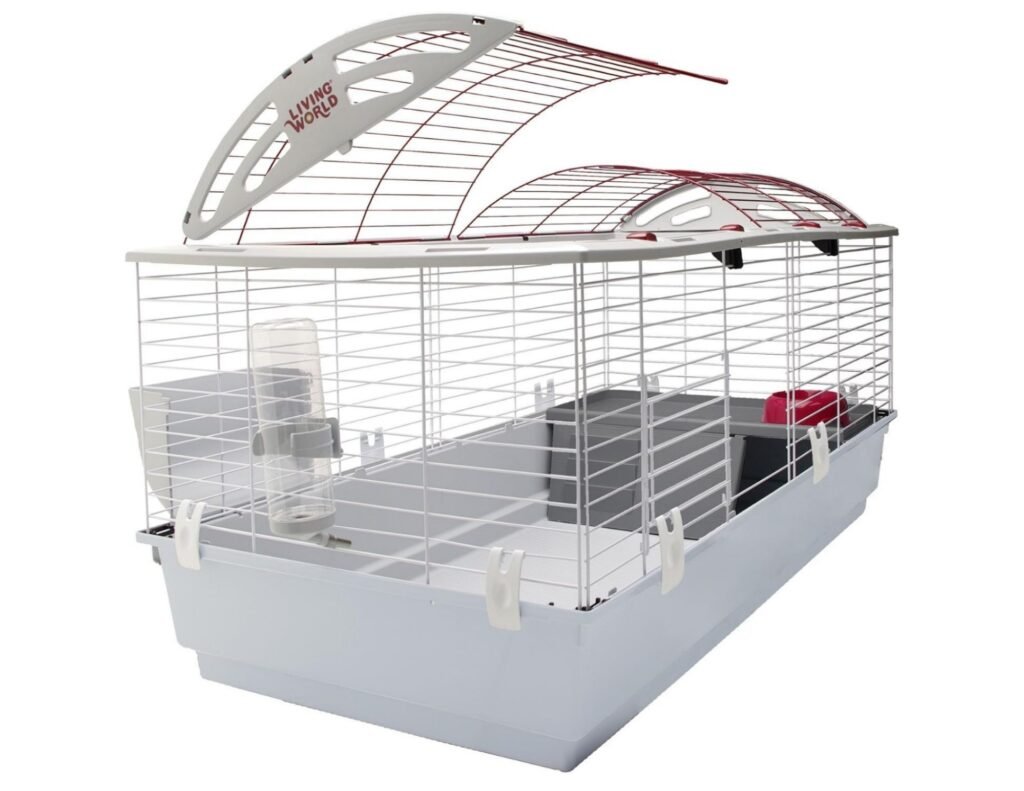
2. Living World – Deluxe Hybrid Habitat
Living World lives up to its namesake by offering a cage that is less housing and more home. The enclosure itself is uniquely designed to let you fix small ramps, platforms, and other toys alongside most of the cage itself, and utilizes a hybrid design to get the most out of every inch the enclosure has to offer.
Everything from a flat bottom portion to safely place bedding and other smaller items, to a raised area perfect for food, accessible via a small ramp, and finally a tip-proof food dish at the top to prevent messy spills that could spoil mealtime and the living conditions of your pig!
One of the best features the Deluxe Hybrid Habitat brings to the plate, however, is its dual openings at the top, granting you full access to the cage with minimal effort, making cleaning or getting your pet simple and safe.
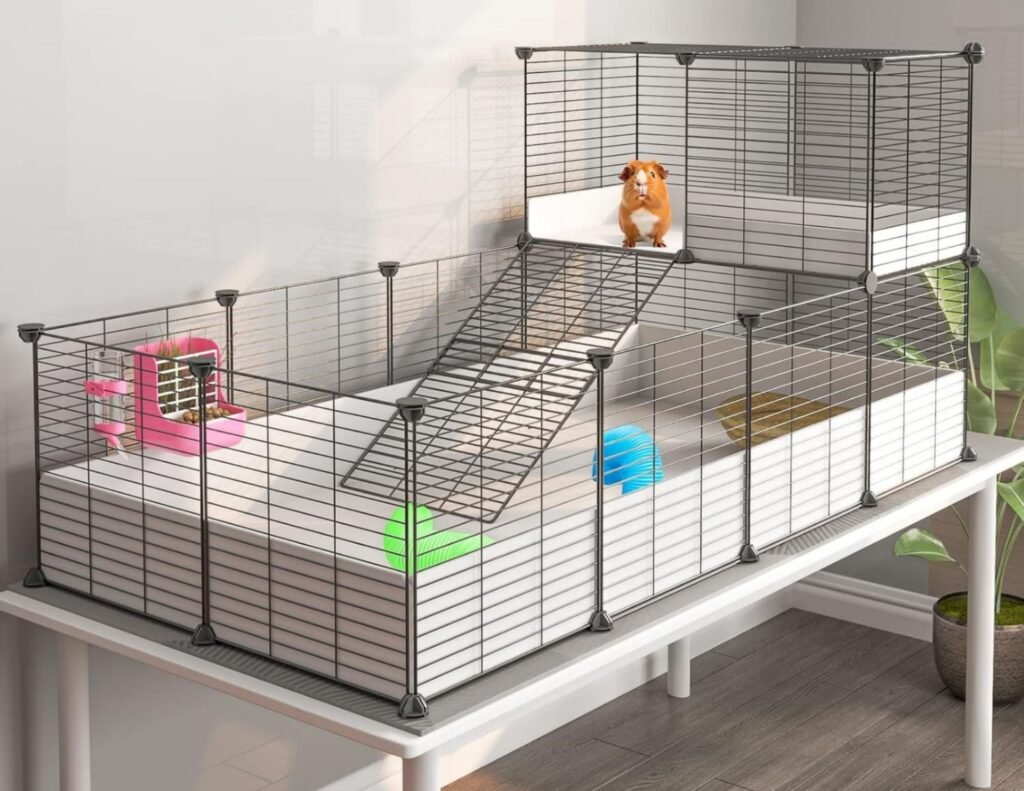
3. Oneluck Guinea Pig Cage
If you were looking for an enclosure that was both simplistic and scenic at the same time, you needn’t look further than this, as Oneluck brings a very basic cage setup at first glance; the more you look at it, the more depth it presents.
Firstly, the cage itself is made of classic iron, so you can expect far more stability than your normal plastic materials can offer. Still, you also get an incredibly open setup, perfect for toys, food, water, and other items that your pig can interact with, granted these aren’t included in the purchase of the cage.
Finally, the cage itself has an elevated loft and partition, which would more than likely be perfect for a sleeping area, should you manage to convince your pig to sleep there, but the entire design is open, letting you easily clean and access your pet; this can be problematic if you have other pets in the home.
Conclusion
Guinea pig cages definitely shouldn’t be placed on the floor if you have other alternatives, as the risks to their safety and well-being don’t justify the few dollars you’d save on getting them an elevated stand and enclosure for both your and their peace of mind.