
Exercising a diabetic small dog requires careful planning to ensure their safety and well-being. Here’s what you need to know:
- Why Exercise Matters: Regular, low-impact activities help manage blood sugar levels, improve insulin response, and support overall health. Moderate exercise can reduce glucose levels for up to two hours post-activity.
- Consult Your Vet First: Always start with a vet consultation to create a personalized exercise plan based on your dog’s weight, age, and health. This prevents risks like hypoglycemia or injury.
- Monitor Blood Sugar: Use tools like glucose monitors before, during, and after exercise to track levels. Avoid exercise during peak insulin activity (4–6 hours post-injection).
- Choose Safe Activities: Opt for gentle leash walks, short swims, or sniffing games. Avoid high-intensity activities like running or agility courses, as they can cause dangerous glucose drops.
- Timing Is Key: Exercise when insulin levels are tapering off (8–12 hours post-injection) or before meals. Avoid activity during peak insulin action.
- Start Gradually: Begin with short, frequent sessions (5–10 minutes) and increase duration over time. Watch for signs of fatigue or distress.
Pro Tip: Always carry high-sugar treats like honey or corn syrup in case of hypoglycemia. With a steady routine and vet guidance, your dog can stay active and healthy.
Treating Your Diabetic Dog: PDSA Petwise Pet Health Hub

Consult Your Veterinarian Before Starting
Before beginning any exercise routine for your dog, it’s crucial to consult your veterinarian. Even light activities can sometimes lead to dangerously low blood sugar levels without proper guidance. As the American Animal Hospital Association notes, “A dog’s blood sugar can drop to dangerously low levels due to sporadic and strenuous exercise or changes in insulin administration”.
Your veterinarian will create a personalized exercise plan tailored to your dog’s specific needs, factoring in their weight, age, and insulin requirements. For instance, a dog involved in agility trials will need a completely different approach compared to one that enjoys slow, leisurely walks. Additionally, your vet will screen for any underlying conditions that could affect glucose regulation, such as Cushing’s disease, hypothyroidism, dental issues, or heart problems. This initial consultation ensures your dog’s exercise routine is both safe and effective.
Assess Your Dog’s Health Status
To start, your veterinarian will evaluate your dog’s overall health to determine if they’re ready for physical activity. This includes checking for complications related to diabetes, such as cataracts or nerve damage that could weaken their hind legs. If your dog is overweight – a common issue among diabetic pets – your vet might recommend a gradual weight loss plan, aiming for a reduction of 1% to 2% of body weight per week.
Your dog’s current activity level will also influence the exercise plan. Dogs with a more sedentary lifestyle will need to ease into activity more gently than those already accustomed to regular exercise. Bloodwork, including glucose curves and fructosamine levels, will help confirm whether your dog’s diabetes is stable enough for increased activity. If your dog is taking steroids or other medications that interfere with insulin, your vet may adjust these treatments before giving the green light for exercise.
Set Blood Glucose Monitoring Guidelines
Once your dog’s overall health has been assessed, your vet will establish blood glucose monitoring guidelines to fine-tune the exercise plan. This often involves conducting a glucose curve, where blood sugar levels are tested every two hours over a 12-hour period. This helps identify when insulin is at its peak activity, so you can avoid exercising your dog during times when they’re most at risk for hypoglycemia.
Your veterinarian will recommend specific testing intervals and may suggest using pet-calibrated devices like the Freestyle Libre to monitor glucose levels before, during, and after exercise. In healthy dogs, normal blood glucose ranges from 80 to 120 mg/dL, with hypoglycemia typically defined as levels below 80 mg/dL. Your vet will set safe thresholds tailored to your dog and guide you on when to check their glucose levels. Never adjust insulin doses based solely on exercise observations – always consult your vet first. Spot checks alone aren’t reliable enough for making dosage changes.
Choosing the Right Type and Intensity of Exercise
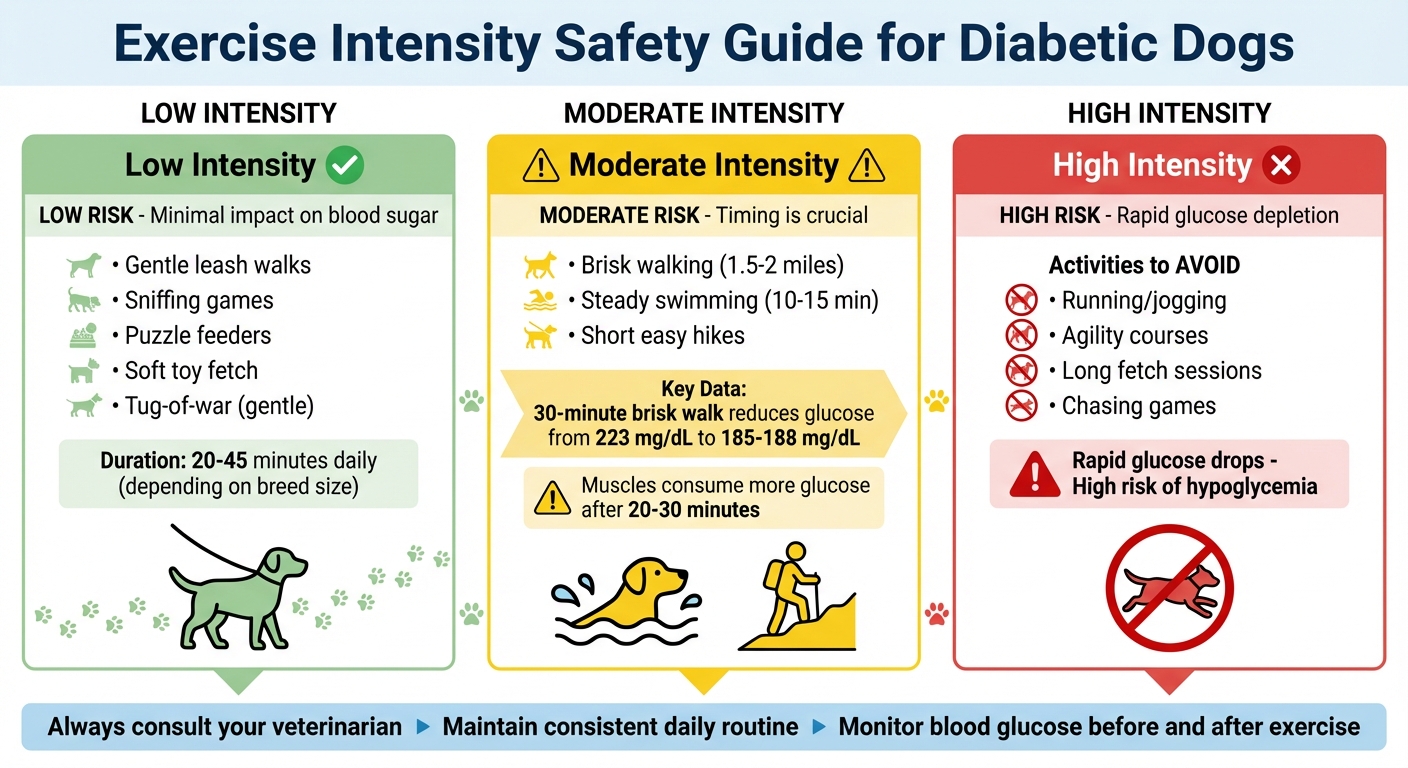
Exercise Intensity Safety Guide for Diabetic Dogs
When deciding on the best exercise for your diabetic small dog, consider its fitness level, weight, and overall health. The focus should be on consistency rather than intensity – regular activity helps stabilize blood sugar levels without overexerting your pup. Factors like age and breed will determine the appropriate duration and intensity of exercise sessions. For small breeds, aim for 30–45 minutes of activity daily, while toy breeds typically need 20–30 minutes. Breaking this into shorter sessions throughout the day can help regulate insulin needs. The key is to maintain the same level of activity every day, as this consistency supports stable insulin requirements. Based on your dog’s needs, here are some exercise options to consider.
Low-Impact Exercises for Gentle Activity
Following your vet’s recommendations, choose exercises that keep blood sugar levels steady. Leash walking is often the best choice for diabetic dogs – it’s easy on the joints and allows you to control the pace. A relaxed walk around the neighborhood not only provides physical benefits but also stimulates your dog mentally. For added variety, consider "sniff walks", where your dog leads with their nose. These walks engage their brain without requiring extra physical effort.
Swimming is another excellent option, especially for dogs with arthritis or mobility challenges. It provides a full-body workout while reducing stress on joints. Keep sessions short – 10 to 15 minutes is ideal – to avoid exhaustion or water-related risks. Always use a life vest to ensure safety, especially if your dog’s energy levels drop suddenly. For indoor options, try gentle games like tug-of-war, soft toy fetch, or puzzle feeders. These are great for dogs that tire quickly or during extreme weather.
Moderate Activities for Healthy Progress
If your dog has adjusted well to gentle exercise, you can gradually introduce moderate activities. Once their stamina improves and their diabetes is managed, consider brisk walks or short hikes on easy trails. A study from June 2025 found that moderate aerobic activity, such as a 30-minute brisk walk covering 1.5–2 miles, significantly reduced blood glucose levels (from 223 mg/dL to around 185–188 mg/dL). This shows that consistent moderate exercise can be an effective tool for managing diabetes.
Be mindful of signs of overexertion, such as slowing down, heavy panting, or muscle stiffness. If you notice these, dial back the intensity.
Avoid High-Intensity Activities
High-intensity exercises like agility courses, long fetch sessions, or chasing games can cause blood sugar to drop dangerously fast. These activities place excessive glucose demands on your dog, increasing the risk of hypoglycemia. Running and jogging are particularly risky for overweight dogs, those with joint problems, or flat-faced breeds. Avoid sporadic, high-intensity workouts that could lead to rapid glucose drops or injuries.
Here’s a quick comparison of exercise intensities to help you choose the safest option:
| Activity Intensity | Examples | Risk Level for Diabetic Dogs |
|---|---|---|
| Low | Gentle leash walks, sniffing games, puzzle feeders | Low: Minimal impact on blood sugar |
| Moderate | Brisk walking, steady swimming, short hikes | Moderate: Muscles consume more glucose after 20–30 minutes; timing is crucial |
| High | Running, fetch, agility, chasing games | High: Rapid glucose depletion; high risk of hypoglycemia |
Stick to activities you can control and stop immediately if necessary. As AkoVet advises, "Steady, regular exercise is much healthier and safer than sudden, high-intensity workouts".
Timing Exercise Around Insulin and Meal Schedules
Getting the timing right for exercise is crucial to avoid dangerous blood sugar drops. Since physical activity increases glucose use, exercising when insulin levels are at their peak can lead to unsafe lows. The best strategy? Plan exercise for times when insulin levels are tapering off, and blood sugar is naturally higher. Research from the University of Pennsylvania School of Veterinary Medicine highlights this approach. They found that exercising 8–12 hours after administering NPH insulin helped prevent hypoglycemia, even as average glucose levels dropped from 223 mg/dL to 185 mg/dL.
A study noted:
"To decrease the risk of inducing hypoglycemia, aerobic exercise was performed during the time period of 8–12 h after insulin administration because the mean time to reach minimum blood glucose concentration in NPH treated diabetic dogs is 4.9 ± 3.0 h after insulin administration." – Jessica R. Mampe, et al., Frontiers in Veterinary Science
This timing creates a safer window for exercise and allows adjustments to insulin administration as needed.
Exercise Before Insulin or Meals
Another good practice is scheduling light activity just before your dog’s next meal and insulin dose. By this point, the earlier insulin dose is wearing off, and blood sugar levels are usually higher. After the exercise, you can feed your dog and administer insulin, which helps stabilize glucose levels more effectively.
Avoid Peak Insulin Activity Periods
Steer clear of exercising during the 4–6 hours following an insulin injection. This is when insulin activity peaks, and combining it with exercise can cause blood sugar to drop dangerously low. For dogs on NPH insulin, blood glucose tends to hit its lowest point around 4.9 ± 3.0 hours after the injection. Additionally, aerobic exercise can continue to reduce glucose levels for up to two hours after the session ends. If your dog skips a meal, avoid exercising altogether during active insulin periods, as this can be extremely risky. Always consult your veterinarian if you’re unsure about how to manage these situations.
sbb-itb-e212914
Building a Safe and Gradual Exercise Routine
Now that you’ve nailed down the timing for exercise, it’s time to focus on creating a routine that’s both safe and gradual. This approach is especially important if your dog has been inactive or is carrying extra weight, as jumping into intense activity too quickly can lead to injuries or unstable blood sugar levels. VCA Animal Hospitals highlights this:
"Exercise is essential to keep your pet healthy and active. But if your pet is overweight or has previously been a couch potato, make sure you build up their activity level gradually to avoid injury."
The golden rule? Consistency beats intensity. Keeping a routine helps stabilize glucose and insulin needs, which is crucial for diabetic dogs.
Start with Short and Frequent Sessions
Ease into it. Begin with 5–10 minute walks two or three times a day, and gradually increase the duration over a few weeks. For obese diabetic dogs, aim for a weight loss of 1%–2% of total body weight per week. This gradual weight loss often reduces insulin resistance, which may mean adjusting their dosage over time. Stick to low-impact activities like leisurely walks, short swims, or gentle play to improve cardiovascular health without putting too much strain on their joints.
Watch for Signs of Fatigue or Distress
As you increase the length or intensity of sessions, keep a close eye on your dog. Signs like heavy panting, weakness, tremors, or unsteady movements are red flags to stop immediately. Afterward, check their paw pads for irritation or tears and watch for difficulty in rising or climbing stairs – these could indicate muscle soreness from overdoing it.
Be Prepared for Emergencies
Always have a portable glucometer, test strips, and high-sugar treats like corn syrup or honey on hand during exercise. If your dog shows signs of low blood sugar – such as weakness, confusion, or "star-gazing" – you can quickly apply a bit of corn syrup or honey to their gums. Keep a record of their exercise duration, intensity, and glucose readings to spot patterns and fine-tune their routine.
Recognizing and Addressing Hypoglycemia During Exercise
When creating a safe exercise plan for your diabetic dog, it’s crucial to be aware of the signs of hypoglycemia and know how to respond. Exercise can cause your dog’s blood sugar to drop to dangerously low levels. Hypoglycemia, defined as blood glucose levels below 80 mg/dL, is a serious condition that demands immediate action. As Dr. Stephanie Howe, DVM, explains:
"Low levels of glucose can be extremely dangerous to a dog, and this condition needs to be treated quickly. If you suspect hypoglycemia, bring your pet to a veterinarian immediately."
Signs of Hypoglycemia to Watch For
Early signs of hypoglycemia can include sudden lethargy, weakness, or your dog refusing to continue walking. Other warning signs might be disorientation, staring into space, or an unsteady, wobbly walk. Small breeds are particularly at risk due to their faster metabolism, which can quickly deplete glucose levels.
If blood sugar continues to drop, more severe symptoms can appear, such as muscle tremors, vomiting, seizures, or fainting. The Cornell University College of Veterinary Medicine highlights the importance of these signs:
"The brain is very dependent on glucose for its nutrition, so any changes in mental state could mean hypoglycemia."
Healthy dogs typically have blood glucose levels between 80 and 120 mg/dL. If levels fall below this range, prompt action is critical.
Immediate Steps to Take
If you notice signs of hypoglycemia, stop any activity right away. Apply a small amount of corn syrup or honey to your dog’s gums to quickly raise blood sugar levels. Once your dog is alert, offer a small portion of their regular food and check their blood sugar every 15 minutes until it returns to normal. Sugar usually begins to work within 1–2 minutes.
Even if your dog seems to recover, it’s essential to contact your veterinarian immediately. Adjustments to insulin doses may be necessary to prevent future episodes.
Conclusion
Exercising a diabetic small dog requires thoughtful planning, but it’s absolutely doable. Work closely with your veterinarian to design a plan tailored to your dog’s unique needs, factoring in their weight, age, and insulin dosage. As the Cornell University College of Veterinary Medicine wisely points out, “A dog who is running agility trials will end up with a different dose than a dog who strolls sedately around the block once or twice a day”. The key is to create a routine that matches your dog’s lifestyle.
Since exercise can lower insulin requirements, always consult your veterinarian before making any adjustments to medication. Establish a consistent schedule for feeding, medication, and exercise to minimize glucose fluctuations. Keeping a daily log of activities, insulin doses, and any changes in your dog’s behavior or symptoms can be incredibly helpful. This record not only ensures your dog’s safety but also provides valuable insights for your veterinarian to fine-tune their treatment plan.
Lastly, always be prepared for emergencies. Keep items like corn syrup or honey on hand in case of low blood sugar episodes. With gradual increases in activity, regular monitoring, and your veterinarian’s guidance, your diabetic small dog can safely enjoy a more active and happy life.
FAQs
What are the signs of hypoglycemia in a diabetic small dog during exercise?
During physical activity, a small diabetic dog might display signs of low blood sugar (hypoglycemia). These can include sudden lethargy, weakness, trembling, or stumbling. You might also notice disorientation, staring spells, dilated pupils, anxiety, or, in more severe cases, seizures.
If any of these symptoms appear, stop the exercise right away. Offer a small amount of a sugar source, like honey or syrup, to help bring their blood sugar back to a safe level. It’s important to talk to your veterinarian beforehand so you’re well-prepared to handle these situations.
When is the best time to exercise my small diabetic dog to prevent low blood sugar?
The ideal time to exercise your small diabetic dog is about 1 to 1.5 hours after their insulin injection and a meal. This timing gives the insulin a chance to start working and helps stabilize their blood sugar levels. It’s important to avoid exercise during the first hour after an injection or within two hours of a previous workout, as these periods might raise the risk of low blood sugar.
Keep activities short and gentle, like 20 to 30 minutes of walking or light play. Regularly monitor your dog’s blood glucose before, during, and after exercise to ensure it stays in a safe range. If their blood sugar drops too low, stop the activity immediately, offer a small snack, and consult your veterinarian for advice. Sticking to a consistent schedule for meals, insulin, and exercise can go a long way in keeping your dog healthy and making glucose levels easier to manage.
What are the best low-impact exercises for a small dog with diabetes?
Low-impact exercises can help keep your diabetic small dog healthy and active without putting too much strain on them. Here are a few safe and enjoyable options:
- Short, relaxed walks: Stick to 10–15 minutes on flat terrain at an easy pace. Let your dog take their time to sniff around and explore – it’s great for mental stimulation too.
- Playtime indoors: Try rolling a lightweight ball or tossing a soft toy a short distance for your dog to chase. Keep these sessions brief, around 5 minutes, to avoid tiring them out.
- Easy stair steps: If your dog feels comfortable, encourage them to step up and down a single low step a couple of times. Limit this to 2–3 repetitions to prevent overexertion.
It’s important to steer clear of vigorous activity within 1–1.5 hours after insulin injections. Also, make it a habit to check your dog’s blood sugar levels before and after exercise to ensure they stay in a safe range. With regular, controlled activity, you can help manage their condition while keeping them happy and engaged.