When your rabbit undergoes surgery, their recovery depends on your care. The biggest risk? GI stasis – a condition where their digestive system slows or stops, often caused by pain, stress, or not eating. It can become life-threatening within 24 hours. Here’s what you need to know to prevent it:
- Monitor eating and bowel movements: Rabbits must eat within 6–8 hours post-surgery. No feces for 12 hours? That’s an emergency.
- Manage pain and stress: Use vet-prescribed pain meds and create a calm recovery space. Keep their body temperature between 101°F–103°F.
- Encourage eating: Offer high-fiber hay and leafy greens; syringe-feed if necessary.
- Watch for warning signs: A firm abdomen, loud teeth grinding, or a hunched posture means immediate vet care is needed.
Quick action and proper care can save your rabbit’s life. Always consult your vet if you notice anything unusual.
What is GI Stasis and Why Surgery Triggers It
Defining GI Stasis
Gastrointestinal stasis, or ileus, happens when a rabbit’s digestive system slows down or stops moving entirely. Rabbits depend on a unique digestive process called hindgut fermentation, where their cecum – a large chamber in their gut – uses bacteria and enzymes to break down fiber. When gut movement decreases, the cecal pH changes, creating the perfect environment for harmful bacteria like Clostridium and E. coli to thrive. These bacteria produce gas and toxins, while the slower digestion causes water to be reabsorbed, leading to hardened masses of food and hair in the gut. Shockingly, about 25% of rabbits brought to the vet are dealing with GI stasis. However, this condition is usually a symptom of a bigger problem, such as pain, stress, dental issues, or a poor diet. Surgery can worsen this already fragile digestive balance.
Why Surgery Increases GI Stasis Risk
Surgery adds layers of risk for triggering GI stasis. Pain from the procedure often leads to anorexia, which disrupts the pH balance in the digestive system, allowing gas-producing bacteria to flourish. Dr. Gregory Rich explains it well: "Regardless of why they stop eating initially, rabbits that do not eat undergo a pH change in their GI tracts that favors the growth of gas-producing bacteria".
Stress from surgery also releases catecholamines, hormones that slow down gut movement. On top of that, general anesthesia and the handling of the intestines during surgery suppress digestion and cause inflammation. Dehydration, which is common after surgery, further complicates the issue by slowing gut motility even more.
The numbers paint a stark picture. Rabbits undergoing surgery for GI obstruction have a survival rate of just 47.5%, compared to a 70% survival rate for those treated medically. The situation becomes even more critical for rabbits with low body temperatures. If a rabbit’s temperature drops below 100.4°F, their risk of death triples. For every 1.8°F drop below 99°F, the risk doubles. These statistics highlight just how crucial it is to provide careful post-operative care and act quickly if complications arise.
sbb-itb-e212914
Our Rabbit Surgery Story || How To Know When Your Rabbit Is Sick PLUS Surgery Recovery Care
Monitoring Your Rabbit After Surgery
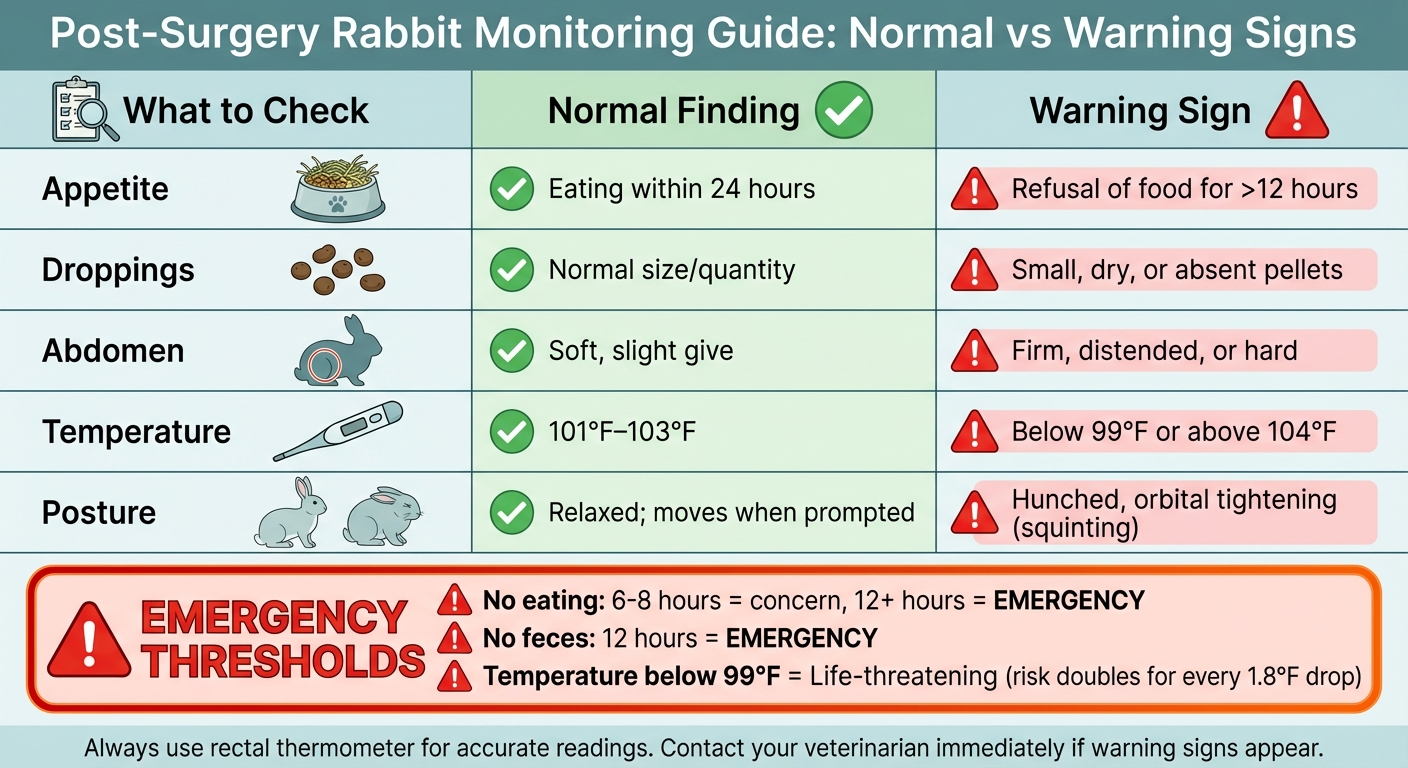
Post-Surgery Rabbit Monitoring Guide: Normal vs Warning Signs
Behavioral Changes to Monitor
After surgery, keeping a close eye on your rabbit’s behavior is crucial, especially due to the risk of GI stasis. Changes in behavior often serve as the first signs of trouble. One of the most critical things to monitor is appetite. If your rabbit goes more than eight hours without eating, this is a red flag. Even a six-hour gap should prompt concern, as it’s unusual for rabbits to stop eating for extended periods.
Pay attention to activity levels as well. While it’s normal for your rabbit to be a bit drowsy for 12–24 hours after anesthesia, they should still respond to gentle encouragement to move around. If your rabbit appears excessively lethargic or unresponsive, it may signal an emergency. Other warning signs include sitting in a hunched or tight, ball-like posture, loud teeth grinding (bruxism), reduced social interaction, or hiding. These behaviors often indicate pain or discomfort.
"It is very important that your rabbit starts to eat as soon as possible after surgery… as the fibre content helps to keep the intestines working." – Animal Trust
Physical Signs of GI Stasis
Behavioral changes are often the first signs, but physical indicators can confirm whether immediate intervention is needed. One of the clearest symptoms of GI stasis is a change in fecal output. To monitor this, replace your rabbit’s bedding with paper towels so you can easily track droppings. If there are no droppings for 12 hours, it’s a medical emergency.
You should also check your rabbit’s abdomen. A healthy abdomen should feel soft and slightly pliable. If it feels firm, distended, or hard, this could indicate a problem.
Temperature monitoring is another critical step. Use a rectal thermometer to ensure your rabbit’s temperature stays between 101°F and 103°F. A temperature below 99°F is particularly dangerous, as it significantly increases the risk of death. For every 1.8°F drop below 99°F, the risk doubles. Avoid relying on ear temperature checks, as they are less accurate. Always use a rectal thermometer for precise readings.
| What to Check | Normal Finding | Warning Sign |
|---|---|---|
| Appetite | Eating within 24 hours | Refusal of food for >12 hours |
| Droppings | Normal size/quantity | Small, dry, or absent pellets |
| Abdomen | Soft, slight give | Firm, distended, or hard |
| Temperature | 101°F–103°F | Below 99°F or above 104°F |
| Posture | Relaxed; moves when prompted | Hunched, orbital tightening (squinting) |
How to Prevent GI Stasis After Surgery
Managing Pain and Reducing Stress
Pain is a major trigger for GI stasis because discomfort often discourages rabbits from eating. Addressing pain and minimizing stress are key steps to keeping your rabbit comfortable and avoiding complications. Veterinarians commonly prescribe pain medications like Meloxicam, Buprenorphine, Gabapentin, Tramadol, or Banamine to help with post-surgical pain. Before giving any medication, make sure to check your rabbit’s rectal temperature – if it’s below 100°F, their body may not metabolize the medication correctly. You can also use microwaveable heat discs or rice socks placed on either side of your rabbit to help maintain their body temperature.
Creating a calm recovery space is just as important. Stress can release catecholamines, which slow down gut movement. Set up a quiet, warm, dry, and dimly lit area away from loud noises or potential predators. If your rabbit has a bonded companion, keeping them together during recovery can provide comfort and reduce stress caused by unfamiliar hospital smells. Minimize handling or hovering over your rabbit, as they often prefer to rest undisturbed when groggy.
"Pain management in rabbits is critical to uneventful recovery." – Dana Krempels, Ph.D., University of Miami
Once your rabbit is settled, the next priority is to encourage eating and drinking to keep their digestive system active.
Getting Your Rabbit to Eat and Drink
Encouraging your rabbit to eat within the first 24 hours post-surgery is crucial to maintaining gut function. High-fiber options like hay and leafy greens are excellent choices to stimulate digestion. To tempt your rabbit, try tearing fresh greens and gently rubbing the cut edges on their nose and lips – this can trigger their natural nibbling instincts. Focus on high-fiber foods and avoid sugary items, which can encourage gas-producing bacteria.
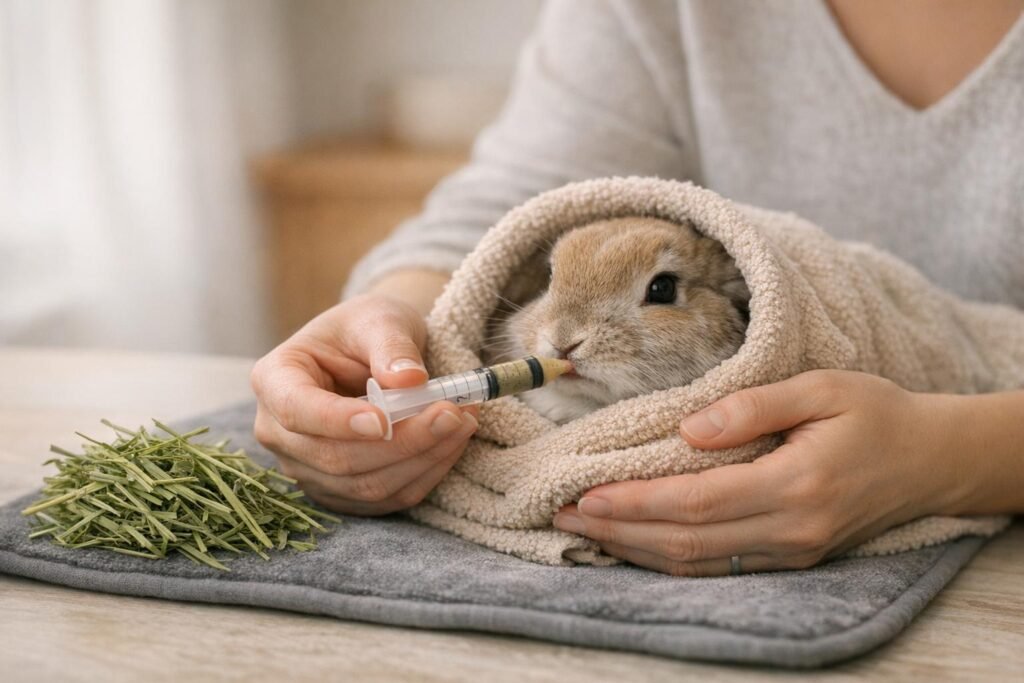
If your rabbit refuses to eat, syringe-feeding a recovery formula like Oxbow Critical Care can provide the necessary nutrients. When syringe-feeding, insert the syringe tip into the gap between their front and back teeth, angling it toward the cheek to prevent choking. Hydration is equally critical – offer water in a sturdy bowl, or if needed, syringe-feed water or an electrolyte solution.
If these measures don’t work, additional medical support may be necessary.
Medications That Support Digestion
Sometimes, medications are needed to help jumpstart digestion. Your vet might prescribe motility drugs like cisapride or metoclopramide to encourage gut movement. For painful gas, simethicone (commonly available as infant gas drops) can provide relief. Dehydration also slows digestion, so subcutaneous fluids like Lactated Ringers Solution may be recommended. Additionally, digestive supplements, including enzymatic aids or Lactobacillus acidophilus, can help restore balance in the gut’s microbial ecosystem. With proper care, around 70% of rabbits recover from GI stasis.
Maintaining Digestive Health Long-Term
Once your rabbit has recovered, keeping their digestive system healthy is key to preventing another bout of GI stasis.
Diet for Healthy Digestion
To avoid future issues, make sure your rabbit has constant access to grass hay like Timothy, meadow, or orchard hay. This helps maintain steady gut motility. Their diet should include about 25% fiber, which supports proper hindgut fermentation and keeps intestinal muscles functioning well.
Leafy greens are another must. Offer at least 4 cups of fresh greens per 5 pounds of body weight daily. Options like romaine lettuce, kale, parsley, cilantro, dandelion greens, and carrot tops provide both fiber and hydration. Fragrant herbs such as basil, mint, and dill can be especially helpful for picky eaters while also soothing the digestive system and reducing gas. When it comes to pellets, keep portions small and opt for grass-based options with at least 22% crude fiber.
Avoid foods high in carbohydrates or starch, like fruits, carrots, grains, legumes, and sugary snacks. These can upset the gut’s pH balance and promote the growth of gas-producing bacteria. Always provide fresh water in a sturdy ceramic bowl to encourage proper hydration.
"The best cure for GI stasis is prevention." – Dana Krempels, Evolutionary Biologist
Beyond diet, regular exercise is just as crucial for a healthy digestive system.
Exercise for Gut Health
Physical activity plays a big role in keeping your rabbit’s intestines working smoothly. Allow them several hours of supervised free-roaming time each day, especially if they usually spend most of their time in a cage or enclosure. Movement helps stimulate peristalsis, which is the process that moves gas and ingested hair through the digestive system.
Encourage your rabbit to hop around at least once or twice daily. You can make this more engaging by gently wiggling fresh hay or aromatic herbs like basil or cilantro to spark their interest. Offering a variety of hay types can also encourage foraging, which naturally promotes activity.
"Regular exercise not only keeps the skeletal muscles strong: it also keeps the smooth muscles of the intestines well-toned and active." – Dana Krempels, Ph.D., Evolutionary Biologist
When to Call Your Veterinarian
Keeping a close eye on your rabbit at home is essential, but there are times when professional care becomes non-negotiable. Certain warning signs mean you need to act fast and contact a veterinarian immediately.
Emergency Warning Signs
If your rabbit hasn’t eaten or produced feces for 12 hours or more, it’s a medical emergency. Even refusing favorite treats can signal something serious – call your veterinarian without delay.
Here are some critical signs that demand immediate veterinary attention:
- A firm, distended abdomen that feels like a "beach ball".
- Loud teeth grinding (bruxism), which signals intense pain.
- A hunched or curled posture, often a sign of severe discomfort.
- If your rabbit becomes limp or unresponsive, seek emergency care immediately.
You can also use a rectal thermometer to check your rabbit’s temperature. A reading below 101.5°F indicates hypothermia, requiring immediate heat support and veterinary care. If the temperature drops below 99°F, the situation becomes life-threatening, with risks multiplying rapidly as the temperature falls further. On the other hand, a fever above 103.5°F is also a red flag that needs prompt attention.
"If your rabbit stops eating or producing feces for 12 hours or more, you should consider the condition an EMERGENCY. GET YOUR BUNNY TO A RABBIT-SAVVY VETERINARIAN IMMEDIATELY." – Dana Krempels, Ph.D., University of Miami
Before heading to the vet, document key details like the time of your rabbit’s last meal, its most recent bowel movement, current temperature, and any medications administered. This information can help the vet assess the situation quickly. It’s also a good idea to locate a rabbit-savvy emergency clinic in advance, as not all emergency vets are equipped to handle exotic pets.
Recognizing these signs and acting quickly can make all the difference. Once the immediate crisis is under control, follow-up care will be crucial for your rabbit’s recovery.
Scheduling Follow-Up Visits
After surgery or an emergency visit, schedule a recheck appointment within 7 to 14 days – ideally before leaving the vet’s office. This follow-up is essential to ensure the surgical site is healing well and your rabbit’s digestive system is functioning properly. If your rabbit has external sutures, staples, or drain tubes, these will need to be removed during this visit.
Follow-ups also help catch underlying issues like dental problems or urinary conditions that could lead to future episodes of GI stasis. Ask your vet for a specific list of symptoms that might require an earlier visit and confirm their after-hours emergency protocol so you’re prepared for any unexpected situations.
If you notice small fecal pellets, pellets strung with hair, or those encased in clear or yellowish mucus, and these don’t improve within two days of home care, contact your vet immediately – don’t wait for the scheduled follow-up.
Conclusion
Preventing GI stasis in rabbits requires careful observation, quick action, and collaboration with your veterinarian. With timely treatment, about 70% of rabbits can recover from GI stasis. Early detection is crucial, so stay alert for warning signs and act swiftly.
Here are some key strategies to support your rabbit’s recovery:
- Pain management: Use prescribed medications to control pain, as untreated pain is a common cause of GI stasis.
- Dietary support: Encourage your rabbit to eat high-fiber hay and greens as soon as possible after surgery to promote gut activity.
- Temperature regulation: Keep your rabbit’s body temperature between 101°F and 103°F.
- Minimize stress: Stick to familiar routines and keep bonded companions together to reduce anxiety.
If your rabbit stops eating or hasn’t produced feces for 8 to 12 hours, treat it as a medical emergency and contact your veterinarian immediately. Keeping detailed records of medications, temperature, food intake, and bowel movements can provide your vet with critical information if complications arise. It’s important to note that a 24-hour fast can result in life-threatening liver failure.
These steps are vital to ensuring your rabbit’s recovery and well-being. With attentive care and timely veterinary intervention, you can give your rabbit the best chance at a full recovery. Always trust your instincts and seek professional help if your rabbit’s condition worsens.
FAQs
How can I tell pain from GI stasis after surgery?
Rabbits in pain often display a hunched posture, grind their teeth, avoid movement, or paw at their abdomen. On the other hand, GI stasis tends to present with a reduced appetite, smaller or fewer feces, lethargy, and sometimes a swollen abdomen. Because these symptoms can overlap, it’s crucial to consult a veterinarian right away if you observe any of these behaviors. Early intervention ensures your rabbit gets the correct diagnosis and care.
What’s the safest way to syringe-feed my rabbit?
To syringe-feed your rabbit safely, start by preparing a recovery formula. Mix the powder with warm water until it reaches a pudding-like consistency (for example, combine 3 tablespoons of powder with 6 tablespoons of water). Hold your rabbit gently but securely, and position the syringe at the side of their mouth, between the cheek and teeth. Slowly dispense the mixture in small amounts. Always consult your veterinarian beforehand to ensure there are no underlying health concerns.
Which post-op foods help restart gut movement fastest?
To help get your rabbit’s gut moving after surgery, try offering their favorite treats or foods they seem eager to eat. Skip the pellets for now – they can swell in the stomach and might make GI stasis worse. Instead, stick to fresh greens and plenty of hay to promote healthy digestion.