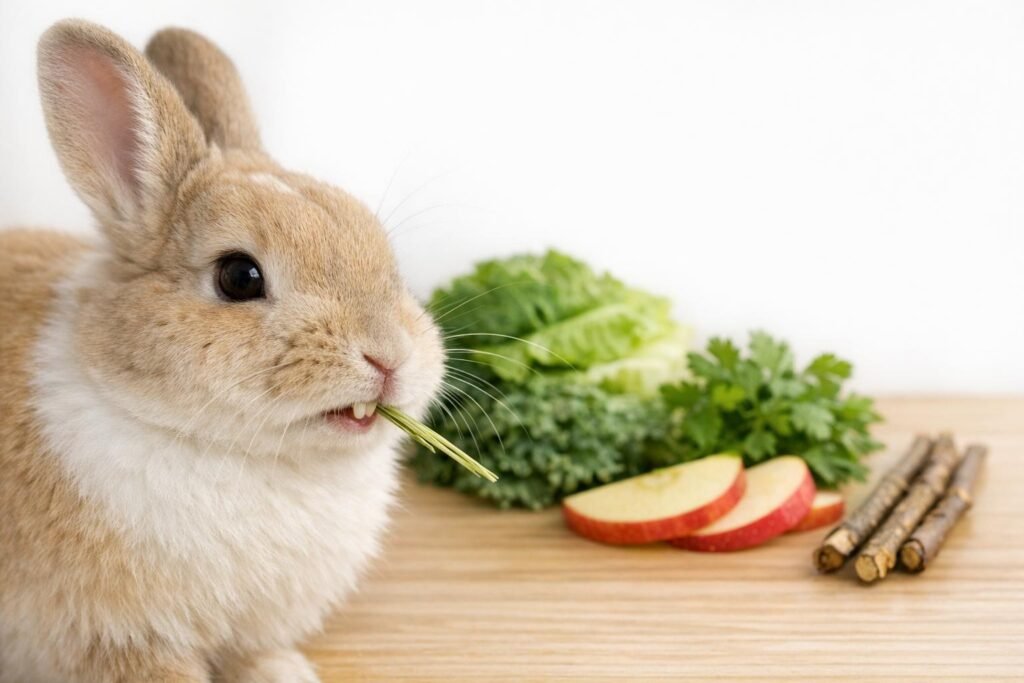
Rabbits have teeth that never stop growing, which means their diet is key to preventing painful dental problems. The right foods can naturally wear down their teeth and keep them healthy. Here’s a quick guide:
- Grass Hay (e.g., Timothy, Orchard, Meadow): Makes up 80% of their diet and promotes natural tooth wear. First-cut hay is the best choice for its coarse texture.
- Leafy Greens (e.g., Kale, Romaine, Dandelion Greens): Provide fiber and nutrients while encouraging chewing. Rotate greens daily for variety.
- Herbs (e.g., Parsley, Cilantro, Dill): Add texture and vitamins. Their stems are great for chewing.
- High-Fiber Fruits (e.g., Apple, Blueberry, Raspberry): Occasional treats that promote chewing. Feed sparingly due to high sugar content.
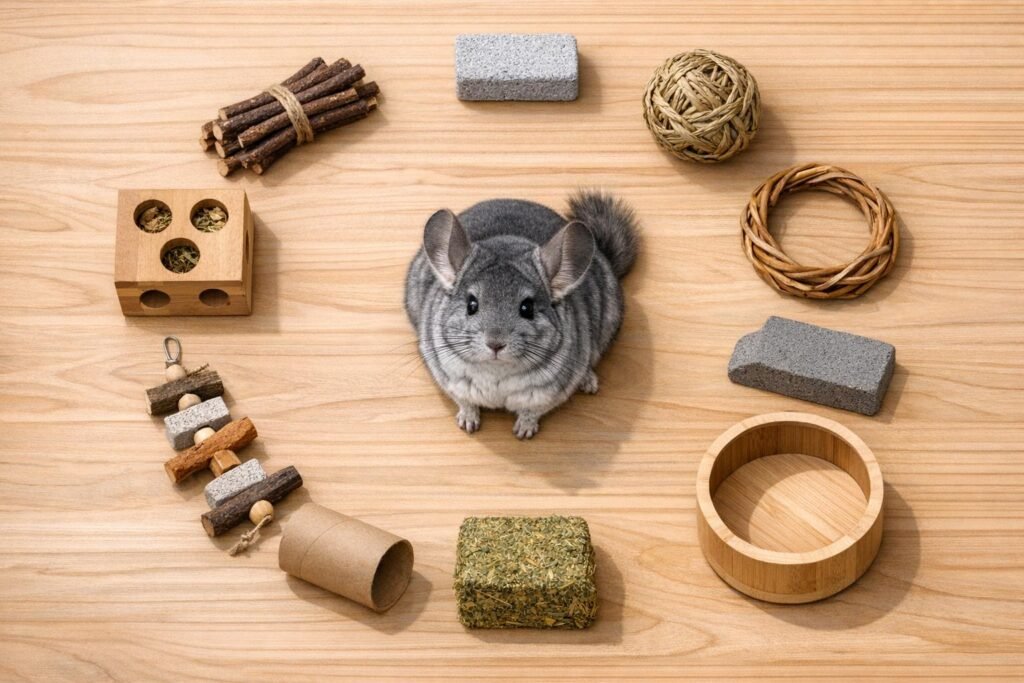
- Safe Twigs and Branches (e.g., Apple, Willow, Pear): Help grind teeth naturally. Ensure branches are untreated and properly prepared.
A high-fiber diet, primarily hay, is the best way to maintain your rabbit’s dental health and avoid costly vet bills. Watch for signs of dental issues like drooling or difficulty eating, and consult a vet if needed.
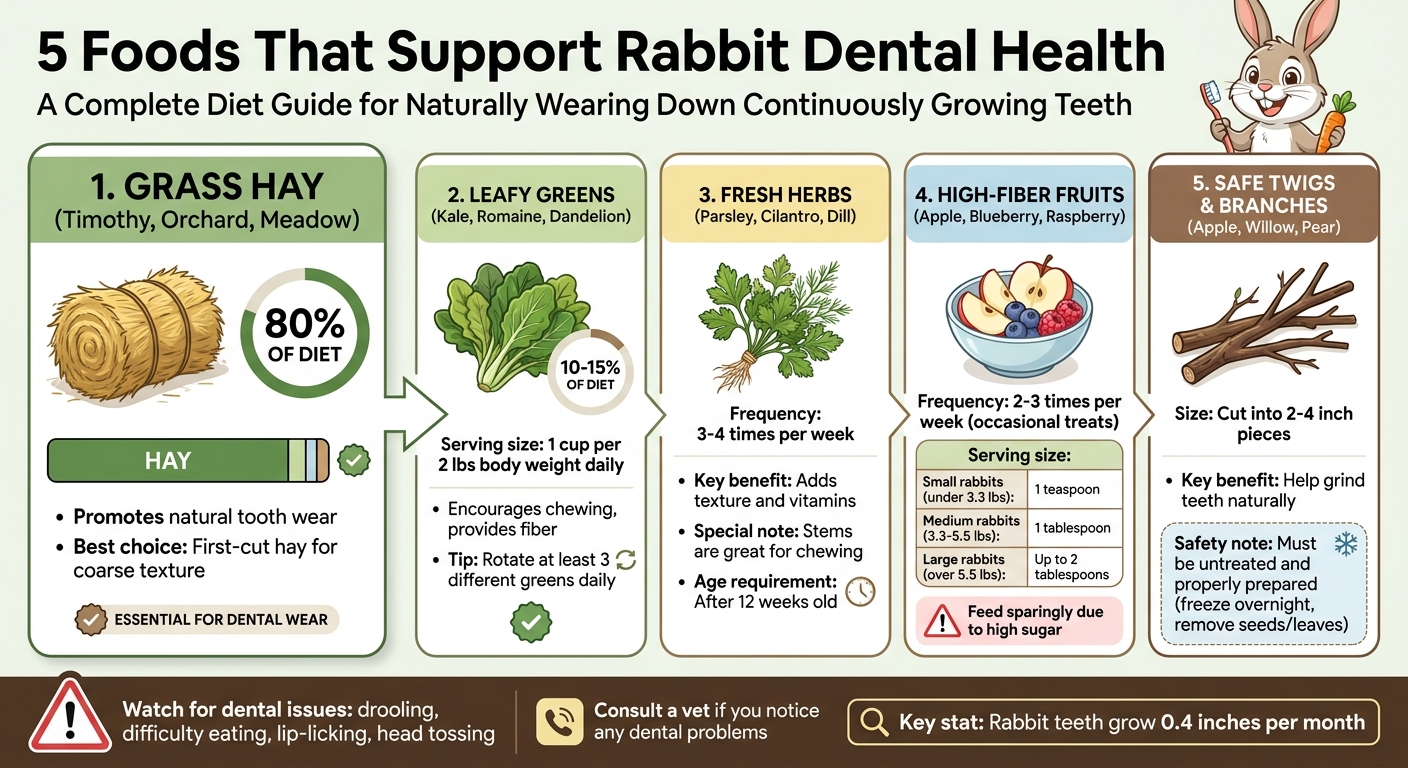
5 Foods That Support Rabbit Dental Health: Diet Breakdown and Serving Guide
How to prevent dental disease in #rabbits | PET CIRCLE
sbb-itb-e212914
1. Grass Hay (Timothy, Orchard, Meadow)
Grass hay is a cornerstone of your rabbit’s diet, making up 80% of what they eat. Its coarse, fibrous texture is key to maintaining their dental health, as the grinding motion required to chew it helps wear down their ever-growing teeth naturally. Beyond dental benefits, hay also mimics a rabbit’s natural foraging habits, keeping them happy and healthy.
Encourages Natural Chewing Behavior
Providing unlimited fresh hay gives your rabbit an outlet for constant chewing, much like they would experience in the wild. Unlike softer foods like pellets, hay satisfies their instinct to graze and chew throughout the day.
Promotes Healthy Tooth Wear
Timothy hay, especially the 1st cut, is particularly effective for dental health. Its stiff, stem-filled texture provides the abrasion necessary to keep your rabbit’s teeth in check. For rabbits with sensitivities to Timothy hay, Orchard hay is a great alternative – it’s softer but still fibrous enough to promote good tooth wear. Meadow hay offers a mix of textures, adding variety that can keep your rabbit engaged and chewing regularly. Many pet owners report noticeable improvement in tooth wear within just a few weeks of consistent hay consumption.
"Rabbits have teeth which are known as hypsodont, meaning they are designed to erupt continuously as they are worn down by a high fibre diet. As such, the key to maintaining healthy teeth for your rabbit starts with ensuring adequate and appropriate fibre provision."
- Briony, Nutritionist
Provides Necessary Nutrients
Grass hay isn’t just great for teeth – it’s also packed with fiber, which is essential for your rabbit’s digestive health. Fiber helps keep their gut moving smoothly, reducing the risk of issues like gastrointestinal stasis. To maintain its nutritional quality, store hay in a dry, covered area away from direct sunlight. Mixing different types, like Timothy and Orchard hay, can keep your rabbit’s diet interesting and encourage consistent eating.
2. Fresh Leafy Greens (Kale, Romaine, Dandelion Greens)
Fresh leafy greens should make up about 10–15% of your rabbit’s diet. These greens not only provide essential vitamins and minerals but also help maintain dental health by encouraging natural chewing patterns. Unlike hay, leafy greens require a different chewing motion, which helps wear down your rabbit’s continuously growing teeth.
Encourages Natural Chewing Behavior and Promotes Healthy Tooth Wear
Leafy greens like kale, romaine, and spring greens engage all 28 of a rabbit’s teeth in grinding and chewing. Their fibrous texture provides just the right resistance to help prevent overgrown incisors and molar spurs. To support this, offer 1 cup of packed leafy greens for every 2 pounds of your rabbit’s body weight daily (e.g., 2–3 cups for a 5-pound rabbit). Rotating at least three different greens each day ensures your rabbit gets a variety of textures, which further promotes proper chewing.
Provides Necessary Nutrients
These greens are packed with nutrients that go beyond dental health. Kale, for instance, is loaded with Vitamin A and antioxidants, though its high calcium content means it should be part of a rotation with other greens. Romaine lettuce is an excellent source of hydration and fiber, offering far more nutritional value than iceberg lettuce. Dandelion greens are another nutrient-rich option that supports digestion. However, because both kale and dandelion greens are high in calcium, alternating them with lower-calcium greens can help prevent bladder issues while still providing the minerals needed for healthy teeth.
Safe and Appropriate for Rabbits
When introducing leafy greens, it’s important to do so gradually. Add one type of green at a time and monitor your rabbit’s stool for any changes. Always wash greens thoroughly for at least two minutes, rinsing multiple times to remove pesticides. Be on the lookout for signs of dental problems, such as drooling, dropping food, or a sudden preference for softer foods. If your rabbit tends to eat too quickly, offering larger, intact leaves like romaine hearts can encourage slower, more deliberate chewing.
3. Fresh Herbs (Parsley, Cilantro, Dill)
Fresh herbs are a fantastic addition to your rabbit’s diet, offering both a unique texture and a nutritional boost that supports dental health. These aromatic plants add variety to your rabbit’s daily greens, thanks to their strong essential oils and satisfying crunch. This texture encourages prolonged chewing, which is vital for managing the growth of your rabbit’s teeth. The stems of herbs like cilantro and dill provide an engaging chewing experience, helping to wear down teeth and prevent overgrowth. Plus, scattering herbs around their enclosure or using them as hay toppers can keep your rabbit mentally stimulated and physically active.
Packed with Nutrients
Cilantro, for example, delivers an impressive 6,748 IU of Vitamin A per 100g – well over 200% of the daily requirement for small mammals. It also contains 310 mcg of Vitamin K, which is vital for bone health and blood clotting. Parsley and dill offer similar vitamin benefits but vary in calcium levels: cilantro has 67 mg, parsley 138 mg, and dill 208 mg per 100g. For rabbits prone to bladder sludge, cilantro is often a better choice due to its lower calcium and oxalate content.
Tips for Safe Feeding
Herbs should only be introduced after your rabbit reaches 12 weeks of age. Start with a small amount – one or two leaves – and monitor your rabbit for any digestive changes over the next 24 hours. To ensure a balanced diet, limit herbs like cilantro to 3–4 times per week instead of offering them daily. Always wash herbs thoroughly to remove any pesticide residue, and only serve the leaves, stems, and flowers.
4. High-Fiber Fruits (Apple, Blueberry, Raspberry)
Adding to the benefits of hay, leafy greens, and herbs, high-fiber fruits like apples, blueberries, and raspberries play an important role in maintaining your rabbit’s dental health. These fruits contribute essential roughage that promotes chewing, which helps wear down your rabbit’s continuously growing teeth – an impressive 0.4 inches per month. Regular chewing is key to preventing dental issues like overgrowth and malocclusion.
Encourages Natural Chewing Behavior
The texture of these fruits makes them ideal for encouraging chewing. Apple slices, with their firm consistency, and the small seed clusters in raspberries and blueberries, require your rabbit to chew thoroughly before swallowing. This mimics the natural foraging behavior rabbits exhibit in the wild, turning snack time into an engaging and beneficial activity. Offering these fruits as occasional treats can enhance your rabbit’s diet while promoting healthy chewing habits.
Safe and Appropriate for Rabbits
When fed properly, these fruits are safe for adult rabbits. However, preparation and moderation are key. Always remove apple cores and seeds, wash all fruits thoroughly, and introduce them gradually to ensure your rabbit can digest them comfortably. Keep in mind that fruit should only be fed to rabbits older than 12 weeks.
Portion control is essential for both dental health and overall well-being. Use the table below to determine the right serving size for your rabbit:
| Rabbit Size | Weight Range | Recommended Fruit Portion |
|---|---|---|
| Small | Under 3.3 lbs | 1 teaspoon per serving |
| Medium | 3.3 lbs – 5.5 lbs | 1 tablespoon per serving |
| Large | Over 5.5 lbs | Up to 2 tablespoons per serving |
Limit fruit servings to 2–3 times per week, as fruits contain more sugar than hay and leafy greens. Raspberries are a particularly good option due to their high fiber and lower sugar content. A serving of one to two raspberries is perfect. If your rabbit experiences soft stools after eating fruit, reduce the portion size at the next feeding.
5. Safe Twigs and Branches (Apple, Willow, Pear)
In addition to hay, greens, and fruits, twigs and branches from apple, willow, and pear trees can be a great addition to your rabbit’s diet. These provide a fibrous texture that helps maintain dental health by naturally wearing down tooth crowns through chewing resistance.
Promotes Healthy Tooth Wear
Twigs and branches offer a different chewing experience compared to hay and greens, which is essential for your rabbit’s dental care. Rabbits have continuously growing teeth – four large incisors, six upper and five lower cheek teeth on each side, and two small peg teeth. Without enough chewing, these teeth can overgrow, leading to sharp points that may injure the tongue, gums, or cheeks.
Apple and pear wood are moderately hard, making them ideal for effective dental wear. Willow, on the other hand, is softer and contains salicin, a natural anti-inflammatory compound found in its bark. Additionally, the bark delivers tannins and fiber, offering further benefits.
If rabbits don’t get enough opportunities to wear down their teeth, they can develop painful dental issues, which might cause them to stop eating entirely – a potential red flag for underlying dental problems.
Safe and Appropriate for Rabbits
Apple, willow, and pear branches are considered safe for rabbits and are highly recommended. However, it’s crucial to prepare them properly before offering them to your pet. Follow these steps:
- Use only untreated wood.
- Rinse thoroughly to remove dirt or chemicals.
- Freeze overnight to kill any pests.
- Remove dark spots that might indicate rot or mold.
- Cut branches into 2–4 inch pieces to prevent choking risks.
If you’re using apple branches, make sure to remove any seeds and leaves beforehand, as these can be harmful to rabbits.
To keep your rabbit engaged, provide a mix of fresh and dried branches for varied textures. If your rabbit stops chewing wood or begins favoring softer foods, schedule a vet visit immediately. These changes could indicate dental spurs or infections, which require prompt attention to ensure your rabbit’s dental health stays on track.
Conclusion
Each type of food plays an important role in keeping your rabbit’s teeth in good shape. Maintaining your rabbit’s dental health doesn’t have to be complicated. A diet rich in grass hay, leafy greens, fresh herbs, high-fiber fruits, and safe twigs helps ensure their ever-growing teeth wear down naturally.
To get the best results, include at least three types of greens every day and choose the roughest cut of hay you can find – first-cut hay is ideal for promoting dental wear. Keep in mind that root vegetables and fruits should only be occasional treats, as they’re low in calcium and packed with sugar.
Be vigilant for signs of dental trouble, like constant lip-licking, tossing their head, or drooling. If you spot any of these, make an appointment with your vet right away. As Paige K Parsons, a House-rabbit Educator at Rabbit.org, explains:
"They MUST continually wear down their teeth or… there will be much dental badness and huge vet bills!" – Paige K Parsons, House-rabbit Educator, Rabbit.org
FAQs
How do I get my rabbit to eat more hay?
To help your rabbit eat more hay, focus on providing fresh, high-quality options like timothy hay, which plays a key role in maintaining their dental health. Make sure the hay stays clean, place it in spots your rabbit can easily reach, and always keep it available. You can also introduce a variety of chew toys to make hay more interesting and encourage regular munching. Ensuring constant access to good hay is crucial for keeping your rabbit healthy and happy.
What are the safest chew sticks if I don’t have fruit trees?
If you don’t have fruit trees, you can offer rabbits safe chew sticks like willow sticks or untreated plain branches. These alternatives promote natural chewing habits and support dental health.
When should I take my rabbit to the vet for dental issues?
If you notice your rabbit showing signs like trouble eating, drooling, weight loss, mouth sores, or discomfort, it’s important to get them to the vet right away. Dental issues in rabbits can escalate quickly and need professional attention to avoid serious complications.