
Breeding pets responsibly starts with understanding and managing genetic risks. Genetic disorders, often inherited through DNA mutations, can impact animals’ health and quality of life. Whether you’re a breeder or pet owner, here’s a quick guide to minimizing these risks:
- Research Breed-Specific Risks: Learn which genetic disorders commonly affect your breed (e.g., hip dysplasia in German Shepherds or respiratory issues in Bulldogs). Use resources like the AKC Breed Club Directory or Orthopedic Foundation for Animals (OFA) for guidance.
- Genetic Testing: Test breeding animals to identify carriers, clear animals, or those affected by specific conditions. Avoid pairing two carriers of the same disorder.
- Health Screenings: Go beyond genetic tests with physical exams, X-rays, cardiac checks, and more to detect non-genetic health issues.
- Reduce Inbreeding: Use diverse pairings and avoid overusing popular sires to maintain genetic variation and reduce the spread of harmful mutations.
- Monitor Offspring: Track health outcomes in litters to make data-driven adjustments to your breeding program over time.
1.6 GENETIC Disease In Pets (Dangers to Avoid #6 of 7)︱Pet First Aid Course
Research Breed-Specific Genetic Risks
When it comes to responsible breeding, understanding breed-specific genetic risks is a crucial first step. Before pairing animals for breeding, it’s important to identify the genetic disorders that are common in your breed or species. Each breed has its own set of inherited health challenges, and recognizing these issues is key to ensuring healthier offspring.
Common Genetic Disorders by Breed
Different breeds come with unique genetic vulnerabilities. For example, hip dysplasia is a well-known issue in breeds like German Shepherds, Rottweilers, Bulldogs, Great Danes, Saint Bernards, and Retrievers. This condition can lead to arthritis over time, significantly impacting a dog’s mobility and quality of life.
Another common issue is degenerative myelopathy, which affects breeds such as German Shepherds, Bernese Mountain Dogs, Boxers, Corgis, Pugs, and American Water Spaniels. This condition causes gradual spinal cord degeneration, eventually leading to paralysis.
Brachycephalic breeds – like English Bulldogs, French Bulldogs, Pugs, Boston Terriers, Shih Tzus, and Cavalier King Charles Spaniels – often experience respiratory issues and heat intolerance due to their shortened skull structure. Additionally, heart diseases such as dilated cardiomyopathy are prevalent in Doberman Pinschers and Great Danes, while arrhythmogenic right ventricular cardiomyopathy is commonly seen in Boxers and Bulldogs.
Epilepsy, marked by recurrent seizures, is another concern for breeds like German Shepherds, Beagles, Belgian Tervurens, Keeshonds, Dachshunds, and Retrievers. Some breeds also carry specific genetic mutations: Basenjis may inherit Fanconi’s Syndrome, Bedlington Terriers are prone to Copper Toxicosis, and Beagles can develop Musladin-Leuke Syndrome. Understanding these risks is essential for preventing genetic disorders in future litters and reducing potential suffering for both animals and their owners.
Where to Find Genetic Risk Information
A great starting point is your breed’s national parent club, accessible through the AKC’s National Breed Club Directory, which provides guidelines for required health testing.
The Orthopedic Foundation for Animals (OFA) offers a wealth of resources, including databases on hips, elbows, cardiac health, eyes, and other inherited conditions. By searching its database, breeders can review health screening results for potential breeding pairs and their relatives.
"to improve the health and well being of companion animals through a reduction in the incidence of genetic disease"
The AKC DNA Resource Center is another valuable tool, offering breed-specific testing recommendations based on parent club data. Their DNA + Health Kit can screen for over 328 genetic markers. For cat breeders, the Winn Feline Foundation provides research focused on feline genetic health, while the WSAVA Hereditary Disease Committee offers global guidelines and educational resources for informed breeding practices.
Working with veterinary geneticists can also be incredibly helpful. They can assist in interpreting complex test results, particularly for polygenic disorders involving multiple genes, and guide you in making informed decisions. By utilizing this information and incorporating targeted genetic testing, you can make smarter breeding choices that prioritize the health of future generations.
Use Genetic Testing to Guide Breeding Decisions
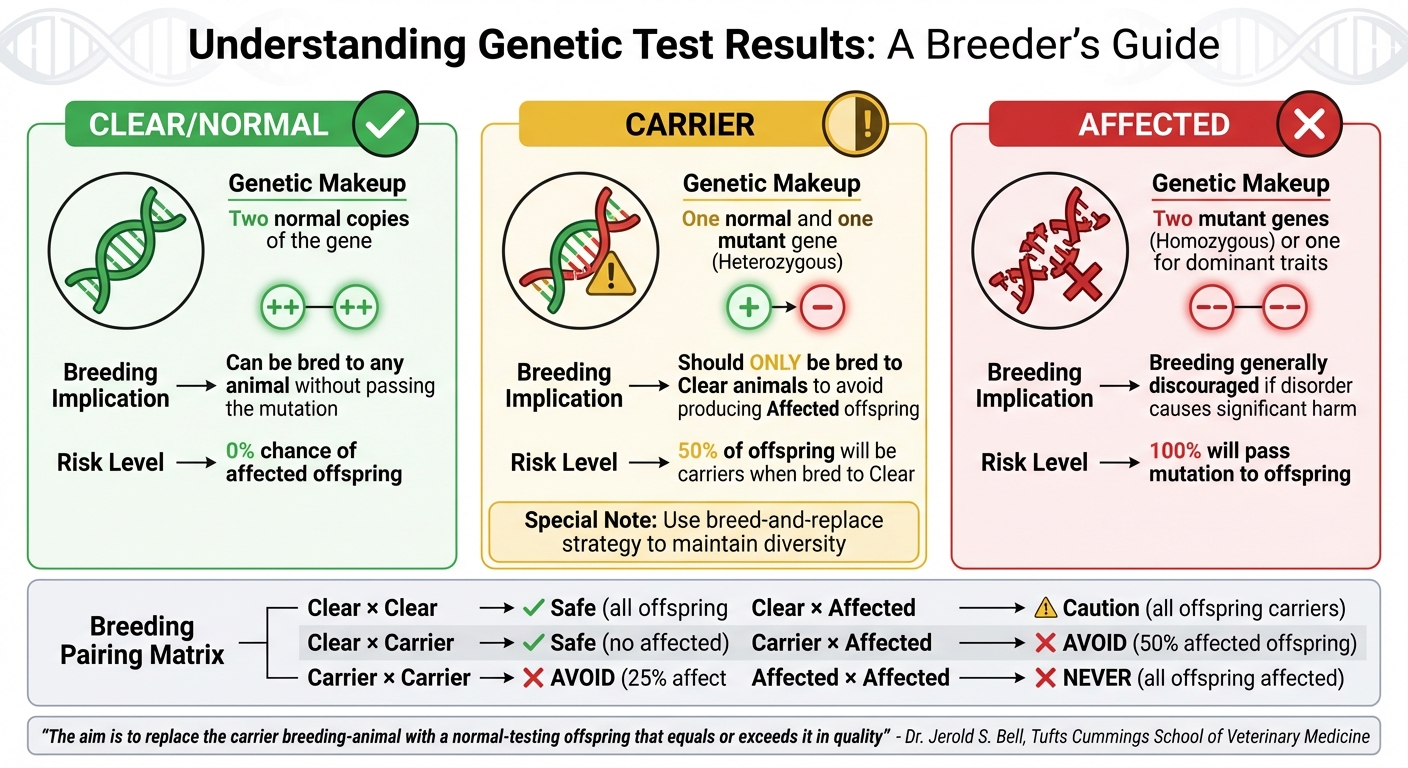
Genetic Test Results Guide for Pet Breeding Decisions
Genetic testing is a powerful tool for understanding an animal’s hereditary makeup. By identifying whether an animal is clear, a carrier, or affected, breeders can make thoughtful choices to prevent the spread of genetic disorders in future generations.
This testing is especially helpful for spotting carriers of recessive conditions. When two carriers are bred, there’s a 25% chance their offspring will inherit two mutant genes and be affected by the disorder. Testing your breeding stock can help you avoid risky pairings while preserving valuable traits. It’s an essential first step in selecting the right genetic tests for your animals.
Choose the Right Genetic Tests
Start by consulting your breed’s national parent club recommendations, which you can find through the AKC’s Directory. These clubs outline the most critical tests for each breed based on known hereditary health issues. For instance, Australian Shepherds should be tested for Hereditary Cataracts (HSF4), MDR1, and Collie Eye Anomaly (CEA), while Beagles require testing for Musladin-Leuke Syndrome (MLS).
Consider using comprehensive genetic panels instead of single-gene tests. These panels often cover a wide range of genetic markers, saving time and money in the long run. For example, the AKC DNA + Health Kit tests for over 328 markers, and Embark screens for more than 270 health conditions across 16 categories. Comprehensive panels can also uncover unexpected genetic mutations that might otherwise go unnoticed.
When selecting a testing provider, accuracy is key. Always choose accredited laboratories to ensure reliable results. The Orthopedic Foundation for Animals (OFA) provides a list of approved testing labs in North America and Europe. Results from these labs are also eligible for registration with organizations like the OFA, which is critical for achieving CHIC certification.
Understand Genetic Test Results
Genetic test results categorize animals into three key groups:
- Clear (Normal): These animals have two normal copies of the gene and cannot pass the mutation to their offspring.
- Carrier: These animals carry one normal gene and one mutant gene. They appear healthy but can pass the mutation to about 50% of their offspring.
- Affected: These animals have two mutant genes (or one for dominant traits) and are likely to develop the disorder.
Here’s a quick breakdown of how these classifications impact breeding decisions:
| Test Result | Genetic Makeup | Breeding Implication |
|---|---|---|
| Clear/Normal | Two normal copies of the gene | Can be bred to any animal without passing the mutation. |
| Carrier | One normal and one mutant gene (Heterozygous) | Should only be bred to "Clear" animals to avoid producing "Affected" offspring. |
| Affected | Two mutant genes (Homozygous) or one for dominant traits | Breeding is generally discouraged if the disorder causes significant harm. |
To maintain genetic diversity while managing hereditary conditions, consider a breed-and-replace strategy for carriers. Dr. Jerold S. Bell from Tufts Cummings School of Veterinary Medicine explains:
"The aim is to replace the carrier breeding-animal with a normal-testing offspring that equals or exceeds it in quality. You don’t want to diminish breed diversity by eliminating quality dogs from the gene pool because they are carriers."
This approach involves breeding a high-quality carrier to a clear animal, then selecting a clear offspring of equal or better quality to continue the line. Over time, this reduces the frequency of the defective gene while preserving valuable traits.
Keep in mind that some genetic variants have incomplete penetrance, meaning an animal might carry the mutation without ever developing the disease. For these cases, or for more complex results involving multiple genes, consult with your veterinarian or a veterinary geneticist. They can help you interpret the findings and make informed breeding decisions tailored to your breed.
Select Breeding Pairs to Minimize Genetic Risks
Once you’ve determined the genetic status of your animals, the next step is to choose breeding pairs that reduce the risk of producing offspring with genetic disorders. This involves carefully analyzing test results, pedigrees, and health records to make thoughtful decisions that protect the health of current and future litters.
Avoid High-Risk Pairings
Never breed two carriers of the same recessive disorder. Pairing two carriers creates a 25% chance of producing affected offspring. Instead, always match carriers with animals that have tested clear.
If genetic testing isn’t available, evaluate risk through family health history. For example, a dog from a litter with multiple affected siblings is more likely to carry "liability genes" than one from a litter with few or no affected siblings. This approach, known as the "breadth of pedigree", focuses on the health of siblings rather than just direct ancestors. It’s especially useful for managing complex polygenic disorders like hip dysplasia. When selecting pairs for such conditions, prioritize animals from lines where siblings have consistently remained healthy across generations.
To further reduce risk, calculate the Coefficient of Inbreeding (CoI) using a 10-generation pedigree. Aim for a CoI at or below the breed’s annual average. Higher CoI values increase the likelihood of combining recessive genes.
Once you’ve avoided high-risk pairings, take the next step by evaluating inbreeding risks.
Increase Genetic Diversity
Reducing genetic risks is only part of the equation – improving genetic diversity is equally important. Genetic diversity helps strengthen your breeding program and prevent the spread of harmful mutations. Overusing a single stud dog can quickly amplify recessive mutations across a population. As Dr. Bell explains:
"The overuse of individual breeding animals contributes the most to decreased diversity (population bottlenecks), and the increased spread of deleterious recessive genes (the founders effect)."
Limit the number of times any one stud is used, and avoid breeding to males that have already sired a large number of litters. Consider outcrossing by selecting mates that are less related than the breed average. This approach increases genetic variation (heterozygosity) and can introduce beneficial traits while reducing the concentration of harmful genes.
For breeds with limited genetic diversity, you can take additional steps by integrating sub-populations. This might involve introducing imported dogs or crossing different lines. However, always ensure that any new bloodlines are thoroughly health-tested before they’re added to your breeding program.
sbb-itb-e212914
Complete Health Screening Before Breeding
Genetic testing is just one piece of the puzzle when it comes to responsible breeding. To ensure the health of both parents and their future puppies, breeders must also conduct thorough health screenings. These screenings go beyond DNA tests, addressing physical conditions and other health factors that might not show up in genetic evaluations. Dr. Greg Burns highlights the importance of combining DNA testing with physical assessments to identify conditions that may appear later in life or for which no specific genes have been identified.
Perform Pre-Breeding Health Checks
A veterinary exam should be scheduled at least 30 days before breeding to address any health concerns, complete parasite treatments, or update vaccinations. This exam should cover infectious disease testing, physical health, and breed-specific screenings.
Infectious disease testing is non-negotiable. Both the sire and dam must be tested for Brucellosis before every breeding. Cornell University College of Veterinary Medicine stresses:
"All breeding dogs should be tested for brucellosis, which is a bacteria that is commonly passed through breeding. This is important because it can infect humans as well".
Brucellosis can lead to sterility, spontaneous abortion, and even pose health risks to humans.
In addition to disease testing, ensure the breeding animals are in optimal physical condition. This includes maintaining a healthy weight, good muscle tone, and a stable temperament. As the AKC explains:
"A bitch that is in good mental condition will make a better mother than a bitch that is insecure, snappy, or has an otherwise unstable temperament".
Breed-specific health screenings are equally critical. While DNA tests can detect certain genetic predispositions, they might miss physical manifestations of disease. For example, larger breeds are prone to orthopedic issues, which can be evaluated through radiographic tests like OFA or PennHIP. Similarly, cardiac screenings with echocardiograms can identify heart conditions in vulnerable breeds, while BAER testing helps detect congenital deafness. Eye exams performed by board-certified ACVO specialists can catch hereditary vision problems, and thyroid panels are useful for detecting autoimmune thyroid issues.
Here’s a breakdown of essential health screenings to consider:
| Screening Category | Specific Tests & Evaluations |
|---|---|
| Orthopedic | Hip Evaluation (OFA/PennHIP), Elbow Evaluation, Patella Evaluation, Shoulder Evaluation |
| Ocular | Eye exams by an ACVO-certified ophthalmologist |
| Cardiac | Echocardiograms, Advanced Cardiac Exams, Holter Monitoring (for breeds like Boxers) |
| Endocrine | Thyroid Testing for Autoimmune Thyroiditis |
| Auditory | BAER (Brainstem Auditory Evoked Response) testing for congenital deafness |
| Infectious | Brucellosis testing, Parasite screenings (internal and external) |
| General Physical | Vaccination review, dental checks, hernia assessments, and evaluation for stenotic nares |
These pre-breeding screenings are essential for identifying issues that genetic tests alone cannot detect.
Keep and Use Health Records
After completing health checks, it’s crucial to maintain detailed records for each breeding animal. These records should include DNA test results, phenotypic certifications (such as OFA or CHIC), vaccination history, and temperament evaluations. Organized health records not only help track the health of individual animals but also guide future breeding decisions.
It’s equally important to document breeding outcomes. Encourage puppy buyers to complete recommended health tests as their dogs mature and share the results with you. This feedback helps evaluate the overall success of your breeding program by showing how healthy the offspring are across entire litters – not just the ones you keep. Reviewing the health records of previous generations can also provide insights into how specific traits are inherited and expressed.
For added transparency, consider registering your breeding animals with the Canine Health Information Center (CHIC). CHIC assigns certification numbers to dogs that complete all recommended health screenings for their breed. These certifications, whether normal or affected, are publicly accessible, promoting openness in breeding practices. Additionally, you can verify the health certifications of potential mates through the OFA website before making breeding decisions.
Monitor Offspring and Adjust Breeding Plans
Health screenings before breeding are just the beginning. The true measure of a breeding program’s success lies in tracking the health and development of puppies after they’re born and placed in homes. Without this critical follow-up, breeders risk overlooking patterns that could signal emerging genetic concerns. Here’s how to monitor each puppy’s health and refine your breeding strategy based on the findings.
Track Health in Offspring
Screen every puppy in the litter. This step is essential, particularly for polygenic disorders like hip dysplasia, where multiple genes play a role. Dr. Jerold S. Bell, Clinical Associate Professor of Genetics at Tufts Cummings School of Veterinary Medicine, highlights the importance of examining the entire pedigree:
"In identifying a dog’s liability for carrying defective genes for a polygenic disorder, the breadth of the pedigree (that is, consideration of all siblings of individuals in the pedigree) is more important than the depth of the pedigree (consideration only of parent-offspring relationships)."
This means that even if a dog appears healthy, having siblings with genetic disorders increases its likelihood of carrying those defective genes. For this reason, it’s crucial to encourage puppy buyers to complete breed-specific health screenings and share the results. These shared insights can help breeders better understand the genetic picture of their breeding pairs.
Stay in touch with puppy owners and maintain detailed records over the long term. Some genetic conditions only manifest in adulthood, so tracking health issues and screening results over time is key. For disorders that lack DNA tests, contributing offspring data to open health registries like the Orthopedic Foundation for Animals can provide valuable insights into genetic risks within bloodlines .
Improve Breeding Programs Over Time
Use health data from offspring to make informed adjustments to your breeding program. Replace higher-risk breeding dogs with lower-risk ones that match or surpass their quality. Dr. Bell explains:
"Using relative-risk assessment as a tool, breeders should replace higher-risk breeding dogs with lower-risk offspring that are equal to or better than their parents in quality."
A real-world example of this approach comes from breeders of the Dutch Kooikerhondje. Between 1994 and 2009, they implemented a screening program for patellar luxation. By using health data from offspring to guide breeding decisions, they successfully reduced the disease prevalence from 28% to 19% over 15 years. This demonstrates how consistent monitoring and selective breeding can lead to meaningful improvements across generations.
Minimize the spread of high-risk genes by placing fewer offspring from high-risk lines into breeding programs until their genetic status becomes clearer. Additionally, be cautious of the "popular sire" effect, where overuse of a single male can spread hidden mutations throughout a breed. The American Kennel Club advises breeders to take an honest look at their dogs’ strengths and weaknesses before breeding, with the ultimate goal of producing healthier animals .
Conclusion
Building a healthier breeding program starts with a well-rounded approach, combining research, testing, and smart pairing strategies. To effectively prevent genetic disorders, it’s essential to first understand the genetic risks specific to your breed. From there, use tools like DNA testing to identify single-gene disorders, and incorporate physical screenings – such as X-rays or echocardiograms – for more complex conditions like hip dysplasia.
When planning pairings, aim to strike a balance between preserving genetic diversity and minimizing disease risk. For example, with autosomal recessive disorders, breeding carriers to dogs with normal test results allows you to retain valuable traits without producing affected puppies. Dr. Jerold S. Bell from Tufts Cummings School of Veterinary Medicine emphasizes this point:
"You don’t want to diminish breed diversity by eliminating quality dogs from the gene pool because they are carriers."
Health screenings for all puppies are non-negotiable. Collecting feedback is equally important, as some genetic conditions may not surface until adulthood. This data can guide you in refining your program over time, gradually replacing higher-risk breeding dogs with lower-risk offspring that maintain or even improve on their quality. By consistently applying these practices, you’ll be setting the foundation for a more sustainable and healthier breeding program.
FAQs
How can I check if my pet carries a genetic disorder?
If you’re curious about whether your pet might carry a genetic disorder, the first step is to talk to your veterinarian. They can assess the health risks associated with your pet’s breed and suggest a trustworthy DNA test. These tests are designed to detect genetic markers tied to conditions commonly found in specific breeds.
The process is straightforward – usually requiring a cheek swab or a small blood sample. Once collected, the sample is sent to a lab for analysis. Within about 2–3 weeks, you’ll receive results that show whether your pet is a carrier or free of certain genetic mutations. If the test reveals your pet is a carrier, it’s crucial to pair them with a mate that doesn’t carry the same mutation to prevent passing the condition to their offspring. For breeders, keeping these test results on record supports responsible and well-informed breeding practices.
How can I reduce the risk of genetic disorders in my pet breeding program?
To reduce the risk of genetic disorders in your breeding program, focus on preserving genetic variety and conducting health tests. Start by screening all breeding animals for known genetic conditions using reliable testing tools. When planning pairings, ensure that carriers of genetic disorders are only matched with non-carriers. This approach helps avoid producing affected offspring while keeping desirable traits in your program.
Evaluate pedigrees and calculate inbreeding coefficients to select mating pairs with minimal relatedness. Aim to keep these coefficients below 6–10% to maintain a healthy gene pool. Avoid relying too heavily on popular sires, as this practice can shrink genetic diversity over time. When necessary, consider introducing genetics from unrelated lines or even different breeds to refresh your program. Gradually replace high-risk animals with healthier, genetically diverse offspring to build a stronger foundation for future breeding.
These strategies can lead to healthier, more resilient pets. For more advice and resources on small-pet care, check out Little Pet Corner.
Why are health screenings important in addition to genetic testing when breeding pets?
Health screenings take a broader approach than genetic testing, focusing on the pet’s overall physical health. These evaluations can uncover non-genetic issues or conditions that genetic tests might miss, including those that aren’t yet apparent. By ensuring both parents are in excellent health, breeders can minimize the chances of passing down health problems to future litters. This process is an essential part of responsible breeding, contributing to healthier and stronger generations of pets.