
Traveling with small pets can be stressful, but with proper planning, you can ensure their safety and comfort. Here’s a quick summary of what you need to do:
- Vet Check: Schedule a vet visit to confirm your pet’s health, update vaccinations, and obtain a health certificate if required.
- Carrier Selection: Choose a sturdy, well-ventilated carrier that is the right size for your pet. Gradually acclimate your pet to the carrier before the trip.
- Travel Kit: Pack essentials like food, water, bowls, ID tags, medical records, a first-aid kit, and cleanup supplies.
- Regular Breaks: Stop every 2–3 hours for bathroom breaks, hydration, and stretching (for road trips).
- Mode-Specific Prep: Follow guidelines for car, air, train, or bus travel, including carrier requirements and safety measures.
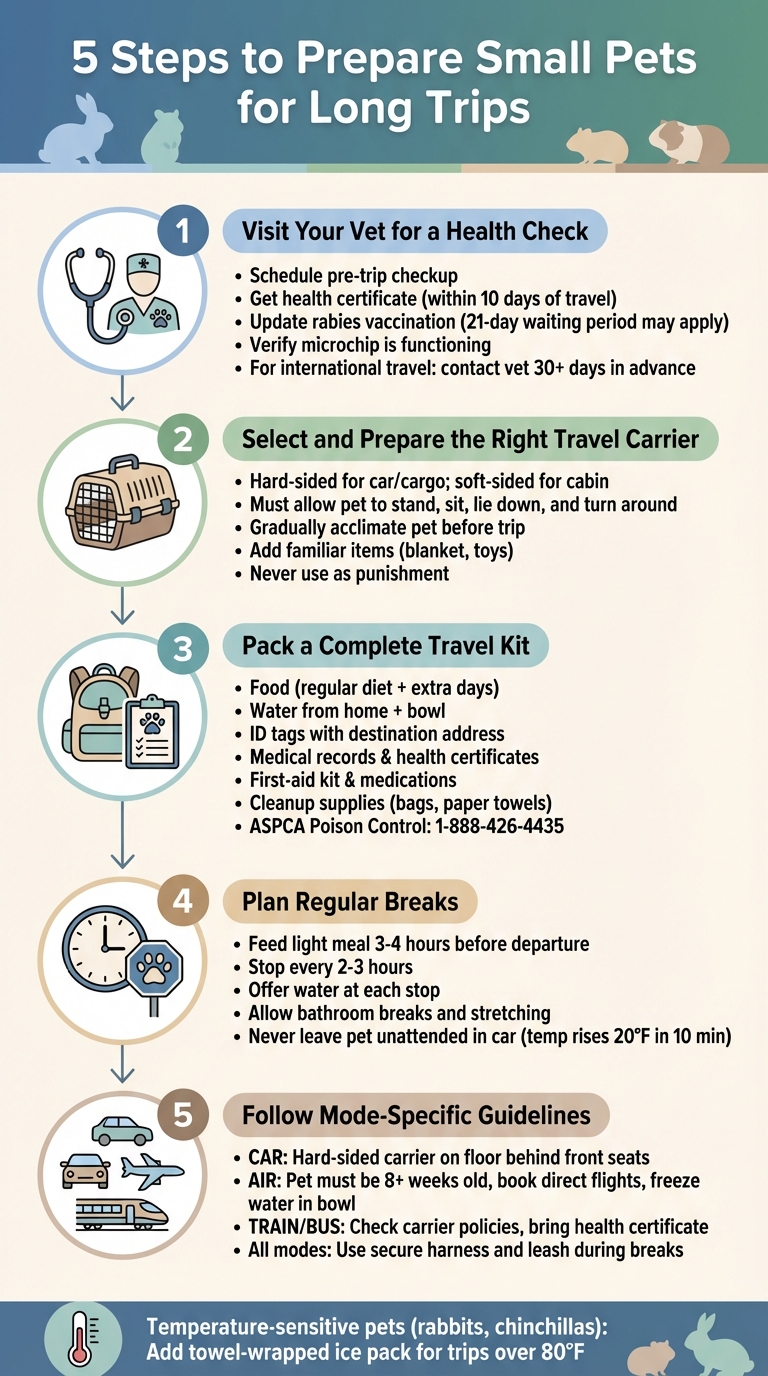
5-Step Guide to Preparing Small Pets for Long Trips
How To Make Traveling With Your Pets Easier
Step 1: Visit Your Vet for a Health Check
Once your travel plans are set, make a vet appointment right away. A pre-trip checkup ensures your pet is healthy enough to travel and flags any underlying issues that might worsen during the journey. This visit is also crucial for meeting legal requirements, like getting a Certificate of Veterinary Inspection (CVI) within 10 days of your departure.
"Health certificates are federal documents that indicate your pet is healthy to travel and won’t pose a health risk to other pets or people." – Family Pet Clinic of Grapevine
During the visit, ask for a hard copy of your pet’s medical records and vaccination history in case of emergencies. Double-check that your pet’s microchip is functioning and update your contact information if needed. If you’re traveling internationally, contact your vet as early as possible – some countries require specific tests or treatments, like blood sampling, at least 30 days before your trip.
Get Vaccinations and Health Certificates in Order
Make sure your pet’s rabies vaccination is current, as it’s often required for crossing state lines or international borders. Some destinations even mandate a 21-day waiting period after the rabies shot before your pet can travel. Your vet can also update preventative care for fleas, ticks, and heartworm, especially if your destination has a higher risk for these parasites. Keep in mind that pets generally need to be at least eight weeks old and fully weaned to travel legally. For small animals like rabbits or chinchillas, which are sensitive to temperatures over 80°F, your vet can advise on precautions to keep them safe. Once vaccinations and certifications are sorted, you can focus on addressing travel-specific challenges.
Address Travel Concerns with Your Vet
Talk to your vet about any potential travel-related issues for your pet. Small animals like guinea pigs, rabbits, and hamsters are especially prone to motion sickness and stress during travel. Your vet might suggest feeding your pet a light meal about 3–4 hours before departure to help minimize nausea and vomiting. For pets with anxiety, ask about non-sedative calming solutions, as sedatives are typically discouraged – they can interfere with breathing and body temperature regulation.
"Tranquilizing your pet is generally not recommended as it could hamper their breathing, so use this time to check with your veterinarian for ways to relax your pet." – ASPCA
If your trip involves a new climate or region, consult your vet about potential health risks specific to your destination. They can recommend emergency clinics along your route and offer tips for managing temperature changes, hydration, and digestive issues caused by unfamiliar water sources.
Step 2: Select and Prepare the Right Travel Carrier
Once your pet gets the all-clear from the vet, it’s time to pick a travel carrier that ensures their safety and comfort. For car rides or cargo holds, hard-sided carriers are the way to go. If your pet will be flying in the cabin with you, a soft-sided carrier is more suitable.
"Hard-sided carriers with ventilation holes that are secured to the vehicle are the safest option" – ASPCA
Avoid using wire or collapsible crates in vehicles – they can fall apart during an accident, putting your pet at risk.
Choose the Right Size and Features
The carrier you pick should be spacious enough for your pet to stand, sit, lie down, and turn around without brushing against the top. For air travel, stick to rigid, airline-approved crates, and top-loading designs are a bonus for easy access. Prioritize carriers with plenty of ventilation and secure closures, such as dual-spring latches for hard-sided carriers or self-locking zippers for soft ones.
If you’re on a budget, consider options like the Frisco Two-Door Top Load, priced between $24.99 and $45.00. For something more premium, the Sleepypod Air – priced around $199.99 – is crash-tested and offers top-tier safety.
Help Your Pet Feel Comfortable with the Carrier
Getting your pet used to the carrier ahead of time can make a big difference in reducing travel stress. Start by placing the carrier in a familiar spot with its door open. Add some of your pet’s favorite items, like a blanket or toy, to create a positive connection. For small animals like rabbits or hamsters, adding a small hiding box inside can help them feel safe.
Introduce the carrier gradually. Begin with short sessions of a few minutes, then work up to longer stays, eventually letting your pet spend the night in it. You can also try short drives around the block to get them used to the motion of travel.
Never use the carrier as a punishment – it should always feel like a safe space. If your pet seems particularly anxious, try using pheromone sprays or calming collars. However, avoid sedatives, as they can interfere with your pet’s breathing during travel.
Step 3: Pack a Complete Travel Kit
Make sure to pack a travel kit that covers all your pet’s needs. This kit ensures your furry (or feathered) friend stays comfortable and cared for throughout the trip.
Food, Water, and Feeding Supplies
Bring enough of your pet’s regular dry food to last the entire trip, plus a few extra days’ worth, just in case. Sudden changes in diet can upset their stomach, so sticking to their usual food is key. Don’t forget to pack plenty of fresh water and a dedicated bowl – hydration is especially important during long journeys.
"Be sure to bring along dry food to feed your pet on its regular schedule." – Merck Veterinary Manual
Plan to stop every two hours to offer water, particularly on road trips. Toss in some species-appropriate treats, like apple slices for rabbits or turkey for ferrets, but skip the human snacks – things like pretzels or chips aren’t safe for pets.
Comfort and Identification Items
Your pet’s collar or harness should have an ID tag with your phone number, your destination address, and a backup contact number. Before leaving, check that your pet’s microchip information is updated with your current details. Carry recent photos of your pet, either printed or digital, in case you need them to help locate your pet if you get separated.
"Always make sure your pet is properly identified. Obtain identification with the address of your destination, as well. It is always a good idea to microchip your pets." – American Humane Society
Pack familiar items like their favorite blanket, toys, or bedding. Familiar smells and objects can help reduce stress and make unfamiliar places feel a bit more like home. Don’t forget a sturdy harness and leash for bathroom breaks. If you’re flying, label your pet’s crate with "Live Animal" and "This End Up" stickers, along with your contact information. Keep all important documents – like health certificates, vaccination records, and emergency vet contacts – in a travel binder for quick access.
First-Aid and Cleanup Supplies
Be prepared for accidents or emergencies by packing a pet first-aid kit. Include essentials like bandages, a first-aid guide, and any regular medications your pet takes. It’s also a good idea to research vet clinics along your route ahead of time – searching for help during an actual emergency can cost valuable time.
"It is always a good idea to have a plan for veterinary emergencies. If the pet is traveling by car, look along the route for reputable veterinarians." – Elizabeth Stelow, DVM, DACVB, Chief of Behavior Service at UC Davis Veterinary Hospital
For cleanup, bring paper towels, plastic waste bags, disinfectant, and grooming tools. Line your pet’s carrier with absorbent materials to handle any accidents. If your pet uses a litter box, pack a small portable one along with enough litter for the trip. For pets sensitive to heat, like rabbits or chinchillas, include a small ice pack wrapped in a towel to keep their carrier cool in warm weather. Lastly, keep the ASPCA National Animal Poison Control Center number handy: 1-888-426-4435.
sbb-itb-e212914
Step 4: Plan Regular Breaks for Rest, Food, and Water
Long trips in a carrier can be stressful for pets. Scheduling regular stops helps keep them comfortable, hydrated, and less anxious, reinforcing all the preparations you’ve made for a smoother journey.
Feed Your Pet Before Departure
It’s best to feed your pet a light meal about 3–4 hours before you hit the road. This gives them enough time to digest and lowers the chances of motion sickness. Avoid feeding your pet while the vehicle is moving, as it often leads to nausea.
"Don’t feed a large meal right before travel to reduce the risk of motion sickness" – American Animal Hospital Association (AAHA)
Instead of full meals during the trip, stick to small snacks like dog biscuits or apple slices during planned stops. This keeps them satisfied without upsetting their stomach.
Stop Every 2-3 Hours During the Trip
Plan to stop every 2–3 hours to let your pet stretch, hydrate, and take a bathroom break.
"During your trip, make frequent stops (about every two hours) so your pet can have a bathroom break, stretch their legs, and enjoy some mental stimulation" – Dr. Elizabeth Stelow, Chief of the UC Davis veterinary hospital’s Behavior Service
At each stop, offer water brought from home to avoid any digestive issues. Always use a secure harness and leash when taking your pet out of the carrier – this prevents accidents or escapes in unfamiliar areas. And remember, never leave your pet unattended in a parked car. Even in the shade, temperatures can climb 20°F in just 10 minutes, putting your pet at serious risk.
Step 5: Follow Guidelines for Your Mode of Travel
Each mode of transportation comes with its own set of safety measures. Building on previous steps, it’s important to tailor your approach for car, air, train, and bus travel to meet the specific needs of your pet and the journey.
Car Travel Safety Tips
When traveling by car, use a hard-sided carrier and position it on the floor behind the front seats. This placement helps prevent the carrier from sliding or tipping if you need to stop suddenly. Avoid securing the carrier with a seatbelt unless it’s specifically designed and crash-tested for that purpose.
"Using a seatbelt to secure a carrier can actually crush the carrier if you get into an accident. Instead – put the small carrier on the floor of the vehicle behind the front passenger or driver seat."
– Center for Pet Safety
Always keep your pet in the back seat, as airbags are not designed for animals and could cause serious injuries in a collision. Before loading your pet into the car, ensure the vehicle is pre-conditioned to a comfortable temperature. For animals prone to overheating, like rabbits or chinchillas, you can place a towel-wrapped ice pack inside the carrier. Similarly, for small prey animals such as hamsters or guinea pigs, including a hiding box in the carrier can provide a sense of security. While these steps make car travel safer, air travel introduces additional requirements and considerations.
Air Travel Requirements for Small Pets
If you’re flying with a pet, federal regulations mandate that dogs and cats must be at least eight weeks old and weaned for at least five days before they can travel. You’ll also need a health certificate from your veterinarian, usually dated within 10 days of your flight. Choose an FAA- or USDA-approved carrier that fits under the seat in front of you and allows your pet to stand, sit, and turn around comfortably.
Whenever possible, book direct, non-stop flights to reduce travel time and minimize the chances of mishandling during layovers. Feed your pet a light meal about six hours before the flight to avoid motion sickness, and skip tranquilizers, as they can interfere with your pet’s breathing at high altitudes.
"Tranquilizing your pet is generally not recommended as it could hamper their breathing, so use this time to check with your veterinarian for ways to relax your pet."
– ASPCA
A helpful tip: freeze water in your pet’s travel bowl the night before the flight. This way, the ice will gradually melt during the journey, providing a steady source of hydration. If your pet will be traveling in the cargo hold, notify the pilot and flight attendants upon boarding to ensure they’re aware.
Check Train and Bus Pet Policies
Traveling by train or bus comes with its own unique challenges, and pet policies can vary widely between carriers. Some companies don’t allow pets at all, while others permit small animals in approved carriers. Before booking, research the specific rules of your chosen service. If you’re crossing state lines, you’ll likely need a health certificate (dated within 10 days) and proof of rabies vaccination.
For rodents and rabbits, a hard plastic carrier is the best choice since these pets might chew through softer materials. Keep your pet’s medical records, vaccination documents, and health certificates in an easily accessible folder in case inspections are required at state borders. Adding a small hiding box inside the carrier can also help prey animals feel more secure during the journey.
Conclusion
Preparing your small pet for a long trip takes effort, but it’s well worth it for a safer and more comfortable journey. By consulting your vet, choosing the right carrier, packing a thorough travel kit, planning regular breaks, and sticking to travel-specific guidelines, you can make the experience much less stressful for both you and your pet.
"No matter the type of travel, good planning and preparation can help avoid surprises and make the trip less stressful for both you and your pet."
– Merck Veterinary Manual
These steps highlight the value of careful planning. From ensuring your pet’s health to providing in-transit comfort, every detail matters. Getting your pet used to its carrier, updating microchip information, and identifying emergency clinics ahead of time can offer added peace of mind.
Since every pet has its own needs, it’s essential to adjust your preparations accordingly. With the right approach, traveling with your pet can go from being a challenge to a smooth and enjoyable experience.
FAQs
How can I help my small pet with motion sickness during travel?
If your small pet struggles with motion sickness, there are some practical ways to make their trip more comfortable. Start by feeding them a light meal about 3–4 hours before you hit the road, and skip feeding while the vehicle is moving to help minimize nausea. Make sure the car is well-ventilated, and place their carrier so they’re facing forward – this can help with their sense of balance.
To keep them calm, pack a few familiar items like a favorite blanket or toy. Plan for regular stops every 1–2 hours to let them rest, drink some water, or stretch if it’s safe. Offer small amounts of water during the trip to keep them hydrated. If your pet still shows signs of motion sickness, such as drooling or whining, it’s a good idea to check with your veterinarian beforehand about safe anti-nausea or calming medications. Paying close attention to their behavior and making adjustments as needed can go a long way in ensuring a smoother journey for your furry companion.
How can I keep my small pet safe and comfortable while traveling in extreme weather?
To keep your small pet safe during extreme weather, it’s essential to plan travel during times with moderate temperatures. In the summer, aim for early morning or late evening trips to steer clear of intense heat. During winter, midday travel is best when it’s slightly warmer. Always use a well-ventilated carrier with breathable bedding for hot weather or insulated bedding for colder conditions.
Hot weather tips: Add a cooling pad or a frozen water bottle wrapped in a towel to the carrier to help regulate the temperature. Watch for signs of heat stress, such as panting or unusual lethargy, and act quickly if you notice them.
Cold weather tips: Use thermal bedding to keep your pet warm, and ensure the carrier is placed away from drafts or cold air. And remember – never leave your pet alone in a parked car. The interior can heat up or cool down dangerously fast, even if it doesn’t feel extreme outside.
Keep fresh water handy in a spill-proof bottle, offering small sips regularly to prevent dehydration. Prepare for emergencies by carrying a pet first-aid kit, your veterinarian’s contact details, and a plan for finding safe shelter if needed. With the right precautions, your pet can travel comfortably and securely, no matter the weather.
What do I need to know about traveling internationally with my small pet?
Traveling internationally with a small pet involves careful planning and attention to regulations. Most countries require a health certificate from a licensed veterinarian, issued within 10 days of your trip. This document verifies that your pet is healthy, free of contagious diseases, and up-to-date on vaccinations like rabies. In some cases, destinations might also require a microchip and a rabies antibody test for entry.
It’s essential to review the specific entry requirements for your destination, as certain countries may ask for additional permits or even a "pet passport." Airlines also have their own guidelines, which often include size and weight restrictions, approved crate types, and applicable fees. To avoid surprises, contact your airline ahead of time to confirm these details and reserve a spot for your pet.
Before you travel, make sure to schedule a vet appointment to finalize all necessary paperwork and ensure your pet is ready for the journey. A little preparation goes a long way in making the trip as smooth as possible for your furry friend.