
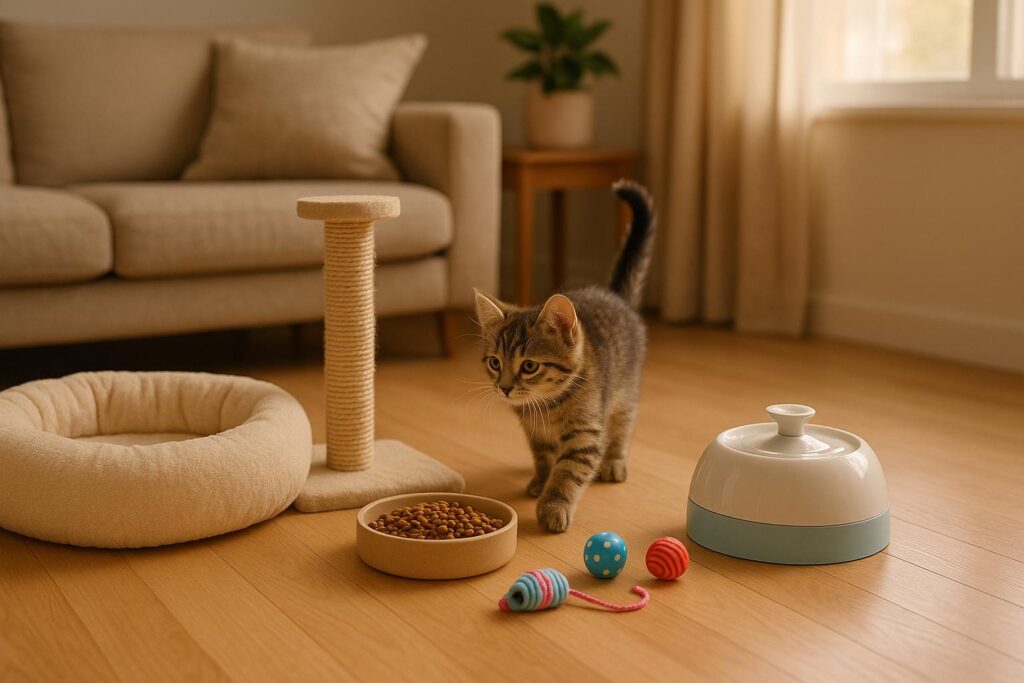
Bringing a cat home for the first time? Here’s your quick-start guide to ensure a smooth transition for both you and your feline friend. Cats thrive in a setup that’s safe, comfortable, and stress-free. To help, here’s a list of 15 essentials every cat owner should prepare before their new companion arrives:
- Food and Water Bowls: Wide, shallow bowls prevent whisker fatigue. Choose stainless steel or ceramic for hygiene.
- Cat Food and Treats: Pick age-appropriate wet or dry food to meet nutritional needs.
- Litter Box and Litter: One per cat plus an extra. Use low-dust, unscented litter and clean daily.
- Cat Bed: A soft, washable bed in a quiet spot helps your cat feel secure.
- Scratching Post or Pad: Essential for nail health and stress relief. Look for stable, tall options.
- Cat Carrier: A sturdy, comfortable carrier is a must for vet visits and travel.
- Cat Toys: Interactive toys keep your cat engaged and active.
- Cat Tree or Climbing Structure: Provides exercise and a high vantage point for observation.
- Grooming Tools: Brushes, nail clippers, and dental care tools help maintain your cat’s health.
- Food Storage Container: Airtight containers keep food fresh and pest-free.
- ID Tag and Collar: Use a breakaway collar with an ID tag for safety.
- Microchip: A permanent form of identification to help reunite you with your cat if they get lost.
- Cleaning Supplies: Enzymatic cleaners for accidents, plus litter scoops and waste bags.
- Health and Wellness Items: A pet first aid kit with essentials like a thermometer and antiseptic wipes.
- Flea and Tick Prevention: Consult your vet for the best solution.
Quick Tip: Set up a quiet "safe room" with these items to help your cat adjust during the first few days. Gradually introduce them to the rest of your home while monitoring for stress signals like hiding or changes in appetite.
Preparation is key to building trust and ensuring your cat feels at home from day one.
15 Must-Have Items for New Cat Owners
Food and Water Bowls
When choosing bowls for your cat, go for wide and shallow designs. This helps prevent whisker fatigue, a discomfort caused when a cat’s whiskers repeatedly touch the sides of deep bowls, which can discourage them from eating or drinking.
"Cats are often sensitive to bowl design, and choosing the right bowl for your cat is important to ensure they have a comfortable and enjoyable feeding and drinking experience." – Cheshire & Wain
Stainless steel and ceramic bowls are the best options since they’re easier to clean and less likely to harbor bacteria compared to plastic. Plastic bowls can sometimes lead to feline acne, and some cats may prefer the feel of ceramic. Place the bowls in a quiet area, away from the litter box, and if your cat is older or has arthritis, consider using elevated bowls. Cats generally need 44–66 ml of water per kg of body weight daily.
Once you’ve picked the right bowls, it’s time to think about food and treats tailored to your cat’s needs.
Cat Food and Treats
Choose food that matches your cat’s life stage. Wet food, with its high moisture content (up to 80%), is a great way to help keep your cat hydrated.
Litter Box and Litter
Cats usually take to litter boxes naturally. If you have multiple cats, the rule of thumb is to have one box per cat, plus an extra one. Place the boxes in quiet, accessible spots, away from their food and water.
Fill the box with 2–3 inches of litter to allow your cat to comfortably bury waste. Low-dust or dust-free litters are better for respiratory health, and clumping, non-clay varieties are easier to scoop and more eco-friendly. Scoop daily to keep the box fresh and appealing, and give it a full clean with mild, unscented soap at least once a month. Avoid heavily scented litters, as they might deter your cat from using the box.
Cat Bed
A cozy, washable bed in a quiet spot is a must. Options like raised or heated beds can provide extra comfort. Multiple beds can give your cat a variety of resting spots.
Scratching Post or Pad
Scratching is essential for cats – it helps them mark territory, maintain healthy nails, stretch, and even relieve stress [7]. Kittens start scratching as early as five weeks old.
"It’s not about stopping your cat’s scratching but rather appropriately meeting their needs." – LeeAnna Buis, CFTBS, FFCP
Look for a scratching post that’s at least 30 inches tall to allow full-body stretches. A wide, heavy base ensures stability, and materials like sisal are durable and satisfying for most cats. Some cats might prefer carpet or cardboard. Place the scratching post in a prominent location, like near their favorite resting spot, and use catnip or treats to encourage use. If your cat scratches furniture, try redirecting them with double-sided tape or aluminum foil [7].
Cat Carrier
A sturdy carrier is essential for vet visits or travel. Choose a hard-sided design that allows your cat to stand, turn, and lie down comfortably. Carriers with top and front openings make it easier to get your cat in and out. Keep the carrier accessible and line it with a soft blanket to help your cat feel more at ease.
Cat Toys
Cats need toys to stay active and entertained. Interactive wand toys are great for playing together, while small balls or faux mice are perfect for solo play. Puzzle feeders can combine mealtime with mental stimulation. Rotate toys weekly to keep things interesting, and avoid toys with small parts that could pose a choking hazard.
Cat Tree or Climbing Structure
Cats love climbing and observing their surroundings from high places. A cat tree offers vertical space for exercise and security. Choose a structure that fits your home – most are 4–6 feet tall – and look for features like multiple levels, integrated scratching posts, and hidden nooks. Place it near a window for added entertainment, and ensure the base is sturdy to prevent tipping.
Grooming Tools
Regular grooming keeps your cat’s coat healthy. For short-haired cats, use a slicker brush or rubber grooming mitt. Long-haired cats may need a metal comb and a de-shedding tool. Keep cat-specific nail clippers on hand for trims, and start handling your cat’s paws early to make the process smoother. Dental care tools, like finger brushes, can also be helpful if needed.
Food Storage Container
An airtight container keeps food fresh and deters pests. Pick a size that matches the amount of food you typically buy, and label it with the expiration date and feeding instructions. Store it in a cool, dry place away from sunlight.
ID Tag and Collar
Even indoor cats can occasionally slip outside, so an ID tag on a breakaway collar is essential. Ensure the collar fits snugly but comfortably, with enough space for two fingers underneath. Include your name, phone number, and address on the tag, and consider adding "Indoor Cat" for extra clarity. Update your contact information if it changes.
Microchip
A microchip provides a permanent form of identification that won’t get lost like a collar. A vet or animal shelter can insert the chip under your cat’s skin, usually between the shoulder blades. Register your contact information with the microchip company and keep it updated to improve the chances of reuniting with your cat if they go missing.
Cleaning Supplies
Accidents are common when a new cat is adjusting, so stock up on pet-safe cleaning products. Enzymatic cleaners are great for breaking down odors and organic stains. Other essentials include litter scoops, waste bags, and paper towels. Avoid harsh chemicals like bleach or ammonia, as they can discourage proper litter box use.
It’s also a good idea to have a basic first aid kit for minor health concerns.
Health and Wellness Items
A pet first aid kit can help you handle minor issues before they become major problems. Include items like a digital thermometer (normal cat temperatures range from 100.5°F to 102.5°F), gauze pads, antiseptic wipes, and nail styptic powder for small cuts. A pill dispenser or pill pockets can make giving medication easier. Always consult your vet before treating any health concerns.
Flea and Tick Prevention
Work with your veterinarian to choose the best flea and tick prevention for your cat. Regular preventative care ensures your cat stays healthy and comfortable.
New Kitten Essentials: 14 Things Every New Cat Guardian Needs
sbb-itb-e212914
Setting Up Your Home for Your New Cat
Preparing your home thoughtfully can make all the difference in helping your cat settle in smoothly. A well-prepared space, stocked with the right supplies, creates a welcoming environment and eases your cat’s transition.
Start by designating a safe room for your new feline companion. This should be a quiet, cozy area where your cat can relax and adjust during the first few days. Equip this space with the essentials: food and water bowls, a litter box, a comfy bed, a scratching post, and a few toys. Make sure the litter box is placed in a private yet accessible corner, away from the feeding area, to encourage natural exploration and comfort.
"I think cleaning up after yourself and identifying choking hazards and toxins is number one" – Linda Hall, certified cat behaviorist and co-founder of Cat Behavior Alliance
Once your cat feels comfortable in their safe room, it’s time to tackle cat-proofing the rest of your home. Think about your space from a cat’s perspective and identify potential risks. Secure tall furniture, like bookcases or dressers, to the walls to prevent tipping. Keep cords out of reach and remove any toxic plants from areas your cat can access.
In the kitchen, cover stovetop burners, close appliance doors, and double-check appliances before use. Use childproof latches on cabinets containing cleaning supplies, and make sure trash cans have tight-fitting lids. Small items like rubber bands, hair ties, or food scraps should be kept out of reach to avoid choking hazards.
Bathrooms need extra attention too. Always close toilet lids, store medications securely, and avoid leaving cleaning agents where your cat might come into contact with them. It’s also a good idea to use pet-safe cleaning products, especially around areas where your cat might drink or explore.
Don’t forget other potential hazards around the house: secure windows and balconies, block off fireplace openings, and tie up dangling blind cords.
Once your home is safe, start introducing your cat to their new environment. Begin with the basics. Show them where the litter box is and encourage them to use the scratching post. You can make the scratching post more appealing by mimicking scratching motions, sprinkling it with catnip, or transferring your cat’s scent onto it using a towel.
As your cat becomes more comfortable, keep an eye on their behavior. Follow the 3–3–3 rule: 3 days to decompress, 3 weeks to settle in, and 3 months to build trust. Adult cats may take longer to adjust than kittens, so be patient and allow them to move at their own pace. Keep an eye out for signs of stress, such as hiding, destructive behavior, or changes in appetite. Provide plenty of safe spaces for hiding and mental stimulation to keep them engaged.
Gradually expand their access to other rooms in your home, but always ensure they have a secure retreat to return to. You can encourage exploration by placing food near doorways or exits. Cats thrive in environments where they feel safe, comfortable, and familiar.
"Cat-proofing helps prevent disasters from happening" – Joey Lusvardi, CCBC, owner of Class Act Cats
Finally, schedule a veterinary visit within the first week to check your cat’s health and address any concerns. Your vet can also provide advice tailored to your cat’s specific needs, whether related to age, breed, or personality.
With a bit of planning and patience, your new feline friend will soon feel like part of the family.
Conclusion
When your home is ready, the final piece of the puzzle is understanding how these essentials lay the groundwork for a happy and harmonious life with your new cat. Welcoming a cat into your home is a major milestone, and being prepared can make all the difference between a stressful adjustment period and a smooth, joyful transition. Having all 15 essential items on hand before your cat arrives helps ease the anxiety of settling into an unfamiliar place, allowing your new furry friend to focus on bonding with you.
As Bowman Animal Hospital & Cat Clinic puts it:
"Being a cat parent is a responsibility, and you need to be prepared to take care of your new fur baby properly." – Bowman Animal Hospital & Cat Clinic
Starting with quality essentials benefits both you and your cat in countless ways. Grooming tools help manage shedding and prevent hairballs, keeping your cat comfortable and your home tidy. Scratching posts not only protect your furniture but also support your cat’s instinctive nail care. A clean, well-chosen litter box encourages healthy habits and minimizes behavioral issues.
This level of preparation reflects your dedication to your cat’s well-being. Studies reveal that 85% of cat owners worldwide feel a deep emotional connection with their cats, and one in seven treats their feline companion like a child. Having the right supplies from day one helps foster this unique bond from the start.
Creating a safe, welcoming space with these essentials gives your cat a place to unwind and explore at their own pace. This thoughtful setup helps your cat feel secure and builds the trust and confidence needed to strengthen your relationship over time.
Lynn Maria Thompson sums it up beautifully:
"If you respect your cat as an intelligent individual, kitty will reward you with unbounded love and a lifetime of loyalty." – Lynn Maria Thompson
FAQs
What’s the best way to help my new cat settle into its new home?
To help your new cat settle in, begin by preparing a quiet and cozy room where it can explore safely. Make sure to include the basics: food and water bowls, a litter box, a scratching post, and a few spots for hiding. This small, secure space will help your cat feel less overwhelmed as it adjusts to its new surroundings.
Once your cat seems comfortable, gradually introduce it to the rest of your home over the course of a few days. Keep things calm by avoiding loud noises or sudden changes in the environment. Adding pheromone diffusers and sticking to a consistent schedule for meals and playtime can make a big difference in easing your cat’s stress and helping it feel at home.
How can I make my home safe for my new cat?
Keeping your cat safe starts with a few simple but essential adjustments to your home. Secure cords from blinds and curtains to prevent any accidental entanglements. Install childproof locks on cabinets and trash cans to keep your feline friend away from harmful items. Anchor heavy furniture, TVs, and shelves to the wall to eliminate tipping risks. Get rid of toxic plants and store cleaning supplies and small objects well out of reach. Lastly, make sure windows and balconies are equipped with sturdy screens or barriers to prevent any dangerous falls. These precautions will help create a safe and welcoming space for your curious new cat.
How can I choose the best food and treats for my cat based on their age and needs?
Choosing the best food and treats for your cat means considering their age and individual needs. Cats at different stages of life have unique dietary requirements, so it’s important to pick products labeled for kittens, adults, or seniors.
- Kittens need food packed with protein and nutrients to fuel their growth and boundless energy.
- Adult cats thrive on a balanced diet that helps maintain a healthy weight and overall well-being.
- Senior cats often do better with food that’s lower in calories, gentle on their teeth, and includes ingredients that support digestion and joint health.
Stick to options made with high-quality ingredients and steer clear of anything loaded with artificial additives or fillers. If you’re unsure what’s best for your feline friend, your veterinarian can provide guidance based on their specific health and lifestyle needs.