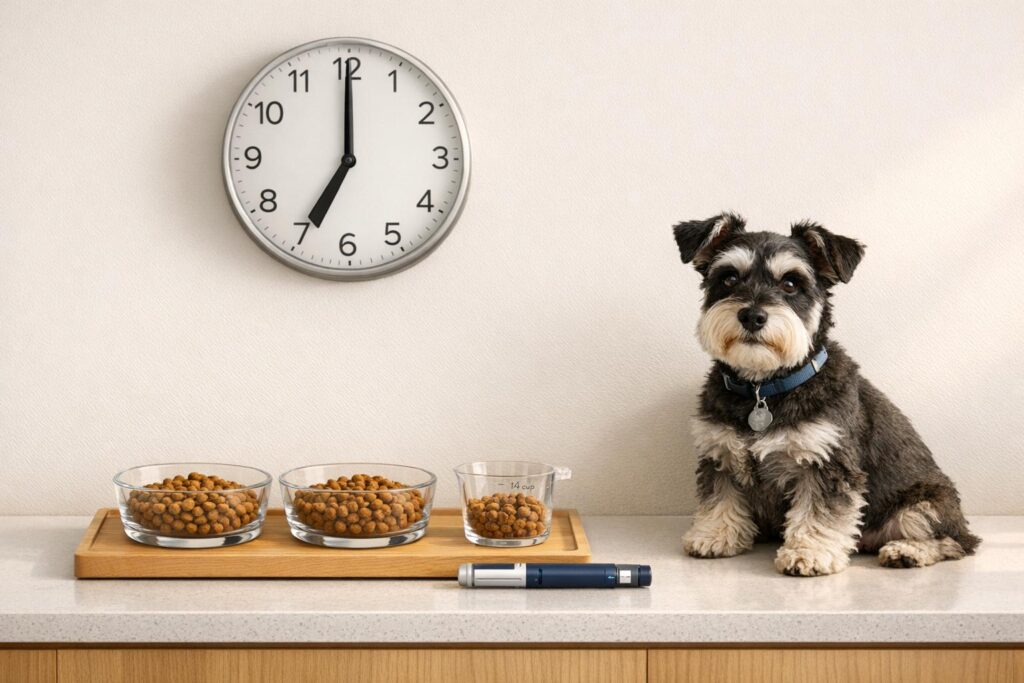
Managing diabetes in small dogs requires a strict feeding schedule. Here’s what you need to know:
- Consistency is Key: Feed diabetic dogs at the same time every day, typically 12 hours apart, to align with insulin’s effectiveness.
- Meal and Insulin Timing: Insulin injections should be given within 30 minutes after meals to prevent blood sugar spikes or drops.
- Avoid Free-Feeding: Random snacks or treats can disrupt blood sugar control, making scheduled meals essential.
- Diet Matters: High-fiber, low-starch diets help stabilize glucose levels. Choose foods with complex carbohydrates and resistant starch for better control.
- Portion Control: Use a digital kitchen scale to ensure precise meal portions, as even small variations can impact blood sugar in small dogs.
Skipping meals or inconsistent feeding can lead to dangerous blood sugar fluctuations. Always consult your veterinarian to tailor a feeding and insulin plan specific to your dog’s needs.
How many times a day do you feed a diabetic dog?
How Meal Timing Affects Blood Sugar Levels
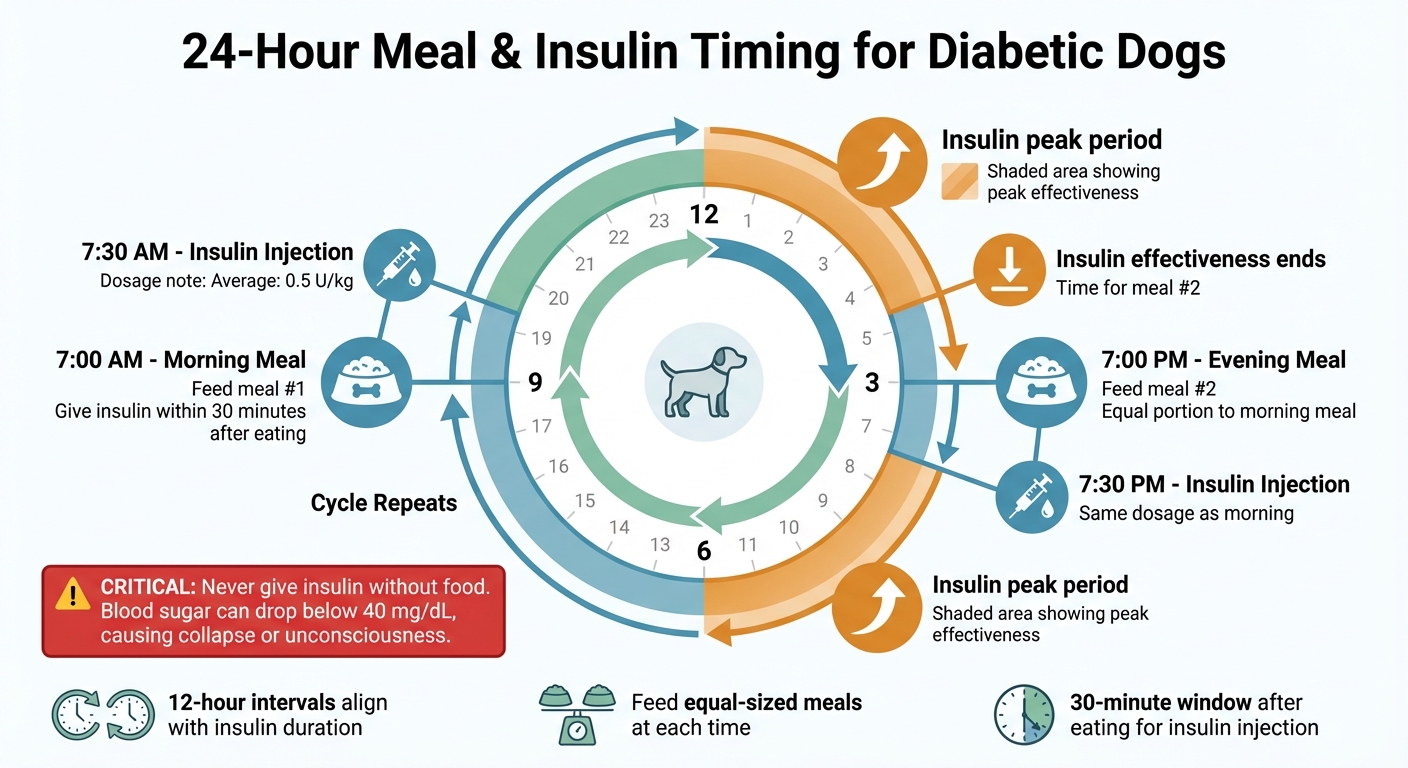
Daily Meal and Insulin Schedule for Diabetic Small Dogs
When a diabetic dog eats, glucose is released into the bloodstream. Without enough insulin, this can lead to sudden spikes in blood sugar levels. To manage this, meals need to be carefully timed to align with the insulin’s active period. Proper coordination helps maintain stable blood sugar levels, avoiding both dangerous lows (hypoglycemia) and highs (hyperglycemia).
Dr. Emily A. Fassbaugh explains, "Eating triggers a blood glucose surge… Diabetic dogs can’t make insulin, so they need to receive their insulin injection at the same time they are fed".
On the flip side, giving insulin without food can cause blood sugar to plummet to dangerously low levels – below 40 mg/dL. At this point, a dog could collapse or even lose consciousness.
Synchronizing Meals with Insulin Administration
Most diabetic small dogs are managed with intermediate-acting insulin, like Vetsulin or NPH, which requires careful timing with meals. A common approach is to split the daily food into two portions and administer insulin immediately after each feeding. Meals are typically spaced 12 hours apart to match the insulin’s effectiveness. For instance, if a dog eats at 7:00 AM and receives insulin right after, the insulin usually peaks between noon and 3:00 PM and wears off by 7:00 PM – just in time for the next meal. Many diabetic dogs achieve good control with an average insulin dose of 0.5 U/kg every 12 hours.
Why Free-Feeding Doesn’t Work for Diabetic Dogs
Free-feeding can create unpredictable spikes in blood sugar that scheduled insulin doses can’t handle. Unplanned snacks or treats can lead to glucose surges without the necessary insulin to balance them.
Dr. Joi Sutton warns, "If you give a snack in the middle of the day, the blood sugar will likely rise due to the snack".
Unlike non-diabetic dogs, whose pancreases naturally release insulin in response to eating, diabetic dogs lack this ability. This means even a small treat given outside of mealtime can disrupt the delicate balance of insulin and glucose, making free-feeding an unsafe option.
Post-Meal Glucose Responses and Diet Composition
What you feed your dog is just as important as when you feed them. The type of food plays a major role in determining how quickly glucose is absorbed and how much blood sugar levels rise after a meal. Studies have shown that the amount of digestible carbohydrates in a dog’s diet is the main factor influencing post-meal glucose levels. Let’s explore how specific dietary components can influence these glucose dynamics.
Diabetic diets often rely on complex carbohydrates for 50–55% of their energy. However, a 2012 study involving 12 healthy dogs revealed that a diet with moderate carbohydrate content (about 25% of total calories) led to peak glucose levels that were 8–12 mg/dL lower than those observed with traditional high-carbohydrate diets. This resulted in more stable blood sugar levels throughout the day.
The Role of High-Fiber Diets
The type of fiber in a dog’s diet can significantly impact blood sugar control. Different fibers affect glucose levels in unique ways. Insoluble fiber, such as cellulose, is particularly effective at reducing post-meal blood sugar spikes compared to soluble fibers like beet pulp or guar gum, which form a gel and slow digestion.
A key study conducted at the University of Pennsylvania in 2000 looked at seven dogs with naturally occurring insulin-dependent diabetes mellitus. These dogs were fed three different diets – low-fiber, high insoluble-fiber, and high soluble-fiber – over the course of a month. The results showed that dogs on the high insoluble-fiber diet had lower average blood glucose levels and a smaller area under the glucose curve compared to the other two diets.
"In dogs with naturally occurring insulin-dependent diabetes mellitus, a dry, high insoluble-fiber diet may aid in glycemic control", says Dr. Susan E. Kimmel from the University of Pennsylvania.
For overweight diabetic dogs, diets with 10–20% fiber on a dry matter basis are recommended, while dogs at an ideal weight generally do well with 5–15% fiber. These findings highlight the importance of selecting the right type and amount of fiber to support diabetic management.
Carbohydrate Sources and Glycemic Control
The source of carbohydrates in your dog’s diet matters greatly. Starch, which makes up 30–60% of most extruded dog foods, varies in how quickly it breaks down into glucose. Cereal grains like spelt and oats are digested rapidly, leading to higher glucose spikes. On the other hand, ingredients like sweet potatoes are richer in resistant starch and amylose, which slow gastric emptying and reduce glucose absorption rates.
For example, median glucose levels 30 minutes after a meal can reach as high as 288 mg/dL, compared to 260 mg/dL at other times. This highlights the importance of choosing carbohydrate sources that promote a steadier blood sugar response. When paired with consistent meal schedules, a carefully designed diet can help maintain stable blood sugar levels. Understanding these dietary factors is key to creating effective feeding strategies for dogs.
sbb-itb-e212914
Meal Frequency and Portion Control for Diabetic Small Dogs
Managing meal timing and portion sizes is crucial for diabetic dogs. Most veterinarians suggest feeding them twice a day, spaced exactly 12 hours apart. This schedule aligns with the typical duration of insulin activity, ensuring insulin works effectively when glucose from food enters the bloodstream. The American Animal Hospital Association (AAHA) underscores this practice:
"Feed equal-sized meals twice daily at the time of each insulin injection."
Why Consistent Meal Schedules Matter
Sticking to a strict twice-daily feeding routine helps prevent dangerous blood sugar fluctuations that can occur with irregular eating habits. It also makes it easier to identify potential health issues early. For example, eating outside of scheduled times can lead to unexpected glucose spikes since insulin doses are calibrated for regular feeding. On the other hand, if your dog suddenly skips a meal, it could signal underlying health problems or poor diabetes management. For newly diagnosed diabetic dogs, veterinarians recommend weighing them every 2–3 weeks to ensure the feeding plan is working effectively.
The 12-hour feeding interval aligns with a dog’s natural digestion cycle. Typically, a dog’s stomach empties within a few hours, and hunger signals appear after 8 to 10 hours. This predictable rhythm helps maintain stable energy levels throughout the day and reduces the risk of weight gain, which can worsen insulin resistance. Such consistency also supports effective portion control.
The Role of Portion Control in Insulin Management
Along with a regular meal schedule, precise portion control is essential for maintaining stable insulin sensitivity. Even small variations in portion sizes can lead to significant blood sugar changes in small diabetic dogs. Using a digital kitchen scale can help ensure accuracy in meal portions.
To determine your dog’s ideal daily caloric intake, consider their weight and activity level. For instance, a 20-lb active diabetic dog typically requires 576 calories per day, split into 288 calories per meal. For overweight dogs, aim for gradual weight loss of 1–2% of body weight per week.
It’s critical to keep meals equal and balanced to optimize insulin response. If your dog skips a meal, avoid administering their insulin dose and contact your veterinarian for advice. As noted by Cornell University College of Veterinary Medicine:
"If your dog skips a meal, do not give them an insulin dose because it could trigger hypoglycemia."
Practical Tips for Implementing Meal Timing Protocols
Managing your dog’s meal and insulin schedule goes hand-in-hand with maintaining stable blood sugar levels. These practical tips can help you stay on track.
Feeding and Insulin Timing Best Practices
Start by feeding your dog and confirming they’ve eaten before giving their insulin injection. This precaution helps avoid dangerous drops in blood sugar if your dog skips their meal after the injection. Once they’ve started eating, administer the insulin within 30 minutes.
Stick to a consistent 12-hour feeding schedule. Small adjustments of 10 to 30 minutes are fine occasionally, but regularity is crucial for managing blood sugar levels effectively.
"Routines may not be exciting, but routines make for a well-regulated diabetic pet!"
Accurate portion control is just as important. Use a digital kitchen scale to measure meals, especially for smaller dogs, as even slight calorie variations can impact blood sugar levels significantly. Afterward, you can reward your dog with a small diabetic-friendly treat.
Adjusting Insulin Protocols for Missed Meals
When your dog doesn’t eat as planned, insulin adjustments are necessary. If they eat less than half of their meal, give only half the prescribed insulin dose and monitor them closely. If they refuse their meal entirely, avoid giving the full insulin dose. Instead, consult your veterinarian to decide whether a half-dose or skipping the dose altogether is safer.
"Even if your pet doesn’t eat anything, they should receive a half dose of insulin to help combat elevated blood glucose. Do not give the full dose of insulin, as this can cause their blood glucose to drop too low."
Always keep honey or corn syrup nearby. If your dog shows signs of hypoglycemia – like disorientation, stumbling, or lethargy – apply a small amount to their gums and contact your vet immediately. And if you’re unsure whether an insulin injection was successful, avoid giving a second dose. Instead, wait and continue with the regular schedule at the next 12-hour interval.
Conclusion
Managing diabetes in small dogs hinges on one key principle: consistency is everything. To keep blood glucose levels stable, your dog needs the same food, in the same amount, at the same time every single day – ideally spaced 12 hours apart. When meals are carefully timed to align with insulin injections, they work in harmony to prevent dangerous spikes or drops in blood sugar levels.
"Consistency is key to diabetes regulation. I encourage consistency of timing of injections and consistency of portions fed." – Dr. Joi Sutton, Veterinarian
Research highlights that free-feeding or allowing random snacking can throw blood glucose levels into chaos, making it nearly impossible for any insulin routine to work properly. High-fiber, low-starch diets are particularly effective because they slow glucose absorption, and using a digital kitchen scale to measure portions ensures precise calorie control. For small breeds, even minor variations in food intake can have a big impact on blood sugar stability.
It’s important to remember that every diabetic dog is different. What works for one dog might not be suitable for another, which is why close collaboration with your veterinarian is crucial. Your vet will rely on tools like glucose curves and regular monitoring to create a tailored plan that accounts for your dog’s weight, activity level, and any other health issues. For example, approximately 30% of dogs develop diabetes as a result of pancreatitis, making customized treatment plans all the more important.
"The ideal diet and feeding regimen for your diabetic dog is the one that keeps their glucose at a steady level." – Cornell University College of Veterinary Medicine
FAQs
Why is it important to match meal times with insulin injections for diabetic small dogs?
Managing your diabetic dog’s meals alongside their insulin injections is crucial for keeping their blood sugar levels steady. When meals are timed to align with insulin’s peak effectiveness, it ensures the glucose from food is absorbed properly, minimizing the chances of sudden spikes or drops in blood sugar.
For smaller dogs, sticking to a consistent routine is especially important. Feeding them at the same times daily and coordinating meals with insulin can help boost their overall well-being and energy. Be sure to work with your veterinarian to develop a schedule that suits your dog’s unique needs.
What are the best types of carbohydrates for managing blood sugar in small diabetic dogs?
For small diabetic dogs, the most suitable carbohydrates are those that are low-glycemic, high in fiber, and digest slowly. These types of carbs help keep blood sugar levels stable by avoiding sudden spikes and drops. Great options include cooked sweet potatoes, pure pumpkin, green beans, and other non-starchy vegetables. You can also add small amounts of low-glycemic whole grains like barley or oats to their diet.
On the other hand, steer clear of highly digestible carbs such as white rice, corn, peas, or grain-free foods loaded with simple sugars. These can lead to quick glucose spikes. Combining these diabetes-friendly carbs with a consistent feeding schedule can make a big difference in managing blood sugar levels and supporting the overall well-being of small diabetic dogs.
How do I ensure my diabetic small dog gets the right portion size?
To make sure your diabetic small dog gets the right portion size, start by talking to your veterinarian. They’ll help you figure out the ideal daily calorie intake based on your dog’s weight and specific health needs. Once you know the target, use a kitchen scale or measuring cup to measure the food accurately – no guessing allowed. If your dog gets insulin twice a day, divide the daily food amount into two equal meals. For dogs on a once-daily insulin schedule, adjust the portions as your vet advises.
Consistency is super important. Feed your dog at the same times each day, ideally 10–12 hours apart, to match the insulin’s action and keep blood sugar levels steady. Stick to the same food and ingredients for every meal to maintain uniformity. Keep an eye on your dog’s weight and blood sugar levels regularly, and check in with your vet if any adjustments are needed. This routine will help keep your pup both healthy and happy.