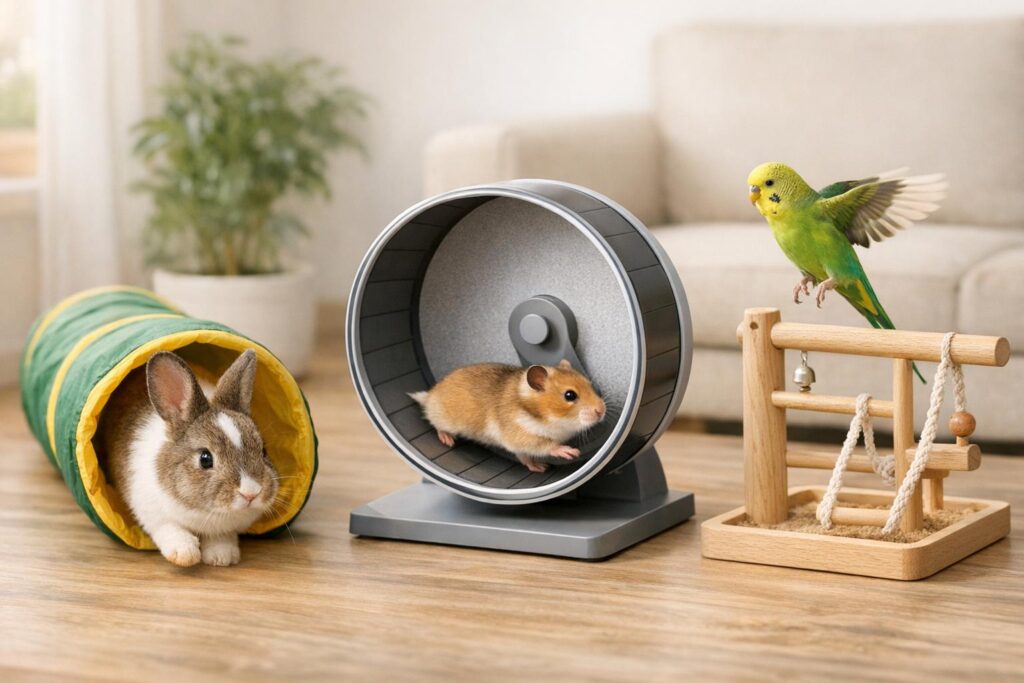
Small pets like rabbits, guinea pigs, and hamsters need regular exercise to stay healthy and happy. Exercise supports their physical health by maintaining weight, strengthening muscles, and improving digestion. It also reduces stress and boredom, preventing destructive behaviors. The amount and type of activity depend on factors like species, age, health, and living environment. For example:
- Small dogs: 30 minutes to 2 hours daily, adjusted for breed and age.
- Cats: 30 minutes of play spread across short sessions.
- Hamsters and gerbils: Wheels, tunnels, and digging activities.
- Rats and mice: Climbing and interactive play.
- Birds: Time outside the cage for flying or climbing.
Tailor routines to your pet’s needs and ensure their exercise area is safe and engaging. Always monitor for signs of fatigue or stress, and consult a vet for personalized advice.
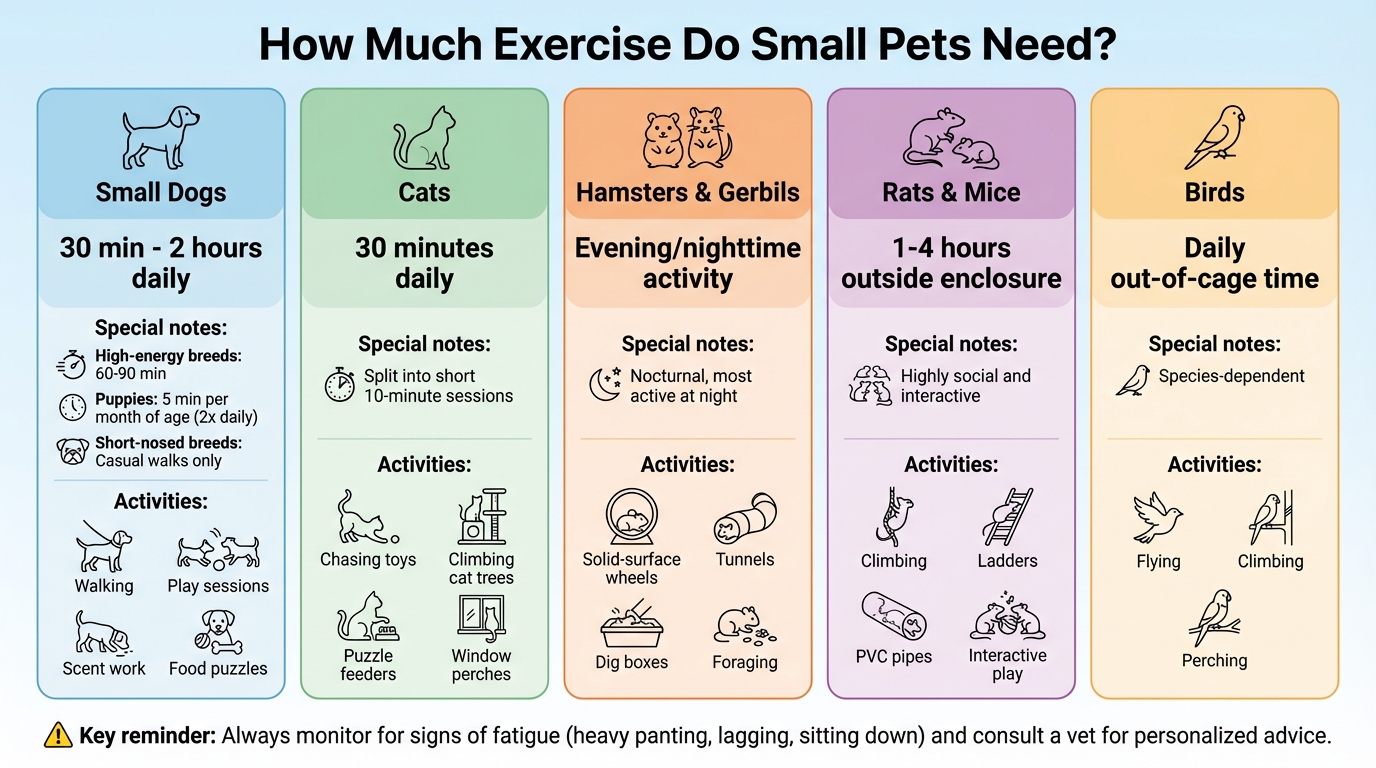
Daily Exercise Requirements for Small Pets by Species
Exercise Requirements by Species
Small Dogs
Small dogs need anywhere from 30 minutes to 2 hours of activity daily. High-energy breeds might require closer to 60–90 minutes, while puppies should follow the "5-minute rule" – 5 minutes of walking per month of age, paired with several 5–10 minute play sessions throughout the day. These short bursts of activity help support their muscle growth and burn off their endless energy. For short-nosed breeds like Bulldogs, casual walks are better suited than intense exercise. According to Laurie C. Williams, owner and director of training at Pup ‘N Iron Canine Enrichment Center:
the amount and type of physical exercise a puppy needs will vary depending on the individual dog as well as its size and breed.
To keep things interesting, try incorporating scent work or food puzzles for mental stimulation. Always include a brief warm-up and cool-down to avoid injuries, and keep an eye out for signs of fatigue, such as sitting, lagging behind, or heavy panting.
Next, let’s look at how to keep your feline friends active.
Cats
Cats thrive on about 30 minutes of playtime each day, ideally spread across several short 10-minute sessions to match their natural energy bursts. As hunters by nature, cats enjoy activities that mimic chasing, pouncing, and jumping. Toys like fishing poles or wands with feathers or streamers work wonders – especially when moved in quick, jerky motions to imitate prey. Letting your cat "catch" the toy occasionally keeps them engaged and excited.
Cats also love vertical spaces. Installing cat trees, wall-mounted shelves, or perches gives them opportunities to climb and observe their surroundings. Puzzle feeders that dispense kibble add a layer of mental stimulation, turning mealtime into a fun challenge. If you have the space, a secure window perch or a "catio" can provide outdoor sensory experiences, like bird watching or enjoying fresh air. Keeping your cat active and engaged can help reduce unwanted behaviors.
Now, let’s dive into the exercise needs of small rodents.
Hamsters, Gerbils, Rats, and Mice
Small rodents have unique exercise needs tailored to their species. Hamsters, for example, are nocturnal and most active in the evening. They need a solid-surface exercise wheel to protect their feet and bones – avoid wheels with wire rungs. Gerbils, on the other hand, are highly active and social creatures. They love digging, tunneling, and even jumping vertically. A dig box filled with paper bedding, shredded paper, and hidden treats can keep them entertained and mimic their natural foraging behaviors.
Rats and mice, often called "vertical" animals, require plenty of climbing and jumping opportunities. Rats, in particular, thrive on daily interaction and enrichment, such as ladders or PVC pipes. Dr. Sharman Hoppes, a clinical assistant professor at Texas A&M College of Veterinary Medicine & Biomedical Sciences, highlights:
rats are probably the most social and interactive of the small rodents.
Dianne Cook, LVT at Oxbow Animal Health, adds:
providing your fur baby with 2–4 hours of playtime outside of their enclosure every day is a noble goal, but even an hour or so is better than no time at all.
If you opt for exercise balls, make sure they’re the right size for the species and always supervise to ensure safety.
How to Plan a Safe Exercise Routine
Setting Up a Daily Schedule
Crafting a consistent exercise routine for your pet starts with understanding their natural rhythm. Hamsters, for instance, are nocturnal and thrive during evening or nighttime hours. On the other hand, rabbits and guinea pigs are more active during the day or early evening. Puppies, especially those around three months old, typically need 15-minute walks twice a day, along with several short play sessions sprinkled throughout.
Splitting activities into shorter sessions allows your pet to recharge between bursts of energy. Dianne Cook, LVT at Oxbow Animal Health, highlights:
Providing your fur baby with 2–4 hours of playtime outside of their enclosure every day is a noble goal, but even an hour or so is better than no time at all.
For dogs, it’s best to wait at least an hour after meals before diving into vigorous exercise to ensure proper digestion. Once you’ve established a routine, the next step is to ensure the exercise space is safe and secure.
Making the Exercise Area Safe
Start by securing all potential escape routes. Use playpens suited to your pet’s species – rabbits and guinea pigs thrive in larger, open pens, while hamsters need setups with solid mats or mesh covers to prevent them from slipping through gaps. Check that cage bars are narrowly spaced and that any tunnels, tubes, or boxes are spacious enough for your pet to move through comfortably.
The surfaces your pet interacts with are equally important. For hamsters, opt for a solid-surface exercise wheel to protect their tiny feet. Puppies, especially when they’re just starting out, should stick to soft surfaces like grass or packed sand to protect their developing paws. Keep hamsters in a temperature range of 64°F–79°F and provide hideouts or "safe zones" where they can retreat if startled.
Eliminate hazards from the play area. Avoid cedar or fresh pine bedding, as these can be toxic, and remove toys with loose parts or cotton balls that could entangle your pet’s toenails. Always monitor your pet for signs of exhaustion. For instance, if your puppy sits down, struggles to keep up, or starts breathing heavily, it’s time to end the session and let them rest.
Adding Mental Stimulation to Physical Activity
Physical exercise is vital, but mental challenges can take your pet’s routine to the next level. For small mammals, try creating a "dig box" by filling a cardboard box with paper bedding or shredded paper and hiding treats inside. This encourages natural foraging behaviors. For dogs, consider a "sniffari" by scattering kibble in a safe outdoor area. Engaging their sense of smell can tire them out even more than a standard walk.
Get creative with treat-hiding games. Use egg cartons, rolled-up dish towels, or crumpled paper to encourage problem-solving. Cats enjoy fishing-pole toys that mimic the movements of birds or insects, and placing fleece-covered perches near windows lets them watch outdoor activity. Laurie C. Williams, Director of Training at Pup ‘N Iron Canine Enrichment Center, advises:
When choosing the activity, I encourage my students to look beyond a walk to other forms of physical activities that provide more enrichment.
Switch up toys weekly to keep things fresh. You can also set up a DIY agility course using everyday items like broom handles, boxes, and ottomans – perfect for dogs or even small rodents. Teaching new tricks through clicker training not only stimulates your pet’s mind but also keeps them physically active.
Adjusting Exercise for Different Pets
Modifying Exercise for Age and Health
A pet’s age and health play a big role in determining how much exercise they need and what type is safe for them. Puppies, for instance, should get about five minutes of exercise per month of age, up to twice daily. Sandra Sanchez from Dan’s Pet Care explains:
As a general rule, puppies need about five minutes of exercise per month of age, up to twice a day.
Adult pets, on the other hand, have broader exercise needs. Toy breeds like Chihuahuas are usually fine with around 30 minutes a day, while larger, high-energy breeds like Labradors often thrive with 60 to 90 minutes of vigorous activity. For senior pets, shorter and low-impact exercises are ideal for maintaining muscle tone without overexerting them.
If your pet has arthritis or joint problems, it’s best to swap out high-impact activities for gentler options like swimming or scent games. Bond Vet highlights:
Swimming can be an effective way to exercise without adding to hip or joint issues.
For pets struggling with obesity, incorporating food-dispensing toys or foraging games can encourage movement while also engaging their minds. These activities combine exercise with problem-solving, making mealtime more stimulating. Always consult your veterinarian to create a routine that supports your pet’s specific health needs.
Once you’ve adjusted the routine for your pet’s age and health, pay close attention to their behavior during exercise to ensure they’re comfortable and not overdoing it.
Reading Your Pet’s Body Language
Understanding your pet’s body language is key to preventing overexertion. Look for signs like heavy panting, lagging behind, glazed eyes, or a dark red tongue, which may indicate they need a break. For smaller mammals, stress might show up as hiding or becoming unresponsive. The Pet Expert Team at Purina advises:
Forceful, heavy panting and a refusal to continue exercise are sure signs that your dog needs to cool down.
Hamsters, for example, might bite if startled or disturbed suddenly. Temperature is another critical factor – avoid running with dogs when it’s over 80°F or when the combined temperature (°F) and humidity (%) exceeds 150. Breeds with short noses, like Pugs and Bulldogs, should stick to 20–30 minutes of exercise in cooler weather, as they are particularly prone to overheating.
Helping Anxious or Fearful Pets Exercise
When dealing with an anxious or fearful pet, patience is everything. Introduce new activities gradually to avoid overwhelming them. For puppies, let them approach the leash at their own pace, rewarding small successes with treats. Oxbow Animal Health suggests staying nearby during playtime without forcing interaction.
Always provide safe hiding spots, such as cardboard boxes, tunnels, or paper bags, so your pet has a retreat if they feel overwhelmed. Start with short sessions – about 5 to 10 minutes – and build up as they grow more comfortable. For pets too nervous for high-energy activities, try a “sniffari” by hiding treats in a secure area. This kind of mental stimulation can help release serotonin and lower stress without requiring intense physical effort. For anxious puppies, beginning on soft surfaces like grass or packed sand can also help ease their fears of hard or unfamiliar terrain.
sbb-itb-e212914
4 Quick Ways To Exercise Your Dog Without "Walking"
Conclusion
To wrap things up, exercise plays a key role in keeping small pets healthy. Regular physical activity helps maintain a proper weight, lowers the risk of obesity, and supports essential functions like digestion and circulation.
Beyond the physical benefits, exercise also contributes to your pet’s mental well-being by reducing boredom and anxiety. As Dianne Cook, LVT from Oxbow Animal Health, puts it:
Just like humans, the more active the pet, the healthier they tend to be, both physically and mentally.
Every pet is unique, so their exercise routine should match their specific needs. Consulting an exotics-friendly veterinarian is a smart move – they can help create a customized fitness plan, whether the goal is weight management, muscle development, or overall wellness. Plus, they can tweak the plan as your pet’s requirements evolve over time.
For more tips and expert advice on keeping your small pet active and healthy, check out Little Pet Corner. With the right approach and professional support, you can ensure your pet thrives both physically and mentally.
FAQs
How do I know if my small pet is getting enough exercise?
To make sure your small pet – whether it’s a rabbit, guinea pig, hamster, or ferret – is staying active and healthy, keep an eye on their physical health and behavior. Physically, a healthy pet should have a noticeable waistline, firm muscles, and no extra fat. They should move around their cage or play area with ease and have a normal appetite and digestion. If you notice irregular droppings or signs of constipation, it could mean they’re not getting enough activity.
On the behavioral side, a pet that’s getting enough exercise will be curious, playful, and actively engage with toys, tunnels, or during supervised playtime. On the flip side, signs like boredom, chewing on cage bars, pacing, or unusual aggression or withdrawal can indicate a need for more physical and mental stimulation.
To keep your pet in good shape, weigh them weekly, check their body condition, and pay attention to how they behave during playtime. If they seem to need more activity, slowly introduce safe options like floor time, obstacle courses, or new enrichment toys to keep them fit and content.
How can I safely introduce exercise to an anxious small pet?
Introducing exercise to a small pet prone to anxiety requires a thoughtful and gradual approach to help them feel safe. Begin with brief, supervised sessions in a secure, escape-proof space, such as a pet-proofed room or a sturdy playpen. Choose familiar, low-stress toys – like a chew-proof tunnel for rabbits or a durable wheel for hamsters – and allow your pet to explore at their own pace. Reward calm behavior with gentle praise or their favorite treat to encourage positive experiences.
Incorporate activities that align with their natural instincts. For example, use a feather wand to engage ferrets or a foraging box to entertain guinea pigs. These activities provide both physical exercise and mental enrichment. Keep the environment quiet, and stay close by to offer reassurance. If your pet begins to show signs of stress, like hiding or trembling, pause the session and try again later with a calm, patient demeanor.
For pets that are especially timid, start with small, manageable steps. Encourage brief movements on a soft surface and gradually increase the activity duration as their confidence grows. With consistency, patience, and positive reinforcement, you can help your pet establish a safe and enjoyable exercise routine.
How can I safely adjust exercise routines for older or health-compromised small pets?
To ensure safe and enjoyable exercise for older or health-compromised small pets, focus on gentle, shorter activities that match their physical capabilities. Always begin by consulting your veterinarian to address any specific health issues, like joint pain or heart conditions, and to determine an appropriate activity plan.
Keep exercise sessions brief – around 5 to 10 minutes – rather than scheduling one long session. Opt for low-impact activities, such as slow leash walks, supervised floor time, or light play with soft toys. For small pets like rabbits or rodents, a secure playpen equipped with tunnels, chew toys, or shallow ramps is a great option. Avoid anything too strenuous, like steep climbs or overly vigorous play.
Stay alert for signs of discomfort, such as heavy breathing, limping, or fatigue, and stop immediately if these occur. To keep their minds active, include mental challenges like puzzle toys or scent-based games. Always stick to your vet’s recommendations and consider using supportive tools like orthopedic bedding or joint supplements to improve their comfort and overall well-being.