Proper storage of pet food is essential to keep it safe and nutritious for your furry friend. Dry kibble and wet canned food have different storage needs, and mishandling can lead to spoilage, nutrient loss, or even health risks. Here’s what you need to know:
- Dry Food:
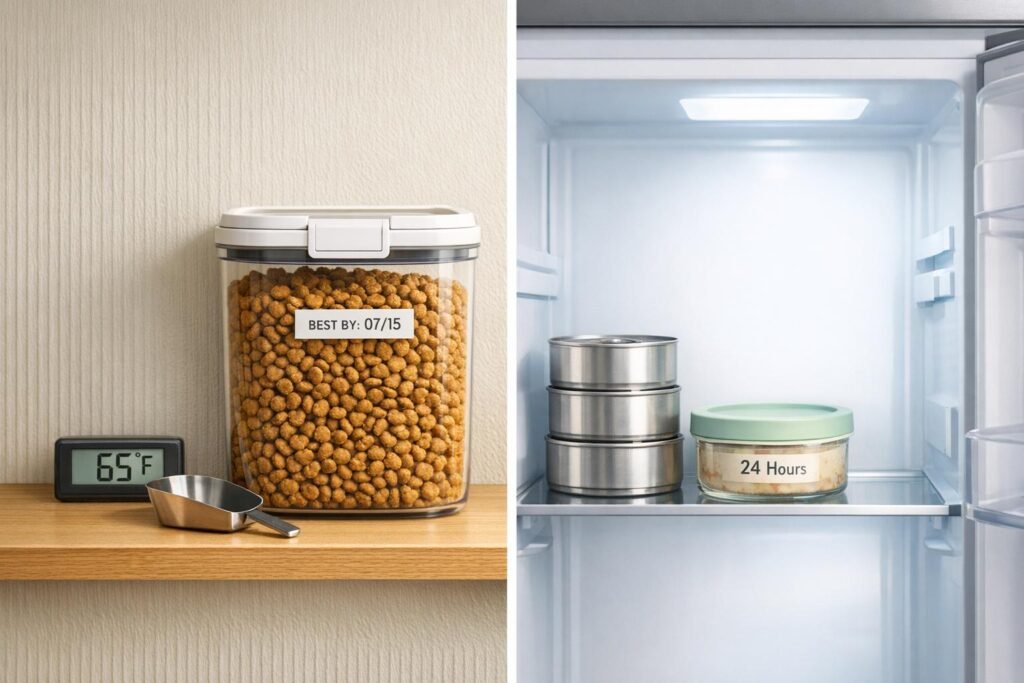
- Unopened: Store in the original bag, in a cool, dry place below 80°F.
- Opened: Use within 30 days and keep in an airtight container (with the bag inside).
- Avoid high temperatures and humidity to prevent mold, pests, and nutrient breakdown.
- Wet Food:
- Unopened: Keep in a cool spot, ideally below 80°F, and check the best-by date.
- Opened: Refrigerate immediately at 35–40°F, use within 3–5 days, and seal with a silicone lid or airtight container.
- Discard food left at room temperature for more than 2–4 hours.
Key tip: Always prioritize hygiene by cleaning bowls and storage containers regularly to avoid bacterial contamination.
How to Store Dry Pet Food
Storing Unopened Dry Pet Food
Keep unopened bags of dry pet food in their original packaging and store them in a cool, dark, and dry spot where the temperature stays below 80°F. According to the FDA, this helps prevent the food’s nutrients from breaking down due to heat exposure. Avoid storing pet food in garages or sheds, as these areas can easily reach temperatures over 100°F during summer, which can cause vitamins and minerals to degrade.
"Store all unopened bags of kibble in a dry place where the temperature is less than 80 degrees Fahrenheit." – FDA
It’s best to leave the food in its original bag rather than transferring it to another container. The Association of American Feed Control Officials explains that the original packaging acts as an extra barrier, sealing in fats and oils to prevent rancidity. Plus, keeping the bag intact ensures you have access to the UPC code, lot number, and best-by date, which are critical in case of a recall. To avoid pests and moisture, store the bag off the floor in a pantry or closet.
Once the bag is opened, additional steps are needed to maintain freshness.
Storing Opened Dry Pet Food
After opening, aim to use the food within 30 days. To keep it fresh, either tightly roll and clip the bag or transfer it – bag and all – into an airtight, BPA-free container. Using materials like stainless steel, glass, or BPA-free plastic for the container is ideal, as it helps maintain the fat barrier provided by the original packaging. This approach also ensures you retain the product details, like the lot number and best-by date, which can be crucial if a recall occurs.
sbb-itb-e212914
Mistakes to avoid when storing your dog food
How to Store Wet Pet Food
Wet pet food needs extra care when it comes to storage because its higher moisture content makes it more prone to spoilage. Proper handling ensures that your pet gets the nutrients they need, but the methods for storing wet food differ quite a bit from those for dry food.
Storing Unopened Wet Pet Food
Unopened cans or pouches of wet food can last up to two years if kept in a cool, dry spot between 50°F and 100°F. Ideally, aim for temperatures below 80°F to help preserve the food’s nutrients.
Checking the best-by date is crucial before storing or serving any wet food. Dr. Hannah Hart, DVM, explains, "Unopened canned and dry dog foods can ideally last until their expiration or best-by date has arrived, but other factors can potentially shorten this timeframe". After the best-by date, the food may lose some of its nutritional value as vitamins and minerals degrade.
Storing Opened Wet Pet Food
Once opened, wet pet food must be refrigerated immediately at 35°F–40°F to prevent bacteria from growing. Use a tight-fitting silicone lid to seal the can, or transfer the food to an airtight glass, metal, or plastic container.
Opened wet food should be used within 3–4 days, though some brands may allow up to 5–7 days if sealed properly. If you can’t use it within that time, you can freeze the leftovers. Portion the food into ice cube trays or freezer bags, and freeze it for up to 3–6 months. When you’re ready to use it, thaw it in the refrigerator for 24–48 hours before serving.
When serving wet food, make sure it doesn’t sit in your pet’s bowl for more than 2 to 4 hours at room temperature. Hill’s Pet advises, "Your pet’s bowl should be emptied of moist or canned food not eaten by your cat or dog within 4 hours if the ambient temperature is above 50°F". Afterward, wash the bowl thoroughly before adding fresh food to avoid bacterial contamination.
These steps show how much more care wet food requires compared to dry food. Up next, we’ll look at how dry food storage differs and why these distinctions matter.
Dry vs. Wet Pet Food Storage Comparison
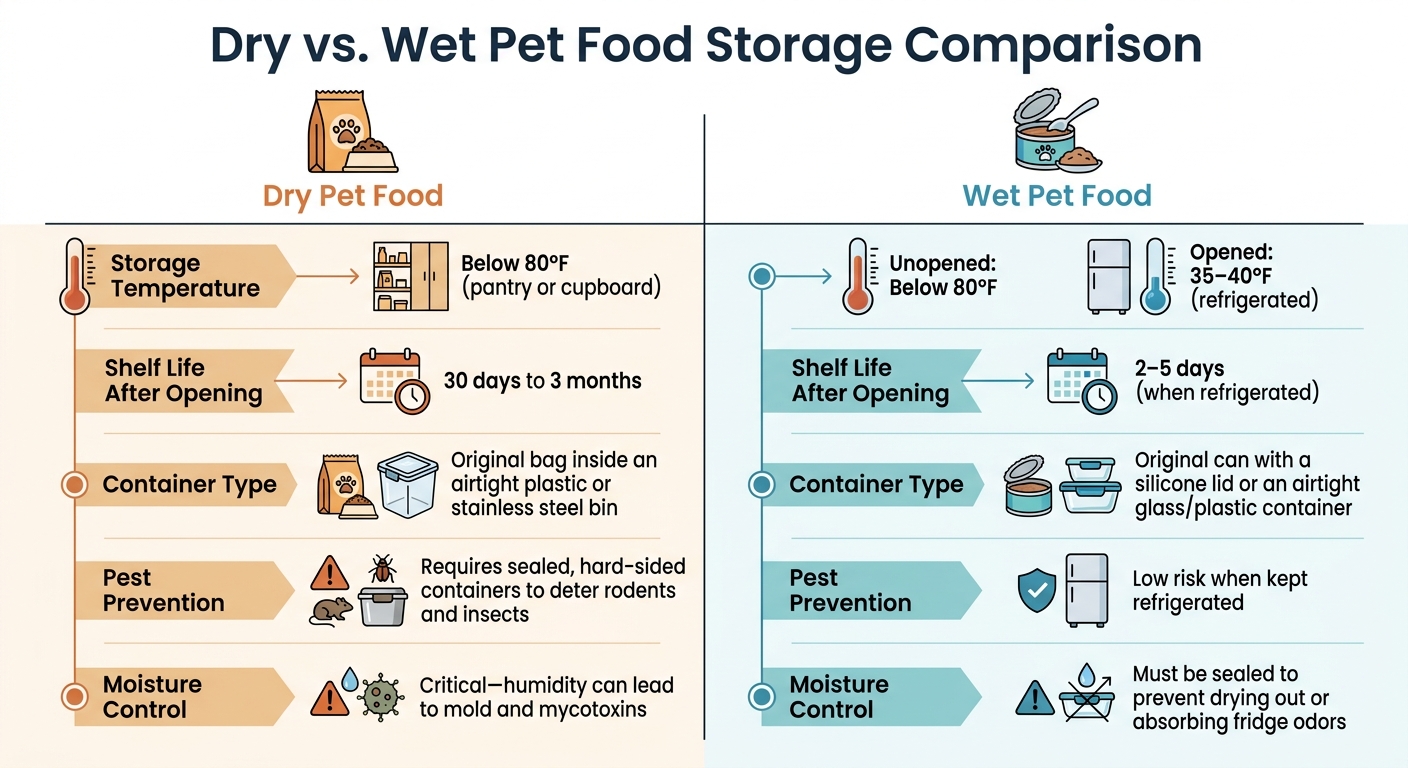
Dry vs Wet Pet Food Storage Guide: Temperature, Shelf Life, and Container Requirements
Let’s dive into how the storage needs for dry and wet pet food stack up against each other. Dry food is generally easier to store – it can last anywhere from 30 days to 3 months after opening, as long as it’s kept in an airtight container at room temperature (below 80°F). Wet food, on the other hand, needs refrigeration immediately after opening and should be used within 2–5 days.
The biggest difference? Temperature. Dry food handles room temperature storage well, while opened wet food absolutely requires refrigeration at 35°F–40°F to keep bacteria from growing quickly.
For dry food, airtight containers are key to keeping pests like rodents and insects at bay. Wet food, while less prone to pests when refrigerated, still benefits from being sealed – using a silicone lid is ideal to keep it from drying out or soaking up unwanted fridge smells.
As Wendy Rose Gould points out: "Dry dog food is extruded and then sprayed with oils that break down and go rancid when exposed to air, so it needs to be kept airtight". Wet food presents a different challenge – once the sterile seal is broken, bacteria can grow rapidly unless it’s kept cold. The table below lays out these differences clearly.
Storage Comparison Table
| Feature | Dry Pet Food | Wet Pet Food |
|---|---|---|
| Storage Temperature | Below 80°F (pantry or cupboard) | Unopened: Below 80°F; Opened: 35–40°F (refrigerated) |
| Shelf Life After Opening | 30 days to 3 months | 2–5 days (when refrigerated) |
| Container Type | Original bag inside an airtight plastic or stainless steel bin | Original can with a silicone lid or an airtight glass/plastic container |
| Pest Prevention | Requires sealed, hard-sided containers to deter rodents and insects | Low risk when kept refrigerated |
| Moisture Control | Critical – humidity can lead to mold and mycotoxins | Must be sealed to prevent drying out or absorbing fridge odors |
Storage Mistakes to Avoid
Proper storage is essential for keeping pet food safe and nutritious, but certain missteps can undo all your efforts. These common mistakes can lead to contamination and spoilage, compromising the quality of your pet’s meals.
One frequent error is topping off a container by adding fresh kibble on top of older food. This might seem harmless, but it can actually contaminate the new batch. As Chewy explains, "Leftover food residue can accumulate oils and bacteria, leading to potential contamination and spoilage". The fresh food absorbs these residues as soon as it comes into contact with the old kibble.
Another mistake is pouring kibble directly into a plastic bin after discarding the original bag. While this might make storage look tidier, it removes important details like the "best by" date, lot number, and UPC code – information you might need in case of a recall. Instead, keep the kibble in its original bag and place the bag inside an airtight container. The bag serves as an additional barrier against fats and oils, which most plastic bins can’t fully protect against.
Where you store the food is just as important. Locations like garages, sheds, or outdoor areas expose pet food to extreme temperatures and humidity. Hill’s Pet warns that "Storage at temperatures of 120°F (48°C) for more than 48 hours can accelerate the normal degradation or destruction of the vitamins". Garages, in particular, often exceed safe temperatures, speeding up the deterioration of food quality.
For wet food, there are additional precautions. Never leave opened cans or pouches at room temperature for more than two hours. If the food has been sitting in a bowl at temperatures above 50°F, discard it after four hours. Properly sealing opened cans is also critical – plastic lids or silicone covers are far more effective at blocking oxygen and odors than zip-to-close bags.
Hygiene is another area that can’t be overlooked. Dirty food bowls and storage containers are breeding grounds for bacteria. Always wash them with hot, soapy water between refills and let them dry completely. Dr. Hannah Hart, DVM, emphasizes that "Scuffs and cracks can harbor bacteria that are difficult to remove even with regular cleaning". If your plastic storage bin is scratched or cracked, replace it to eliminate these hidden bacteria traps. Avoiding these storage pitfalls helps ensure your pet’s food stays safe and nutritious, complementing the best practices discussed earlier.
Conclusion
Storing pet food correctly is key to keeping your pet healthy. The basics are straightforward: dry food should be kept in an airtight container, stored in a cool, dark place below 80°F, and wet food needs to be refrigerated between 35–40°F once opened. These steps help prevent spoilage, bacterial growth, and the loss of essential nutrients.
Timelines are just as important as storage methods. For reference: opened dry food stays fresh for about 30 days, while opened wet food should be used within 3 to 5 days to avoid bacterial contamination. As Dr. Hannah Hart explains, "Knowing how to properly store your dog’s food is very important. It helps the food last as long as possible without growing stale or risking foodborne illness in your pup".
Everyday habits can make a big difference in maintaining food quality. Simple practices – like leaving kibble in its original bag, cleaning storage containers between refills, and checking for unusual smells or mold – go a long way in keeping your pet’s food safe and nutritious.
FAQs
How can I tell if my pet food has gone bad?
You can spot spoiled pet food by looking for a few key signs. A foul or rancid smell, an unusual texture or appearance, or visible mold are all red flags. If the food tastes off (for those brave enough to taste-test), that’s another indicator. Interestingly, pets – especially dogs – might sense something is wrong before you do. If your pet suddenly refuses to eat food they usually love, it’s worth checking for spoilage.
Is it safe to freeze leftover wet pet food?
Freezing leftover wet pet food isn’t the best idea. It can change the food’s taste, texture, and even reduce its nutritional value. Instead, keep it fresh by storing it in an airtight container in the refrigerator and using it within a few days.
What’s the best way to store kibble if I don’t have an airtight bin?
If you don’t have an airtight container, it’s best to keep the kibble in its original bag. Store it in a cool, dry, and dark spot, away from direct sunlight and heat. While an airtight container is the best option for maintaining freshness, the original bag will do the job as long as it’s tightly sealed. For optimal quality, aim to use the food within 30 days of opening.