
Diabetes in rabbits is rare but can be serious if left untreated. Rabbits often hide signs of illness, so early detection is key. Watch for these signs:
- Increased thirst and urination: Drinking more water and filling the litter box faster.
- Unexplained weight loss: Losing weight despite a normal or increased appetite.
- Lethargy: Reduced activity or energy levels.
- Coat changes: Fur appearing dull or messy.
These symptoms can overlap with other issues like kidney disease or dental problems, so a proper veterinary diagnosis is essential. Blood sugar tests, urinalysis, and medical history help confirm diabetes while ruling out other conditions. If your rabbit shows persistent symptoms for more than a few days, consult a rabbit-savvy vet immediately.
Key takeaway: Early monitoring and veterinary care can make a significant difference in managing your rabbit’s health.
Symptoms of Diabetes in Rabbits
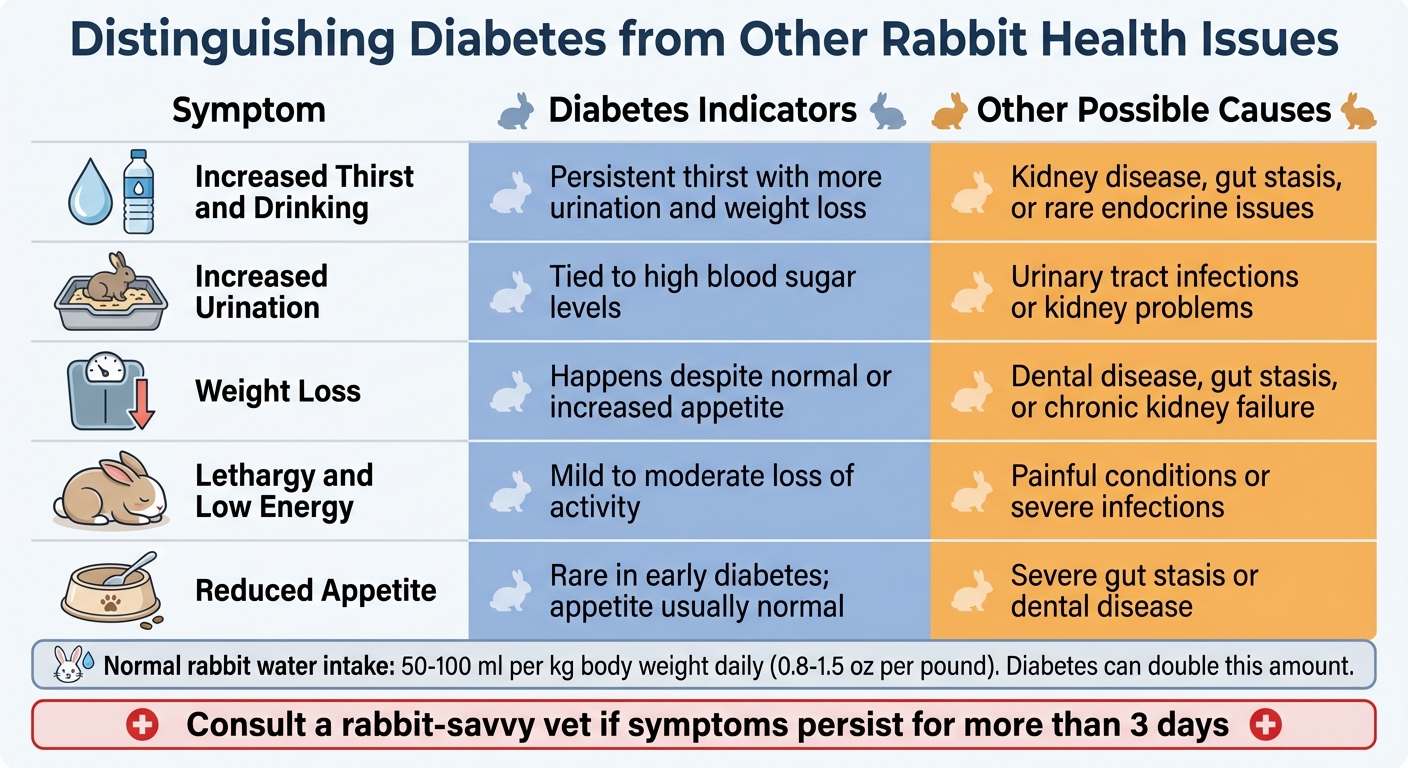
Diabetes vs Other Rabbit Health Conditions Symptom Comparison Chart
Recognizing diabetes in rabbits can be tricky because these pets are experts at hiding signs of illness. Even small changes in their daily habits might hint at something serious. Key symptoms to watch for include shifts in water consumption, urination patterns, and unexplained weight loss, even when your rabbit maintains a normal appetite. Let’s break down the main signs and how they differ from other health problems.
One of the earliest and most noticeable signs is increased thirst and urination. You might find your rabbit spending more time at the water bottle or bowl, and you may need to refill it more often. Typically, rabbits drink about 50–100 ml per kilogram of body weight daily (roughly 0.8–1.5 ounces per pound). Diabetes can double this amount. You might also notice the litter box filling up faster or needing to change bedding more frequently due to excess urine.
Another telltale sign is weight loss despite a normal or even increased appetite. Your rabbit may continue eating its usual hay and pellets but still lose weight over time.
Other symptoms include low energy or lethargy, where your rabbit may seem less active, hide more, or adopt a slouched posture instead of its usual alert stance. You might also notice a decline in coat condition, with fur appearing dull or messy. Keeping a daily log of these changes over a week or two can help you spot patterns and provide useful information for your veterinarian.
Common Signs to Monitor
Some key symptoms to keep an eye on include increased thirst (polydipsia), frequent urination (polyuria), unexplained weight loss, reduced activity, and subtle signs of weakness when handling your rabbit. Pay attention to whether your rabbit still performs playful behaviors like binkies (those joyful jumps and twists) or seems more subdued.
How Diabetes Symptoms Differ from Other Health Issues
Diabetes symptoms can overlap with other common rabbit health problems, so it’s important to distinguish between them.
For example, gut stasis – a common and serious condition in rabbits – has very different symptoms. Rabbits with gut stasis often stop eating entirely, produce little to no droppings, sit hunched in pain, and may grind their teeth. Unlike diabetes, gut stasis does not cause increased drinking or urination but instead leads to a complete loss of appetite.
Similarly, dental disease, another frequent issue in rabbits, can cause weight loss and lethargy. However, dental problems are usually accompanied by drooling (often called "slobbers"), selective eating (like avoiding hay but eating pellets), and sometimes swelling around the face due to tooth root abscesses. In contrast, a diabetic rabbit typically maintains its appetite, and weight loss occurs despite eating normally.
Here’s a quick comparison of symptoms to help differentiate diabetes from other conditions:
| Symptom | Diabetes Indicators | Other Possible Causes |
|---|---|---|
| Increased thirst and drinking | Persistent thirst with more urination and weight loss | Kidney disease, gut stasis, or rare endocrine issues |
| Increased urination | Tied to high blood sugar levels | Urinary tract infections or kidney problems |
| Weight loss | Happens despite normal or increased appetite | Dental disease, gut stasis, or chronic kidney failure |
| Lethargy and low energy | Mild to moderate loss of activity | Painful conditions or severe infections |
| Reduced appetite | Rare in early diabetes; appetite usually normal | Severe gut stasis or dental disease |
If your rabbit is drinking and urinating more while losing weight but still eating normally, diabetes might be the issue. However, if your rabbit stops eating, appears hunched in pain, or starts drooling, these are more likely signs of other health conditions. Because diabetes symptoms can be subtle and overlap with other issues, it’s essential to consult your veterinarian promptly if these signs persist for more than three days. Rabbits can deteriorate quickly once they show visible signs of illness, so early intervention is crucial.
When to Consider Diabetes as a Possibility
When should diabetes be on your radar? It’s worth considering if your rabbit displays a combination of warning signs that last more than a few days. Key symptoms include increased drinking and urination, unexplained weight loss despite normal eating habits, and reduced energy levels – all without an obvious cause like a recent diet change. These concerns are particularly pressing for older or overweight rabbits, as they tend to have higher insulin resistance.
If your rabbit’s blood sugar consistently measures above 20 mmol/L (about 360 mg/dL) under calm conditions and they’re showing persistent symptoms, diabetes becomes a strong possibility. Keep in mind, stress from vet visits or handling can temporarily elevate glucose levels to around 15 mmol/L, so it’s crucial to measure blood sugar in a relaxed setting for accurate results.
Before jumping to conclusions, other common health issues should be ruled out. Conditions like dental disease, kidney problems, or gastrointestinal disturbances can also lead to increased thirst, frequent urination, and lethargy. If these symptoms appear after a stressful event and quickly resolve, diabetes is unlikely. However, if the signs persist for more than a week despite normal care and no recent stressors, it’s time to consult a veterinarian.
Seek immediate veterinary attention if your rabbit becomes unusually quiet, stops eating for an extended period, shows signs of severe pain, or develops weakness. These could signal life-threatening conditions such as intestinal obstruction or liver disease, which may also cause dangerously high blood sugar levels.
Keeping a close eye on your rabbit’s daily habits can be incredibly helpful. Track their water intake, urine output, body weight, and activity levels. If you’re working with your veterinarian to monitor blood glucose at home using a pet glucometer, consistently high readings in a calm rabbit combined with classic symptoms may warrant further testing for diabetes. Keep in mind, though, that true diabetes is extremely rare in rabbits. A professional diagnosis is essential, as relying on information meant for dogs or cats can lead to misinterpretation. Recognizing these signs can help you determine when it’s time to seek expert evaluation.
sbb-itb-e212914
How Veterinarians Diagnose Diabetes in Rabbits
Medical History and Physical Exam
Diagnosing diabetes in rabbits starts with gathering a detailed medical history. Your vet will ask about when the symptoms began, how long they’ve lasted, and any observations you’ve noticed at home. They’ll also inquire about your rabbit’s diet – what kind of hay, pellets, or treats they eat – and if there have been any recent changes in their environment, such as new pets, housing adjustments, stressful events, or medications like steroids that could influence their health. This information helps your vet differentiate between chronic conditions and temporary issues, such as dehydration, pain, or infections, which can sometimes cause short-term blood sugar spikes without indicating diabetes.
Next, during the physical exam, your vet will evaluate your rabbit’s overall condition. They’ll check body weight, hydration levels, coat quality, and abdominal health, feeling for any signs of gas, masses, or gut stasis. Dental health is also examined to rule out tooth problems that could explain weight loss. Since other illnesses like kidney disease or encephalitozoonosis are more common in rabbits and can mimic diabetes symptoms, the vet will look for signs of these conditions as well.
After completing the physical exam, blood tests provide further insight into your rabbit’s condition.
Blood Sugar Testing
Blood glucose testing is a key step in diagnosing diabetes. A sample is taken from veins like the marginal ear, cephalic, or jugular vein. For healthy rabbits, normal blood sugar levels range between 75 and 155 mg/dL (4.2 to 8.6 mmol/L). However, stress from handling or pain can temporarily raise blood sugar levels significantly – up to 270 mg/dL (15 mmol/L) or even 360 mg/dL (20 mmol/L) – making it tricky to identify true diabetes based on a single reading. To reduce stress, vets use gentle restraint and may allow your rabbit time to relax before taking a sample. A consistent pattern of unexplained high blood sugar across multiple tests, while ruling out other conditions like gut stasis or liver disease, is necessary to confirm diabetes.
Urine Tests and Follow-Up Testing
When blood glucose levels don’t provide a clear answer, urine tests can offer additional evidence. Urinalysis checks for glucosuria, which occurs when blood sugar levels remain above 180 to 200 mg/dL for an extended period, causing glucose to spill into the urine. It also screens for ketones – an indicator of a potential emergency – as well as proteins and urinary tract infections. In healthy rabbits, the kidneys reabsorb all glucose, so detecting glucose in the urine suggests prolonged high blood sugar rather than a temporary spike due to stress.
If the results remain unclear, your vet may recommend a fructosamine test. This test measures average blood sugar levels over the past one to two weeks, offering a broader picture unaffected by the stress of a vet visit. When fructosamine levels are elevated alongside glucosuria and symptoms that align with diabetes – and no other explanation fits – diabetes becomes a more likely diagnosis. To rule out other conditions, your vet might also suggest a complete blood count, a full biochemistry panel, or imaging tests like X-rays or ultrasounds to assess the health of the liver, kidneys, pancreas, and intestines.
Conclusion
Rabbits are experts at hiding illness, so spotting subtle changes early is crucial. Keep an eye out for small but meaningful signs like more urine spots, drinking extra water, gradual weight loss, or a quieter demeanor. Acting quickly on these changes can mean the difference between catching an issue early or dealing with a serious, even life-threatening, emergency. If you notice sudden changes in drinking, urination, appetite, weight, or energy, it’s time to contact a rabbit-savvy veterinarian immediately. This approach connects careful monitoring with timely professional care.
Symptoms like excessive thirst, frequent urination, or unexplained weight loss can also indicate serious issues such as kidney disease, gut stasis, or dental problems – all of which require urgent veterinary attention. Knowing what to expect during a vet visit – like providing a detailed medical history, undergoing a thorough physical exam, and performing blood glucose and urine tests – can help you feel more prepared to follow through with diagnostics and treatment.
FAQs
How can I tell if my rabbit has diabetes or another health issue?
It can be tough to tell if a rabbit has diabetes since the symptoms can overlap with other health problems. However, there are some specific signs to look out for. Diabetes in rabbits often shows up as increased thirst, frequent urination, unexplained weight loss, and lethargy. On the other hand, conditions like dental issues, gastrointestinal stasis, or respiratory infections may present differently, with symptoms such as trouble eating, bloating, or labored breathing.
To determine if your rabbit has diabetes, a veterinarian will need to run diagnostic tests like blood and urine analysis. These tests are essential for pinpointing the issue and making sure your rabbit gets the proper care. If you spot any of these warning signs, don’t wait – reach out to your vet as soon as possible to address the problem early.
What should I do if I think my rabbit might have diabetes?
If you think your rabbit might have diabetes, don’t wait – book a vet appointment right away. A veterinarian can run tests, like measuring blood glucose levels, to determine if your rabbit has the condition.
Watch for symptoms such as drinking more water than usual, urinating frequently, losing weight without explanation, or acting unusually tired. Be sure to share these details with your vet. Catching the issue early and managing it properly can make a big difference in keeping your rabbit happy and healthy.
Why is diabetes uncommon in rabbits compared to other pets?
Rabbits rarely develop diabetes, thanks to their distinct metabolism, which sets them apart from pets like dogs and cats. Their bodies are naturally less prone to insulin resistance, largely due to their fiber-rich, low-sugar diet.
A rabbit’s natural eating habits and digestive system work together to keep blood sugar levels steady, significantly lowering the chances of diabetes. That said, maintaining your rabbit’s health still requires a well-balanced diet and routine veterinary visits.