Finding the right litter box for your small cat is about more than just convenience – it’s about their comfort and health. Small cats and kittens need a box that’s easy to access, spacious enough for natural behaviors, and made of durable materials to ensure cleanliness. Here’s what you need to know:
- Size Matters: The box should be at least 1.5x the length of your cat (nose to tail base) and wide enough for them to turn comfortably.
- Entry Height: For kittens and small cats, the entry should be 2-4 inches high to avoid strain.
- Material: Plastic boxes are affordable but can trap odors over time. Stainless steel resists scratches and odors but costs more.
- Design: Open boxes are best for visibility and airflow, while covered or top-entry designs may cause discomfort for some cats.
- Placement: Quiet, low-traffic areas far from food and water are ideal.
Regular cleaning is crucial – scoop daily and deep-clean monthly to keep the box inviting and hygienic. A well-chosen litter box ensures your cat feels safe and reduces accidents.
Size and Entry Height Requirements
Measuring Your Cat for Proper Fit
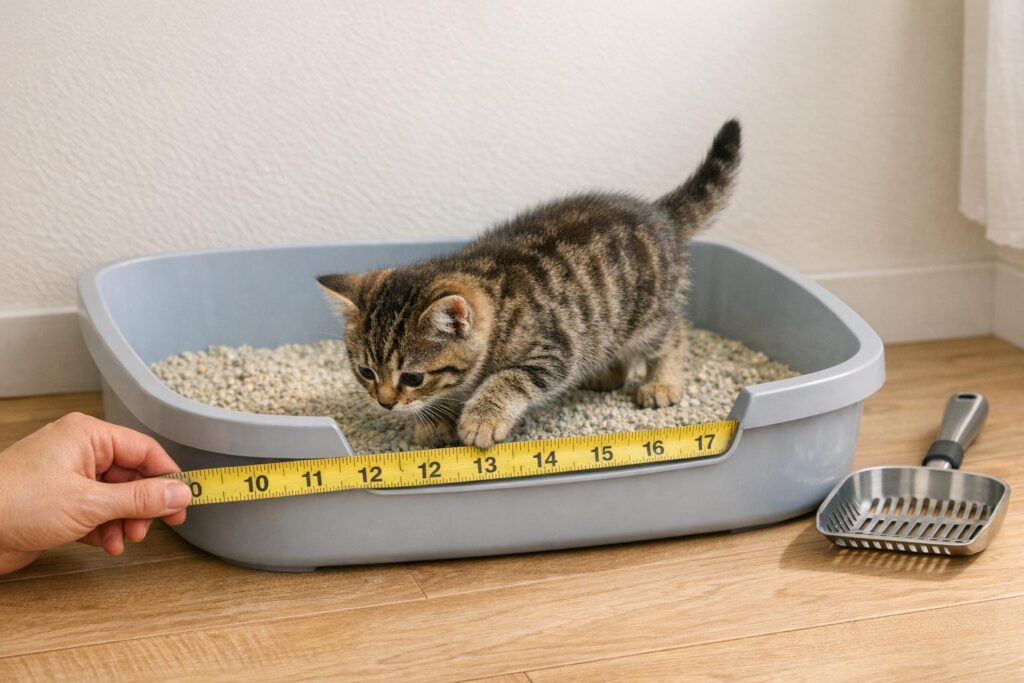
To find the right litter box size, start by measuring your cat from the tip of its nose to the base of its tail (don’t include the tail). Use a soft measuring tape for this, and if your cat is squirmy, get someone to help and offer treats as a distraction. Multiply this length by 1.5 to determine the minimum interior length. For example, if your cat is 12 inches long, the box should be at least 18 inches in length.
Next, measure your cat’s widest point, usually across the shoulders. The litter box should be at least 1.5 times that width, with a minimum width of 13–15 inches. This ensures your cat has enough room to turn around comfortably. As Dr. Laria Herod explains:
A larger litter box is almost always going to be a cat’s preference. They want ample space to dig, turn around, and bury their excrement.
When shopping, pay attention to the interior bottom measurements. Many boxes have sloped sides or built-in features that reduce the actual usable space.
Finding the Right Entry Height
Once you’ve determined the ideal size, consider the entry height to make sure your cat can get in and out easily. For small cats and kittens, the entry height should be between 2 and 4 inches. Anything higher could be a challenge. Cats with joint issues or mobility problems need an entry height of 2 inches or less. Experts emphasize that senior cats or those with limited mobility should have an entry no higher than 2 inches to avoid unnecessary strain.
If you can’t find a commercial option that meets these needs, a plastic under-bed storage container can work well. Alternatively, you can modify a standard plastic bin by cutting a 2-inch opening in the side. Be sure to smooth the edges with duct tape to prevent sharp spots. The key is to create a box that your cat can access easily and without hesitation.
sbb-itb-e212914
Materials and Durability
Plastic vs. Stainless Steel
The material of a litter box plays a big role in how durable it is and how well it controls odors. Plastic litter boxes are the go-to option for many pet owners because they’re affordable – some models start at just $5. However, plastic has its downsides. Its porous nature means sharp claws can leave tiny scratches, which trap bacteria and urine odors, even if you clean the box regularly.
On the other hand, stainless steel litter boxes come with a higher price tag, typically ranging from $20 to $50, while specialized designs for smaller cats can cost between $69 and $115. But here’s the trade-off: stainless steel is non-porous, making it resistant to scratches and odor absorption. As one customer put it:
Plastic harbors bacteria and smell. Stainless Steel is better for your cat’s health.
Stainless steel boxes are built to last for years, unlike plastic ones, which often need replacing every 6 to 12 months. If paired with pine pellet litter, stainless steel can cut down odors by as much as 95.6%. That said, these boxes are heavier, less portable, and can feel cold or even amplify the sound of litter. To help your cat transition to a new stainless steel box, place it near their current one and use the same type of litter. Picking a durable material is just one piece of the puzzle for creating a stress-free litter box setup.
Avoiding Brittle or Fragile Materials
Durability isn’t just about odor control – it’s also about standing up to sharp claws and everyday use. Thin plastic bins, for example, can become brittle over time. If you modify the box to lower its entry or if your cat scratches the same spot repeatedly, the material might crack or even shatter. This can leave sharp edges that could harm your pet.
LeeAnna Buis, a Certified Feline Training and Behavior Specialist, offers this advice:
The scratches will hold bacteria and stink. If you’ve got ’em, it’s time for a new box.
Make it a habit to inspect your litter box for signs of wear, like deep scratches or dried litter that won’t come off no matter how hard you scrub. If you spot these issues, it’s time for a replacement. And if you’re cutting or modifying the box, use heavy-duty duct tape to cover any sharp edges and prevent further cracking.
The Ultimate DIY Litter Box: Cat-Approved, Customizable, and Affordable!
Design Types
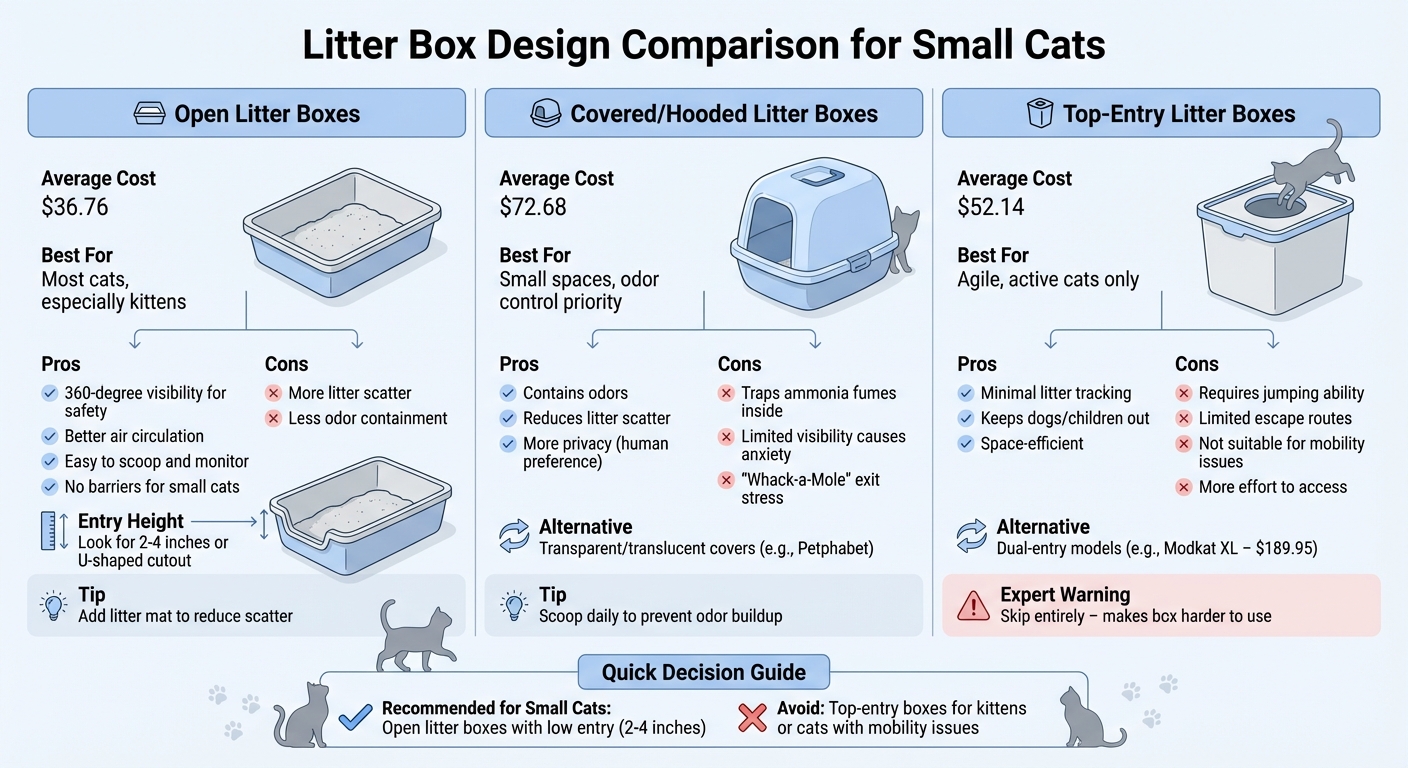
Litter Box Design Types Comparison: Open vs Covered vs Top-Entry for Small Cats
Open Litter Boxes
Open litter boxes are a great choice for small cats and kittens. Their simple design, without lids or flaps, eliminates barriers that could intimidate or block access. For tiny kittens, standard rims of 5–7 inches can be too tall, so look for "Junior" pans or models with a U-shaped cutout to avoid any discomfort or belly dragging.
These boxes also cater to a cat’s natural instincts for safety. Since cats are prey animals, they often feel vulnerable while using the litter box. Open designs provide clear, 360-degree sightlines, allowing them to scan their surroundings and feel more secure. As Mallory Crusta from Cats.com notes:
Open litter boxes allow cats to scan their surroundings, helping them feel safe and secure during a vulnerable time.
Another benefit is better air circulation, which helps prevent the buildup of ammonia fumes – especially important for kittens’ delicate respiratory systems. Plus, open designs make scooping more convenient and let you monitor your cat’s health by observing their waste. If litter scatter becomes a problem, consider a high-sided model or add a litter mat near the entry. On average, open litter pans cost about $36.76.
While open boxes prioritize accessibility and safety, other designs focus on odor control and privacy.
Covered or Hooded Litter Boxes
For those looking to manage odors and reduce litter scatter, hooded boxes can be a practical solution. The hood acts as a barrier, containing unpleasant smells and keeping litter messes in check.
However, this design isn’t always a hit with cats. While the enclosed space might seem like a privacy perk for humans, many cats prefer open sightlines to keep an eye out for potential threats. As LeeAnna Buis, CFTBS, FFCP, from Preventive Vet explains:
Cats want open sightlines so they can see if anything is coming. Especially if you have a nervous cat… coming out of a covered litter box is like a game of Whack-a-Mole.
Another downside is that hoods can trap odors inside the box, creating an unpleasant environment for a cat’s sensitive nose. If you go with a hooded design, look for options with transparent or translucent covers, like the Petphabet Covered Litter Box, which balances visibility with mess control. For small spaces, corner models like the Nature’s Miracle Hooded Corner Litter Box can save room, though they tend to cost more, averaging $72.68. To keep your cat comfortable, scoop daily and clean the box thoroughly to prevent odor buildup.
For a completely different approach, top-entry boxes offer another option.
Top-Entry Litter Boxes
Top-entry litter boxes bring a unique twist to the mix, offering benefits like reduced litter tracking and keeping waste out of reach of dogs or young children. These boxes work well for agile and active cats that can easily jump and navigate confined spaces. On average, they cost about $52.14.
That said, many experts caution against these designs. The enclosed structure limits a cat’s visibility and escape routes, which can make some cats uneasy. Joey Lusvardi, an IAABC Certified Cat Behavior Consultant, advises:
Skip the top entry litter boxes entirely. They require more work for your cat to get into and you want to make the litter box easier for your cat to use, not harder.
If you decide on a top-entry model, consider options with dual entry points, like the Modkat XL ($189.95), which includes both top and front access. Look for lids with ridges or grates to catch stray litter before it hits the floor. However, these boxes aren’t suitable for cats with mobility issues, as the extra effort to access them can be a challenge.
Placement and Maintenance
Choosing the Right Location
Picking the right spot for your cat’s litter box is just as important as selecting the right size and material. A well-placed box ensures your cat feels comfortable and safe, encouraging consistent use. Cats prefer quiet, low-traffic areas where they can see their surroundings – this gives them a sense of security during a vulnerable moment.
Good options include spare bathrooms, quiet corners, or laundry rooms far from noisy appliances. For kittens or small cats, accessibility is key. Avoid placing the box in areas that require climbing stairs or traveling long distances. If your home has multiple levels, placing a box on each floor makes life easier for your feline friend.
Keep the litter box far from food and water dishes. Cats instinctively avoid eliminating near where they eat, and placing these items too close can cause them to avoid the box altogether. Richard Parker, Lead Writer at Senior Cat Wellness, highlights this point:
The worst place for a cat’s litter box in a small apartment would be directly next to food preparation areas.
This separation is also important for health reasons. Toxoplasmosis, caused by T. gondii bacteria, can pose risks if litter is too close to eating areas. In smaller spaces, like studio apartments, consider litter box furniture or place the box in a ventilated bathroom corner. Opt for non-carpeted floors to make cleanup easier and reduce litter tracking.
Once you’ve found the perfect location, regular cleaning will keep the area inviting and safe for your cat.
Cleaning and Maintenance
Keeping the litter box clean is essential for your cat’s health and to encourage regular use. Scoop waste daily, especially in small spaces, to manage odors effectively. Dr. Justine Lee, DVM, underscores the importance of this habit:
Cats don’t want to step into a dirty litter box too often. If the litter box is dirty, they may choose to only urinate once a day instead of 2-3 times.
Deep cleaning is also necessary. Use mild soap and warm water to scrub the entire box monthly if you’re using clumping litter, or twice weekly for non-clumping litter. Avoid bleach or ammonia-based cleaners, as the ammonia in cat urine can react with bleach to produce toxic fumes. Replace plastic boxes every 6 to 12 months, as scratches can trap bacteria and odors over time.
Different litter box designs come with varying maintenance needs. Here’s a quick comparison:
| Design Type | Daily Maintenance | Deep Cleaning Effort | Best For |
|---|---|---|---|
| Standard Pan | Manual scooping 1–2 times daily | High; requires dumping and scrubbing | Most cats; budget-friendly |
| Sifting Pan | Quick waste removal via tray | Moderate; grates may be harder to clean | Owners who want less scooping |
| Automatic/Self-Cleaning | Minimal; machine handles scooping | Low frequency but involves disassembly | Busy owners; multi-cat households |
| Top-Entry Box | Manual scooping; contains litter | High; requires lid removal | Messy diggers; households with pets |
For small cats, monitoring the size of urine clumps can offer insights into their health. A normal clump should measure about 1 to 2 inches in diameter, roughly the size of a golf ball. As LeeAnna Buis explains:
If you aren’t hands-on with what’s coming out of your cat, you’re losing a huge opportunity to track their health and catch issues early.
Conclusion
Finding the right litter box means considering your cat’s instincts alongside practical features. Pay attention to size, material, design, and placement to create a comfortable and inviting space for your small cat.
Durability is key when it comes to materials. Stainless steel boxes hold up well over time, resisting scratches and odors, while plastic options may need frequent replacement to prevent unpleasant smells. For small cats, open-top boxes are often the best choice – they allow better airflow and clear visibility. As LeeAnna Buis, Certified Feline Training and Behavior Specialist, points out:
The litter box needs to fit those natural needs and instincts, or it seems like a less-than-ideal place to eliminate.
On the other hand, covered boxes can trap ammonia fumes and make anxious cats feel trapped, potentially leading to avoidance.
Where and how you maintain the litter box also matters. Place it in a quiet, low-traffic spot, away from food and water, and keep it clean by scooping daily. A well-chosen, properly maintained litter box not only supports your cat’s health but also helps prevent stress and unwanted behavioral issues.
FAQs
How many litter boxes does my small cat need?
Cats, even the smallest ones, deserve a litter box that’s both roomy and easy to reach. For kittens or petite breeds, go for a box with walls around 2–3 inches high – this makes getting in and out a breeze. If you’re a multi-cat household, the rule of thumb is simple: one litter box per cat, plus an extra. This helps prevent territorial disputes and ensures everyone has their own space.
What are the signs my kitten dislikes the litter box?
If your kitten is steering clear of the litter box, the type of litter might be the problem. Common signs include your furry friend choosing other places – like the sofa or carpet – to do their business. This could happen if the litter is dirty, heavily scented, or feels uncomfortable under their paws. Stress or even medical problems could also be factors. If you notice a sudden change in their habits, it’s a good idea to consult a veterinarian. Keep an eye on your kitten’s behavior to figure out the cause and tackle it quickly.
How do I switch to a new litter box without accidents?
To make the transition to a new litter box easier for your cat, take it step by step. Start by placing the new box right next to the old one, giving your cat the chance to check it out. Over the next few days, gradually phase out the old box by using it less and less.
Make sure the new box stays clean, as cats are more likely to use a fresh, tidy space. Also, avoid switching the type of litter suddenly – keeping things familiar can help reduce stress. Pay attention to your cat’s reactions, and if there are any accidents, clean them thoroughly to discourage repeat mishaps. Patience and observation are key during this process.