

When your pet is diagnosed with cancer, you face two main options: chemotherapy or palliative care. Chemotherapy aims to shrink tumors, slow cancer progression, and extend your pet’s life while maintaining their quality of life. Palliative care, on the other hand, focuses entirely on keeping your pet comfortable by managing pain and symptoms without targeting the cancer itself.
Here’s what you need to know:
- Chemotherapy:
- Helps reduce tumor size and can extend survival by months or even years.
- Side effects are usually mild, like fatigue or appetite loss, and most pets tolerate it well.
- Costs range from $2,000–$8,000, depending on the cancer type and treatment plan.
- Palliative Care:
- Prioritizes comfort, using pain relief, anti-nausea meds, and supportive care at home.
- Does not extend life but ensures your pet feels loved and cared for.
- Costs are lower, focusing on medications and occasional vet visits.
Quick Comparison:
| Factor | Chemotherapy | Palliative Care |
|---|---|---|
| Goal | Shrink tumors, extend survival | Manage pain, improve comfort |
| Survival Impact | Adds months to years | Does not aim to extend life |
| Side Effects | Mild (e.g., fatigue, nausea) | Minimal (e.g., mild stomach upset) |
| Cost | $2,000–$8,000+ | Lower, based on medications |
| Visit Frequency | Regular vet visits for treatments | Fewer visits, focus on at-home care |
Your decision depends on your pet’s health, the stage of cancer, financial considerations, and your priorities – whether it’s extending time together or ensuring comfort. Work with your vet to choose the best path for your pet’s unique situation.
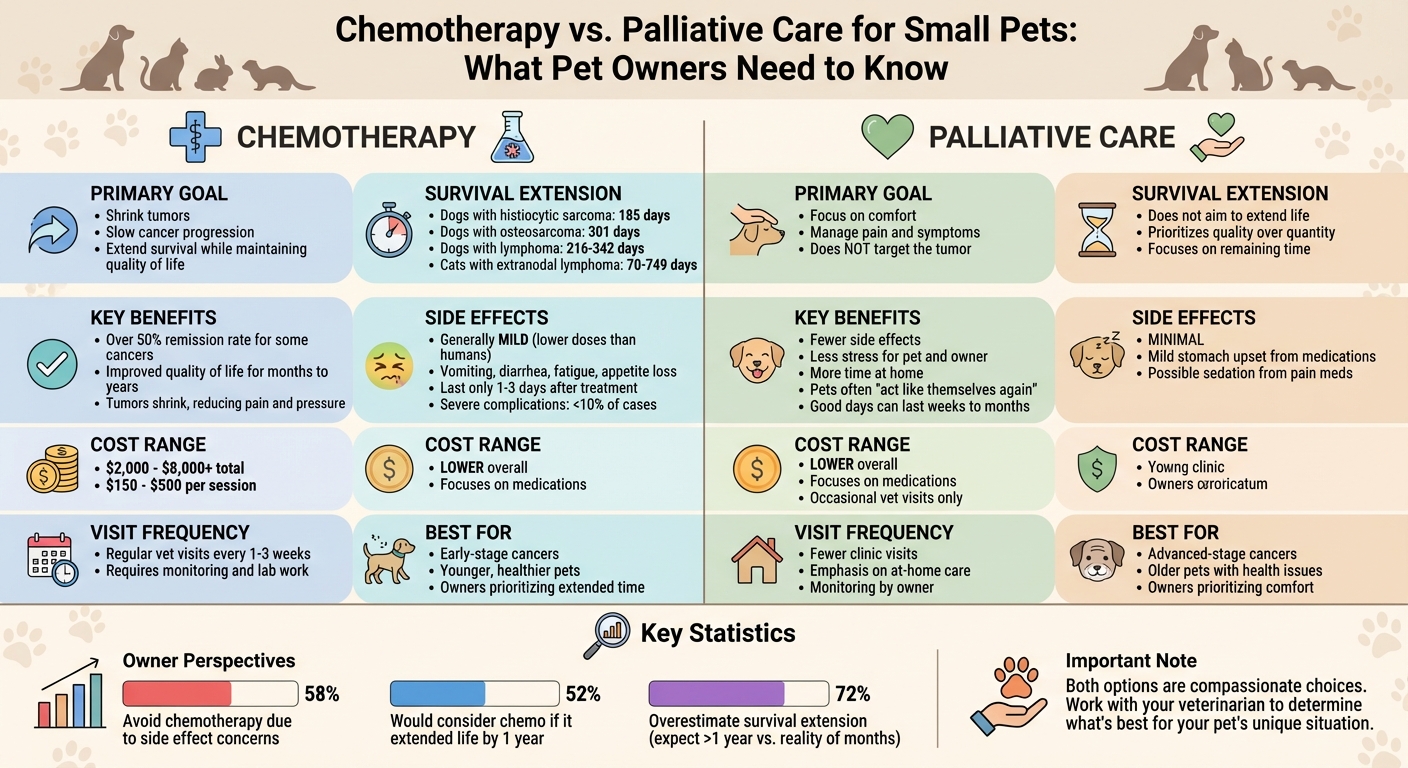
Chemotherapy vs Palliative Care for Small Pets: Complete Comparison Guide
Navigating a Pet’s Cancer Diagnosis with Dr. Renee Alsarraf
Chemotherapy for Small Pets
Chemotherapy involves using specific drugs designed to target and destroy rapidly dividing cancer cells. In veterinary care, these treatments are commonly applied to manage blood cancers like lymphoma and leukemia or cancers that have spread to other parts of the body. While dogs and cats are the primary small pets treated with chemotherapy, experienced veterinary oncologists may also treat ferrets, rabbits, and other small mammals.
Treatment schedules typically occur every one to three weeks. Each visit includes a quick exam, blood tests, and the administration of the chemotherapy – whether orally, intravenously, or directly into the tumor. Most pets can return home the same day after treatment. Pets generally handle chemotherapy well, with only mild and short-lived side effects for most.
Benefits of Chemotherapy
The main goal of chemotherapy in pets is to maintain their quality of life. Unlike human cancer treatments, veterinary protocols use lower doses and less aggressive schedules, prioritizing your pet’s comfort.
When chemotherapy works, the results can be noticeable. Tumors may shrink, easing pain and relieving pressure on organs. For instance, a dog with lymphoma might go from being lethargic and disinterested in food to showing more energy, a healthier appetite, and playful behavior as the treatment reduces its swollen lymph nodes. Similarly, a cat suffering from a nasal tumor might breathe and eat more easily as the tumor size decreases. These changes can make a big difference in your pet’s daily comfort and overall engagement.
Survival outcomes vary depending on the cancer type. For example, chemotherapy can extend a dog’s life by an average of 185 days for histiocytic sarcoma, 301 days for appendicular osteosarcoma, and 216 to 342 days for lymphoma. Cats with extranodal lymphoma may experience survival improvements ranging from 70 to 749 days. Many veterinary clinics report that pets undergoing chemotherapy often enjoy months – or even years – of happy, active life with minimal discomfort.
Risks and Side Effects
Side effects are usually mild and short-term. Common issues include loss of appetite, vomiting, diarrhea, mild weight loss, and fatigue, which often appear a few days after treatment and last only one to three days.
In some cases, chemotherapy can suppress bone marrow, leading to low white blood cell counts and a higher risk of infection. Regular bloodwork helps veterinarians monitor for this. If side effects become difficult to manage, adjustments can be made to the treatment plan. This might include lowering the dose, delaying a session, switching medications, or adding supportive treatments like anti-nausea drugs to keep your pet comfortable.
Serious complications are rare but can include severe gastrointestinal distress, significant bone marrow suppression requiring hospitalization, or organ issues affecting the heart, kidneys, or liver. Many pet owners worry about chemotherapy being harsh based on human experiences, but veterinary specialists often note that pets tolerate it much better, with fewer side effects compared to humans.
Cost of Chemotherapy
In the U.S., the cost of chemotherapy sessions ranges from $150 to $500 or more per session, with complete treatment protocols costing between $2,000 and $8,000 or higher.
Several factors influence these costs. The type of cancer and treatment complexity play a big role – multi-drug regimens, like those for lymphoma, tend to be more expensive than single-drug treatments. Treatment frequency also affects the overall expense. Additionally, the size of your pet matters, as larger dogs require higher doses, which increases costs. The type of facility also impacts pricing, with specialty oncology centers often charging more than general veterinary practices.
Next, we’ll explore how palliative care can help ensure your pet’s comfort throughout their cancer journey.
Palliative Care for Small Pets
Palliative care focuses on keeping your pet comfortable when curing an illness, like cancer, is no longer possible. Rather than trying to eliminate the disease, this approach aims to ease pain and other troubling symptoms, allowing your pet to enjoy the best quality of life for as long as possible. It differs from hospice care, which is typically reserved for the very end of life. Palliative care often begins earlier and may include gentle treatments that enhance comfort.
What Palliative Care Includes
Palliative care is designed to adapt to your pet’s changing needs. At its core is pain management, which may involve medications like NSAIDs, opioids, or gabapentin to address discomfort caused by cancer. Anti-inflammatory drugs or corticosteroids can also help reduce swelling and pain.
To support overall well-being, veterinarians might prescribe anti-nausea medications and appetite stimulants. These can help maintain your pet’s weight and encourage eating. Adjustments to diet – like offering soft or warmed food in small portions – can make mealtimes easier for pets dealing with nausea or mouth pain. In some cases, palliative radiation therapy is used to alleviate symptoms such as pain, bleeding, or limited mobility. This involves low-dose radiation treatments delivered weekly over several weeks, focusing on comfort rather than curing the tumor.
At-home care is equally important. Making food, water, and litter boxes easily accessible can help your pet navigate their environment more comfortably. A stable indoor setting, along with regular interaction and grooming, can boost their comfort. Monitoring daily behaviors – such as eating, drinking, sleeping, and playing – provides valuable insights for your veterinarian, allowing for timely adjustments to medications or care plans. Together, these efforts can help improve your pet’s day-to-day comfort.
Benefits of Palliative Care
Unlike aggressive treatments like chemotherapy, palliative care focuses on targeted symptom relief to maximize comfort. It can help improve your pet’s mobility, comfort, and ability to engage in normal activities, even as the disease progresses. Addressing symptoms like nausea or coughing often restores natural behaviors, such as eating, grooming, and sleeping. Many pet owners notice their pets "acting like themselves again" during this time.
Veterinarians often observe that pets on well-managed palliative plans enjoy "good days", showing interest in food, play, and social interactions – sometimes for weeks or even months. Since palliative care avoids frequent hospital visits and invasive treatments, it reduces stress for both pets and their families, allowing for more quality time together at home. Interestingly, research indicates that 58% of dog and cat owners opt against chemotherapy due to side effects like appetite loss, weight loss, and depression, preferring a comfort-focused approach like palliative care.
Limitations of Palliative Care
While palliative care can significantly improve quality of life, it does not aim to control or cure the underlying disease. This means the illness typically continues to progress. The focus on comfort over extending life often results in a shorter lifespan overall.
As the disease advances, the effectiveness of symptom management may decline, leading to issues like worsening pain, breathing difficulties, or organ failure that medications alone cannot fully address. Additionally, some palliative medications, such as NSAIDs or steroids, may cause side effects like stomach upset or kidney strain, particularly in older or more fragile pets.
This approach also requires pet owners to be prepared for difficult decisions, including euthanasia, when a pet’s quality of life deteriorates significantly. By working closely with your veterinarian, you can ensure that your pet’s care plan aligns with your priorities and adapts to their changing needs.
sbb-itb-e212914
Chemotherapy vs. Palliative Care: Side-by-Side Comparison
When deciding between chemotherapy and palliative care for small pets, it’s important to understand how these approaches differ in their goals, daily impact, and costs. The table below provides a clear comparison.
Comparison Table
Here’s a breakdown of the key differences between chemotherapy and palliative care:
| Factor | Chemotherapy | Palliative Care |
|---|---|---|
| Primary Goal | Reduce tumor size, slow cancer progression, and extend survival while maintaining quality of life. | Focus on comfort and symptom management without directly targeting the tumor. |
| Typical Survival Extension | Dogs: 185 days for histiocytic sarcoma, 301 days for osteosarcoma, 216–342 days for lymphoma; Cats: 70–749 days for extranodal lymphoma. | Does not aim to extend survival but prioritizes comfort during the remaining time. |
| Advantages | Can lead to remission in some cases (e.g., over 50% of cats with high-grade lymphoma achieve full remission) and provide improved quality of life for months or even years. | Causes fewer side effects, less stress, and allows pets to enjoy a more stable routine at home. |
| Cons/Risks | Potential side effects include vomiting, diarrhea, lethargy, appetite loss, and reduced white blood cell counts; severe toxicity requiring hospitalization occurs in fewer than 10% of cases. | Does not halt cancer progression, and symptoms like pain or breathing issues may worsen over time. |
| Side Effect Severity | Generally mild, as pets receive lower drug doses compared to humans. | Minimal side effects, though some medications may cause mild upset stomach or sedation. |
| Quality of Life Impact | Many pets maintain good quality of life during treatment, with protocols adjusted to their needs. | Prioritizes comfort and pain relief, avoiding unnecessary suffering. |
| Cost Pattern | Higher overall due to frequent oncology visits, lab work, imaging, and specialized medications. | Lower overall, focusing on pain relief, anti-nausea medications, and occasional rechecks. |
| Visit Frequency | Requires multiple vet visits over weeks or months for treatment and monitoring. | Involves fewer visits, with a focus on at-home care and medication. |
Owner Expectations vs. Reality
Pet owners often have varying expectations about treatment outcomes. A survey showed that 58% of owners avoid chemotherapy due to concerns about side effects, while 52% would consider it if it extended their pet’s life by a year. Interestingly, 72% of owners believed chemotherapy would extend survival by more than a year, even though most cancers result in survival extensions of just several months to under one year.
This highlights the importance of having honest conversations with your veterinarian to understand what each option truly offers and to set realistic expectations before making a decision.
How to Choose Between Chemotherapy and Palliative Care
Factors to Consider
Deciding between chemotherapy and palliative care for your pet is a deeply personal choice, influenced by several key factors. One of the most important considerations is the stage of your pet’s cancer. Early-stage cancers are often more responsive to chemotherapy, while advanced stages may lean toward prioritizing comfort through palliative care.
Your pet’s overall health and age also play a big role. For an older pet with additional health problems, frequent vet visits and potential side effects from chemotherapy could be overwhelming. On the other hand, a younger, healthier pet might handle the treatment better and enjoy an improved quality of life for a longer time. Financial considerations are another aspect to weigh – chemotherapy typically costs between $3,000 and $7,000 or more, whereas palliative care is generally less expensive.
Lastly, think about your priorities. Is your focus on extending your pet’s life, or is it more about ensuring their daily comfort? Deciding what matters most to you – quality time or longevity – can help shape a treatment plan tailored to your pet’s needs.
Working with Your Veterinarian
Once you’ve considered these factors, discussing them with your veterinarian is crucial. Your vet, or a veterinary oncologist, can provide a personalized prognosis based on your pet’s specific cancer type, stage, and overall health. Ask detailed questions like, "What are the realistic survival times with no treatment, palliative care, or chemotherapy?" and "What are the best-case, typical, and worst-case scenarios?" It’s also a good idea to request written cost estimates for the entire treatment plan, including medications, monitoring tests, and any potential emergency care.
Be open about your quality-of-life goals for your pet. Ask how often clinic visits will be needed, what side effects are most likely with the proposed treatment, and how to determine if the treatment is effective. Many veterinary clinics offer quality-of-life scales to help you monitor your pet’s appetite, mobility, and overall comfort at home.
If you’re feeling unsure, consider asking for a referral to a veterinary oncologist for a second opinion. You might also explore the option of a trial period with one or two chemotherapy sessions to see how your pet responds before making a long-term commitment. And remember, choosing palliative care is a compassionate and valid decision that prioritizes your pet’s comfort. By combining your observations with your veterinarian’s expertise, you can make the choice that feels right for your pet’s unique situation.
Conclusion
When faced with the choice between chemotherapy and palliative care for your pet, the decision often comes down to balancing extended time with quality of life. Chemotherapy is designed to add more time – sometimes months – while ensuring your pet can still enjoy their daily activities. Many pets continue their usual routines between treatments, maintaining a good quality of life during this period. On the other hand, palliative care focuses entirely on comfort, using pain management, anti-nausea medications, and supportive care at home to make their remaining time as peaceful as possible.
The right choice depends on several factors: your pet’s cancer type and stage, their overall health and personality, your emotional and financial situation, and your personal priorities. Both approaches are compassionate and valid. Opting for palliative care doesn’t mean giving up – it’s a choice to prioritize dignity and comfort. Similarly, choosing chemotherapy doesn’t mean subjecting your pet to unnecessary suffering, as treatments can be adjusted or stopped if their quality of life diminishes.
Ultimately, the decision comes down to finding the balance between extending life and maintaining its quality. Your veterinarian will provide realistic survival estimates, explain potential side effects, and guide you through the decision-making process with your pet’s well-being at the center.
Whether you choose chemotherapy or palliative care, attentive home care and familiarity will always be key to supporting your pet through their journey. For additional guidance on caring for small pets during illness, visit Little Pet Corner. Whatever path you choose, making the decision with love and informed understanding ensures it will be the right one for your pet.
FAQs
How can I choose between chemotherapy and palliative care for my pet with cancer?
When deciding between chemotherapy and palliative care for your pet, several factors come into play – your pet’s overall health, the type of cancer, their prognosis, and, most importantly, their quality of life. Your goals as a pet owner also matter. Are you hoping to extend their time with you, ensure their comfort, or find a balance between the two?
A conversation with your veterinarian is key. They can help you weigh the potential benefits and risks of each option. Chemotherapy might slow the progression of cancer, but it can also bring side effects. On the other hand, palliative care focuses solely on keeping your pet comfortable and free from pain. The choice should honor your pet’s well-being and what feels right for your family.
How do the costs of chemotherapy and palliative care compare for small pets?
The cost of chemotherapy for small pets tends to be on the higher side because it involves specialized treatments, specific medications, and regular visits to the vet. Depending on the cancer type and the treatment plan, expenses can range anywhere from a few hundred dollars to several thousand.
On the flip side, palliative care focuses on maintaining your pet’s comfort and managing symptoms rather than aggressive treatment. This approach often requires fewer vet visits and less intensive procedures, making it a more affordable option. While costs can vary widely, palliative care is generally a more budget-conscious choice for supporting your pet’s quality of life.
Can chemotherapy help improve my pet’s quality of life if they have cancer?
Chemotherapy can play a key role in managing cancer symptoms in pets, aiming to enhance their quality of life and potentially give you more precious time together. Unlike human treatments, chemotherapy for pets is typically less aggressive, prioritizing their comfort and aiming to keep side effects to a minimum.
That said, pets can react differently to treatment. Some might experience side effects such as nausea, fatigue, or a reduced appetite. Deciding whether chemotherapy is the right choice depends on factors like your pet’s overall health, the type and stage of cancer, and how they are likely to respond. It’s essential to have an open discussion with your veterinarian to explore the best course of action tailored to your pet’s unique needs and well-being.