
Managing diabetes in small dogs means keeping their blood glucose levels in check. Here’s what you need to know:
- Initial Diagnosis: Frequent testing is critical in the first few weeks. Perform blood glucose curves (BGCs) every 7–14 days until the right insulin dose is determined.
- Stable Diabetes: Once under control, do a full BGC every 3 months. Regular home monitoring of symptoms, food intake, and insulin doses is also important.
- When to Test More Often: Increase testing if there are symptoms of uncontrolled diabetes (e.g., excessive thirst, frequent urination), changes in insulin dosage, or signs of hypoglycemia (e.g., weakness, tremors, seizures).
- Tools for Monitoring: Use veterinary-specific glucometers like the AlphaTrak 2 for accurate results. Continuous glucose monitors (CGMs) like the FreeStyle Libre are another option but may have limitations.
- Target Levels: Keep blood glucose between 80–150 mg/dL at its lowest point (nadir) and aim for a peak around 200 mg/dL.
Consistent monitoring helps prevent complications and ensures your dog stays healthy. Work closely with your vet to adjust care as needed.
Blood Glucose Monitoring Schedule for Diabetic Small Dogs
Recommended Monitoring Frequency for Small Dogs
Monitoring After Initial Diagnosis
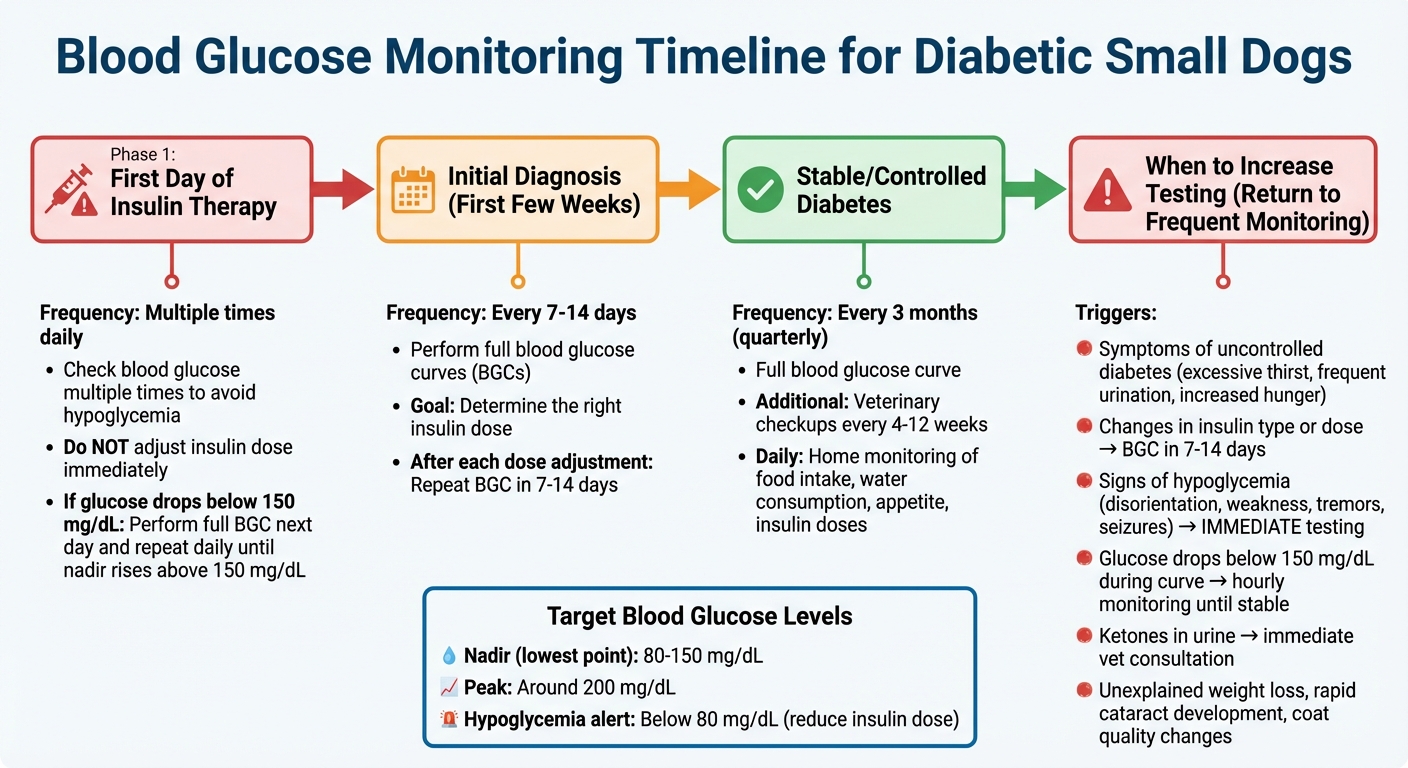
The first few weeks after a diabetes diagnosis are the most critical for monitoring. On the first day of insulin therapy, blood glucose should be checked multiple times to avoid hypoglycemia. However, even if blood glucose levels are high, the insulin dose should not be adjusted right away.
If blood glucose drops below 150 mg/dL on the first day, a full blood glucose curve (BGC) should be performed the following day and repeated daily until the nadir (lowest point) rises above 150 mg/dL. Routine BGCs should then be conducted every 7–14 days during the initial regulation phase until the appropriate insulin dose is determined. Audrey K. Cook, BVM&S, MRCVS, from Texas A&M University, explains:
Newly diagnosed patients are monitored more frequently, often every 7–14 days, while a suitable insulin type and dose is determined.
Each time the insulin dose is adjusted, another BGC should be performed 7–14 days later to assess its impact. Once the glucose levels stabilize and the insulin dose is optimized, the frequency of monitoring can be reduced.
Monitoring Schedule for Controlled Diabetes
Once diabetes is under control, the monitoring schedule becomes less demanding. For stable cases, perform a full blood glucose curve at least every three months. The AAHA Diabetes Management Guidelines highlight:
A periodic BGC is recommended for seemingly well-controlled patients… at least q 3 mo even in well-controlled diabetics.
Regular testing like this helps catch issues like hypoglycemia that might not be obvious.
Between these quarterly blood glucose curves, general veterinary checkups – including physical exams and lab tests – are usually recommended every 4 to 12 weeks. Daily home monitoring remains essential, with owners keeping track of food intake, water consumption, appetite, and insulin doses. Periodic urine testing for glucose and ketones is also advised. For instance, if no glucose is detected in the urine for an extended period, it could indicate an insulin overdose.
When to Increase Monitoring Frequency
Certain situations call for more frequent or immediate testing. Any change in insulin type or dose requires a follow-up BGC within 7–14 days. If a previously stable dog starts showing signs of uncontrolled diabetes – like excessive thirst, frequent urination, or increased hunger – a full blood glucose curve should be performed.
Suspected hypoglycemia is an emergency that requires immediate attention. Symptoms such as disorientation, staggering, lethargy, weakness, or seizures signal the need for urgent blood glucose testing. If levels drop below 150 mg/dL during a curve, hourly monitoring is recommended until stabilization. Similarly, the presence of ketones in urine requires immediate veterinary consultation and more frequent testing.
Other red flags include unexplained weight loss, rapid cataract development, or changes in coat quality. These signs may indicate the need for closer monitoring and adjustments to the treatment plan.
sbb-itb-e212914
Blood Glucose Monitoring Methods
Direct Measurement Methods
For small dogs, handheld glucometers are the go-to tool for measuring blood glucose levels. These devices require just a tiny blood sample, usually taken from the ear, lip, or footpad using a lancet. Among the options available, veterinary-specific devices like the AlphaTrak 2 stand out for their reliability. According to the AAHA Diabetes Management Guidelines:
"The AlphaTrak 2 may be the most accurate BG meter (glucometer) for veterinary patients because it has been calibrated in dogs and cats."
Using human glucometers for dogs can be risky, as these devices often underreport blood glucose levels by more than 40%. This is due to the lower glucose content in canine red blood cells compared to humans. Such inaccuracies could lead to dangerous insulin dosing errors, making pet-calibrated glucometers a safer choice.
Another option is continuous glucose monitoring (CGM) devices like the FreeStyle Libre. These systems use a small sensor inserted under the skin to measure interstitial glucose levels, providing frequent readings without the need for repeated blood draws. The sensor can stay in place for up to 14 days. Dr. Emma Ryan highlights the advantages of CGMs:
"The FreeStyle Libre allows Vets to see glucose management while the pet is at home in their normal environment. This alleviates the stress of travel and hospital stays and can greatly reduce the number of times a pet is poked with a needle for blood draws!"
That said, CGMs aren’t without challenges. Around 60–80% of dogs may dislodge the sensor before the full 14-day period, and these devices can sometimes lag during rapid blood sugar changes. They also vary in price, though discounts may be available. Importantly, if a CGM flags hypoglycemia but your dog seems fine, double-check the reading with a handheld glucometer before making any adjustments.
While direct monitoring methods provide immediate data, indirect methods offer a broader view of glucose trends over time.
Indirect Measurement Methods
Urine glucose testing is a non-invasive way to monitor diabetes, though it has its limitations. Urine test strips detect glucose only when levels exceed the renal threshold, which typically ranges from 160–220 mg/dL. This means the test can confirm past glucose spikes but doesn’t provide real-time data or detect hypoglycemia.
Urine testing is particularly useful for identifying ketones, which can signal a dangerous insulin deficiency requiring immediate veterinary care. While helpful for tracking overall trends at home, urine tests shouldn’t be used to adjust insulin doses, as they might miss critical low blood sugar episodes.
Another indirect method is fructosamine testing, which measures average blood glucose levels over the past 14–28 days using a single blood sample. This test is less influenced by short-term stress and is often more affordable than performing a full 12-hour glucose curve. However, it doesn’t capture daily ups and downs or pinpoint episodes of hypoglycemia, making it more suitable for evaluating long-term glucose control rather than immediate treatment decisions.
Choosing the right monitoring method ensures consistent tracking and helps guide timely adjustments in care.
Target Blood Glucose Levels and Treatment Changes
Healthy Blood Glucose Ranges
In healthy dogs, blood glucose typically ranges from 80–120 mg/dL. For diabetic dogs, the goal isn’t perfect blood sugar control but maintaining levels that reduce the risk of complications. Dr. Audrey K. Cook from Texas A&M University explains:
"Achieving euglycemia (BG approximately 60–130 mg/dl) is not the goal of insulin therapy because dogs and cats are spared many of the complications associated with sustained hyperglycemia in human diabetes patients."
For diabetic dogs, the nadir – the lowest point of blood glucose – should fall between 80 and 150 mg/dL, while the peak should stay around 200 mg/dL. Most diabetic dogs can tolerate levels as high as 250 mg/dL without major side effects. However, if glucose levels drop below 80 mg/dL, it indicates hypoglycemia, which requires immediate attention. The American Animal Hospital Association (AAHA) Diabetes Management Guidelines stress the importance of this threshold:
"No matter what other BG concentrations are during the day, if BG is ever <80 mg/dL, the insulin dose must be reduced."
These target ranges are essential for guiding treatment adjustments and ensuring effective diabetes management for your dog.
Modifying Care Based on Test Results
Adjusting treatment involves considering both the nadir reading and clinical signs like increased thirst, frequent urination, or weight loss. Here’s how test results guide insulin dosing:
- Nadir <80 mg/dL: Reduce the insulin dose by 10–25%. If your dog shows signs of lethargy, tremors, or weakness, cut the dose by 50% immediately.
- Nadir >150 mg/dL with clinical signs: Increase the insulin dose by 10–25%, depending on your dog’s size and the severity of symptoms.
- Nadir is high, but your dog maintains a stable weight and shows no symptoms: Keep the dose the same and recheck in 1–3 months.
- Nadir is high with weight loss: Raise the insulin dose and schedule a follow-up in 14 days.
It’s important to avoid making insulin adjustments based on a single blood glucose reading. Instead, rely on a full blood glucose curve to make informed decisions. After any changes to the insulin dose, retest in 7–14 days to assess the impact.
How to test your dog’s blood glucose at home
Conclusion: Consistent Monitoring for Small Dogs
Caring for a small dog with diabetes requires teamwork between you and your veterinarian. As Thomas Schermerhorn, VMD, DACVIM (SAIM), points out:
A close clinician–pet owner relationship is critical to success, as the pet owner provides daily care and performs most day-to-day monitoring.
Your role involves administering insulin, keeping track of food and water intake, and watching for any symptoms, while your veterinarian focuses on interpreting this data and fine-tuning the treatment plan.
One key aspect of managing diabetes is regular blood glucose curves (BGCs). According to the American Animal Hospital Association (AAHA) guidelines:
Blood glucose curves serve two very useful purposes that other monitoring parameters do not. They identify clinically undetectable hypoglycemia… [and] the only way to know how to appropriately change an insulin dose is to perform a BGC.
After any insulin adjustment, a BGC should be done within 7–14 days. Even when your dog’s diabetes is stable, quarterly BGCs are recommended. This routine monitoring is essential to avoid complications like the Somogyi effect – a rebound in blood sugar caused by an episode of low glucose – and to ensure timely updates to the treatment plan.
Home monitoring plays a big role in providing accurate data. Testing at home minimizes stress-related inaccuracies. Using a veterinary-specific glucometer, such as the AlphaTrak 2, can give precise results. Alongside glucose testing, keeping a detailed log of insulin doses, food intake, and any behavioral changes is invaluable. Sharing these records with your veterinarian before appointments ensures they have a complete picture to make informed decisions about your dog’s care.
FAQs
How can I know if my small dog’s diabetes is well-managed?
You’ll know your small dog’s diabetes is being well-managed when their symptoms – like constant thirst, frequent urination, shifts in appetite, or unexplained weight loss – start to improve or disappear altogether. Signs like maintaining a steady weight, a normal physical exam, and consistent lab results are also good indicators of effective care.
Here are the key test results to keep an eye on:
- Blood glucose levels: Most readings should ideally fall between 100–250 mg/dL, with the lowest point (nadir) staying above 150 mg/dL.
- Serum fructosamine levels: These should stay within the range your veterinarian recommends.
If you’re ever unsure about your dog’s progress, don’t hesitate to reach out to your vet. They can help fine-tune the care plan to ensure your pup stays on track.
What are the advantages of using a continuous glucose monitor for my small dog?
A continuous glucose monitor (CGM) makes it much easier to keep tabs on your dog’s blood sugar levels without needing constant blood draws. This small device, placed under your dog’s skin, delivers real-time glucose readings straight to a handheld device or smartphone app. With this, you can track patterns of blood sugar highs and lows throughout the day, helping you spot early signs of hypoglycemia or hyperglycemia and adjust insulin doses as necessary.
CGMs are user-friendly, come pre-calibrated, and send alerts when glucose levels go outside the target range. These instant notifications allow you to act quickly – whether that means giving your dog a snack or contacting your veterinarian. By improving blood sugar management, CGMs can also cut down on the need for frequent in-clinic glucose tests, saving time and reducing stress for both you and your furry companion.
If you’re thinking about using a CGM for your small dog, talk to your veterinarian to determine the best option for their specific needs and daily routine.
When should I talk to my vet about adjusting my dog’s insulin dosage?
If your dog’s blood glucose level dips below 150 mg/dL, or if they display symptoms of hypoglycemia – like weakness, confusion, or seizures – it’s crucial to contact your vet immediately. Similarly, if their glucose levels stay consistently high, a call to your vet is essential. After any adjustment to your dog’s insulin dosage, your veterinarian will likely suggest doing a follow-up glucose curve within 7 to 14 days to confirm the new dose is both effective and safe.
Staying on top of your dog’s blood glucose levels and keeping open communication with your vet are vital steps in managing their diabetes and supporting their overall well-being.