
Traveling with small pets can be risky without proper planning. From ensuring your pet’s carrier is secure to preventing heatstroke or hypothermia, there are many factors to consider. Here’s a quick rundown of how to keep your furry friend safe:
- Secure the Carrier: Place it on the floor behind the driver or passenger seat for stability.
- Choose the Right Size: The carrier should allow your pet to stand, turn, and lie down comfortably.
- Introduce the Carrier Early: Familiarize your pet with the carrier weeks before traveling.
- Never Leave Pets in the Car: Temperatures can rise or drop dangerously fast.
- Keep Pets in the Back Seat: Front airbags can be deadly for small pets.
- Provide Water and Manage Feeding: Offer water every 2 hours and avoid feeding right before travel.
- Take Regular Breaks: Stop every 2 hours for water, bathroom breaks, and to check on your pet.
- Ensure Proper ID: Use collars, tags, and microchips to help reunite with your pet if they get lost.
- Control Car Temperature: Maintain a stable range of 68–72°F to prevent overheating or chilling.
- Bring Familiar Items: Blankets or toys can reduce stress during the trip.
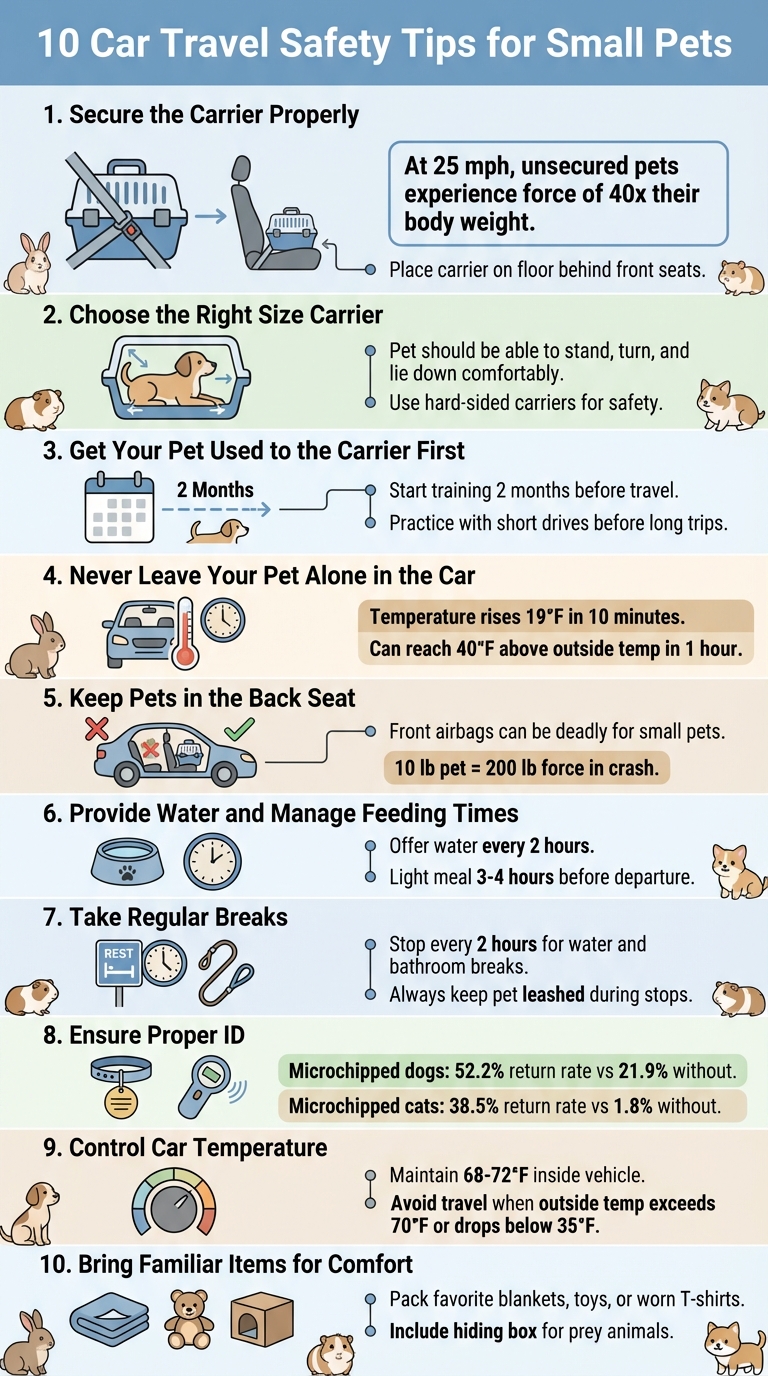
10 Essential Car Travel Safety Tips for Small Pets Infographic
How to properly secure your pet during a car ride
1. Secure the Carrier Properly
An unsecured carrier can become a dangerous projectile during sudden stops or accidents. Even at just 25 mph, a pet in an unrestrained carrier can be hurled forward with a force equal to 40 times its body weight. This poses serious risks not only to the pet but also to everyone else in the vehicle – even a small guinea pig in an unsecured carrier can cause harm.
For maximum safety, choose a hard-sided, well-ventilated plastic carrier. Avoid wire or collapsible crates, as they can collapse under pressure and cause serious injuries. Hard-sided carriers provide much-needed protection, but only if they are properly positioned and secured.
The safest spot for a carrier is on the vehicle floor, directly behind the front passenger or driver seat. This placement prevents sliding and avoids relying on untested restraint systems. If you must place the carrier on a seat, ensure it is centered and stable.
"Using a seatbelt to secure a carrier can actually crush the carrier if you get into an accident. Instead – put the small carrier on the floor of the vehicle behind the front passenger or driver seat." – Center for Pet Safety
Standard seatbelts should not be used to secure carriers unless the carrier has been crash-tested and proven safe for impact. Floor placement remains the most reliable way to protect your pet during travel.
2. Choose the Right Size Carrier
Picking the right carrier size is crucial for your pet’s comfort and safety. A carrier that’s too small can restrict movement and cause stress, while one that’s too large might allow your pet to slide around dangerously during sudden stops. The ideal carrier should let your pet stand up without their head touching the top, turn around easily, and lie down in a natural position.
"The crate should be large enough for your pet to stand or sit without touching the top, lie down and turn around." – ASPCA Relocation Team
Start by measuring your pet’s standing height and lying length. Choose a carrier slightly larger than these dimensions to ensure they have enough room to move comfortably.
For pets that like to chew, such as dogs or certain small animals, hard plastic carriers are a better option than fabric or cardboard, which can be easily damaged. Dr. Laurie Hess, DVM, DABVP, emphasizes that hard plastic carriers are the safest choice for small pets traveling long distances.
If you’re transporting prey animals like rabbits or guinea pigs, consider placing a small hiding box inside the carrier. This helps them feel more secure during the trip. Make sure the carrier has enough floor space for them to move comfortably, along with secure locks and proper ventilation to prevent escapes and ensure good airflow.
Once you’ve selected the perfect carrier, take the time to get your pet accustomed to it before traveling. This helps reduce anxiety and makes the journey smoother for both of you.
3. Get Your Pet Used to the Carrier First
Start introducing your pet to the carrier at least two months before your trip. This extra time helps turn the carrier from something intimidating into a cozy, familiar space they feel safe in.
Place the carrier in an area your pet already enjoys – maybe near a sunny window or close to their favorite sleeping spot. Leave the door open and line the inside with a soft blanket or an old T-shirt that carries your scent. To make it even more inviting, try feeding your pet inside the carrier. These small steps help create positive associations. Keep these sessions short and relaxed so your pet doesn’t feel pressured.
"Starting carrier training while your kitten is still young will teach your cat that the carrier is just another fun hiding place, or play area, as opposed to a confined space that is only used for transportation."
- Christine Taylor, DVM
Once your pet feels at ease with the carrier at home, it’s time to introduce them to the car. Begin slowly. Sit in the parked car with your pet in the carrier – engine off. Let them get used to the new surroundings. Next, turn the engine on so they can adjust to the vibrations and sounds. Gradually move on to short drives, starting with a quick trip around the block, and increase the distance little by little over several days.
"Exposing your pet (while in the carrier) to the sights and sounds of the outside world and returning them safely home a few times before they have to take the big trip to the veterinarian will likely make the trip less scary."
- Laurie Hess, DVM, DABVP
To avoid motion sickness during practice drives, feed your pet a light meal about three to four hours beforehand. Repeating these steps consistently will help your pet stay calm and confident during every trip.
4. Never Leave Your Pet Alone in the Car
Once your pet is comfortable in their carrier, it’s crucial to keep them under supervision at all times during stops. Leaving a small pet alone in a parked car is extremely dangerous – temperatures can climb by 19°F in just 10 minutes and may soar to 40°F higher than the outside temperature within an hour. Cracking a window or parking in the shade offers little protection against this rapid heat rise.
"On a hot day, even with the windows open, a parked automobile can become a furnace in no time, and heatstroke can develop. In cold weather, a car can act as a refrigerator, holding in the cold and causing the animal to freeze to death."
- ASPCA
Cold weather poses its own risks. A parked car can trap freezing air, potentially leading to hypothermia or even frostbite. Small pets like guinea pigs, hamsters, and rabbits are especially sensitive to extreme temperatures. Additionally, brachycephalic breeds, such as Pugs and French Bulldogs, are at even higher risk of heat exhaustion due to their short snouts, which make it harder for them to cool down.
If you need to leave the car, always take your pet with you in their carrier. A better option is to plan stops at pet-friendly places where they can safely accompany you. Leaving your pet unattended – even briefly – can undo even the best safety precautions. If you can’t ensure constant supervision, it’s best to leave your pet at home with someone you trust.
Being mindful of these temperature risks is essential as you prioritize your pet’s safety.
5. Keep Pets in the Back Seat
After setting up your pet’s carrier properly, it’s equally important to place it in the back seat. Why? Safety comes first. Front-seat airbags are designed with adult humans in mind and deploy with an incredible amount of force. If your pet is in the front seat when an airbag activates, the results could be devastating – even fatal.
"Like children, front air bags can injure pets if they deploy when your pet is in the front seat."
Positioning your pet in the back seat also helps minimize distractions. A loose pet can jump into your lap, block your line of sight, or even interfere with controls like the steering wheel or pedals. And in the event of a collision, an unrestrained pet can turn into a dangerous projectile. The math is staggering – a pet weighing just 10 pounds can generate a force equivalent to 200 pounds during a crash.
To secure the carrier, use a seatbelt or wedge it firmly on the floor behind the front seats to prevent it from sliding. Ideally, place the carrier near the center of the vehicle for better stability. If the carrier is too small for a seatbelt, wedging it on the floor will help keep it from tipping or rolling during sudden stops or sharp turns.
Finally, resist the urge to let your pet stick its head out the window. While it might look cute, flying debris can cause serious injuries, and there’s a risk your pet could be thrown out of the vehicle during sudden movements.
sbb-itb-e212914
6. Provide Water and Manage Feeding Times
Keeping your small pet hydrated and well-fed during car travel is essential for their safety and comfort. Plan water breaks carefully – don’t fill a bowl inside the carrier, as it’s likely to spill. Instead, stop every two hours to offer fresh water and give your pet a quick bathroom break. A tip from the ASPCA: freeze a small dish of water the night before your trip. The ice won’t spill during loading and will melt gradually, providing water as your pet needs it.
Feeding schedules also play a big role in reducing travel stress and preventing motion sickness. Avoid feeding your pet immediately before or during the drive. The ASPCA recommends:
"Your pet’s travel-feeding schedule should start with a light meal three to four hours prior to departure, and always opt for bottled water."
This gives your pet enough time to digest before hitting the road.
Dr. Laurie Hess also advises against overfeeding before travel, as it can lead to discomfort. Stick to regular portion sizes to keep things balanced.
For water, use bottled or familiar sources to avoid upsetting your pet’s stomach. On longer trips, you can offer a small, familiar treat – like a piece of apple for rabbits or a sunflower seed for hamsters – to keep them comfortable and content.
7. Take Regular Breaks for Bathroom and Exercise
To keep your pet comfortable during travel, plan for regular breaks. Long stretches in a carrier can be uncomfortable, especially for small animals. According to the Merck Veterinary Manual, you should stop every 2 hours at a rest area or another safe spot to let your pet drink water and use the bathroom. This advice applies to dogs, cats, rabbits, ferrets, and other small pets. For guinea pigs or rabbits, consider lining the carrier with absorbent potty pads to manage any accidents, and make sure to offer water at each stop.
Your pet won’t be able to handle a six-hour drive without breaks. Mauldin Station Vet emphasizes that these stops are crucial for your pet’s comfort and overall well-being. Use the time to check on their stress level, provide some reassurance, and look for signs of discomfort or anxiety.
Always keep your pet leashed during breaks. Unfamiliar surroundings can be overwhelming, and a scared pet might suddenly run off, potentially into traffic or other dangerous situations. For added safety, use secure, species-specific harnesses for animals like cats and ferrets. Only open the carrier inside your vehicle or in a secure, enclosed area. Regular breaks not only help reduce stress but also minimize the risk of accidents, making the trip safer and more pleasant for everyone involved.
8. Make Sure Your Pet Has Proper ID
Traveling with pets can be unpredictable – whether it’s a quick stop during a road trip or the stress of being in a new environment, there’s always a chance your pet could get loose. Having proper identification significantly increases the likelihood of reuniting with your furry companion. A study published in the Journal of the American Veterinary Medical Association in July 2009 found that microchipped dogs were returned to their owners 52.2% of the time compared to only 21.9% for dogs without chips. For cats, the difference was even more striking: 38.5% of microchipped cats made it back home, versus just 1.8% for those without chips. Identification acts as a safety net, providing an added layer of security if your pet is separated from you.
Start with visible identification. A flat collar with an ID tag that includes your name and current cell phone number is essential. For trips, consider adding a temporary tag with your cell phone and destination contact information. Always use flat collars – avoid choke collars during travel, as they can pose safety risks. If your pet is traveling in a carrier, make sure to attach your contact details securely to the carrier.
For a more permanent solution, microchips are invaluable. Unlike collars, which can fall off, a microchip is implanted under your pet’s skin and can be scanned by veterinary clinics or shelters. Before heading out, log into your microchip registry (such as HomeAgain) to confirm that your contact information is up-to-date. According to the same study, incorrect or missing owner information in microchip databases was the primary reason pets weren’t reunited with their families.
"A tag on a collar can easily fall off and be lost. We recommend a microchip for every pet!" – PetIQ Veterinary Council
If you want to go a step further, modern technology offers additional options. Smart tags or GPS collars allow real-time tracking, which can be a lifesaver if your pet gets lost in an unfamiliar area. It’s also a good idea to keep a recent photo of your pet on your phone. This can be shared quickly with local shelters or printed on "lost pet" flyers if needed. And if you’re traveling internationally, double-check with your veterinarian to ensure your pet’s microchip complies with ISO standards. Having these measures in place can give you peace of mind and help keep your pet safe while you travel.
9. Control the Car’s Temperature
The temperature inside a car can climb quickly – by as much as 20°F in just 10 minutes and over 40°F in an hour. Even if it’s a mild 70°F outside, the interior of your vehicle can reach a scorching 110°F. The American Veterinary Medical Association emphasizes this risk, stating: "Even on a 70-degree day, that’s more than 110 degrees inside your vehicle!".
While heat is a serious concern, cold weather can be just as dangerous. In freezing conditions, a car can trap cold air, increasing the risk of hypothermia. Pets that are young, elderly, unwell, or underweight are particularly vulnerable. Brachycephalic breeds, like Pugs and French Bulldogs, face heightened risks of heat exhaustion due to their shorter airways.
To keep your pet safe, maintaining a stable and comfortable climate inside the car is essential. Aim to set the climate control between 68–72°F, and make sure air vents are clear to allow steady airflow around your pet’s carrier. Watch for signs of discomfort – heavy panting or lethargy may indicate overheating, while shivering or curling up tightly could signal overcooling. Temperatures outside that exceed 70°F or drop below 35°F can create unsafe conditions for your pet.
In addition to regulating the temperature, you can help ease your pet’s travel stress by including familiar items like their favorite blanket or toy in the car. Small comforts can make a big difference.
10. Bring Familiar Items for Comfort
Traveling by car can be overwhelming for small pets as they encounter new sights, sounds, and smells. To help ease their anxiety, bring along something familiar like a blanket, a favorite toy, or even a T-shirt you’ve worn. Dr. Laurie Hess, DVM, DABVP, emphasizes the importance of such items:
"A favorite blanket, towel or toy – even a T-shirt that you’ve worn – can put a pet at ease in an unfamiliar carrier".
Reducing stress not only comforts your pet but also promotes safer travel by minimizing stress-related behaviors.
For prey animals like rabbits, guinea pigs, hamsters, and gerbils, familiar items can also provide a sense of security by encouraging hiding. These species often feel safer when they can stay out of sight. Dr. Hess suggests:
"Providing them with a small box within the carrier, such as a shoe box for a small rabbit or guinea pig, or a tissue box for a hamster or gerbil, where they can hide may make being in the carrier less stressful".
Larger animals, such as ferrets or bigger rabbits, may prefer to burrow their heads under a towel or blanket to feel hidden and protected.
In addition to familiar items, pack a mix of toys. WebMD advises:
"To keep your pet happy and occupied during the trip, pack a few toys, including some new ones for novelty and a few old favorites".
Old toys offer comfort, while new ones can provide entertainment and distraction during long drives. These small touches not only make the journey smoother for your pet but also help them feel safe and secure.
Lastly, line the bottom of the carrier with a towel or blanket. This adds extra comfort and can also absorb any accidents along the way.
Conclusion
Traveling with small pets requires thoughtful preparation and close attention throughout the journey. The CDC emphasizes that proper planning minimizes stress and ensures the safety of both you and your pet. From securing a well-fitted carrier to keeping an eye on the car’s temperature and packing familiar items, each detail contributes to a smoother, safer trip.
Small animals are especially sensitive to the challenges of car travel. For instance, temperatures inside a car can become dangerously high in a short time. Pets like rabbits and chinchillas are particularly vulnerable, as they can overheat when temperatures exceed 80°F. Additionally, unrestrained pets face the risk of injury in sudden stops or accidents, making proper carrier use and restraint critical.
If you’re planning interstate or international travel, start preparations as early as six months in advance to meet documentation requirements. Ease your pet into the idea of travel by taking short practice drives to help them associate the carrier with a positive experience. Don’t forget to pack a travel kit that includes essentials like familiar items, bottled water from home, your pet’s medical records, and emergency contact numbers. Keep your veterinarian’s number handy, along with the ASPCA Poison Control Center at 1-888-426-4435.
While on the road, check in on your pet every two hours. Offer water, bathroom breaks, and keep an eye out for signs of distress, such as heavy breathing or panting. The ASPCA Relocation Team highlights the dangers of unrestrained pets, stating:
"Unrestrained pets in unfamiliar circumstances can become frightened or startled and may panic and run into traffic or away from you"
This serves as a strong reminder of the importance of constant supervision and proper precautions.
FAQs
How can I help my pet get used to a travel carrier before a car trip?
To help your pet feel at ease in a travel carrier, start by selecting one that’s sturdy, well-ventilated, and offers easy access. Place the carrier in a familiar spot in your home, and line it with soft bedding to make it cozy and inviting. Keep the door open so your pet can explore it at their own pace.
Create positive associations by placing small treats or favorite toys inside the carrier. Gradually increase the time your pet spends inside – start with a few seconds and slowly work up to 10–15 minutes. Once they’re comfortable, take them on short car rides to help them get used to the experience. Stay patient and consistent, rewarding calm behavior to build their confidence and ease any anxiety.
What should I do if my pet seems stressed or uncomfortable during a car trip?
If your pet seems uneasy or stressed during a car ride, find a safe spot to pull over and evaluate the situation. Make sure they have access to water, check the car’s temperature, and confirm they’re secure and comfortable in their carrier or restraint. Use a calm, soothing tone when speaking to them – it can go a long way in reducing their anxiety.
For pets experiencing motion sickness – signs include drooling, whining, or vomiting – try improving airflow in the car by keeping it well-ventilated, and avoid sudden stops or sharp turns. If these symptoms don’t improve or become more severe, reach out to your veterinarian for guidance or to explore possible solutions. Your pet’s comfort and health should always come first when traveling.
What temperature should I maintain in the car when traveling with my pet?
Keeping your car’s interior temperature below 85°F is essential for your pet’s safety and well-being. Leaving a pet unattended in a vehicle is never a good idea, as the temperature inside can climb by 20°F in just 10 minutes – even when it’s a mild 70°F outside. This rapid rise can quickly create a hazardous environment for your pet. Always ensure proper ventilation and maintain a safe temperature whenever traveling with your furry companion.