
Rabbits and chinchillas are wonderful animals to have, especially when taken care of properly! Both animals can bring their owners pure joy. If you love both animals, you might wonder if these two animals can live together. If so, how can they be cared for? If not, you may have a few questions.
While rabbits and chinchillas share certain traits, determining whether they are compatible when placed in the same environment is a relatively simple question. This ultimately leads to the answer that no, they cannot live in the same enclosure, due to the needs of one, which often puts the other at risk.
If you are set on the idea and can provide ample space for them to live in different areas throughout your home or premises, then you can own both. Still, you’ll need to take some dramatic steps to ensure the lives of both animals are of high quality. More importantly, they are all safe, but for complete clarity, they will never be allowed to live in the same cage or enclosure, and chinchilla dust will never be allowed to migrate into a rabbit area.
Why Can’t Rabbits and Chinchillas Live Together?
The biggest reasons the two animals cannot live together are their vastly different dietary, lifestyle, and safety needs. Chinchillas need to be “dusted” to remove excess oils from their skin, but the same dust can cause severe respiratory issues in rabbits, making it less than ideal to attempt this. Still, there are plenty of deeper reasons past that.
1. Different Dietary Needs
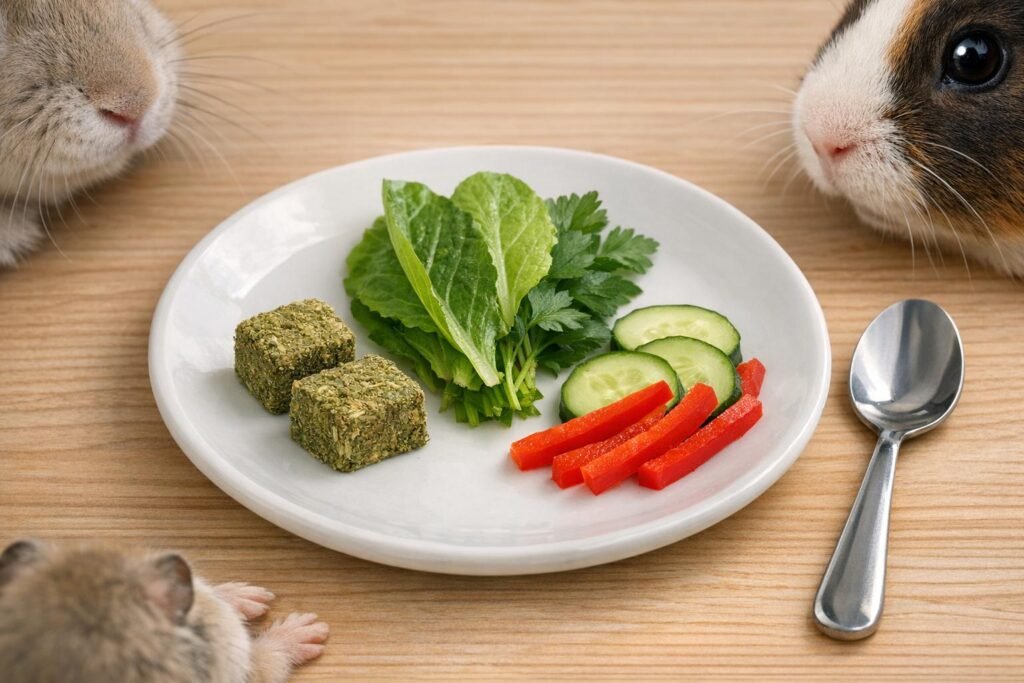
At a base level, both rabbits and chinchillas can happily eat hay. However, rabbits require more, including leafy greens, and if their diet is specifically missing nutritional value, you can supplement the remainder of what they are missing with pellet feed.
On the other hand, chinchillas need that same hay, but hitting their dietary needs is much more difficult, making specialized pellet blends almost mandatory. Even if you are giving them treats that help meet their nutritional needs, more often than not, these treats aren’t healthy in the quantities chinchillas need to thrive.
While not incredibly well known, these two different pellet blends often do not share the same ingredients either. Because of this, you won’t be able to “make do” with rabbits eating chinchilla pellets or vice versa if you are having a rough week, or haven’t made it to the store that week. These diets are largely exclusive and require very niche upkeep aside from the hay.
2. May Become Aggressive
Rabbits aren’t typically aggressive on their own. Still, when they aren’t fixed or neutered, they have the potential to become more agitated and territorial, making them aggressive by default. Even more importantly, this aggression is typically only observed among other rabbits. Rabbits may view chinchillas as a threat when sharing an enclosure (hypothetically, again, the dust from chinchillas is extremely dangerous to rabbits), which may lead to either animal being harmed.
While on the topic of overall aggression, all rabbits you have should be neutered or spayed for the same reason: it prevents them from experiencing their more primal urges. It allows them to live happily in small pairings or even groups. This is incredibly important, as rabbits are social animals by nature, meaning they need others to play and truly thrive.
Chinchillas on the other hand do not tolerate other animals very well and often react incredibly aggressive towards anything that isn’t of their species, between their sharp nails, capacity to bite, and other different methods of harm, it really isn’t a good idea to try and lump these little creatures together, regardless of the situation you are facing may convince you that it is a sound idea.
3. Different Play Styles
Dabbling again on the hypothetical possibility of these two adorable animals playing together. If we were to completely erase the idea that they may not like each other, or that one’s dust is another’s respiratory emergency, the way each of them approaches “play” would be significantly different, which could place both animals in very uncomfortable positions.
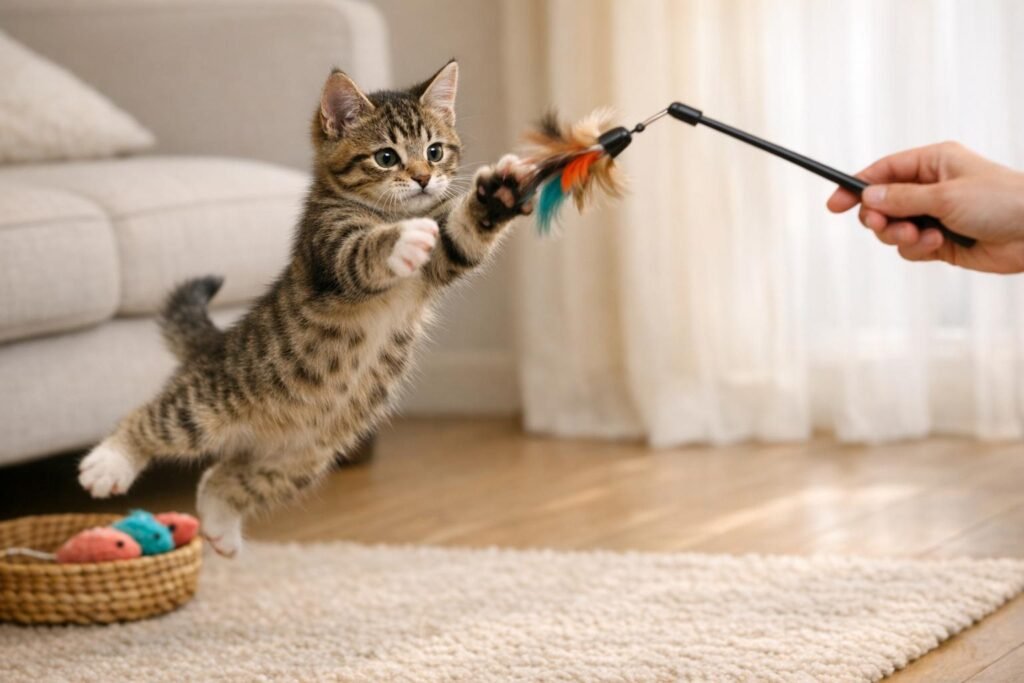
Duality is the name of the game amongst these two little creatures, with rabbits opting to be incredibly playful, hopping, bounding, and curious about things (when they feel safe enough to do so). On the other hand, chinchillas quite literally want to “chill” and relax. Because chins are particularly prone to heat stress and other issues, they would find it difficult to get along in the same space.
Chinchillas also prefer a calmer and quieter environment, which is the opposite of what rabbits bring to the table. This is made glaringly apparent when the rabbits themselves feel confident and safe where they are, amplifying these playful tendencies.
4. Rabbits Can Injure Chinchillas Due to Size
It’s no secret that rabbits are often larger and much heavier than chinchillas. The size difference alone can make things dangerous if the two were to play together. Still, their play methodology makes this size difference much worse. Rabbits enjoy hopping, “Binkying”, and running around their enclosure; by comparison, this larger creature could potentially jump onto or slam into a chinchilla, making it incredibly dangerous for the two to play together.
On the other hand, chinchillas are more often than not relaxed and docile, even when they are at play, preferring to explore their habitat, investigate what’s new, or make small climbs and hops. However, without the explosive energy the rabbit’s body can provide, they would be more of a victim if these two animals had to share a space, never mind if they had to play together in it.
5. Health Risks
Unfortunately, the reasons these two little critters shouldn’t play together expand from here, with the more glaringly obvious issues becoming more prominent, most notably bacteria from rabbit droppings. Dust is getting into rabbits’ respiratory systems. While these two issues alone may not seem very important, they are non-negotiables in both animals’ lifestyles that cannot be changed, making them far more challenging to overcome, if not impossible.
Dust Baths (Respiratory Issues)
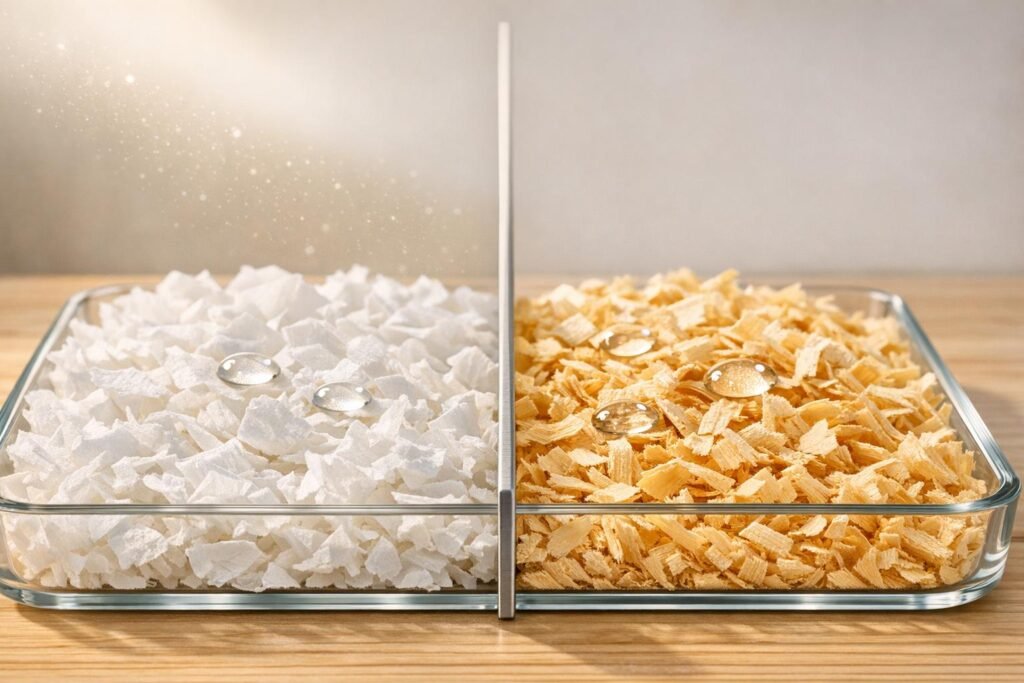
Chinchillas constantly secrete oils from their skin. To combat these excess secretions, they often need to indulge in the dust baths you provide. While the act itself can be absolutely adorable and even fun to watch and participate in, the dust can be hazardous when combined with rabbits.
Rabbits have very sensitive noses and, by extension, respiratory systems. Their lungs and airways are not designed to withstand the onslaught of dust, dirt, and other contaminants that can enter their airways. These microscopic particles can cling to the respiratory system, making it difficult to breathe, or even worse, cause severe irritation, leading to inflammation and more.
Assuming for a moment both animals were in the same enclosure, they would inevitably come into contact with either each other, or the rabbits would migrate and discover the dust bath area, regardless of how this incident happens, it ends negatively for the rabbit, and as such it’s better to avoid it happening entirely, as there is no way to really keep your chinchilla dusty, and your rabbit’s nostrils free of said dust, a true conflict of interest if there ever was one.
Bacteria in Poop Droppings
In much the same way that you cannot directly control where the dust on your chinchillas goes in an enclosure, you cannot truthfully control what kind or how much bacteria are in your rabbit’s droppings. These droppings are absolutely crawling with bacteria that will prove harmful to your chinchilla, primarily due to how closely the two will be in proximity, but more so because chins lack any defensive layering against the direct or ongoing exposure.
Innately, two main kinds of bacteria can prove problematic for your chinchilla: Clostridium difficile and Campylobacter. The former can cause diarrhea or gastrointestinal issues, while the latter can cause more generalized issues, though it can still lead to digestive problems.
A greater issue becomes how these bacteria would then spread like wildfire through the rest of your chinchilla population, and how that epidemic could, in turn, become problematic for the rabbits. For a moment, one chinchilla got severe diarrhea, runny, nasty, and a cesspool of bacteria.
Well, that same bacteria would now not only be thriving in the infected chinchilla’s stool, but also the initial source of infection, meaning it’s only a gamble of time before they all contract it, but this much feces (let alone contaminated feces) would eventually prove dangerous to the rabbits as well, because again, their respiratory system couldn’t endure this much abuse.
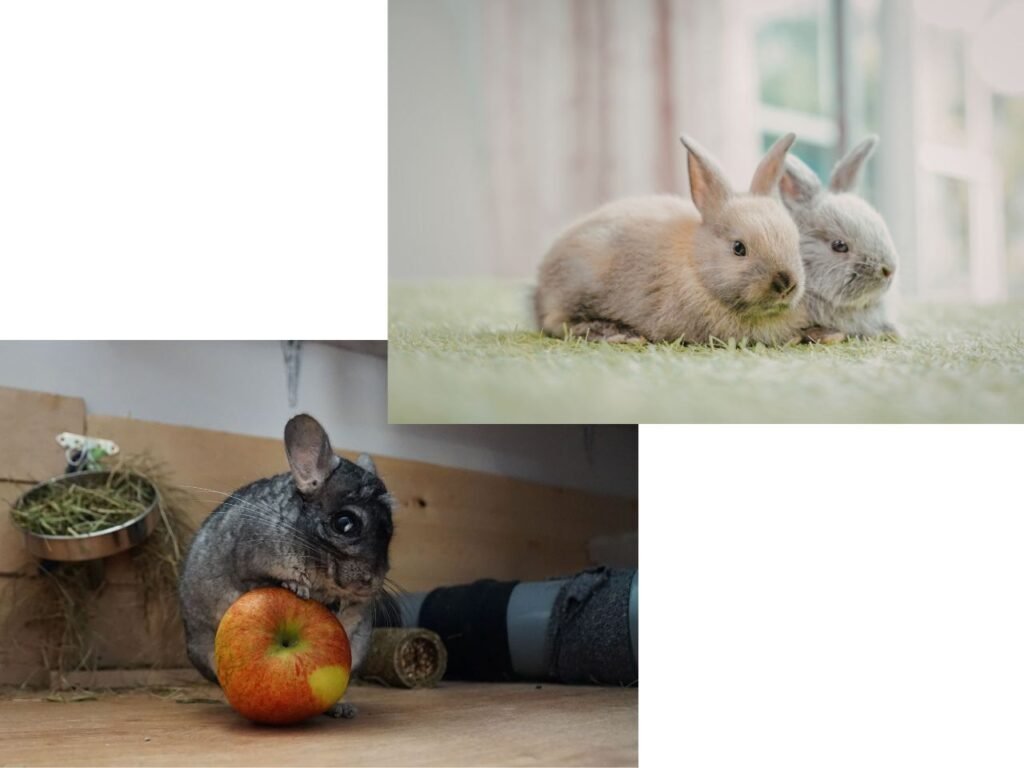
Can Rabbits and Chinchillas Be Introduced to Each Other?
In the wide world of hypothetical possibility, yes, these two animals can be introduced to one another. Assuming you met the perfect criteria for them to be safely near one another, every single time, then yes, they could get to know one another, and sometimes be allowed to mingle.
It is absolutely imperative to understand how much work needs to go into every one of these interactions however, as the chins must be mostly if not entirely free of duty, the enclosure they share, also free of dust, and most notably, the general attitude and behaviours of both individual animals must be taken into consideration, as they are not guaranteed to like one another.
1. Gradual Introduction
You’ll want to take time to ensure that both animals can have something akin to an interaction amongst each other, but with your guided hand ready to intervene should things go awry, anything from bad behaviour, to either party becoming frightened is an immediate cause to stop the introductions, as there is nothing to be gained by giving your pets unnecessary stress.
The “introductions” should be taken slowly if they are successful, with them only being exposed to one another for very small increments of time, just enough to see one another, maybe make some formulated judgements, and mosey back to their respective areas to continue about their business. Definitely don’t try to “force” them to interact with one another.
2. Keep Living Spaces Separate
While the two animals could be getting introduced, it is important to understand this does not mean they are in the same cage; they both need “Close” cages, but not sharing one, as they will need their own unique areas to feel safe, secure, and have a location to retreat to should they not like how things are playing out.
3. Ensure Supervised Visits
In no situation or scenario should these two animals be allowed to interact with one another, or even be vaguely in the same area without someone keeping a vigilant eye over both of their comfort levels, behaviour, and safety, even if the rabbit is happy, confident, and wanting to get closer, that does not justify pushing that boundary if the chinchilla is hesitant, or frightened.
Can Rabbits and Chinchillas Live In the Same Room Together?
Assuming the room is large enough for the animals to never come into direct contact with one another, the dust from the chinchillas can never freely drift into the rabbit enclosure, and rabbit feces never come into contact (even by your interaction) with a chinchilla. Yes, hypothetically, they can be in the same room.
Bear in mind, though, that the same room does not mean the same enclosure or cage. While it might sound repetitive at this point, the safety of both animals is important, and it would be horrible for any part of this to be misconstrued and put any animals in danger through ill-advised advice.
Are There Any Big Differences Between Rabbits and Chinchillas?
Yes, their eating habits, sizes, temperament, and finally, play styles are all fundamentally different. Respect for each of these aspects will help you keep both animals happy and comfortable in your home, especially if you plan to own them in tandem rather than separately.
Conclusion
Yes, rabbits and chinchillas can live together in the same “household” but they cannot be together in the same enclosure or cage, taking the time to set up unique biomes for each animal to live in can allow you to introduce the two, but this should be done sparingly and with the understanding that you, and you alone provide the barrier that keep both little creatures safe.