
- Cage Size & Bar Spacing: Choose a cage that’s at least 1.5–2 times your bird’s wingspan. Ensure proper bar spacing to prevent injuries – smaller birds need tighter spacing (0.25–0.5 inches), while larger birds require wider gaps (up to 1.5 inches).
- Cage Shape & Materials: Opt for rectangular cages with strong, non-toxic materials like stainless steel. Avoid round cages and harmful materials like galvanized wire or painted wrought iron.
- Placement: Keep the cage in a draft-free, well-lit area at eye level, away from kitchens, direct sunlight, and busy spaces. Position one side against a wall for added security.
- Accessories: Include perches of varying sizes and materials, stainless steel food and water bowls, and a mix of toys for mental stimulation (e.g., foraging, chewing, and climbing).
- Lighting & Sleep: Provide 10–12 hours of full-spectrum lighting daily and ensure 10–12 hours of uninterrupted darkness at night. Use a cage cover or a quiet room for sleep.
- Cleaning: Replace cage liners daily, clean bowls with hot, soapy water, and sanitize the cage weekly with bird-safe cleaners like diluted vinegar.
Quick Tip: Regularly rotate toys and inspect accessories for wear to keep your bird engaged and safe.
A well-thought-out cage setup ensures your bird stays healthy, active, and stress-free for years to come.
You’re Setting Up Your Bird Cage All Wrong!
Selecting the Right Cage
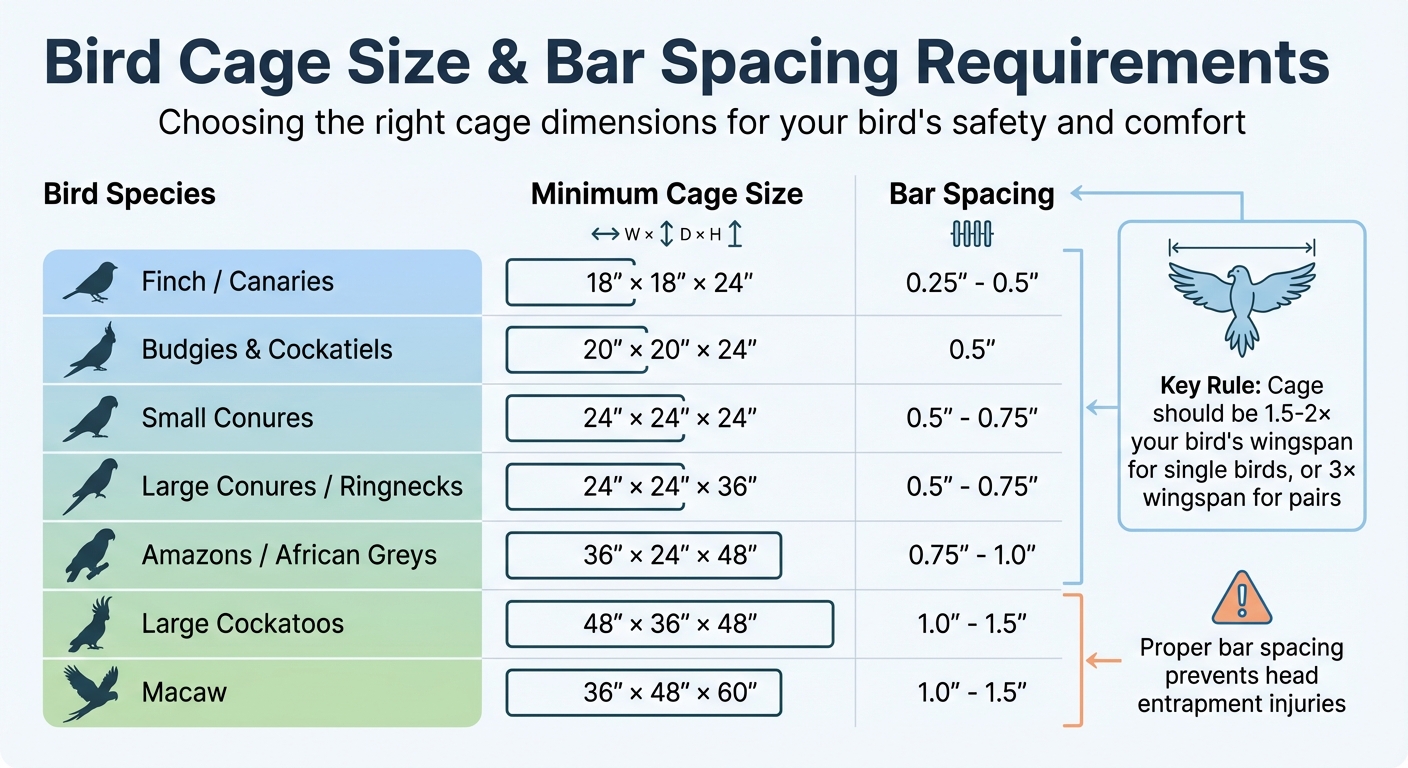
Bird Cage Size and Bar Spacing Guide by Species
The cage you choose plays a major role in your bird’s overall well-being. It’s always a good idea to go for the largest cage your budget and available space can handle. This ensures your bird has plenty of room to move around, stretch, and exercise comfortably.
Cage Size and Bar Spacing
Dr. Patricia Latas, DVM, offers this important insight:
A bird cage should be longer than they are tall because birds fly from side to side, not up and down.
To determine the right cage size, measure your bird’s wingspan. The cage should be 1.5 to 2 times the wingspan for a single bird or three times the wingspan for a pair . This extra room allows your bird to flap their wings freely without the risk of hitting the cage walls.
Bar spacing is another critical factor. If the bars are spaced too widely, smaller birds might get their heads stuck, which can be dangerous or even fatal. For small birds like finches and budgies, the spacing should be between 0.25 and 0.5 inches. Larger species, such as macaws, need bar spacing between 1.0 and 1.5 inches. Additionally, ensure the bars are strong enough to withstand the beaks of larger birds.
| Bird Species | Cage Size (in) | Bar Spacing (in) |
|---|---|---|
| Finches / Canaries | 18 x 18 x 24 | 0.25 – 0.5 |
| Budgies & Cockatiels | 20 x 20 x 24 | 0.5 |
| Small Conures | 24 x 24 x 24 | 0.5 – 0.75 |
| Large Conures / Ringnecks | 24 x 24 x 36 | 0.5 – 0.75 |
| Amazons / African Greys | 36 x 24 x 48 | 0.75 – 1.0 |
| Large Cockatoos | 48 x 36 x 48 | 1.0 – 1.5 |
| Large Macaws | 36 x 48 x 60 | 1.0 – 1.5 |
Once you’ve nailed down the size and spacing, the next step is to focus on a cage design that prioritizes both safety and practicality.
Cage Shape and Design
The shape and design of the cage are just as important as its size. Square or rectangular cages are the best choice because they provide corners where birds can retreat and feel secure. Round cages, on the other hand, lack these corners and can make birds feel exposed. They also often feature converging bars at the top, which can create a "pinch zone" where a bird’s feet or neck might get caught.
Avoid cages with intricate or tapering bar designs, as these can trap your bird’s head, feet, or wings. Additionally, inspect the cage for smooth welds and sturdy construction to prevent injuries to your bird’s delicate feet. For larger birds with strong beaks, look for cages with "punch-through" construction, which offers extra durability.
When it comes to doors, side-opening or drawbridge-style doors are the safest options. Guillotine-style doors that slide up and down can be risky since some birds may figure out how to lift them, potentially trapping their heads. If you’re working with limited space, a playtop cage with a built-in play area can be a great space-saver. Dome-top cages, while offering more vertical space inside, may require an external stand for additional enrichment.
The material of the cage also matters. Stainless steel, particularly 304-grade, is considered the safest and most durable option. Powder-coated steel is a more budget-friendly alternative but should be checked regularly for chipping. Steer clear of cages made from galvanized wire, hardware cloth, or painted wrought iron, as these materials can contain harmful toxins like zinc or lead .
Where to Place the Cage
Choosing the right spot for your bird’s cage can have a big impact on their overall well-being. The location influences everything from their breathing and stress levels to how well they sleep.
Avoiding Drafts and Direct Sunlight
Steer clear of windows, exterior doors, and air conditioning vents when placing the cage. These areas often create drafts, which can lead to respiratory problems in birds – even minor drafts can cause issues.
Direct sunlight is another thing to avoid. Opt for a spot with soft, indirect light instead. If the cage is near a window, ensure there’s a shaded area inside the cage where your bird can cool off if needed. Never place the cage in the kitchen – fumes from cooking, especially from non-stick cookware, can be deadly to birds. Similarly, avoid areas near radiators, fireplaces, heaters, or fans, as these can cause dangerous temperature swings.
A moderately busy family or living room works well. This kind of space allows your bird to enjoy social interaction without feeling overwhelmed by constant activity. Dr. Patricia Latas, DVM, notes:
A bird is stressed if subjected to constant observation. In the wild, the common species of companion birds are preyed upon by raptors and other animals and are sensitive to extended periods of a watchful gaze.
Once you’ve eliminated environmental risks, focus on making the cage setup as comfortable and secure as possible.
Positioning for Security and Comfort
Place the cage at eye level and position it with one side against a wall. This arrangement helps your bird feel safe by eliminating the possibility of being approached from behind, which can reduce their anxiety. A veterinarian in McHenry, IL explains:
If Polly has walls on three sides of her, she can only be approached from the front. This will help her let her guard down and relax.
Leave a small gap – about an inch or two – between the cage and the wall. This prevents your bird from chewing on the wall and makes cleaning easier. To protect your floors from droppings and scattered food, consider putting a plastic floor mat (like the ones used under office chairs) beneath the cage. This not only prevents stains but also simplifies cleanup.
Required Cage Accessories
Once your bird’s cage is properly placed, the next step is setting it up with the essentials. The right accessories not only keep your bird safe and healthy but also provide enrichment to prevent boredom.
Perches and Climbing Structures
Perches are a must-have since birds spend most of their time on their feet. The Phoenix Landing Foundation highlights their importance:
Birds are on their feet most of the time, so perches are not only important for enrichment, but also for their physical health.
A good guideline to follow is the 4-3-2-1 perch rule for foot health: include 4 perches of varying diameters (from small to large), 3 different materials (like natural wood with bark, cotton rope, and concrete), 2 action perches (swings or ladders), and 1 flat platform or shelf. For proper fit, there should be about a 3/4-inch gap between your bird’s front and rear nails when it grips the perch.
Natural wood branches, soft cotton rope, and concrete perches provide diverse textures that help maintain nail and beak health. Flat platforms are also great for allowing birds to rest their feet completely flat.
Place perches at different heights, ensuring they don’t block access to food or water. Birds naturally prefer to sleep on the highest perch, so make this spot as comfortable as possible. Be sure to regularly inspect rope perches for loose threads or fraying, as these can pose strangulation risks.
Food and Water Bowls
Stainless steel bowls are the best choice for most birds. They’re non-toxic, durable, and can withstand even strong beaks. For smaller birds, BPA-free plastic bowls are a good alternative and are easy to clean in the dishwasher. Heavy ceramic bowls are another option, but they must be crack-free to avoid bacteria buildup. As veterinarians Gregory Rich, Laurie Hess, and Rick Axelson explain:
Stainless steel is strong enough to withstand a large bird’s chewing, and attaching these dishes to the cage prevents birds from tossing the dishes around.
To prevent spills or messes, use bowls that lock or bolt onto the cage. Position them away from perches to avoid contamination from droppings. For cleaner water, consider water silos (like the JW Insight Water Silo, priced around $7), as they help keep debris and feathers out. Place water bowls at chest height so gravity can help your bird drink and rinse its beak.
Clean food and water bowls daily with hot, soapy water to prevent bacteria buildup. Always provide fresh water, letting the tap run for a few seconds before filling the bowl to flush out potential contaminants from the pipes.
Toys and Enrichment Items
Keeping your bird entertained is essential to avoid issues like feather plucking or excessive screaming. The Lafeber Company explains:
A wild parrot is constantly active, but a captive parrot doesn’t have quite as much to do… the bird is bored. Rather than let your bird discover his own ways of entertaining himself, offer him a variety of toys.
Here are some great options for enrichment:
- Foraging and puzzle toys: These encourage your bird to "work" for food, mimicking natural behaviors and keeping their mind sharp.
- Shredding and chewing toys: Items made from safe materials like balsa wood, manzanita, paper, cardboard, or hay satisfy their need to chew.
- Preening toys: Feathers or shredded rope toys help reduce stress, especially for birds that spend time alone.
- Movement toys: Swings, ladders, climbing nets, and "boings" encourage physical activity and improve balance.
To keep things interesting, rotate toys weekly. Place them within easy reach of a perch but away from food and water bowls to avoid contamination. Be cautious with toys that have "S" hooks, lead, zinc, or small parts that could be swallowed. Also, avoid "jingle" bells, as they can trap your bird’s beak or toes.
sbb-itb-e212914
Cleaning and Maintenance
Keeping your bird’s cage clean is essential for their health. A clean environment helps prevent bacteria from spreading and supports your bird’s well-being in their carefully designed habitat.
Bedding and Liners
Use plain newspaper or paper towels as cage liners – modern newsprint is lead-free and safe for birds. These liners make it easy to monitor your bird’s droppings, which can provide early clues about their health if you notice changes in color, texture, or moisture. Steer clear of sandpaper, wood chips, corncob bedding, and cat litter, as these can lead to foot sores, digestive blockages, or fungal growth. Cedar and pine shavings are also problematic because they can irritate a bird’s respiratory system. To maintain a clean and odor-free cage, replace liners daily. For convenience, products like Vitakraft Bird Cage Liners (7 count, $8.98) are a popular choice, boasting a 4.7/5 star rating from 208 reviews.
Cleaning Schedule and Supplies
Daily cleaning includes replacing liners, washing food and water bowls with hot, soapy water, and wiping droppings off perches and cage bars. A simple spray solution made of one part white vinegar and two parts water is an effective and safe cleaner for daily use.
"White vinegar diluted with water is the safest thing to use for cleaning around a bird. Typically one part vinegar to two parts water. It doesn’t have to be exact because even straight vinegar is safe to use around birds."
On a weekly basis, give the tray, grate, perches, toys, and cage bars a thorough scrub. Once a month, take the cage apart and clean it with a bird-safe disinfectant, such as Absolutely Clean Bird Cage Cleaner & Deodorizer. If you need to use diluted bleach (1 cup per gallon of water), make sure your bird is moved to a well-ventilated area during the process. After cleaning, rinse everything thoroughly and let all parts – especially wooden perches – dry completely before reassembling the cage and returning your bird to its home.
Lighting and Sleep Requirements
The right balance of light and darkness plays a crucial role in your bird’s health. It regulates hormones, aids in vitamin production, and keeps your feathered friend calm and content. Birds perceive light differently than humans, so creating a lighting and sleep environment tailored to their needs is essential for their well-being.
Natural and Artificial Lighting
Birds thrive with 10 to 12 hours of steady, full-spectrum lighting each day, mimicking the conditions of their natural tropical habitats. However, standard household bulbs won’t suffice. Unlike us, birds process light much faster, meaning typical bulbs appear to flicker in their eyes, which can cause stress. To avoid this, opt for flicker-free, full-spectrum lights with a Color Rendering Index (CRI) of at least 91.
Full-spectrum lighting that includes UVA and UVB rays is especially important. These rays enable birds to produce Vitamin D3, which is essential for calcium absorption and overall health. Parrots, for example, spread oil from their uropygial gland (found near their tail) onto their feathers. When exposed to UV light, this oil undergoes a chemical reaction, producing Vitamin D3. Place the light directly above your bird’s cage to ensure even exposure, avoiding shadows that reduce intensity. Also, avoid placing glass or plastic between the UV lamp and your bird, as these materials block beneficial UV rays. Provide perches at varying distances from the light, allowing your bird to bask in full light or retreat to a shaded area as they prefer.
For consistency, consider using full-spectrum bulbs with timers to maintain a regular day/night cycle. Keep in mind, UVB bulbs lose their effectiveness after about six months, even if they still appear functional, so replace them regularly.
Sleep Environment
Uninterrupted sleep is just as important as proper lighting. Birds need 10–12 hours of darkness each night to stay healthy. Without sufficient rest, they can become moody, aggressive, or even develop health issues. Cover your bird’s cage with a breathable, secure sheet at night to block out light and disturbances. If your bird’s main cage is in a busy area like the living room, consider setting up a smaller, quieter "sleep cage" in a bedroom or another low-traffic space.
"At night, a bird’s cage should be covered or moved to a dark, quiet room so that they may get the 12 to 14 hours of sleep they require." – Dr. Patricia Latas, DVM
Some birds may experience "night frights", where they thrash around due to fear in complete darkness. If this happens, try using a dim nightlight or partially covering the cage to provide comfort and security. A white noise machine on low volume can also help mask household sounds if your family tends to stay up late. Remember, the sleep cage should always be a peaceful, positive space – not a place for punishment.
Conclusion
Creating the right environment for your bird is essential for its well-being and happiness. Since many pet birds can live for over 40 years, providing a secure and comfortable cage is an investment in their long-term health and quality of life.
Maintaining a clean and safe space is crucial. As PetMD Editorial emphasizes:
"A clean and well-maintained living space can set the stage for the health and happiness of your bird." – PetMD Editorial
A thoughtfully designed cage – complete with enough room, proper bar spacing, diverse perches, and a rotation of engaging toys – helps keep your bird active and healthy. Positioning the cage away from harmful kitchen fumes, drafts, and other environmental hazards protects your bird’s delicate respiratory system. Additionally, consistent lighting and a stable sleep routine play an important role in your bird’s overall health.
Your bird depends on you to create a space where it feels both safe and connected. Placing the cage at eye level in a social area fosters companionship, while positioning it near a wall can provide a comforting sense of security.
Each detail, from cage size to its location, contributes to your bird’s physical and emotional well-being. As the Lafeber Company aptly puts it:
"Your bird’s housing, like your home, should be safe, comfortable, spacious, and have room for plenty of ‘amenities,’ like perches, food cups, and toys." – Lafeber Company
FAQs
What size cage and bar spacing should I choose for my bird?
When choosing a cage for your bird, size matters – a lot. Your feathered friend needs enough room to move around freely, and the cage should suit their specific species. Here’s a quick guide: budgies need at least 18" × 18" × 24", cockatiels require 20" × 20" × 24", and large macaws need a minimum of 48" × 36" × 60".
Bar spacing is another crucial factor to keep in mind. Proper spacing helps prevent escapes and injuries. Follow these general recommendations: ¼–½ inch for finches and canaries, ½ inch for budgies and cockatiels, ⅝–¾ inch for medium parrots, and 1–1½ inches for large macaws and cockatoos. Your bird’s safety and comfort should always come first when selecting their new home!
What materials should I look for in a bird cage?
The safest and most durable option for bird cages is stainless steel. This material is resistant to rust, bacteria, and harmful toxins, making it a reliable choice for your bird’s health. Stainless steel cages with a powder-coated or vinyl-coated finish are even better, as these coatings provide a smooth surface that’s gentle on your bird’s feathers and skin while ensuring long-lasting durability. On the other hand, avoid cages made from galvanized wire, as they often contain zinc or lead, which can be toxic to birds.
When selecting a cage, pay close attention to the bar spacing and construction to match your bird’s species. For smaller birds like budgies, bar spacing between 3/8 and 7/16 inches is ideal. Medium-sized birds, such as cockatiels, do better with a spacing of around 5/8 inches. Additionally, inspect the cage for smooth welds and avoid any with exposed solder, as solder may contain lead. Choosing a well-constructed, safe cage ensures your bird has a secure and comfortable home.
How can I make sure my bird gets enough light and sleep?
To keep your bird in top shape, make sure it gets 10–12 hours of bright, steady light every day. Regular room lighting usually isn’t enough, so think about using a bird-safe LED light placed above or near the cage to simulate natural daylight. Stick to a routine – turn the light on in the morning and off at night to align with your bird’s natural rhythm.
When it comes to sleep, your bird needs 10–12 hours of uninterrupted darkness each night. You can cover the cage with a breathable, light-blocking cover or set up a separate sleeping cage in a quiet, low-traffic spot, away from bright lights and noise. A peaceful nighttime routine with dim lighting and minimal distractions will help your bird get the rest it needs to stay healthy.