
Affiliate disclosure: Little Pet Corner is reader-supported. As an Amazon Associate we earn from qualifying purchases made through links on this page, at no extra cost to you.
Quick answer: The best small pet turtles are the common musk turtle, mud turtles and the spotted turtle, which typically stay around 3–5 inches as adults. Male map turtles also stay fairly small. Red-eared sliders are popular but grow to about a foot, so they aren’t a true small turtle. Every species here can live for decades and needs heated, filtered water, UVB lighting and a basking area.
Small Pet Turtles Compared
| Species | Adult shell length | Typical lifespan | Notes |
|---|---|---|---|
| Common musk turtle (stinkpot) | 3–5 in | 30–50+ yrs | Very small, mostly aquatic; good beginner choice |
| Mud turtle | 3–5 in | 25–40+ yrs | Small, semi-aquatic; needs land area too |
| Spotted turtle | 3.5–5 in | 25–50 yrs | Protected in many states; buy only captive-bred with paperwork |
| Map turtle | Males 3.5–6 in; females 7–10+ in | 15–30 yrs | Males stay small; females get much larger |
| Red-eared slider | 7–12 in | 20–40 yrs | Popular but NOT truly small; needs a large tank |
Sizes and lifespans are typical ranges from reptile care references; individual turtles vary.
What Are the Best Small Pet Turtles?
The five best tiny pet turtles are spotted, map, common musk, mud, and red-eared sliders. Each has unique characteristics and quirks that make them perfectly suited to being a long-term friend to you and your family. Below we will go over each one in detail and highlight what they need to thrive in your home and how to keep them happy.
1. Spotted Turtle
These little 3.5 to 4.5-inch creatures earn their name by their black to bluish-black shells littered with small yellow spots, with dots on their legs and faces. Sometimes, they eat foods like worms, shrimp, crickets, and other small insects and require a sun lamp for their Vitamin D3 needs.
Going in step with that, the water they bask in should be roughly 75 to 80 degrees Fahrenheit, as anything hotter can injure the turtle. Any temperature lower than that could cause it to hibernate or get sick.
The turtles are extremely friendly and outgoing but require extensive dietary needs for the animal to stay healthy for years. They need to be in an enclosure with enough water to rest their bodies but only deep enough to lift their heads entirely out of the water.
Spotted turtles do not need a lot of water because they can drown if the water is too deep and cannot easily make it back to an area to rest. These turtles can live for an incredibly long time, going from 65 to an incredibly 110 years.
2. Map Turtles
Map turtles earn their name because their shells appear very similar to topographical maps. These North American turtles feature extreme size differences in females, often dwarfing the males of the breed. Female map turtles typically are 7 inches; the males usually only get 5 inches long and can live for up to 20 years.
If you want a map turtle, you need an enclosure with an excellent water filtration system to keep the turtle from getting sick. These turtles also require a sun lamp like most turtles and are heavy baskers meaning they love to “sun-bathe.”
The map turtles’ diet mainly consists of plants and turtle food as babies, evolving into freeze-dried shrimp and krill when they mature. These little guys usually need a 20-gallon tank minimum to be happy.
3. Common Musk Turtles
Musk turtles usually have black or dark brown shells featuring small yellow stripes along their back and sides. These small creatures range between 3 to 5 inches long.
The turtle itself can subsist on a diet of worms, shrimp, certain insects, and even your common turtle foods, but like all turtles, they require some level of vitamin C to remain healthy, these turtles on average can live for about 40 to 60 years with proper care.
Traditionally these turtles require a lot of room, which is not entirely indicative of their name. This is because when these turtles are threatened, they can release a scent from special glands that cause them to smell funky. The turtles should have a basking area like any other turtle and a standard filtration system to keep them from getting sick.
4. Mud Turtles
Earning their name due to their favorite areas, being muddy locations that make them comfortable when hibernating, the mud turtle is a small turtle that usually only gets 5 inches in size.
The mud turtles have a flatter dome than a musk turtle but share most other visual aesthetics, like a primarily brown or black shell. Lastly, these creatures have a strong yellow to orange streaking lining most of their exposed body.
Mud turtles are omnivorous, feeding on almost anything smaller than they are in the wild. This means they eat frogs, fish, eggs, insects, and even small plants. However, they can be healthy eating store-bought pellets as well.
You’ll want to compliment this diet with leafy greens dusted with vitamin supplements to ensure they are healthy. These turtles require a tank of about 25 gallons in size to remain mobile and happy for the 30 to 50 years they are alive.
5. Red-Eared Sliders
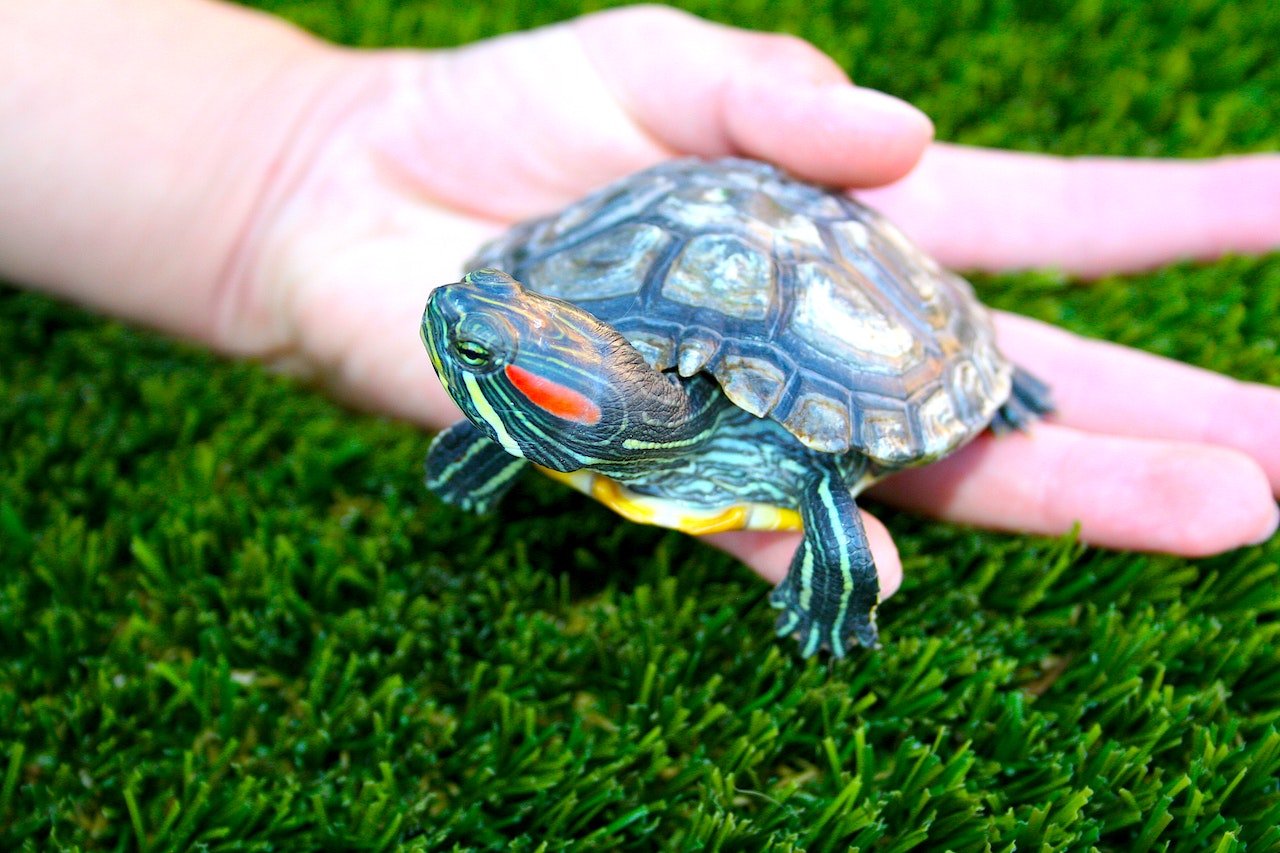
Last but certainly not least, we have the red-eared slider. They are named this due to the small red colorations on either side of the turtles’ heads. These 5 to 11-inch little guys have a primarily brown shell that can be complemented with small black, green, and yellow stripes and a heavy dome shape shell.
Primarily omnivores, they will eat just about anything near them, especially in the wild. However, these small creatures are a bit more demanding in their care needs, with the larger sizes needing a tank of up to 100 gallons large.
More so, if your turtle is female (as they can get bigger), a sun lamp is mandatory, and again a good water filtration system is a must. Still, these little guys can live for about 30 years with proper care.
Do Small Turtles Make Good Pets?
Yes, small turtles can make great pets! However, they require tanks large enough to meet their needs. You must schedule a time to clean the tanks, rotate out fresh water, and closely monitor your little-shelled friend.
Turtles are all prone to respiratory issues due to their semi-aquatic lifestyle. Not only this, but most turtles do not like to be held. Still, some cases prove the opposite.
What Turtles Stay Small (Even in Adulthood)?
There are many turtles that stay small even in adulthood. For example, every turtle on this list remains smaller than 13 inches long. However, the smaller ones would be the following:
- Map turtle (7 inches)
- Spotted turtle (4.5 inches)
- Musk turtle (3 to 5 inches)
These little guys will remain small their whole lives, making them easier to handle. Still, their size does not directly indicate that they will be easier to care for.
How Do You Care for a Small Turtle?
Regardless of what breed you go with, small turtles have extensive nutritional needs that must be met. Some of the most important things include:
- Having an appropriately sized tank that will give them room to roam.
- A sun lamp that provides adequate lighting and warmth.
- A water filtration system strong enough to keep them from getting infections.
What Is the Smallest and Friendliest Turtle?
The Eastern mud turtle probably holds this title with its head held high. They are very relaxed, easygoing, and small enough to be picked up by just about anyone. Remember, handling your turtle too much can change its behavior, especially if children aren’t experienced in caring for them.
What Turtles Like to Be Held?
In truth, no turtles expressly like being held from a species standpoint. However, they can learn to like being held, assuming the person or people doing so hold them gently and give them attention in a way they approve of.
On the other hand, picking your turtles up and being loud or making sudden, jerking movements can cause them not to enjoy the experience and attempt to hide when someone tries to pick them up.
Are Mini Turtles High Maintenance?
Yes, mini turtles are relatively high maintenance as they might require being fed more than once a day.
Still, it can be rather time-consuming to consider monitoring their health, keeping their tanks clean, regularly adding and changing water, and inspecting them for health issues. Still, these investments are similar to how much time you’d spend caring for any other pet.
—————————————————–
Small Turtle FAQs
What is the smallest pet turtle?
The common musk turtle and mud turtles are among the smallest commonly kept turtles, usually 3–5 inches as adults.
Why can’t I buy a turtle under 4 inches?
In the U.S., an FDA rule in place since 1975 bans selling turtles with shells under 4 inches as pets because of the salmonella risk to children. Be wary of “mini turtles” sold at markets or online.
Do small turtles carry salmonella?
Any turtle can carry salmonella without looking sick. Wash hands after handling, keep turtles away from food prep areas, and supervise young children.
What size tank does a small turtle need?
A common guide is about 10 gallons of water per inch of shell, so a 4-inch musk turtle needs roughly a 40-gallon tank, plus a basking area, heater, filter and UVB light.
Are small turtles good pets for kids?
They can be educational, but an adult should handle care and hygiene, and the family should be ready for a 25–50 year commitment.
Conclusion
Small turtles can make for amazing pets, and with lifetimes spanning up to 50 years in most breeds, you will be looking for a companion for you or your little ones for the vast majority of your life. So, consider how long you’ll be with your little shelled friends before getting a turtle.
We hope this article helped you learn more about what good tiny turtles you can have in your home. If you have other questions about tiny pets, check out our other articles for more information!