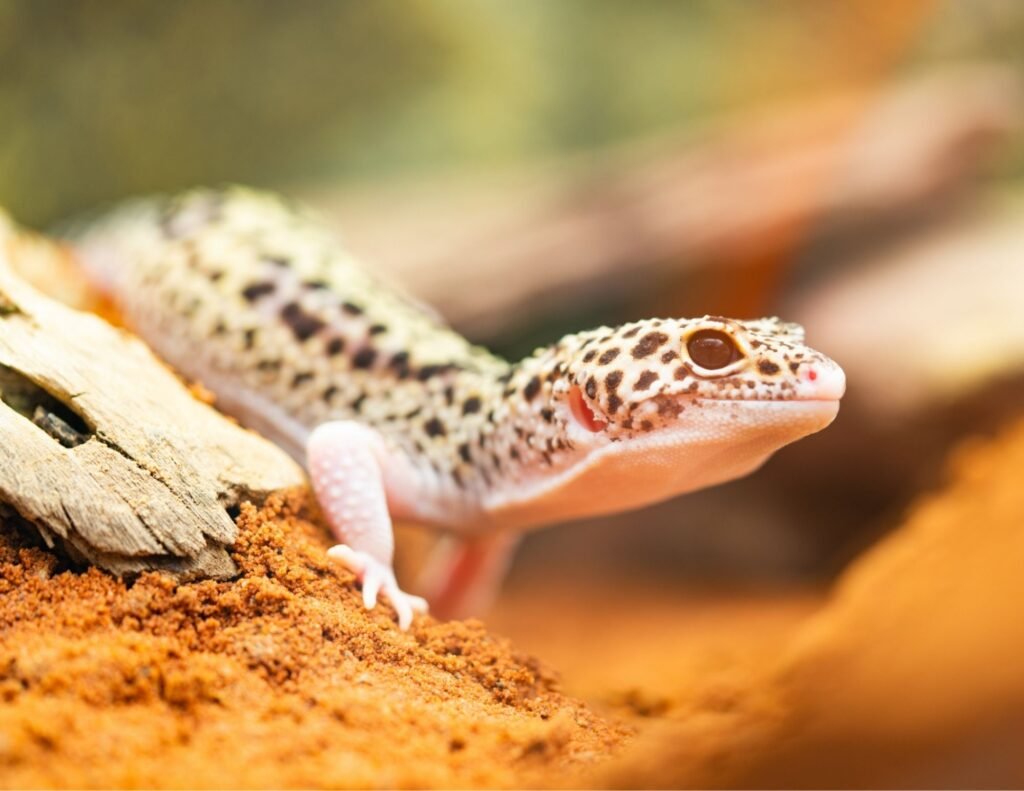
Owning a leopard gecko is one of the best things you can do if you want to have a pet or wish to improve your mental health. Even more importantly, leopard geckos can live a long life with proper care. One way to do that is by providing the right type of bedding.
If you provide your leopard gecko with the wrong one, it can lead to serious health issues, so you must give them exactly what is needed, but do so on the budget you are working with.
That said, there are many wonderful options, but we’ll review only a few. For a brief overview, here are the ones we will review below:
- Zilla jungle mix
- Legigo natural sphagnum moss
- Josh’s Frogs BioBedding Substrate
- Legigo coco coir
- Zilla desert reptile substrate
In this article, we will discuss what type of bedding is best for leopard geckos and what we should avoid entirely and why. We’ll also review each bedding option above so you can choose the right one for your leopard gecko. We are here to answer any questions you have, so keep reading for more!
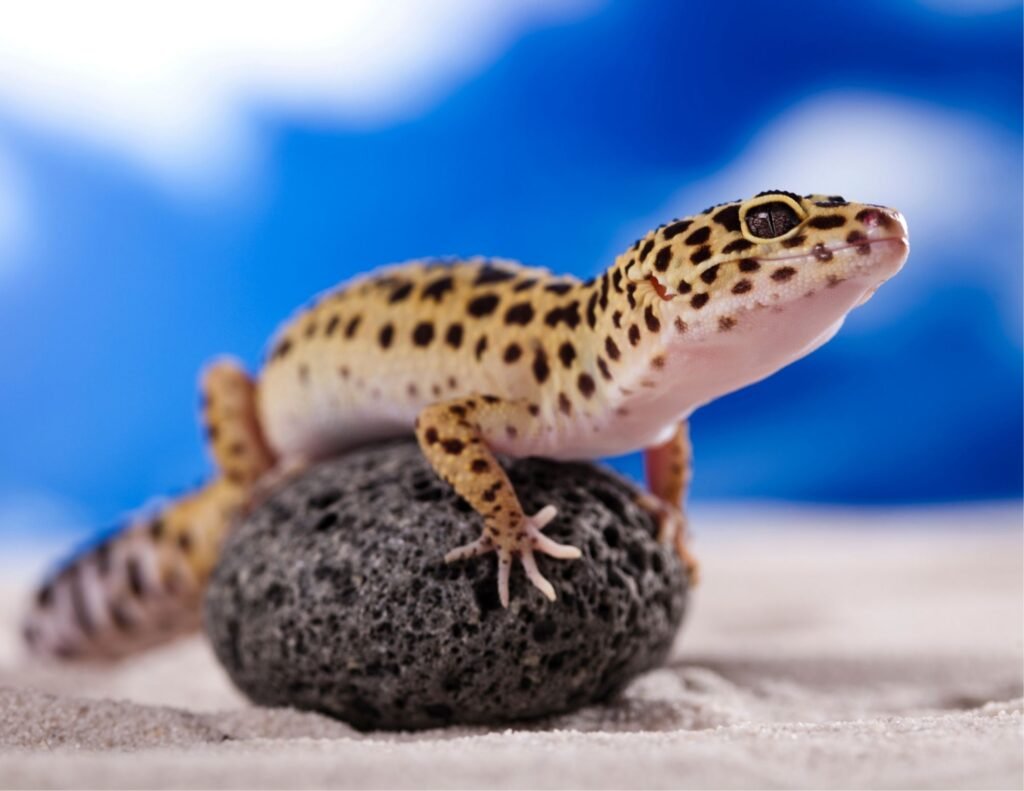
What Type of Bedding Is Best for Leopard Geckos?
There are many wonderful bedding options you can get for your leopard gecko. Look for bedding that is easy to clean, absorbent, non-toxic, and not a choking hazard. Overall, you want what is best for your leopard gecko!
1. Commercial Arid Mixes
Commercial arid mixes are essentially mixtures that mimic the natural habitat of a leopard gecko (or other reptiles, since most commercial mixes are designed for more than one animal).
These mixes vary in ratio, but most include dry, rocky sand, topsoil, and sometimes excavator or bentonite clay and other geological elements. Here is a breakdown of what all of them do individually:
- Organic topsoil: Usually made of coco coir or peat-free organic topsoil that provides essential nutrients for live plants and allows moisture retention beneath the dry surface layer to help your gecko shed better.
- Rocky sand: Usually made with river, quartz, or desert sand. It is essential for drainage and, when mixed with other materials, prevents a brick-like consistency that can cause impaction.
- Excavator clay or bentonite clay: Allows the arid mix to work by binding the topsoil and sand together, encouraging natural burrowing or digging behavior. The clay also ensures the sand will not collapse on your leo.
- Other elements: Some companies that provide topsoil offer organic elements such as sphagnum moss, volcanic rock dust, or orchid bark fragments that add texture and trace nutrients without raising the tank’s humidity.
When mixed, these components support natural digging behavior, like burrowing, for your leopard gecko.
On top of this, commercial arid mixes are designed to be compact, so there’s very little dust, making it safer for your leopard gecko to roam around and so you don’t have to worry about them breathing in dust.
2. Non-Adhesive Shelf Liners
If you have ever put a shelf liner in your cabinets and loved how simple and easy it is, you will be thrilled to know non-adhesive shelf liners are a great option for your leopard gecko’s tank.
They’re essentially rolls of heavy-duty matting made from food-grade plastics or ethylene-vinyl acetate (EVA) that can cover the entire floor of their cage.
Although they have great pros in terms of being easy to clean, helping prevent impaction, and being sterile, they have cons as well, like making it much harder for your leo to burrow unless you are providing a dedicated box for that purpose.
Even so, if you are on a budget or don’t want to spend endless time cleaning their cages, this is an excellent option. Also, if you’re between paychecks but need more flooring and have some shelf lining lying around, we recommend this as an option too.
3. Paper Towels
Suppose you have young leopard geckos or want to save money on flooring. In this case, we recommend paper towels, as they’re a very safe option for your gecko. Plus, paper towels are hygienic and practical for many reasons.
For example, suppose your leopard gecko needs to be quarantined because they are sick. In that case, it is wise to keep them away from their cage and their belongings for several days (most vets recommend 30 to 90 days of quarantine). This gives you ample time to sanitize their rocks, hides, bowls, and other belongings while also monitoring their condition. It also helps you gauge what their poop looks like and whether they have parasites.
Not only that, but it takes just a few minutes to change out your gecko’s bedding and, going with the saying, “out with the old, in with the new,” much faster and quicker. You be happy to clean their cages faster and your leo will thank you because they won’t be sitting in filth like poop or pee.
Lastly, the bottom of the cage will be warm, which helps your gecko’s belly digest food more properly thanks to the heat from the heating mat below the tank. Overall, paper towels are an excellent, cost-effective choice. The biggest downside of paper towels is that they don’t allow natural digging.
One quick important note: make sure the paper towels are unscented to keep them safe.
4. Topsoil and Sand Mixture
Topsoil and sand mixtures essentially mimic a leopard gecko’s natural habitat, which also keeps impaction risks at a minimum. This encourages natural behaviors like digging and burrowing while reducing impaction risks, unlike sand, which can cause health issues.
On top of that, topsoil and sand mixtures provide great micro-humidity management, which helps your leo shed its skin properly.
This type of flooring provides excellent joint support for your little friend due to how it is set up. This means the floors aren’t flat like paper towels, shelf liners, glass, or tile. Essentially, topsoil and other sand mixtures are among the best floorings you can provide for your leopard gecko.
What Bedding Should Leopard Geckos Avoid?
Not all flooring labeled as good for small animals is good for leopard geckos. One of the biggest concerns is whether the flooring stays warm enough for your little friend to digest its food properly and how dusty it is. Leopard geckos may also accidentally ingest a piece of flooring, which can be a bigger concern. That said, here are some flooring options to avoid for your leopard gecko.
1. Reptile Carpet
Reptile carpet looks like a good buy because it seems easy to clean (you can easily lift it in and out of the tank), but it’s not good for your leo. This is because it can harbor a lot of bacteria, making it extremely difficult for you to clean.
On top of that, reptile carpet can cause health issues for your gecko and possibly you too, because when you open the cage, you breathe in any toxic air the cage may have acquired. Lastly, your gecko’s claws might get stuck in the carpet fibers, which can cause injury and stress.
2. Crushed Walnut Shells
Crushed walnut can cause serious injury to your gecko if you use this substrate. This is because they can accidentally ingest it, causing stomach problems or even hurting their bellies or somewhere else on their body due to the tiny pieces with sharp edges that crushed walnut provides. For this reason, it is best to use another bedding option.
3. Corn Cob Bedding
Corn cob bedding is not good for leopard geckos for three main reasons:
- It is too dry for leopard geckos, which can lead to dehydration. Their bedding needs enough moisture for proper shedding and overall well-being.
- If accidentally ingested, it can lead to blockages or serious digestive issues.
- Corn cob can harbor mold because it’s highly absorbent and made of organic material. This is especially true if it sits in a warm environment, like your gecko’s cage, as the two combined can encourage mold growth. Although it is too dry for leopard geckos, moisture can get trapped at the bottom of the tank, making the environment too dangerous for them.
4. Calcium Sand
Leopard geckos need calcium for overall health, but using calcium sand is a huge risk because it can lead to impaction. Unlike regular quartz sand, calcium sand encourages digestion as it smells and tastes appealing to your little friend.
Because of this, they might try to swallow some, wanting to gain all of the goodness in said sand, leading to extreme lethargy, a swollen abdomen, or weight loss, making things worse or even causing your leopard gecko to die.
Lastly, fine-grain sand doesn’t come from their natural environment, where they’re used to clay, sparse dirt, and rocks. In fact, leopard geckos live in arid and semi-arid areas with sparse vegetation, which is why it is important to keep temperature and humidity consistent rather than too hot or too wet.
5. Wood Chips or Shavings
Wood shavings and chips are not good for leopard geckos because they can harbor harmful substances like bacteria or too much moisture, causing respiratory problems and risk of impaction. Although some people say it is okay to use for your leo, we recommend avoiding it altogether.
How Often Should You Change the Bedding in Their Cage?
Unlike other small mammals, like rabbits, guinea pigs, or mice, you only need to change a leopard gecko’s cage every 2 to 4 months, but it depends entirely on the type of material you use. For example, if it gets soggy, soiled, or develops a nasty odor, it is time to clean the tank, and there may be an underlying issue.
For weekly maintenance, clean and refill their food and water bowls daily, and remove any poop, uneaten insects, and shed skin to keep the enclosure hygienic. Lastly, wipe the surfaces of their cage every day. In doing so, you also build a bond with your little pet, so they know you will take care of them no matter what!
What Is the Best Leopard Gecko Bedding?
Now that we have covered what your leopard gecko can and can’t have in terms of bedding, we will review each substrate we recommend below. Our team has thoroughly reviewed each one, and they’re excellent choices for your gecko’s bedding!
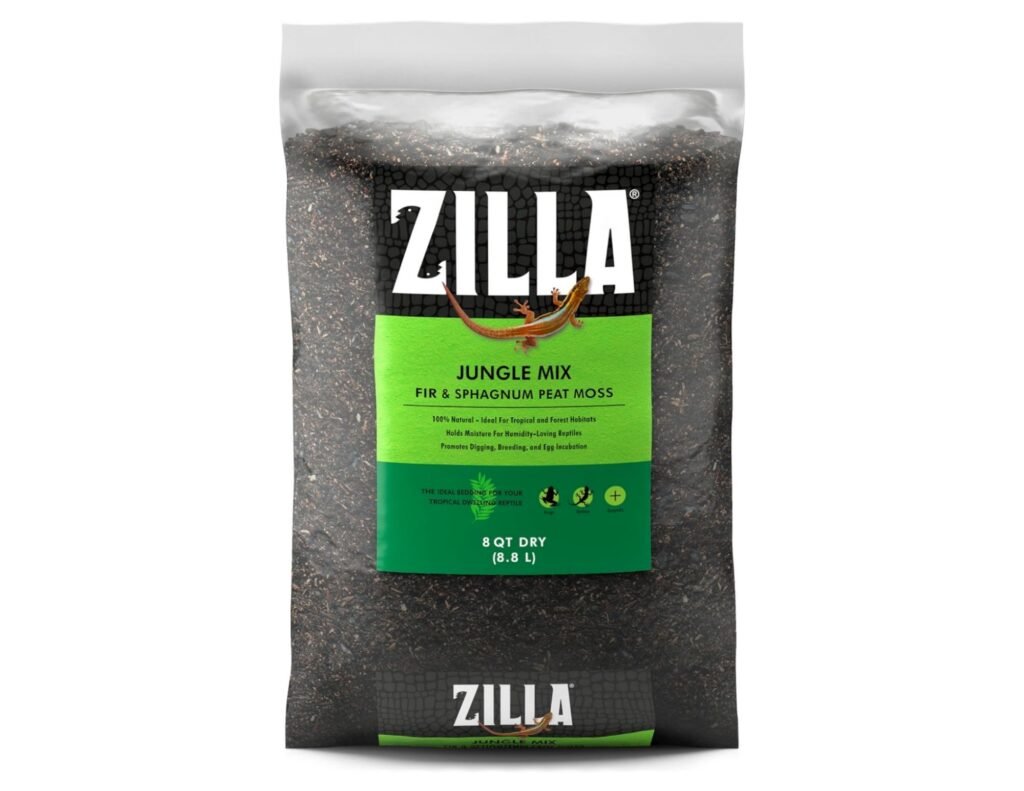
1. Zilla Jungle Mix Terrarium Substrate Bedding
Zilla Jungle Mix is an excellent substrate for your leopard gecko for many reasons. It’s a great substrate for your geckos to lay eggs, provides plenty of moisture to help induce shedding, and has a natural, soft feel your leopard gecko will enjoy.
This bedding also promotes burrowing and digging. Lastly, Zilla Jungle Mix is highly absorbent and helps maintain humidity. Although Zilla Jungle Mix is meant for jungle-dwelling animals, many leopard gecko owners say it’s an excellent substrate for them. Even if you don’t use it long-term, it won’t hurt to try this bedding.
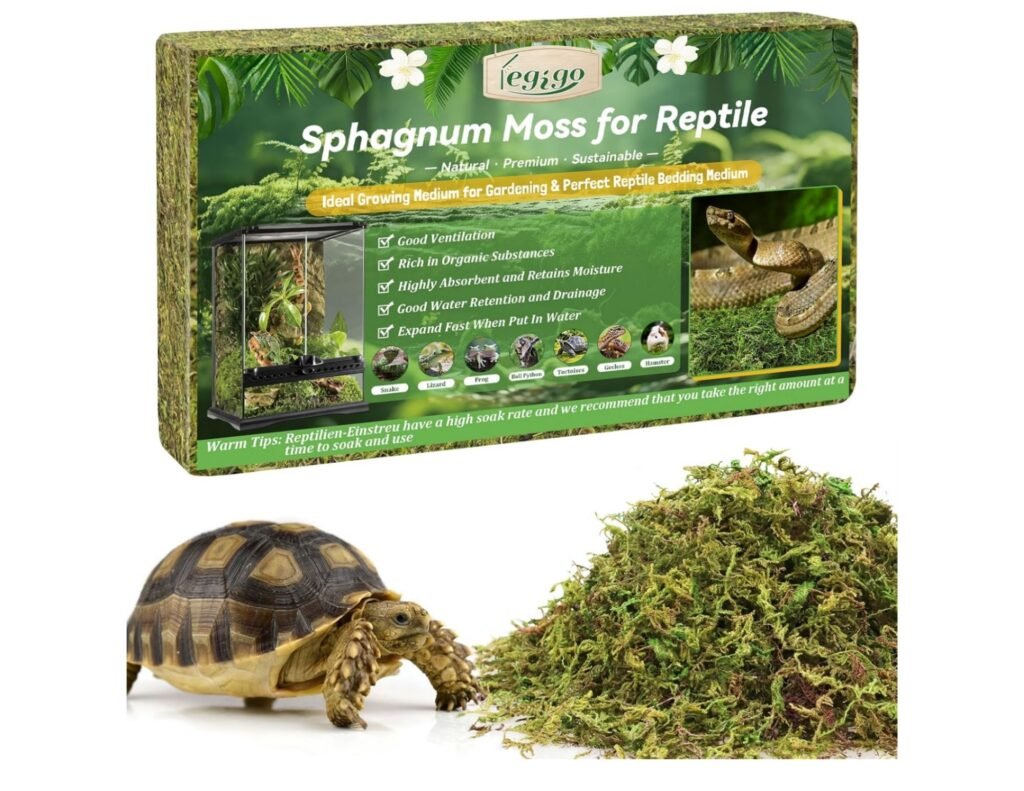
2. Legigo Natural Sphagnum Moss
Another favorite, Legigo natural sphagnum moss comes compacted in a block, so you wet the area and let it dry until it is damp but not dripping. The beauty of this bedding is that you can keep it as moist or as dry as you want, so for a leopard gecko that needs part arid and part humid spots, it is perfect.
The moss helps control humidity and creates excellent hiding and burrowing spots. Lastly, this moss will last up to 6 weeks if you spot-clean it regularly. Otherwise, replace it every 1 to 2 weeks for full hygiene.
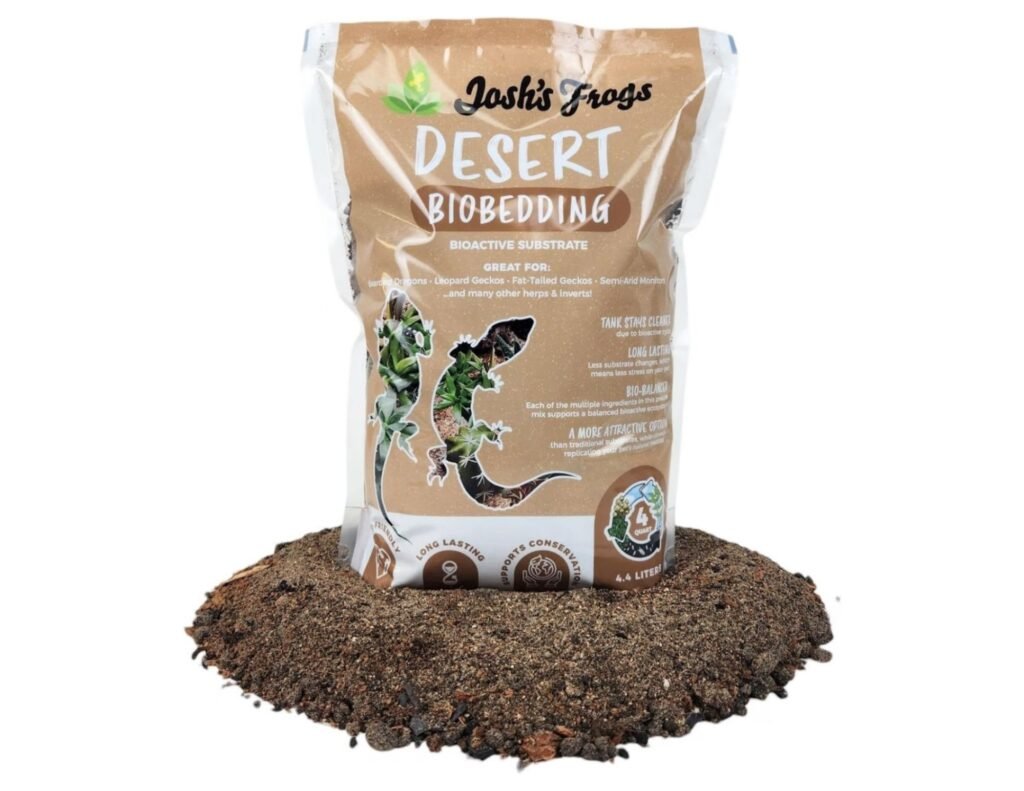
3. Josh’s Frogs BioBedding Desert Bioactive Substrate
For those looking for the ideal substrate for arid and semi-arid bedding, look no further than Josh’s BioBedding Desert Bioactive Substrate! It’s the perfect combination for your leopard geckos, made from organic matter, sand, and other natural components. Your leopard gecko will have a blast being able to dig and burrow at their own leisure. Plus, we tested this product for 3 years before releasing it, so you can be confident it is safe for your little lizard friend.
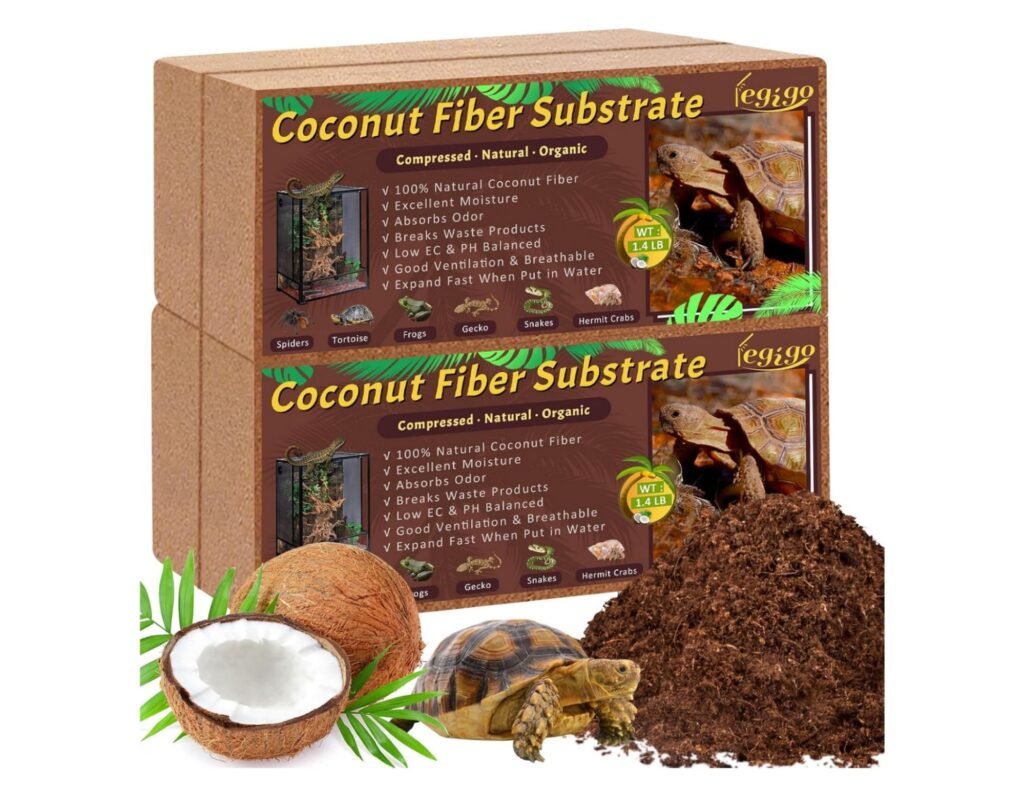
4. Legigo Natural Coco Coir Reptile Bedding
One of the best things about Legigo natural coco coir reptile bedding is that you can dispose of it outside in your backyard or compost area, thanks to its biodegradable properties. Not only that, but this bedding is extremely soft and airy, meaning your leopard gecko will have plenty of space and area to burrow and dig, providing them a safe alternative to anything they cannot use. This coco coir comes in a pack of 4, giving you the best value for the price.
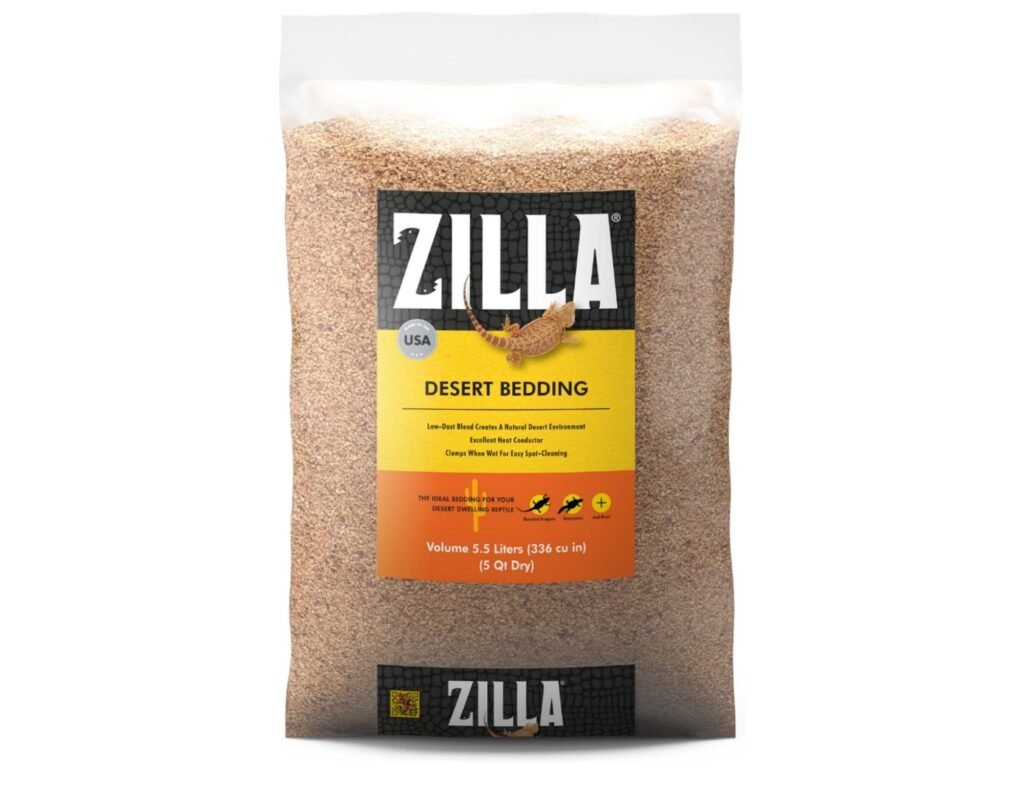
5. Zilla Desert Bedding Reptile Substrate
Another desert bedding that mimics a leopard gecko’s natural habitat, this bedding is made of sand-like material that is much easier to handle than traditional sand. Not only does this substrate promote burrowing for your gecko, but also for any live insects you may want to provide for them as well. In doing so, your leo will have a blast hunting for its prey while the hunt entertains you.
Final Words
In a nutshell, leopard geckos need specific substrates to support their overall well-being. If you have more questions about handling your gecko, we recommend checking out our other articles for further guidance. After all, we are here to help, and we wish you the best on your small-pet journey!