Interactive toys aren’t just playthings for small cats – they’re tools that improve their health, behavior, and quality of life. Cats, regardless of size, need mental and physical stimulation to stay healthy and happy. Without it, they can develop stress, obesity, and destructive habits. Toys like wand teasers and food puzzles mimic hunting, keeping cats active and engaged.
Key Benefits:
- Mental Health: Reduces stress, anxiety, and boredom while sharpening cognitive function.
- Physical Health: Encourages exercise, helps manage weight, and supports mobility.
- Behavioral Improvements: Curbs aggression, prevents destructive actions, and builds positive routines.
For small breeds, these toys are even more important due to their unique needs. Regular play – just two 10-15 minute sessions daily – can transform their well-being. Choose safe, size-appropriate toys, rotate them weekly, and align playtime with your cat’s natural activity peaks (dawn and dusk). Wrap up sessions with a treat to mimic their natural hunting cycle. It’s a simple way to ensure your feline thrives.
Interactive Toys Benefits for Cats: Key Statistics and Health Outcomes
Puzzle Toys for Cats: Everything You Need to Know!
sbb-itb-e212914
Mental Health Benefits of Interactive Toys
Indoor cats face a unique challenge: their instincts as natural predators clash with an environment that lacks prey. This mismatch can lead to stress, anxiety, and boredom, often resulting in destructive behaviors or even physical health issues. Interactive toys help close this gap by allowing cats to act out their predatory sequence – stalking, chasing, pouncing, and capturing. This kind of play has been shown to lower stress and fear levels.
Lowering Stress and Anxiety
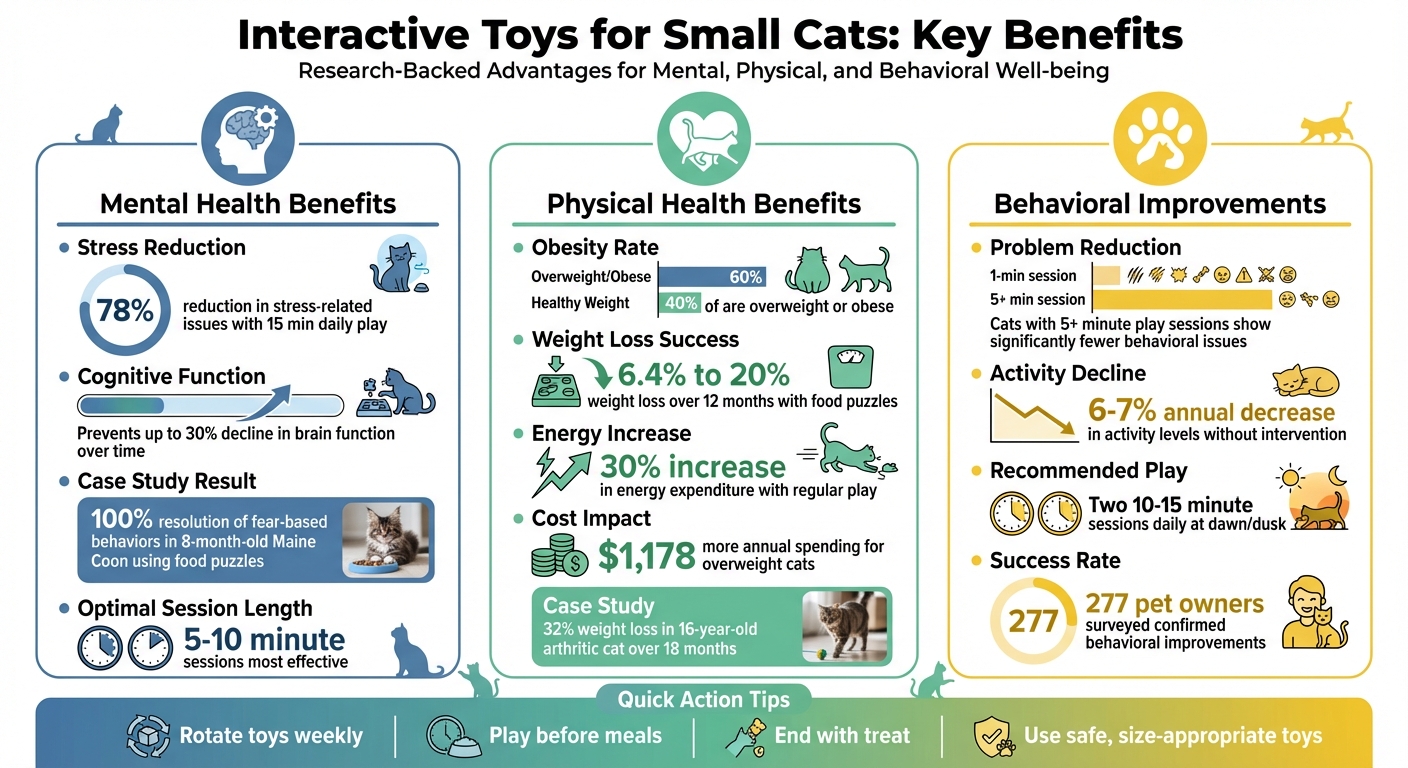
Interactive play has been proven to reduce stress and anxiety in cats. For example, a study published in the Journal of Feline Medicine and Surgery in September 2016 highlighted the impact of interactive toys on two different cases.
In one case, an 8-month-old Maine Coon suffering from fear of a household dog and stress-related scratching saw all problem behaviors disappear after being introduced to food puzzles and safe-place conditioning. In another example, a 9-year-old Domestic Shorthair dealing with noise phobia and redirected aggression experienced a complete resolution of aggression and a marked improvement in noise-related fears after using similar puzzles.
For shy or nervous cats, wand toys can be particularly effective. These toys give timid cats the chance to play and build confidence through successful "captures" without feeling threatened. Consistency is key: 5- to 10-minute play sessions are much more effective at reducing behavioral problems than shorter bursts of activity. Wrapping up playtime with a treat mimics the natural hunting cycle and helps cats relax.
Interactive play doesn’t just ease anxiety – it also keeps boredom at bay by engaging cats’ minds.
Preventing Boredom and Stimulating Cognitive Function
Boredom isn’t just unpleasant for cats – it can be harmful. As Kristyn Vitale, a researcher at Oregon State University, explains:
"Animals often engage in repetitive behaviors when their environment lacks variation".
Without enough mental stimulation, cats may develop harmful habits like pacing or overgrooming, which are signs of psychological stress.
Puzzle feeders and treat-dispensing toys are excellent tools for challenging a cat’s mind. These toys require problem-solving skills, which mimic the mental effort involved in hunting. For instance, a 2-year-old Domestic Shorthair with severe fear of people showed remarkable improvement after being introduced to interactive puzzles. Over time, the cat began displaying attachment behaviors, responding to its name, and stopped avoiding people altogether.
The American Association of Feline Practitioners emphasizes the importance of mental engagement, stating:
"Many behavioral and physical disorders that are seen in cats are often secondary to stress from lack of appropriate stimulation".
Interactive play benefits cats at every stage of life. For kittens, it helps develop sensory skills, coordination, and precision. For older cats, it keeps their minds sharp and combats cognitive decline. To maintain interest, toy rotation is essential. Storing toys out of sight and swapping them weekly keeps the experience exciting and prevents cats from losing interest.
Physical Health Benefits of Interactive Toys
Interactive toys bring more than just fun – they can have a big impact on a cat’s physical health. Pam Johnson‐Bennett, a certified cat behaviorist, highlights a common issue:
"Too many indoor cats are becoming feline couch potatoes with the only exercise coming in the form of the walk to the food bowl and litter box".
This lack of movement can lead to serious health problems, but interactive toys can help break this cycle. By combining mental engagement with physical activity, these toys address the inactivity seen in many indoor cats.
Promoting Regular Exercise
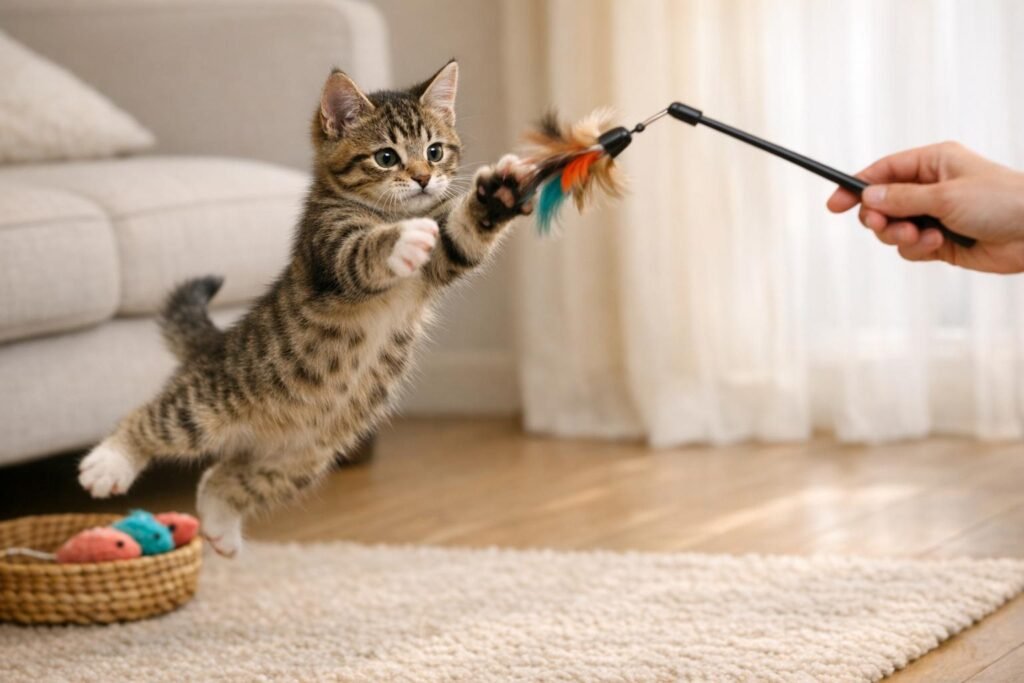
Interactive toys are designed to tap into a cat’s natural hunting instincts. For example, wand teasers and motorized balls mimic the unpredictable movements of prey, like birds or mice. This triggers a cat’s predatory sequence – stalking, chasing, pouncing, and capturing – providing a full-body workout that engages muscles from their paws to their tail.
Food puzzles add another layer of physical activity. These toys require cats to manipulate objects to access their food, turning mealtime into an opportunity for exercise. This is especially important for indoor cats, as activity levels tend to drop by 6% to 7% every year as they age.
Timing and structure matter when it comes to play. Short, 10- to 15-minute sessions at dawn and dusk align with a cat’s natural activity peaks. Kittens may need up to 10 play sessions a day, while adult cats usually benefit from 2 to 3 sessions. Incorporating vertical spaces like cat trees or perches can encourage jumping and climbing, which further strengthens muscles and helps maintain agility. These activities not only keep cats physically fit but also satisfy their natural instincts, contributing to their overall health.
Preventing Obesity and Associated Health Problems
Interactive play does more than just keep cats active – it also helps prevent obesity and the health issues that come with it. In the U.S., around 60% of cats are considered overweight or obese. This condition increases the risk of serious problems like type 2 diabetes, joint pain, heart disease, and chronic urinary tract issues. It also comes with financial costs, as owners of overweight cats spend an estimated $1,178 more annually on care.
Food puzzles are particularly effective in managing weight. A study published in the Journal of Feline Medicine and Surgery (2016) found that obese cats using food puzzles lost between 6.4% and 20% of their body weight over 12 months. One notable case involved a 16-year-old obese domestic longhair with arthritis, who lost 32% of her body weight in 18 months by using both stationary and mobile food puzzles. Another study from the Virginia‐Maryland College of Veterinary Medicine tracked 44 overweight cats, with 29 successfully losing weight or achieving an ideal body condition through a plan that included ball-shaped food toys.
Dr. Lauren E. Dodd emphasizes the benefits of food-dispensing toys:
"Food-dispensing toys may slow food consumption, prolong feeding time, increase activity, and decrease time between meals".
For older cats dealing with arthritis or mobility issues, gentle interactive play can help maintain flexibility and reduce stiffness without putting too much strain on their joints. Regular, short play sessions throughout the day can make a noticeable difference in their overall health.
Behavioral Improvements from Interactive Play
Interactive play doesn’t just keep cats physically and mentally sharp – it can also transform their behavior. By channeling their energy and instincts in the right direction, these play sessions can tackle common challenges like aggression, anxiety, and destructive tendencies.
Reducing Aggression and Destructive Behavior
Interactive play provides a much-needed outlet for a cat’s natural hunting instincts. Without it, these instincts may manifest in unwanted ways – like pouncing on ankles, clawing furniture, or even picking fights with other pets. Pam Johnson‐Bennett, a Certified Cat Behavior Consultant, highlights this point:
"Interactive play is an underused tool when it comes to preventing or correcting behavior problems. It’s a valuable aspect of a behavior plan when dealing with fear, aggression, boredom, depression, [and] intercat conflict".
Research backs this up. A 2014 study in the Journal of Veterinary Behavior surveyed 277 pet owners and found that cats who engaged in play sessions of at least 5 minutes showed fewer behavioral issues compared to those with only 1-minute sessions.
Wand toys are a favorite for addressing these tendencies. They allow cats to channel their energy into chasing and pouncing, keeping human hands safely out of the equation. This is especially helpful for cats prone to biting or scratching, as it lets them act out their predatory instincts safely. Dr. Mikel Delgado, a Certified Cat Behavior Consultant, puts it succinctly:
"What are the signs a cat guardian should look out for that mean they need more play? ‘Attacking your ankles!’".
Timing is also key. Cats are naturally more inclined to play when they’re hungry, so scheduling sessions before meals can increase their engagement and minimize frustration. Always wrap up play by letting your cat "catch" the toy, followed by a treat or meal. This mimics the full hunting cycle and prevents pent-up frustration that could lead to aggressive outbursts.
Developing Positive Habits Through Play
Interactive play doesn’t just curb bad behavior – it helps build positive routines. Regular sessions, like two 15-minute playtimes a day, provide predictable stimulation that reduces anxiety and boosts confidence. Cats that consistently get this kind of engagement are less likely to develop habits like overgrooming, excessive scratching, or aggression toward family members. These behaviors often stem from boredom, and interactive toys can fulfill the mental stimulation that indoor cats crave.
For shy or nervous cats, interactive play can be a game-changer. Playing at a comfortable distance helps them gradually build trust and confidence. Over time, as they become more engaged with appropriate toys, they’ll naturally move away from destructive alternatives.
To keep things fresh, rotate toys regularly. Even older toys can feel new again by "marinating" them in catnip or silvervine.
Dr. Karen Sueda, a board-certified veterinary behaviorist, sums it up perfectly:
"A tired cat is less likely to pounce on your legs, attack other cats, or engage in other potentially harmful behavior".
In short, interactive play creates a win-win situation: a calm, happy cat and a more harmonious home. It strengthens the bond between you and your feline friend while reducing stress and behavioral challenges.
Practical Tips for Small Cat Owners
If you’re looking to keep your little feline entertained and healthy, the right approach to interactive toys can make all the difference. Let’s dive into some practical ways to choose and manage toys for your small cat.
Selecting the Right Toys for Small Cats
When choosing toys, consider your cat’s size, energy level, and personality. Safety comes first – any toy should be larger than a quarter to prevent choking. Cats have hook-like tongues that can easily pull small objects into their throats. Lightweight toys, like ping-pong balls, are great for small cats to bat around and carry with ease [37,38].
For high-energy cats with a strong prey drive, fast-moving electronic toys or intricate puzzles can be a hit, as they provide both physical and mental stimulation. Shy or anxious cats, on the other hand, might prefer stationary plush toys or scent-based options like catnip or silvervine. Keep in mind, though, that only 50% to 70% of cats respond to catnip due to genetics. Senior cats, many of whom show signs of osteoarthritis by age 10, do best with low-impact toys that stay on the ground and incorporate scent enrichment.
Color matters too – cats see blue and yellow most clearly, so toys in these colors are more likely to grab their attention. The best toys allow your cat to follow the natural hunting sequence: search, stalk, chase, pounce, catch, and manipulate. Wand toys are excellent for simulating this sequence, while puzzle feeders encourage foraging behaviors.
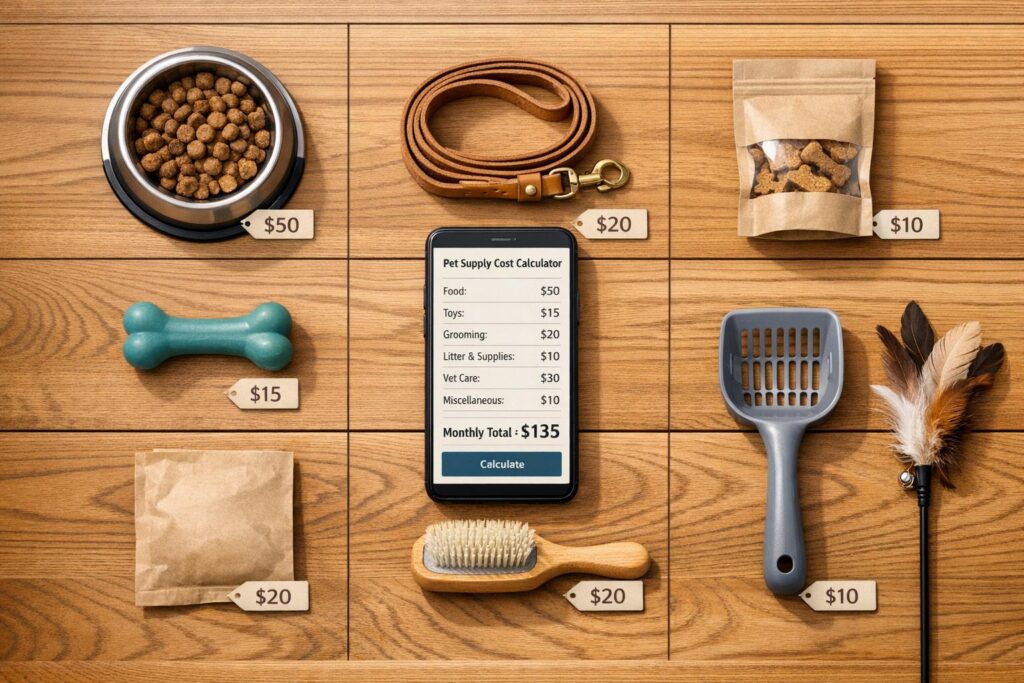
If you’re on a budget, consider affordable options like the Petstages Tower of Tracks (around $9–$10) or the KONG Window Teaser (about $10). For more complexity, mid-range choices like the Nina Ottosson Puzzle Game ($21) are worth exploring. If you’re looking to splurge, the SnugglyCat Ripple Rug ($46) offers durability and long-term engagement.
Toy Rotation and Daily Play Schedules
Keeping your cat excited about their toys means maintaining an element of surprise. Rotate toys weekly to keep them fresh. Limit access to 4–5 toys at a time, then swap them out every few days or once a week [37,40,41]. Store unused toys in a closed container out of sight – if your cat constantly sees them, they’ll lose their appeal. When reintroducing a toy, rubbing it with catnip or silvervine can make it feel brand new.
Cats are naturally most active at dawn and dusk, making these the ideal times for play. Aim for two 10–15 minute sessions during these periods [38,41,46]. According to Dr. Crista Coppola, a Certified Applied Animal Behaviorist:
"Cats will get bored with the same toys day in and day out. Limit their access so the toy maintains its high value for the cat".
Wrap up play sessions by transitioning from a laser pointer to a physical toy, then offer a treat or meal to complete the hunting cycle [38,41]. Always put away interactive toys like wands after playtime, as they’re not safe for unsupervised use. For solo-play toys, remove any ribbons, feathers, or small plastic parts that could pose choking or intestinal risks [37,40].
Conclusion
Interactive toys play a key role in supporting your cat’s overall well-being. Mentally, they provide the stimulation needed to help prevent up to a 30% decline in brain function over time, according to research. Physically, regular play increases your cat’s energy use by 30%. In fact, a clinical study revealed that obese cats using food puzzles achieved weight loss ranging from 6.4% to 20% over a year.
Beyond health benefits, interactive play can also improve your cat’s behavior. Just 15 minutes of play each day can reduce stress-related issues by 78%. Owners who dedicate at least 5 minutes per session report noticeably fewer behavioral problems. By committing to two 15-minute sessions a day, you can help address common challenges like inappropriate urination or destructive scratching by channeling your cat’s natural hunting instincts into positive activities.
Dr. Stephanie Globerman highlights this connection:
"Most behavior problems in cats stem from boredom, frustration, and stress".
Interactive toys not only tackle these issues but also deepen the bond between you and your feline companion.
Incorporating consistent, varied play – whether through a ball track or a puzzle feeder – keeps your cat mentally sharp, physically active, and emotionally balanced. By setting aside a little time each day for play, you give your cat the tools it needs to thrive.
FAQs
How do I know my small cat needs more play?
Cats can’t directly tell you when they’re bored or stressed, but their behavior speaks volumes. Watch for signs like pacing, overgrooming, excessive meowing, or ignoring their toys. These can all point to a lack of mental stimulation.
Interactive playtime is a great way to keep stress and unwanted behaviors at bay. If your cat seems uninterested in play or shows signs of stress, try engaging them during their most active hours – typically around dawn and dusk. This aligns with their natural hunting instincts and might make playtime more appealing.
Which interactive toys are safest for small cats?
When picking toys for your cat, go for interactive options made from non-toxic, long-lasting materials. Ensure the size is suitable to avoid any choking hazards or accidental swallowing. Steer clear of toys with small or detachable parts that could pose a risk. Good choices include food puzzles, soft plush toys marked as safe for children, and durable balls or puzzle feeders without sharp edges. Always supervise your cat during play at first and check toys regularly for signs of damage to keep them safe for use.
What should I do if my cat gets bored with toys fast?
Keeping your cat entertained doesn’t have to be complicated, but it does require a little variety. Switch up their toys regularly to keep things fresh. Try a mix of options, like food puzzles, interactive toys, or even simple DIY creations like cardboard boxes or crumpled paper.
Short play sessions – about 10 minutes, two to three times a day – can do wonders for their mental and physical stimulation. You can also spice things up by changing where you place the toys or tweaking their appearance. These small changes can make playtime feel new and exciting, helping to ward off boredom.