
Bathing rabbits is not only unnecessary but can also be harmful. Rabbits are excellent self-groomers, and their fur is designed to repel dirt naturally. Bathing them can lead to extreme stress, injuries, hypothermia, and skin problems. Instead, focus on safer alternatives like brushing, spot cleaning, or using cornstarch for dry cleaning. Persistent dirtiness might signal health issues, so consult a veterinarian if needed. Full baths should only be done under veterinary supervision for medical reasons. Keep their environment clean and provide a healthy diet to support their natural grooming habits.
How Rabbits Keep Themselves Clean
Self-Grooming Behavior in Rabbits
Rabbits are meticulous groomers, dedicating hours to keeping their fur clean. They use their teeth, tongue, and paws to remove dirt and evenly spread protective oils across their coat. This natural grooming routine helps eliminate loose hair and debris, ensuring that healthy rabbits stay clean without the need for human assistance. Their teeth play a key role in detangling fur and removing stubborn particles. Beyond cleanliness, this process also enhances the fur’s ability to protect the rabbit.
How Rabbit Fur Repels Dirt
A rabbit’s fur is cleverly designed with two layers: a dense undercoat that provides insulation and coarse guard hairs that repel water and dirt. This structure prevents dirt from sticking to their coat. Short-haired breeds, in particular, benefit from their compact fur, which is easy to maintain and less prone to matting. Even wild-type fur is highly effective at keeping dirt at bay. Combined with their grooming habits, these features help rabbits maintain a clean and healthy coat naturally.
How Proper Housing Supports Cleanliness
While rabbits are excellent at self-grooming, a clean living environment plays a big role in supporting their hygiene. Indoor housing with absorbent bedding, frequent litter changes, and separate areas for eating and hay storage helps reduce soiling. Daily cleaning of the litter box prevents waste from accumulating on their fur, making it easier for rabbits to keep themselves clean, especially around their hindquarters. For overweight rabbits, adjusting their diet – limiting pellets to 1–2 ounces daily (about the size of an egg cup) and offering unlimited hay and greens – can improve their mobility and self-grooming ability.
HOW TO GROOM YOUR RABBIT! Brushing Tips, Shedding Stages and Supplements
Why Bathing Is Dangerous for Rabbits
Rabbits are naturally clean animals, capable of grooming themselves effectively. Despite this, some owners may be tempted to bathe their rabbits if they notice dirt or debris on their fur. However, immersing rabbits in water can pose serious risks to their health – risks that far outweigh any potential benefits. Let’s explore why bathing can be so harmful to these delicate creatures.
Stress and Shock
Rabbits are prey animals with a heightened fight-or-flight response. When restrained or submerged in water, they often experience extreme fear and panic, which can lead to shock. This kind of stress can be life-threatening. A frightened rabbit’s heart rate and breathing can skyrocket, potentially causing circulatory collapse. Mary Cotter, a renowned expert in rabbit care, explains: "Bathing a rabbit can cause extreme stress, leading to serious health problems… In some cases, this can even cause a heart attack".
Older rabbits, those with pre-existing health issues, or rabbits already experiencing stress are particularly at risk for cardiac complications during or after a bath.
Some warning signs of severe stress include:
- Violent struggling
- Wide, panicked eyes
- Rapid breathing
- Loud tooth grinding
- Sudden stillness or collapse
If your rabbit shows symptoms like cold ears, pale gums, weakness, or unresponsiveness after being exposed to water, seek veterinary help immediately.
Risk of Broken Bones and Spinal Injuries
Rabbits have fragile skeletons paired with powerful hind leg muscles, making them prone to injury if they panic. A wet, slippery surface – like a bathtub or sink – can make matters worse. A frightened rabbit may thrash and twist violently, increasing the risk of fractures, dislocations, or even severe spinal injuries. In the worst cases, spinal trauma can result in paralysis or require euthanasia.
Even lifting a struggling rabbit improperly can lead to injury. Without proper support for their back, a panicked rabbit’s thrashing can cause serious harm. This makes the physical risks of bathing just as concerning as the stress it causes.
Hypothermia and Skin Problems
Rabbit fur is incredibly dense, with a thick undercoat that traps air to help regulate body temperature. While this is great for insulation, it becomes a problem when the fur gets wet. Once soaked, the dense fur can take hours to dry completely, even in a warm home with typical indoor temperatures (68–72°F). During this drying process, a rabbit can lose body heat, putting them at risk of hypothermia. Smaller, elderly, underweight, or sick rabbits are especially vulnerable to dangerous drops in temperature.
Using a hair dryer to speed up drying isn’t a safe solution either. Hair dryers can burn a rabbit’s sensitive skin, and they often fail to fully dry the thick undercoat. Additionally, bathing strips away the natural oils that protect a rabbit’s skin. Without these oils, their skin becomes more prone to dryness, irritation, and infections. Damp fur trapped in folds can further encourage bacterial or fungal growth, while water entering the ears may lead to painful ear infections.
A rabbit’s delicate skin can also tear easily during vigorous scrubbing or rough drying, creating open wounds that invite infection. All of these factors make bathing a dangerous and unnecessary practice for rabbits.
sbb-itb-e212914
How to Clean Your Rabbit Without Bathing
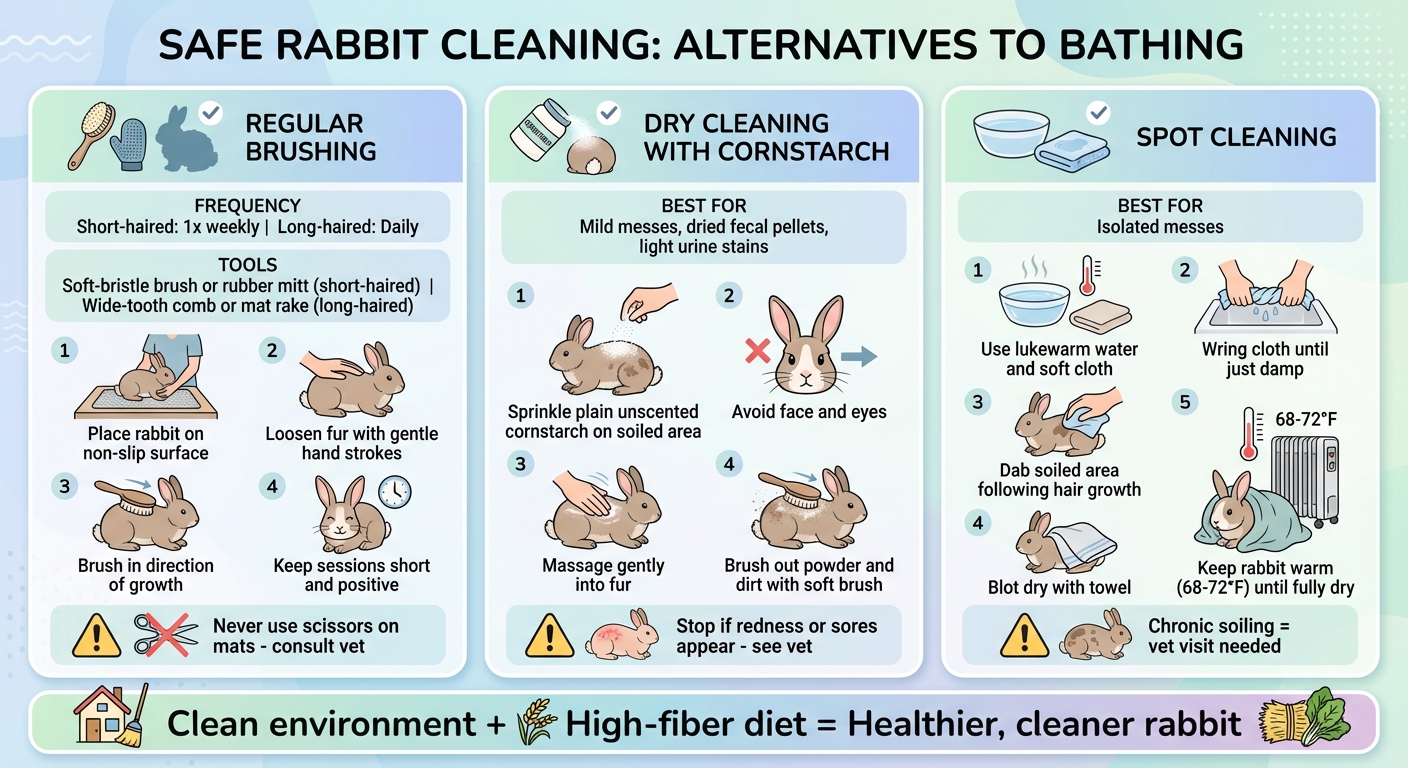
Safe Rabbit Cleaning Alternatives: Step-by-Step Guide
You don’t need to bathe your rabbit to keep them clean. In fact, there are safer and less stressful alternatives that align with their natural grooming habits. Regular brushing, dry cleaning with unscented cornstarch, and spot cleaning can effectively remove dirt while keeping your rabbit comfortable and calm.
Regular Brushing
Rabbits are naturally good at grooming themselves, but brushing helps remove loose fur and debris that they might miss. For short-haired rabbits, brushing once a week is usually enough, while long-haired breeds benefit from daily brushing to prevent mats and buildup. During shedding seasons, brushing more often can help keep fur from being ingested, which could lead to intestinal issues.
Use soft-bristle brushes or rubber grooming mitts for short-haired rabbits to avoid irritating their sensitive skin. For long-haired rabbits, a wide-tooth comb or mat rake works best. Place your rabbit on a secure, non-slip surface, start with gentle hand strokes to loosen fur, and then brush in the direction of growth. Keep sessions short and positive – multiple quick grooming sessions are easier on your rabbit than one long one.
If mats develop, avoid using scissors, as rabbit skin is very delicate and can tear easily. For small tangles, gently work through them with a comb, holding the fur close to the skin. For severe mats, especially those close to the skin, consult a veterinarian or a professional groomer to ensure safe removal.
Dry Cleaning with Cornstarch
When your rabbit’s fur gets dirty but doesn’t require a bath, plain unscented cornstarch can be a lifesaver. Sprinkle a small amount onto the soiled area, keeping it away from their face and eyes, and gently massage it into the fur. Use a soft brush or fine comb to remove the powder and loosened dirt. Make sure to shake off any excess powder to prevent clumping near the nose.
This method works well for mild messes like dried fecal pellets or light urine stains. It’s particularly helpful for older rabbits, those recovering from surgery, or disabled rabbits that need to stay dry. However, if you notice redness, sores, broken skin, or signs of urine scald, stop using cornstarch and consult your veterinarian. Persistent soiling may indicate an underlying health issue that needs attention.
Spot Cleaning Dirty Areas
For isolated messes, spot cleaning is a gentle and effective option. Start with a small bowl of lukewarm water and a soft cloth. Wring out the cloth until it’s just damp, then support your rabbit as you carefully dab the soiled area, following the direction of hair growth. Avoid soaking the skin. Use a clean section of the cloth as needed until the area is clean, then blot the fur dry with a towel. Continue drying by gently rubbing the area until the fur is almost dry. Keep your rabbit in a warm, draft-free space (around 68–72°F) until they’re completely dry.
Spot cleaning is great for occasional messes, but if your rabbit has chronically wet or dirty areas, a strong odor, or hardened feces, it could mean they’re struggling to groom themselves properly. In such cases, a veterinarian should evaluate their health.
Maintaining a clean environment is just as important as grooming. Regularly clean your rabbit’s living space, change litter boxes often, and provide a high-fiber diet rich in grass hay. This supports healthy digestion and helps prevent soft or sticky stools, keeping your rabbit cleaner overall.
For safe and effective grooming tools, Little Pet Corner offers well-researched product recommendations that cater to your rabbit’s needs.
Rare Cases When Bathing May Be Required
Bathing is rarely necessary for rabbits and should only occur under the guidance of a veterinarian in specific health-related emergencies. These cases are not part of routine care but rather medical interventions aimed at addressing serious conditions.
Medical Situations That May Require Bathing
In certain situations, a veterinarian may recommend a bath to address specific medical concerns. These include severe urine scald, persistent diarrhea that poses a risk of flystrike, or contamination with toxic substances that cannot be safely removed by other means. Additionally, in some post-surgical or wound-care scenarios, a vet may advise localized cleaning if absolutely necessary.
It’s important to understand that these baths are medical procedures, not grooming practices. A veterinarian will assess whether a bath is essential or if alternatives – like clipping, dry cleaning, or spot-wiping – are safer options. Attempting to bathe a rabbit without professional guidance can lead to complications such as skin damage, infections, or even flystrike. Chronic issues with soiling may also point to underlying health conditions that need veterinary attention.
When Soiling Indicates Health Problems
Frequent soiling often suggests a health issue rather than a hygiene problem. A clean environment and regular grooming usually prevent soiling, so persistent issues warrant closer examination. Warning signs include consistently wet fur, irritated or inflamed skin, hardened fecal matter stuck to the fur, discomfort when touched, and more severe symptoms like maggots or oozing wounds. A strong ammonia-like smell that persists despite gentle cleaning is another red flag.
Such symptoms can indicate conditions like urinary tract disease (including sludge, stones, or infections), chronic gastrointestinal problems like diarrhea or soft stools, obesity that limits self-grooming, arthritis or spinal issues that reduce flexibility, or dental problems that interfere with consuming cecotropes. If you notice continued soiling despite maintaining a clean habitat and regular spot cleaning – or if there’s visible wetness around the genitals or inner thighs, coupled with changes in posture or activity – contact a rabbit-savvy veterinarian immediately. Avoid attempting a full bath at home, as it could worsen the situation.
Conclusion
Bathing rabbits comes with serious risks that can jeopardize their health and well-being. From extreme stress and potential cardiac shock to injuries like broken bones and spinal damage, the dangers are substantial. Rabbits can also suffer from hypothermia, skin irritation, and infections – all of which far outweigh any perceived grooming benefits. It’s important to remember that healthy rabbits are excellent self-groomers and typically don’t require bathing.
Instead, focus on safer alternatives to maintain your rabbit’s hygiene. Regular brushing is key – once a week for most rabbits and daily for long-haired breeds. For minor messes, dry cleaning with cornstarch or spot-cleaning with a damp cloth works well. When paired with proper housing and a healthy diet, these methods are more than sufficient to keep your rabbit clean and comfortable.
However, if you notice persistent soiling or hygiene issues, it could indicate an underlying health problem. In such cases, consult a rabbit-savvy veterinarian immediately. Full or partial baths should only be considered in rare medical situations and always under veterinary guidance, such as when severe soiling cannot be managed with safer cleaning methods.
FAQs
Why shouldn’t rabbits be bathed?
Bathing rabbits is typically discouraged because it can cause them significant stress and potentially lead to health issues. Their skin is quite sensitive and can easily become irritated or damaged when exposed to water. Plus, rabbit fur takes a long time to dry, which increases the chance of hypothermia. Bathing can also disrupt their natural grooming routine, which is vital for keeping their coat clean and maintaining overall hygiene.
A safer and more rabbit-friendly approach is spot cleaning. Use a damp cloth to gently clean any dirty areas, and regularly brush their fur to remove dirt and loose hair. These methods are much less stressful and help keep your rabbit comfortable and clean.
What are the signs that my rabbit’s grooming issues could be related to a health problem?
If your rabbit is having trouble keeping clean, it could point to a deeper health problem. Be on the lookout for things like constantly dirty or tangled fur, a noticeable odor, nails that are too long or uneven, or abnormal droppings or urine. These symptoms might signal issues such as obesity, dental problems, or infections.
Should you observe any of these warning signs, reaching out to a veterinarian without delay is crucial to make sure your rabbit gets the proper care.
What are the best ways to keep my rabbit clean without giving them a bath?
Bathing rabbits is usually not a good idea. It can cause them unnecessary stress and even pose health risks. Thankfully, there are safer and easier ways to keep your rabbit clean and healthy:
- Brush regularly: Brushing helps remove loose fur and prevents matting, especially when your rabbit is shedding.
- Spot clean when needed: Use a damp cloth or unscented baby wipes to gently clean any dirty spots on their fur.
- Maintain grooming habits: Trim their nails as needed and check their coat for any debris or tangles.
These simple steps align with your rabbit’s natural grooming instincts and keep them comfortable without the stress of a bath.