
Rabbits need specific diets at different life stages to stay healthy. Baby rabbits require mother’s milk and alfalfa hay for growth. Young rabbits thrive on alfalfa hay and pellets for high energy and development. Adults should switch to timothy hay, limited pellets, and fresh vegetables to maintain health and prevent issues like obesity. Seniors may need softer hay, adjusted pellet portions, and supplements for aging concerns. Hay should always make up the majority of their diet, ensuring proper digestion and dental health.
Key Takeaways:
- Baby Rabbits (0–7 weeks): Mother’s milk and alfalfa hay are essential.
- Young Rabbits (7 weeks–7 months): Unlimited alfalfa hay and pellets support growth.
- Adult Rabbits (1–5 years): Grass hay (timothy), limited pellets, and vegetables are ideal.
- Senior Rabbits (6+ years): Focus on softer hay, adjusted portions, and health monitoring.
Always transition diets slowly and consult a veterinarian for specific needs.
Feeding Baby Rabbits (Birth to 7 Weeks)
Mother’s Milk Requirements
For the first three weeks of life, baby rabbits, or kits, depend entirely on their mother’s milk for both nutrition and immunity. A healthy doe typically nurses her kits once or twice a day, often during the night or early morning. If everything goes as it should, the kits will double in size during this period. However, if a kit looks underweight or isn’t growing as expected, it’s important to seek advice from a rabbit-savvy veterinarian. In cases where the mother isn’t nursing adequately, a vet may recommend hand-rearing using an approved small-pet milk replacer. Never use cow’s milk, as it isn’t suitable for rabbits. As the kits grow stronger, they’ll naturally start to show interest in solid foods.
Starting Solid Foods
By the time kits are about three weeks old, they begin experimenting with solid foods while still nursing. At this stage, you can introduce unlimited alfalfa hay along with a small amount of plain junior pellets specifically designed for growing rabbits. Alfalfa hay is ideal because its higher protein and calcium content support early development. Make sure to provide fresh alfalfa hay daily in an easily accessible container.
When offering pellets, use a shallow dish and avoid mixes containing seeds or nuts, as these can encourage selective eating habits. Between three and seven weeks, you can offer pellets nearly free-choice, but monitor their stools closely. If you notice diarrhea or soft stools, it may be a sign that adjustments to their diet are needed. By the time they reach seven to eight weeks, most kits are fully weaned and eating a diet of hay and pellets exclusively. To protect their still-developing digestive systems, it’s best to wait until they’re three to four months old before introducing vegetables.
Feeding Young Rabbits (7 Weeks to 7 Months)
Using Alfalfa Hay
Once rabbits are weaned, their diet needs to support their rapid growth and high energy demands. From seven to eight weeks old, alfalfa hay should be the primary hay provided. It’s packed with protein and calcium – both essential for building strong bones, supporting muscle development, and keeping those ever-growing teeth in check. Compared to grass hays like timothy or orchard grass, alfalfa offers a richer nutrient profile, making it ideal for young rabbits during this critical growth phase.
Make sure to provide fresh alfalfa hay daily, served in a clean feeder. Rabbits are natural grazers, so having hay available throughout the day helps maintain proper digestion and keeps their teeth from overgrowing. As your rabbit nears six to seven months, start introducing timothy or other grass hays gradually. This shift helps lower calcium and calorie intake, preparing them for their adult diet. Until then, unlimited alfalfa hay is the way to go.
Choosing Pellets for Growing Rabbits
In addition to hay, pellets play a major role in meeting the nutritional needs of young rabbits. During this stage, their energy needs are sky-high, and pellets provide the concentrated nutrients required for healthy growth. Unlike adult rabbits, young ones can have near unlimited access to pellets – their bodies will burn through the extra calories as they grow.
When choosing pellets, stick to those specifically labeled for young rabbits. Avoid mixes with colorful bits, seeds, nuts, or corn, as these can lead to picky eating and an imbalanced diet. Instead, go for uniform pellets with a guaranteed analysis that includes:
- At least 18% fiber for digestive health
- 12–16% crude protein to support growth
- 2–4% fat for energy
Opt for brands that complement an alfalfa-based diet. As your rabbit approaches six months, gradually reduce the pellet portion to about 1/8 cup per 2.2 pounds of body weight. Keep an eye on their weight and check their feces regularly to ensure everything stays on track.
Feeding Rabbits 🐰 Best Diet for Baby, Adult & Elderly Bunnies
Feeding Adult Rabbits (1 to 5 Years)
As rabbits transition from their rapid growth phase into adulthood, their dietary needs change significantly. Providing the right balance of nutrients during this stage is crucial for maintaining healthy digestion and supporting dental health.
Switching to Timothy Hay
When your rabbit reaches adulthood – around the age of one – it’s time to make timothy hay the centerpiece of their diet. While alfalfa hay is suitable for growing rabbits due to its higher calorie, protein, and calcium content, it can cause problems like obesity and kidney issues in adult rabbits. Grass hays like timothy are rich in fiber (20–27%), which aids digestion and keeps their ever-growing teeth in check. With a lower calcium content (around 1.0%), timothy hay also promotes urinary health.
Transitioning from alfalfa to timothy hay should be done gradually over 7 to 14 days. Start by mixing about 25% timothy hay with alfalfa and slowly increase the ratio until your rabbit is eating 100% timothy hay. Keep an eye out for signs like soft stools or reduced appetite during this process. Always provide unlimited access to fresh grass hay – generally, an amount equal to your rabbit’s body weight – to avoid gastrointestinal issues. Once the switch is complete, adjust their pellet portions to align with their new dietary needs.
Adjusting Pellet Portions
Unlike young rabbits, adults don’t need unlimited pellets. With their slower growth rate, excess calories from pellets can lead to weight gain. Instead, offer a measured portion of 2–5 tablespoons (approximately 1 to 2 ounces) of adult-formulated pellets daily. Look for pellets specifically designed for adult rabbits, containing 12–15% protein, 20–27% fiber, 2–3.5% fat, and about 1.0% calcium. Timothy-based pellets, like Oxbow Bunny Basics/T, pair well with a grass hay diet.
Stick to plain, uniform pellets rather than mixes that include seeds, nuts, or corn, as these can encourage selective feeding. A medium-sized rabbit typically needs about ¼ cup of pellets per 5 pounds of body weight, though more active rabbits may require up to ½ cup. Weigh your rabbit weekly to monitor any changes in weight, and adjust the pellet portions as needed. Remember, hay should account for about 85% of their diet, with pellets only contributing around 5%.
Incorporating Fresh Vegetables
Fresh vegetables add variety, hydration, and essential nutrients to your rabbit’s diet. Aim to provide 1 packed cup of leafy greens per 2 pounds of body weight daily, which equates to about 2–3 cups for a 5-pound rabbit. This portion should make up roughly 10% of their overall diet. To ensure balanced nutrition, offer at least three different types of vegetables each day. Safe daily choices include arugula, basil, celery leaves, chicory, dandelion greens, fennel, romaine lettuce, spring greens, and watercress. Introduce new vegetables gradually – starting with less than ½ ounce – to monitor how your rabbit reacts.
Limit high-oxalate greens like spinach, kale, Swiss chard, and parsley to occasional servings, as feeding them daily can lead to bladder issues. Similarly, root vegetables like carrots and fruits should be treated as occasional treats. Offer these sugary foods sparingly – 1 to 2 tablespoons once or twice a week – and avoid them entirely for overweight rabbits. Splitting your rabbit’s daily vegetable portion into two meals can also help with digestion.
Here’s a quick summary of daily feeding guidelines for adult rabbits:
| Food Type | Daily Amount (per 5 lbs body weight) | Notes |
|---|---|---|
| Grass Hay (Timothy, Oat, Orchard) | Unlimited (85% of diet) | Main source of fiber |
| Pellets (Timothy-based) | ¼–½ cup (5% of diet) | 2–5 tablespoons; measured daily |
| Fresh Vegetables | 2–3 cups (10% of diet) | 3+ varieties; reduce if hay intake drops |
| Fruit | 1–2 tablespoons, 1–2×/week | Avoid for overweight rabbits |
| Water | Unlimited | Fresh daily |
sbb-itb-e212914
Feeding Senior Rabbits (6 Years and Older)
As rabbits age – typically around six years old – their bodies go through changes that call for thoughtful dietary adjustments. While their adult diet forms the foundation, the focus shifts toward maintaining their comfort and health in these later years. With a slower metabolism, reduced dental efficiency, and decreased gut motility, senior rabbits need a carefully tailored approach to their nutrition.
Managing Fiber Levels
High-fiber grass hay remains the backbone of a senior rabbit’s diet, just as it is for younger adults. Providing unlimited access to timothy, orchard, or meadow hay – about the same weight as your rabbit daily – helps keep their digestive system functioning smoothly and prevents issues like gastrointestinal stasis. Aim for a diet that includes 20–27% crude fiber overall.
If dental wear makes chewing tougher, consider switching to softer hay varieties such as second-cut timothy or orchard grass. These are gentler on aging teeth but still provide the long fiber strands necessary for proper digestion. Alfalfa hay should generally be avoided unless your rabbit is underweight and a veterinarian specifically recommends it. Its higher calcium levels can exacerbate problems like bladder sludge or kidney stones.
Tracking Weight and Food Intake
Regular weight checks are essential for senior rabbits. Use a digital kitchen scale to weigh your rabbit weekly, and look out for any changes. A weight loss of more than 10% or unexpected gains should prompt a visit to the vet. Even small losses – just 2–3 ounces – could signal dental problems, poor nutrient absorption, or other chronic conditions.
Keep a close eye on hay consumption – your rabbit should eat an amount roughly equal to its body weight in hay daily. Additionally, monitor their fecal output. Healthy droppings are firm and plentiful, while smaller, harder, or fewer pellets could indicate digestion slowdowns or dehydration. If your rabbit is losing weight despite eating hay, you might need to increase their pellet intake gradually. Senior-specific pellets, which are lower in calcium but high in digestible fiber, are a good option. A general guideline is about 1–2 ounces of pellets per 2 pounds of body weight. Regular monitoring will help you decide when additional support is necessary.
Adding Supplements for Aging Rabbits
Some senior rabbits can benefit from supplements, but always consult a rabbit-savvy veterinarian before introducing anything new to their diet. For joint health, glucosamine and chondroitin supplements – dosed at 5–10 mg per pound of body weight daily – can help rabbits dealing with arthritis or stiffness. Products like Oxbow Natural Science Joint Support, which costs around $10.00–$16.00 for a 60-count bag, are a popular choice.
Probiotics designed for herbivores can also be useful, especially during or after digestive issues or antibiotic treatments. Maintaining a balanced calcium-to-phosphorus ratio between 1:1 and 2:1, with total dietary calcium around 1.0%, supports bone health without overloading the kidneys. Additionally, scheduling annual wellness exams, including bloodwork every 6–12 months, is vital. These checkups help monitor kidney and liver health and ensure dietary adjustments are made as needed for calcium or protein levels.
Supplements by Life Stage
Supplements can play a key role in addressing nutritional gaps across different stages of a rabbit’s life. While a balanced diet of hay, pellets, and fresh vegetables provides most of the nutrients rabbits need, certain life stages or health concerns may require extra support. However, it’s crucial to consult a rabbit-savvy veterinarian before introducing any supplements. Over-supplementing, particularly with minerals like calcium, can lead to serious health problems.
Calcium and Phosphorus Needs
The calcium-to-phosphorus ratio changes as rabbits grow, making it essential to adjust their diet accordingly. For young rabbits, a higher ratio of calcium to phosphorus (about 1.5:1 to 2:1) is necessary to support bone development. Alfalfa hay and alfalfa-based pellets are excellent for meeting these needs. Without enough calcium, young rabbits risk developing weak bones or conditions like secondary hyperparathyroidism.
As rabbits mature into adulthood (between one and five years), their calcium requirements decrease significantly. At this stage, a ratio closer to 1:1 is ideal, with total dietary calcium levels around 1.0%. Timothy hay and timothy-based pellets are better suited for adult rabbits, as they provide the right balance. Continuing to feed alfalfa during adulthood can lead to excess calcium in the diet, increasing the risk of bladder stones and kidney issues.
Beyond minerals, maintaining a healthy gut environment is equally important for a rabbit’s overall well-being.
Probiotics for Gut Health
Gut health is a cornerstone of a rabbit’s overall digestive function, and probiotics can help maintain a healthy balance of gut bacteria. These supplements are particularly useful during times of change, like diet transitions, stress, or after a course of antibiotics. For young rabbits, probiotics are especially beneficial during weaning, which typically occurs around seven weeks. At this stage, their digestive systems are adapting from milk to solid foods. Products like Oxbow probiotic powders or Bene-Bac gel can ease this transition. A gradual introduction is key – mix 1/4 teaspoon into water or pellets daily for a 6-pound rabbit over a seven-day period to prevent digestive upset.
Adult rabbits can also benefit from probiotics, especially when transitioning from alfalfa to timothy hay or during stressful periods that may slow digestion. For senior rabbits, whose gut motility often decreases, ongoing probiotic support can help prevent gastrointestinal stasis. Additionally, some supplements like vitamin E or D (if not already included in their pellets), omega-3 fatty acids for a healthy coat, or glucosamine for joint health may be recommended for older rabbits. Always ensure these are introduced under the guidance of a veterinarian to avoid any complications.
Feeding Guidelines by Age
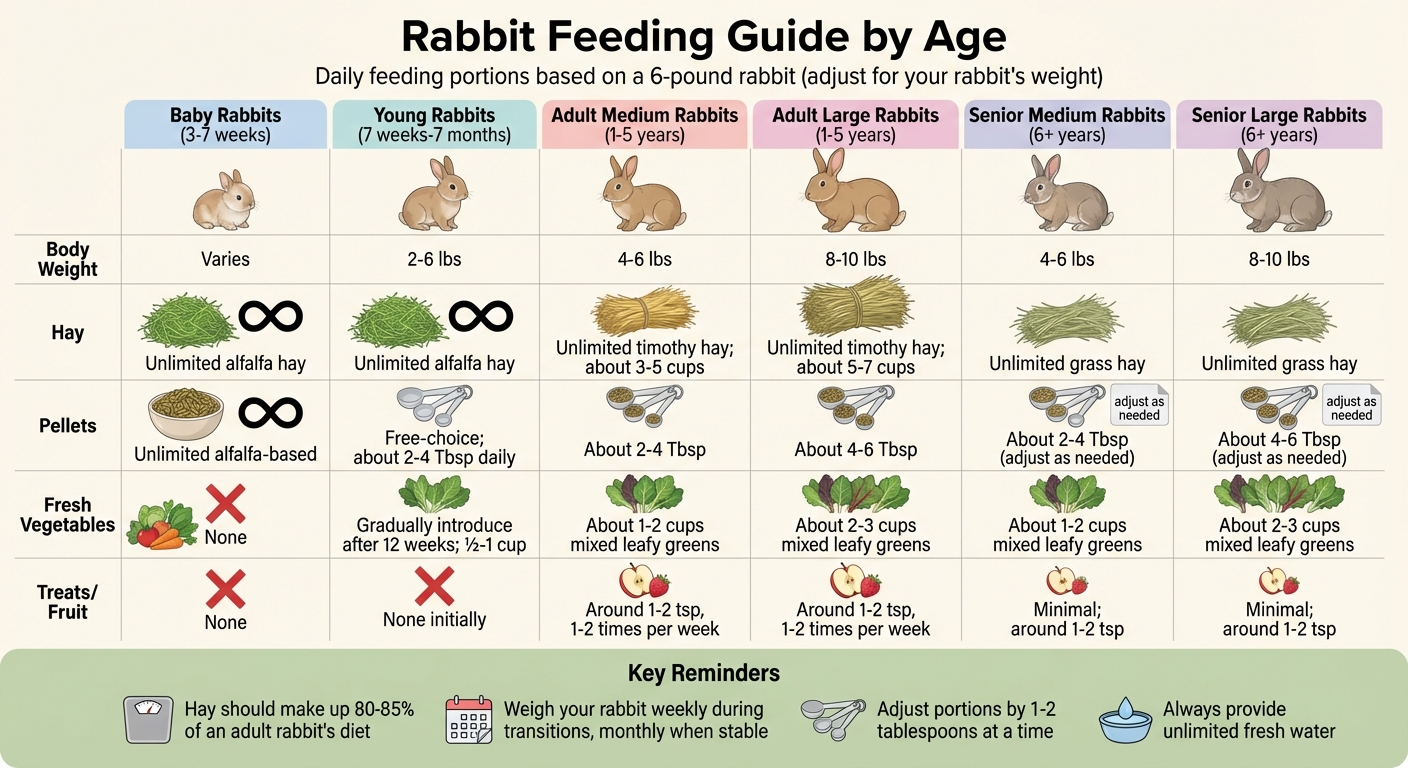
Rabbit Feeding Guide by Age: Daily Portions for Hay, Pellets, Vegetables and Treats
Follow these age- and weight-based recommendations to portion hay, pellets, vegetables, and treats for your rabbit. These guidelines are based on a 6-pound rabbit, so you’ll need to adjust portions depending on your rabbit’s weight. For instance, a 4-pound rabbit will need smaller portions, while a 10-pound rabbit will require larger ones. Keep an eye on your rabbit’s body condition – when you gently press on their sides, you should feel their ribs, but they shouldn’t be overly prominent.
Below is a quick reference chart outlining daily feeding amounts by life stage.
Age-Based Feeding Chart
This chart provides general feeding recommendations for rabbits at different stages of life. Use these as a starting point, and adjust based on your rabbit’s specific needs, activity level, and overall health.
| Life Stage | Body Weight | Hay | Pellets | Fresh Vegetables | Treats (Fruit) |
|---|---|---|---|---|---|
| Baby (3–7 weeks) | Varies | Unlimited alfalfa | Unlimited alfalfa-based | None | None |
| Young (7 weeks–7 months) | 2–6 lbs | Unlimited alfalfa | Free-choice; about 2–4 Tbsp daily | Gradually introduce after 12 weeks (½–1 cup) | None initially |
| Adult (1–5 years) – Medium | 4–6 lbs | Unlimited timothy hay (about 3–5 cups) | About 2–4 Tbsp | About 1–2 cups mixed leafy greens | Around 1–2 tsp, 1–2 times per week |
| Adult (1–5 years) – Large | 8–10 lbs | Unlimited timothy hay (about 5–7 cups) | About 4–6 Tbsp | About 2–3 cups mixed leafy greens | Around 1–2 tsp, 1–2 times per week |
| Senior (6+ years) – Medium | 4–6 lbs | Unlimited grass hay | About 2–4 Tbsp (adjust as needed) | About 1–2 cups mixed leafy greens | Minimal (around 1–2 tsp) |
| Senior (6+ years) – Large | 8–10 lbs | Unlimited grass hay | About 4–6 Tbsp (adjust as needed) | About 2–3 cups mixed leafy greens | Minimal (around 1–2 tsp) |
Be mindful of signs that your rabbit’s diet might need tweaking. If your rabbit gains weight, develops fat pads over their ribs, or leaves hay uneaten, they might be getting too many pellets or treats. On the other hand, weight loss, low energy, or a dull coat could mean they need more food, particularly in older rabbits. Additionally, soft or irregular droppings might suggest digestive upset from too many pellets, vegetables, or a sudden dietary change.
Weigh your rabbit weekly during dietary transitions and monthly once their diet stabilizes. If adjustments are needed, modify portions by 1–2 tablespoons at a time to ensure their health and well-being.
Conclusion
A rabbit’s nutritional needs shift as they grow. Baby rabbits (kits) rely on milk and alfalfa for essential nutrients, while young rabbits benefit from diets rich in protein and calcium to support their development. Adult rabbits thrive on a mix of grass hay, limited pellets, and fresh vegetables. For senior rabbits, their diet often needs adjustments based on factors like weight, mobility, and dental health.
No matter the age, hay is the backbone of a rabbit’s diet. For adults, hay should make up 80–85% of their meals. The fiber in hay is crucial for healthy digestion, keeping teeth in check, and preventing issues like obesity or gastrointestinal stasis. Pellets, vegetables, and occasional treats can complement the diet but should never overshadow the importance of hay.
To avoid common pitfalls, steer clear of overfeeding pellets, giving alfalfa to adult rabbits, introducing sudden dietary changes, or offering too many sugary treats. Regularly monitor your rabbit’s weight – weekly during dietary transitions and monthly when stable. If you notice changes in appetite or weight, adjust portions slightly (by 1–2 tablespoons) and consult your veterinarian for guidance.
For additional help with hay options, pellet recommendations, and product reviews, check out the resources at Little Pet Corner. By combining thoughtful feeding practices with routine veterinary care, you can help your rabbit enjoy a long and healthy life.
FAQs
How can I tell if my rabbit’s diet needs to change as they grow older?
Pay close attention to signs such as changes in weight (whether they’re gaining or losing), noticeable shifts in energy levels, dental issues like overgrown teeth, digestive problems such as diarrhea or constipation, and differences in their coat or skin condition. These signs can vary depending on your rabbit’s age, so adjusting their diet to match their life stage is essential.
For instance, young rabbits often need nutrient-rich diets to support their growth. Adult rabbits thrive on a balanced diet that helps maintain their overall health, while senior rabbits may benefit from softer foods or added supplements to address the challenges of aging. Regular visits to a veterinarian are crucial to keeping track of your rabbit’s health and ensuring their diet is properly tailored to their needs.
What’s the best way to transition my rabbit from alfalfa hay to timothy hay?
To help your rabbit adjust safely, begin by blending a small portion of timothy hay with their usual alfalfa hay. Over the course of 7–10 days, gradually increase the amount of timothy hay in the mix. Pay close attention to your rabbit’s eating patterns and watch for any signs of digestive trouble, like softer stools or a decrease in appetite. If you spot any problems, slow the transition and reach out to your veterinarian for guidance if necessary.
What are the best supplements for senior rabbits and how do they help?
As rabbits grow older, their dietary requirements shift, and certain supplements can help support their well-being. For example, joint support supplements containing glucosamine and chondroitin may aid in keeping them mobile and easing any discomfort. Adding fiber supplements can also be helpful, as aging rabbits often experience less efficient digestion. On top of that, omega-3 fatty acids can contribute to overall health, benefiting both heart and brain function. However, before adding any new supplements to your rabbit’s diet, it’s crucial to consult with your veterinarian to ensure they align with your pet’s specific needs.