Your pet’s skin is more delicate than yours. Using the wrong shampoo can cause irritation, dryness, or even toxic reactions if ingested during grooming. Here’s how to keep your small pet safe and healthy during bath time:
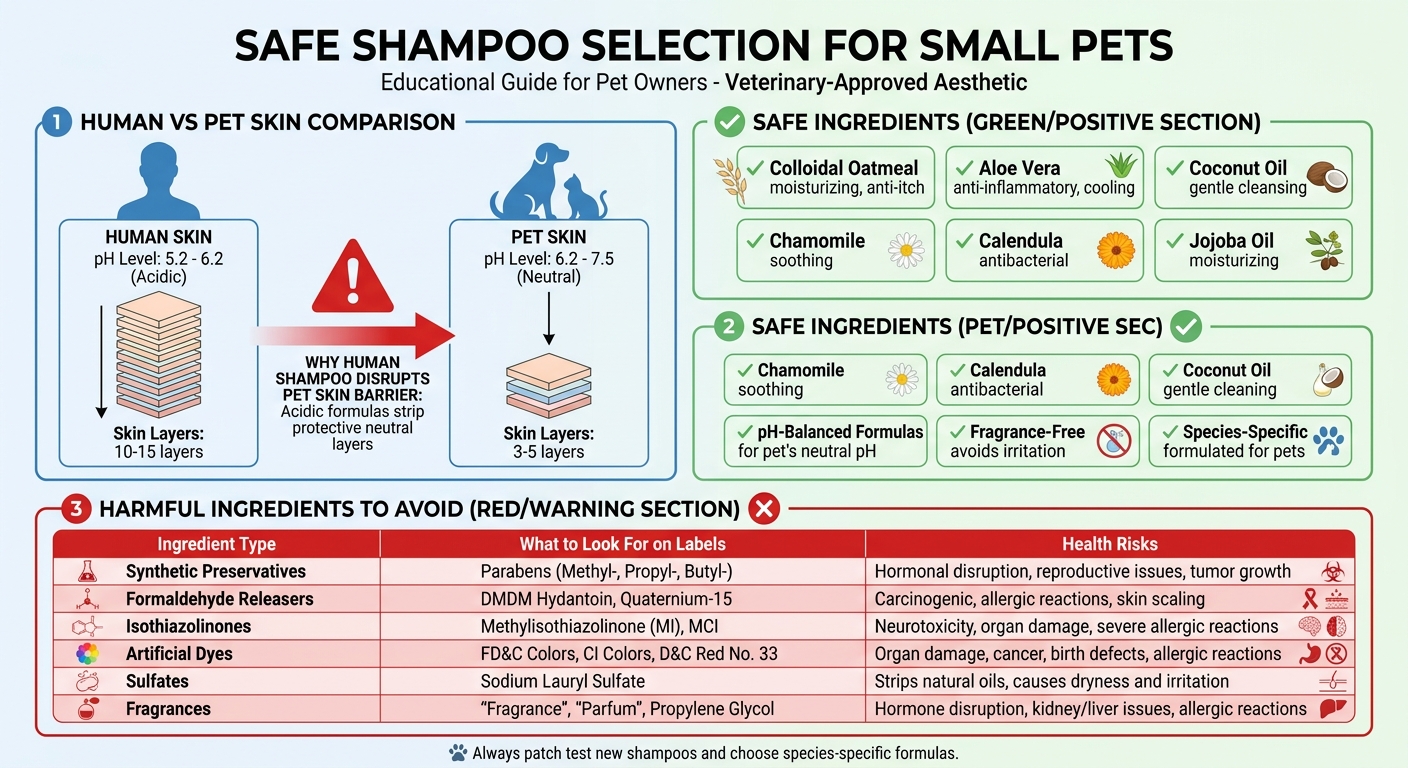
- Avoid human shampoos: Pets have thinner skin (3-5 layers vs. our 10-15) and a more neutral pH (6.2–7.5). Human shampoos can disrupt their skin barrier.
- Look for species-specific products: Ingredients safe for one pet (like dogs) can harm another (like cats or rabbits).
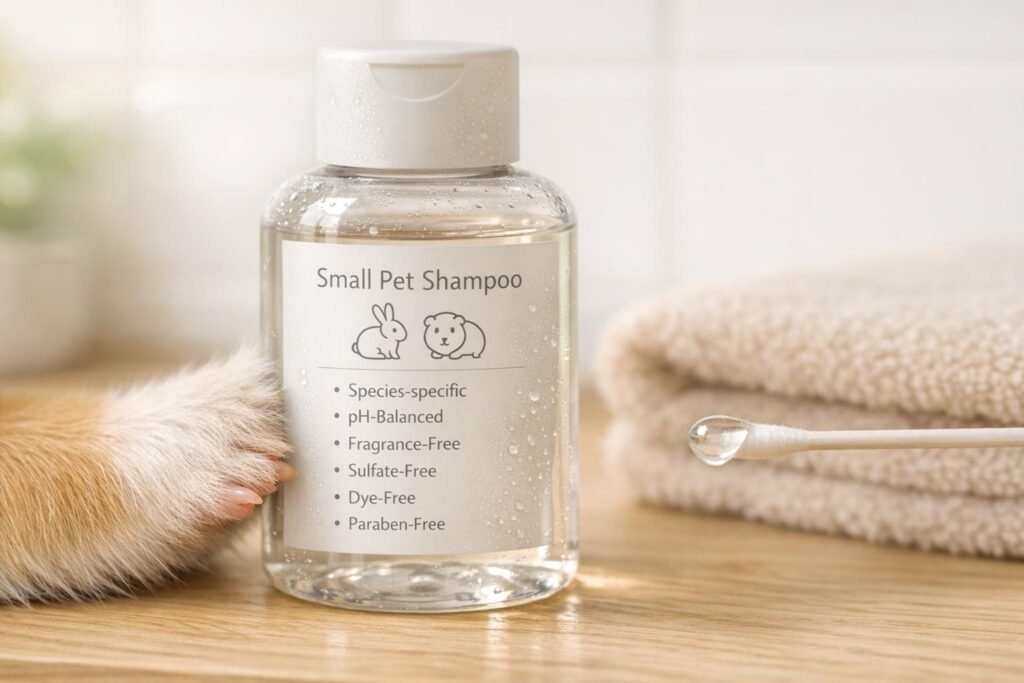
- Choose safe ingredients: Opt for shampoos with natural options like oatmeal, aloe vera, or coconut oil. Avoid sulfates, artificial dyes, fragrances, parabens, and alcohol-based additives.
- Patch test first: Always test a small area before full use to check for reactions.
Selecting the right shampoo protects your pet’s skin, reduces irritation risks, and ensures their grooming routine is safe and effective.
Human vs Pet Skin Differences and Harmful Shampoo Ingredients to Avoid
Natural & Safe Pet Shampoos
sbb-itb-e212914
Why Small Pets Need Specialized Shampoos
Small pets have skin that’s quite different from human skin, especially when it comes to pH and structure. These differences make it essential to use shampoos specifically designed for them.
pH Differences in Small Pet Skin
Human skin tends to have an acidic pH, usually ranging between 5.2 and 6.2. On the other hand, small pets like dogs and cats have a more neutral skin pH, typically between 6.2 and 7.5. According to VCA Hospitals:
"The pH of human skin is acidic (5.2 to 6.2), while the skin of dogs and cats is more neutral (6.2 to 7.5). Bathing your pet with a more acidic human shampoo disrupts the acid mantle and strips away the protective oils from their skin and coat."
Using human shampoos on pets can disturb this natural balance, making their skin more vulnerable to infections caused by bacteria, viruses, and fungi. The pH difference also means that harsh ingredients can cause even more harm to their sensitive skin.
Risks of Harsh Ingredients
Beyond pH concerns, harsh chemicals can wreak havoc on your pet’s delicate skin. Jan Reisen from the American Kennel Club points out:
"Dogs’ skin is actually more sensitive than ours. We have 10-15 layers of skin cells, while canines have only 3-5. Shampoo with the wrong pH balance and/or harsh chemicals can irritate a dog’s skin and strip away the protective oils."
Ingredients like sulfates (e.g., Sodium Lauryl Sulfate) are particularly problematic. They can strip away natural oils faster than the skin can replenish them, leading to dryness and irritation. For pets that groom themselves, leftover shampoo residue can also pose a risk if ingested, potentially causing stomach issues.
Benefits of Species-Specific Products
Shampoos made specifically for pets are designed to match their unique skin needs. These formulations take into account the neutral pH and thinner skin layers of small pets, ensuring their skin stays healthy and protected. Research shows that pH-balanced shampoos can greatly improve the condition of a pet’s skin and coat.
Species-specific shampoos often feature gentle, soap-free cleansers that remove dirt without stripping the skin’s natural barrier. They also include moisturizing ingredients to prevent dryness. Additionally, these products are tested for safety on the specific animals they’re intended for. This is crucial because ingredients safe for one species might be harmful to another – for example, certain pyrethroids are dangerous for cats.
Understanding these differences and benefits makes it easier to choose the right shampoo for your small pet, ensuring their skin stays healthy and irritation-free.
Safe Ingredients to Look for in Pet Shampoos
Natural and Soothing Ingredients
When selecting a pet shampoo, keep an eye out for ingredients like colloidal oatmeal, aloe vera, coconut oil, chamomile, calendula, and jojoba oil. These ingredients are known for their moisturizing, anti-itch, cooling, anti-inflammatory, and antibacterial properties – key qualities for maintaining and protecting sensitive pet skin.
For cleansing, plant-based formulas are a great choice. While they might not create a lot of foam, they clean effectively without stripping away your pet’s natural oils. It’s also essential to choose shampoos that are pH-balanced specifically for animals. As Pup & Pur highlights:
A good pet shampoo does not just clean. It protects the skin barrier, prevents recurring irritation, and stays safe with repeated use.
By combining soothing ingredients with gentle cleansers, these shampoos can clean your pet’s coat while safeguarding their skin. Additionally, choosing formulations designed to minimize allergic reactions is crucial for pets with sensitivities.
Hypoallergenic and Fragrance-Free Formulas
For pets with delicate skin, hypoallergenic and fragrance-free shampoos are the way to go. These options are designed with simple, clear ingredient lists to reduce the risk of irritation and moisture loss. Fragrances, while unnecessary for cleaning, are a common trigger for skin issues. Alain Courchesne, Founder of Doggy Bathroom, explains:
Artificial fragrances are a common cause of skin irritation. They often contain undisclosed chemical blends that can be harsh on sensitive skin and overwhelming for a dog’s sense of smell.
This is especially true for small breeds, which face unique challenges. Courchesne further notes:
Small breeds may face similar challenges. With less body mass and a higher surface-area-to-weight ratio, ingredients can more readily affect small breeds.
To ensure safety, avoid shampoos with vague terms like "fragrance" or "parfum", as these often conceal undisclosed chemicals.
Harmful Ingredients to Avoid in Pet Shampoos
Knowing which ingredients can harm small pets highlights the importance of using mild, species-specific shampoos.
Alcohol and Strong Scents
If you spot "fragrance" or "parfum" on a shampoo label, those terms might be hiding a mix of chemicals, including phthalates. These substances are known hormone disruptors and have been linked to kidney and liver issues, reproductive problems, and allergic reactions in both humans and pets. The American Kennel Club advises against artificial fragrances in dog shampoos to lower the risk of irritation.
Alcohol-based ingredients, such as propylene glycol, are another red flag. This additive has been associated with liver and kidney toxicity, skin irritation, and other organ-related problems in pets. Because small pets have fewer skin layers than humans, their skin is more prone to irritation and allows harmful chemicals to penetrate more easily, increasing the risk of systemic toxicity.
Opt for "fragrance-free" shampoos rather than those labeled "unscented." Unscented products might still contain masking chemicals to hide odors, while fragrance-free products are free of such additives. Avoid vague terms like "perfume oils" or "proprietary blends", which often obscure the actual ingredients.
In addition to fragrances and alcohol-based additives, synthetic dyes and preservatives also pose risks to your pet’s health.
Artificial Dyes and Synthetic Preservatives
Artificial dyes, often listed as FD&C or CI colors, are purely cosmetic and offer no benefit. These dyes have been linked to organ damage, cancer, birth defects, and allergic reactions. Since pets groom themselves by licking their fur, any synthetic dye residue left on their coat could be ingested, leading to internal toxicity.
Synthetic preservatives are equally concerning. Formaldehyde-releasing agents like DMDM hydantoin and quaternium-15 release small amounts of formaldehyde, a known carcinogen that can cause skin irritation, burning, and allergic reactions. Isothiazolinones (MI/MCI), another class of preservatives, are known to trigger severe allergic reactions and have been identified as potential neurotoxins even in small doses. Parabens, commonly used to extend product shelf life, are linked to hormonal disruptions, skin irritation, and rashes.
Here’s a quick summary of harmful ingredients to watch out for:
| Harmful Ingredient | Common Label Names | Primary Risks |
|---|---|---|
| Synthetic Preservatives | Parabens (Methyl-, Propyl-, Butyl-) | Hormonal disruption, reproductive issues, tumor growth |
| Formaldehyde Releasers | DMDM Hydantoin, Quaternium-15 | Carcinogenic, allergic reactions, skin scaling |
| Isothiazolinones | Methylisothiazolinone (MI), MCI | Neurotoxicity, organ damage, severe allergic reactions |
| Artificial Dyes | FD&C Colors, CI Colors, D&C Red No. 33 | Organ damage, cancer, birth defects, allergic reactions |
When choosing pet shampoos, steer clear of products with bright, artificial colors or strong, potpourri-like scents – these are often signs of synthetic dyes and fragrances. Look for shampoos with a "Certified Organic" seal rather than relying on vague terms like "All Natural", which can be misleading. Avoiding these harmful ingredients helps protect your pet’s skin and overall health.
How to Read Pet Shampoo Labels
Once you know which ingredients to steer clear of, the next step is learning how to decode shampoo labels. This ensures you’re picking a product that’s safe for your pet.
Check Species-Specific Labels
Always choose shampoos labeled specifically for your pet’s species, especially if you have small animals like rabbits or guinea pigs. Generic pet shampoos – or those made for dogs or cats – might contain ingredients that are harmful to smaller species. For instance, essential oils that are fine for dogs can be toxic to rabbits and guinea pigs. In fact, more than 70% of skin irritation cases in guinea pigs are linked to products not designed for small animals.
Human and baby shampoos are also a no-go for small pets. Their skin has a different pH and structure, making these products unsuitable. As Dana Krempels, Ph.D., from the University of Miami, explains:
Most popular shampoos for humans – including baby shampoos – are not recommended for use on rabbits, as they can contain harsh ingredients that are rough on delicate rabbit skin.
Additionally, check for age-appropriate formulations and certifications to ensure the product meets safety standards.
Look for Age and Safety Certifications
If you’re shopping for younger pets, opt for shampoos labeled "Puppy" or "Kitten." These formulas typically offer extra hydration and include skin-nourishing ingredients like vitamin E or B5.
Third-party certifications can also help you identify trustworthy products. Labels like "USDA Certified Organic" confirm ingredient purity, while the "Leaping Bunny" seal ensures the product is cruelty-free. Be cautious of vague terms like "natural", "botanical", or "hypoallergenic", as these often lack proper regulation. Instead, look for labels that specifically state "pH-balanced for pets" and "soap-free." These indicate gentle, pet-safe formulas that clean without disrupting the natural skin barrier.
Best Shampoo Types by Pet Species
Choosing the right shampoo for your pet isn’t just about cleanliness – it’s about catering to their specific skin needs. Small pets like guinea pigs, rabbits, hamsters, and ferrets have delicate skin that requires specially formulated shampoos. Using the right type ensures bath time is both safe and comfortable, while protecting their sensitive skin.
Oatmeal-Based Shampoos
For guinea pigs and hamsters with dry or itchy skin, oatmeal-based shampoos can work wonders. Colloidal oatmeal acts as a gentle, skin-soothing ingredient that hydrates while calming irritation and inflammation. It’s packed with beneficial nutrients like fats, proteins, vitamins, and minerals, making it ideal for sensitive or dry skin. A great example is the earthbath Oatmeal & Aloe Itch Relief Shampoo, which boasts a perfect 5.0/5 star rating from users. For best results, keep the lather on your pet’s coat for at least 90 seconds before rinsing.
Aloe Vera and Organic Oil Formulas
Rabbits and ferrets with sensitive skin benefit greatly from shampoos containing aloe vera and organic oils. Aloe vera is known for its anti-inflammatory properties, promoting healing and soothing allergic reactions. Organic oils, like coconut oil, gently cleanse and hydrate without removing the skin’s natural moisture. For example, the kin+kind Sensitive Skin Oatmeal Shampoo, priced at $14.99 for a 12 fl oz bottle, uses saponified organic olive and coconut oils to lift dirt without relying on harsh synthetic agents. These plant-based formulas help maintain a neutral skin pH of 6.2–7.5, which is crucial for preserving the skin’s natural barrier.
If your pet has heightened sensitivity, consider shampoos that go beyond hydration and are specifically hypoallergenic.
Fragrance-Free Hypoallergenic Shampoos
Fragrance-free hypoallergenic shampoos are a safe choice for all small pets, as they minimize the risk of irritation. Fragrances, while pleasant to humans, offer no cleaning benefits and can overwhelm a pet’s sensitive sense of smell, potentially causing respiratory or skin issues. Small pets, like guinea pigs, also groom themselves frequently, so any scented residue could be ingested, leading to potential toxicity. Look for formulas with soothing ingredients like oatmeal extract, aloe vera, or Vitamin E to support skin and coat health without causing irritation.
As noted by Krista Williams, BSc, DVM, CCRP, and Lynn Buzhardt, DVM:
The acid mantle is washed away by bathing, so shampoos and soaps often contain moisturizers that protect the skin until the acid mantle is renewed.
Products labeled as "soap-free" and "pH-balanced for pets" are excellent choices, as they clean effectively without disrupting the skin’s natural defenses.
Testing Shampoo Safety Before Full Use
Even shampoos labeled as "mild" can sometimes cause reactions in small pets. Their skin is much thinner and more sensitive than human skin, which makes them more prone to irritation from concentrated products. This highlights why choosing a shampoo specifically designed for your pet’s species is so important, as previously mentioned. Once you’ve selected a safe, pH-balanced shampoo, performing a patch test is a must to ensure it won’t irritate your pet’s delicate skin.
Dilution and Patch Testing
Start by diluting a small amount of shampoo (about the size of a dime) in warm water – around 100°F/38°C. You can test the water temperature on your wrist to ensure it’s comfortable. Apply the diluted shampoo to a less sensitive area, like the hindquarters, after brushing out any mats. If you’re using a concentrated professional formula – some of which are designed for a 50:1 dilution ratio – make sure to mix it thoroughly before applying.
For pets with long fur, brushing the test area beforehand is essential to remove mats that could trap the shampoo. When applying the diluted solution, use a cup or a low-pressure sprayer to gently pour it onto the area. Avoid splashing, as sudden movements or noises could startle your pet. As PetCareLab Editorial emphasizes:
A perfect first bath is 80% rinsing and 20% shampoo.
Once applied, rinse the area thoroughly to ensure no residue remains, as leftover shampoo could cause irritation.
Monitor for Reactions
Keep a close eye on your pet during and after the patch test. Signs of immediate stress, such as wide eyes, trembling, or panting, can indicate discomfort. After the area has dried, inspect it for any signs of irritation, such as redness, flaking, bumps, sores, hives, or swelling. The PetMD Vet Advisory Panel explains:
Ingredients meant for humans could cause slight to severe reactions, such as hives, redness, or swelling.
Because some reactions may take time to appear, continue monitoring your pet for several hours after the test. Watch for behaviors like excessive scratching or biting at the skin – these could signal discomfort. If you notice any of these signs, stop using the shampoo immediately and consult your veterinarian. They can recommend hypoallergenic or medicated alternatives that are better suited for your pet’s needs.
Conclusion
Selecting the right shampoo for your small pet is key to keeping their skin healthy and free from irritation. Unlike humans, pets have thinner, more sensitive skin with a neutral pH, making them more vulnerable to products not designed for their needs. Using the wrong shampoo, even occasionally, can strip away essential oils and set off a cycle of irritation, leading to chronic itching and discomfort.
To avoid this, focus on species-specific, soap-free formulas that maintain the skin’s natural balance. It’s also crucial to steer clear of ingredients that can strip oils or cause harm. For example, never use dog shampoo on cats – ingredients safe for dogs can be toxic to cats if ingested during grooming. As Pup & Pur explains:
A good pet shampoo does not just clean. It protects the skin barrier, prevents recurring irritation, and stays safe with repeated use.
This highlights the importance of choosing a shampoo that prioritizes both safety and skin health.
Always perform a patch test and keep an eye out for any adverse reactions. If your pet experiences ongoing issues like redness, flaking, or excessive scratching, consult your veterinarian to rule out underlying conditions before making changes to their grooming routine.
FAQs
How often should I bathe my small pet?
For pets with healthy skin and coats, giving them a bath about once a month is generally sufficient. This helps remove dirt and oil while keeping them smelling fresh. Cats are a bit different – they usually don’t need regular baths because they groom themselves. Only bathe a cat if they become unusually dirty or have a specific skin condition. Always take your pet’s individual needs into account, and if you’re uncertain, it’s a good idea to check with your vet.
Can I use pet wipes or water-only baths instead of shampoo?
Pet wipes and water-only baths are handy for quick touch-ups, but they can’t replace shampoo. Wipes are great for removing surface dirt and odors between baths, while water-only rinses can help wash away loose dirt and hair. However, neither option thoroughly cleans your pet’s coat or skin, nor do they effectively remove oils. To keep your pet’s skin healthy and coat clean, regular grooming with shampoo is a must.
What should I do if my pet licks shampoo or shows irritation?
If your pet happens to lick shampoo or shows signs of irritation, make sure to rinse them thoroughly to get rid of any leftover residue. While most pet shampoos are mild, persistent irritation – like redness, itching, or swelling – should be addressed by contacting your veterinarian right away. It’s also important to stop your pet from licking the irritated area to prevent further discomfort or accidental ingestion of harmful substances. Keep a close eye on their behavior to ensure they stay safe and comfortable.